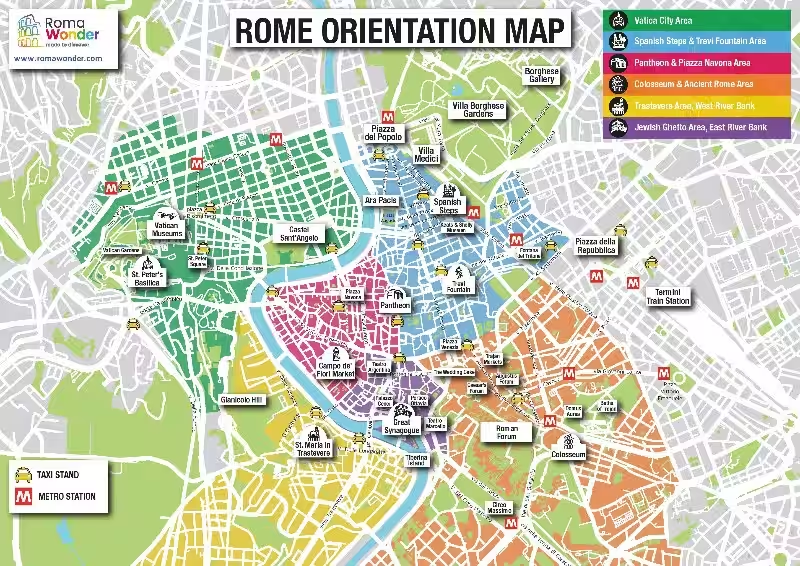
Imagine holding a meticulously detailed Rome sites map in your hands, not just a guide to ancient ruins and bustling piazzas, but a key to unlocking the very soul of a city steeped in religious history. Rome, the Eternal City, is a living testament to centuries of faith, a place where the whispers of saints and the echoes of divine pronouncements still resonate. For pilgrims, history buffs, and the simply curious, navigating this sacred landscape is an enriching journey, and understanding its religious heart is paramount. This article will guide you through the essential Rome sites map, focusing on the profound religious significance that permeates its every stone.
From the monumental grandeur of Vatican City to the humble catacombs, Rome offers an unparalleled exploration of Christianity’s evolution and its enduring impact. We’ll delve into the major religious landmarks, understanding their historical context, their spiritual importance, and how they contribute to the unique religious tapestry of this extraordinary metropolis. Prepare to embark on a virtual pilgrimage, guided by the insights presented here, to discover the spiritual essence of Rome.
No exploration of Rome’s religious identity is complete without a deep dive into Vatican City, the independent state and spiritual epicenter of the Roman Catholic Church. This compact yet incredibly significant territory, clearly marked on any comprehensive Rome sites map, is a pilgrimage destination for millions worldwide. Its imposing architecture and sacred relics draw believers and admirers alike, offering a glimpse into the immense influence and historical weight of the papacy.
At the heart of Vatican City stands the magnificent St. Peter’s Basilica, a masterpiece of Renaissance architecture and a potent symbol of Catholic faith. Its sheer scale is breathtaking, and within its hallowed walls lie treasures like Michelangelo’s Pietà and the believed tomb of St. Peter himself. Beyond the basilica, the Vatican Museums house an unparalleled collection of art and historical artifacts, including the awe-inspiring Sistine Chapel, where Michelangelo’s frescoes depict biblical narratives with unparalleled artistry. Understanding the layout of these key Vatican sites on your Rome sites map will allow for a more organized and impactful visit.
St. Peter’s Basilica: The Cornerstone of Catholicism
Visiting St. Peter’s Basilica is more than just sightseeing; it’s an experience that can profoundly touch the spirit. The sheer volume of worshippers and visitors present each day speaks to its enduring draw. Imagine standing beneath Bernini’s colossal baldachin, a bronze canopy sheltering the papal altar, the sheer craftsmanship a testament to human devotion. The basilica also offers the opportunity for spiritual reflection, with countless chapels and alcoves providing spaces for prayer and contemplation.
Beyond the artistic and architectural marvels, the spiritual weight of St. Peter’s Basilica is palpable. It is a place where popes have been crowned, where significant religious pronouncements have been made, and where the faithful gather for Mass and other sacraments. The experience of attending a service here, or simply walking the nave, can be a deeply moving encounter with centuries of unbroken religious tradition. Prioritizing its location on your Rome sites map ensures you don’t miss this pivotal religious landmark.
The Vatican Museums and Sistine Chapel: Art as Divine Revelation
The Vatican Museums are not merely a repository of art; they are a visual chronicle of faith and human history. As you navigate the labyrinthine halls, guided by your Rome sites map, you’ll encounter masterpieces ranging from ancient Egyptian artifacts to Roman sculptures and Renaissance paintings. Each piece tells a story, often intertwined with religious themes and the patronage of the Church.
The pièce de résistance, of course, is the Sistine Chapel. Standing beneath Michelangelo’s ceiling and his Last Judgment is an overwhelming sensory and spiritual experience. The vibrant colors, the dramatic figures, and the sheer ambition of the work are designed to inspire awe and contemplation of divine narratives and humanity’s place within them. It’s a place where art transcends mere aesthetics to become a powerful form of religious expression. When planning your route using your Rome sites map, allocate ample time for the Vatican Museums, as the Sistine Chapel alone warrants a significant portion of your visit.
Ancient Christianity: Echoes from the Catacombs and Early Churches
Long before the grandeur of Vatican City dominated the skyline, early Christians in Rome practiced their faith in secrecy and fortitude. The early days of Christianity were marked by persecution, and much of their spiritual life took place underground, in the vast network of catacombs. These subterranean burial chambers, often marked on specialized Rome sites map guides focusing on early Christianity, offer a poignant glimpse into the lives and beliefs of the first believers.
Exploring the catacombs, such as those of St. Callixtus or St. Sebastian, is a journey back in time. The simple frescoes adorning the walls, depicting biblical scenes and symbols of hope, speak volumes about the resilience of their faith in the face of adversity. These sites are not just historical curiosities; they are sacred spaces where the foundations of Christianity in Rome were laid. Many of these early churches, built over the tombs of martyrs, are still active places of worship today.
The Catacombs: Underground Sanctuaries of Faith
Imagine descending into the cool, dimly lit tunnels of a Roman catacomb. The air is thick with history, and the walls are lined with niches where the faithful were laid to rest. These were not just cemeteries; they were also places of worship and community for early Christians who sought refuge from persecution. The artwork found within, though often simple, is incredibly powerful, conveying messages of faith, salvation, and the promise of eternal life.
The symbolic imagery within the catacombs is particularly fascinating. The depiction of the Good Shepherd, for instance, was a common motif, representing Christ’s care for his followers. Fish symbols, or ‘ichthys,’ were also used as a secret code for Christians. Understanding these early forms of religious expression provides a crucial context for the development of Christian art and theology. When consulting your Rome sites map, look for sections dedicated to the Appian Way, as many of the most significant catacombs are located along this historic route.
Early Christian Basilicas: Enduring Monuments to Devotion
Beyond the catacombs, Rome is dotted with ancient basilicas that stand as enduring monuments to early Christian devotion. Churches like Santa Sabina, Santa Maria Maggiore, and St. John Lateran (the official cathedral of the Diocese of Rome) offer a glimpse into the architectural evolution of Christian worship. These structures, often predating the grand Renaissance edifices, possess a unique spiritual gravitas, a testament to their long history of prayer and pilgrimage.
Santa Maria Maggiore, for example, boasts stunning 5th-century mosaics that are among the oldest and best-preserved in Rome, depicting scenes from the Old Testament. St. John Lateran, the “Mother of all Churches,” holds immense historical and spiritual significance, having served as the primary papal residence for centuries. Identifying these basilicas on your Rome sites map will reveal a layer of religious history that is both profound and accessible, offering a more intimate encounter with Rome’s faith.
Beyond Catholicism: A Multifaceted Religious Landscape
While Catholicism undeniably forms the dominant thread in Rome’s religious fabric, the city’s spiritual landscape is richer and more diverse than often perceived. Throughout its history, Rome has been a crossroads for various faiths, and contemporary Rome reflects this multifaceted heritage. A comprehensive Rome sites map might not always highlight these, but their presence enriches the city’s spiritual narrative.
From ancient Jewish history to the presence of other Christian denominations and even smaller religious communities, Rome offers a unique perspective on religious coexistence and evolution. Understanding these diverse influences provides a more complete picture of Rome’s complex cultural and spiritual identity, showcasing its ability to accommodate and integrate various belief systems over millennia.
The Jewish Quarter: A Legacy of Resilience and Faith
Rome’s Jewish community boasts one of the oldest continuous Jewish presences in Europe, dating back to antiquity. The historic Jewish Quarter, or Ghetto, with its distinctive architecture and vibrant atmosphere, is a testament to this enduring legacy. The Great Synagogue of Rome, a striking edifice on the banks of the Tiber, stands as a symbol of this community’s resilience and vibrant religious life. Consulting your Rome sites map and specifically seeking out the area around Tiber Island will lead you to this historically significant district.
Exploring the Jewish Quarter offers a different dimension of Rome’s religious history. The Portico d’Ottavia, an ancient Roman structure that now serves as an entrance to the ghetto, is a powerful reminder of the long and often challenging co-existence between Jewish and Roman societies. The Museo Ebraico (Jewish Museum) further illuminates the rich cultural and religious heritage of this community, offering insights into their traditions, art, and history. The culinary traditions of the Roman Jewish community, like the famous Carciofi alla Giudia (deep-fried artichokes), are themselves a delicious expression of their cultural identity.
Other Christian Denominations and Religious Sites
Beyond the Roman Catholic Church, Rome is home to a variety of other Christian denominations, each with their own places of worship. Anglican, Methodist, Lutheran, and Orthodox churches can be found throughout the city, offering spiritual solace and community to their adherents. These churches, though perhaps less monumental than their Catholic counterparts, contribute to the diverse Christian presence in Rome. Keep an eye on your Rome sites map for these smaller, yet significant, religious institutions.
Furthermore, Rome’s historical connections mean that remnants of ancient paganism can still be encountered, albeit in transformed contexts. The Pantheon, originally a temple to all gods, is now a church, symbolizing the transition and adaptation of religious spaces. Even sites like the Baths of Caracalla, while primarily public amenities, were imbued with a sense of ritual and social gathering that touches upon broader ancient Roman spiritual practices. Recognizing these layers of history on your Rome sites map allows for a more nuanced understanding of Rome’s evolving religious landscape.
Navigating Your Religious Pilgrimage: Tips for Using Your Rome Sites Map
To truly immerse yourself in Rome’s religious heart, a well-utilized Rome sites map is your most valuable tool. It’s not just about knowing where to go, but understanding the interconnectedness of these sacred sites and planning your journey with intention. Think of your map as a storyteller, revealing the narrative of faith woven through the city’s millennia of history.
When using your Rome sites map, consider grouping sites geographically to maximize your time and minimize travel. For instance, dedicate a full day to Vatican City. Another day could be dedicated to exploring the ancient Christian basilicas on the Aventine Hill or along the Appian Way. Remember to factor in opening hours, potential queues, and the need for quiet contemplation at these sacred locations. Dress modestly when visiting churches and religious sites, as this is a sign of respect.
Practical Planning for a Spiritually Rich Experience
Before you even set foot in Rome, take time to study your Rome sites map. Identify the must-see religious landmarks for your personal journey. Are you primarily interested in the grandeur of the Vatican, the historical depth of the catacombs, or the quiet reverence of smaller basilicas? Prioritizing your interests will help you create a meaningful itinerary.
When you’re actually in Rome, don’t underestimate the power of local advice or guided tours. Local guides can offer invaluable historical and spiritual insights that you might miss on your own. Consider purchasing tickets for major attractions like the Vatican Museums in advance to avoid long waits. Remember, a Rome sites map is a guide, but the true discovery comes from experiencing these places with an open heart and a curious mind.
Respect and Reverence: Embracing the Sacred Atmosphere
Visiting Rome’s religious sites is an opportunity for profound personal reflection and spiritual connection. It’s crucial to approach these places with respect and reverence. This means dressing appropriately, with shoulders and knees covered, and maintaining a quiet demeanor, especially during services or prayer times. Your Rome sites map can show you the way, but your conduct will determine the depth of your experience.
Be mindful of your surroundings and the purpose of these sites. They are not merely tourist attractions but living places of worship and pilgrimage for millions. Taking a moment to pause, breathe, and absorb the atmosphere can transform a superficial visit into a truly meaningful encounter with Rome’s spiritual heritage. Let your Rome sites map guide your steps, but let your spirit lead your journey.
Frequently Asked Questions: Rome Sites & Religion
What are the most important religious sites in Rome?
The most significant religious site in Rome is Vatican City, an independent city-state and the spiritual heart of the Catholic Church. Within Vatican City, St. Peter’s Basilica is the principal church and a UNESCO World Heritage Site, renowned for its Renaissance architecture and religious art. The Vatican Museums, also within Vatican City, house the Sistine Chapel, famous for Michelangelo’s frescoes that depict biblical scenes. Beyond Vatican City, the city of Rome boasts numerous historically important churches, including the four major basilicas: St. John Lateran (the cathedral of Rome), St. Mary Major, St. Paul Outside the Walls, and St. Peter’s Basilica. Other notable churches include Santa Maria in Trastevere, San Luigi dei Francesi (housing Caravaggio paintings), and the Pantheon, originally a Roman temple later consecrated as a Catholic church.
How can I best plan my visit to religious sites in Rome?
To effectively plan your visit to Rome’s religious sites, consider purchasing tickets for popular attractions like the Vatican Museums and St. Peter’s Basilica in advance online to avoid long queues. Dress codes are strictly enforced at religious sites; shoulders and knees must be covered. Comfortable walking shoes are essential. For Vatican City, allocate at least half a day to explore St. Peter’s Basilica, the Vatican Museums, and the Sistine Chapel. Grouping nearby churches geographically can help optimize your itinerary. Many churches offer guided tours which can provide deeper insights into their history and religious significance. Check opening hours as they can vary, especially for smaller churches and on religious holidays.
Are there any specific religious customs or etiquette to be aware of in Rome?
When visiting churches and religious sites in Rome, it is important to observe respectful behavior. Keep your voice low, avoid loud conversations, and refrain from eating or drinking inside. As mentioned, dress modestly, covering shoulders and knees. Taking photographs may be restricted in certain areas, particularly within the Sistine Chapel, so be mindful of signage. During religious services, it is customary to remain quiet and avoid movement unless absolutely necessary. For those who wish to attend Mass, schedules are usually posted outside churches, with St. Peter’s Basilica offering daily services.
How does the religion practiced in Rome influence its historical sites?
Religion has profoundly shaped Rome’s historical landscape. The city served as the center for the Roman Empire, which had its own polytheistic beliefs and built temples that still stand today, like the Pantheon. With the rise of Christianity, Rome became the seat of the Papacy, leading to the construction of countless churches, basilicas, and religious institutions that dominate its architecture. The Vatican City’s existence as a sovereign state within Rome is a direct result of its religious importance. Many historical sites, from ancient forums to Renaissance palaces, have religious narratives intertwined with their history, and the art and artifacts found within them often reflect religious themes and stories.
Can I explore Jewish heritage sites in Rome?
Yes, Rome has a rich Jewish heritage. The historic Jewish Ghetto, one of the oldest in Europe, is a significant area to explore. Within the Ghetto, you can visit the Great Synagogue of Rome, a beautiful and active place of worship. The Jewish Museum of Rome, located adjacent to the Synagogue, offers a comprehensive look at the history and culture of Roman Jews. Exploring the narrow streets of the Ghetto also allows you to discover ancient synagogues and learn about the community’s long and complex history in the city.