The tapestry of human experience is rich and varied, woven with threads of joy, sorrow, hope, and questioning. Amidst this vibrant complexity, many find solace, purpose, and an enduring sense of connection within the framework of our Catholic faith. This profound religious tradition, with its deep historical roots and expansive global reach, offers a comprehensive worldview that addresses fundamental questions about life, death, and our place in the universe. It’s more than just a set of doctrines; it’s a living, breathing relationship with the divine, a path towards holiness, and a vibrant community that supports and nourishes its members.
Exploring our Catholic faith is a journey of discovery, inviting us to delve into the teachings of Jesus Christ, as preserved and articulated by the Church He founded. It’s a journey that can be both intellectually stimulating and deeply emotionally resonant, offering answers to the perennial human yearning for meaning and belonging. Whether you are a lifelong adherent, a curious inquirer, or someone simply seeking to understand this significant global religion, this article aims to illuminate the heart of our Catholic faith, making it relatable, informative, and profoundly useful for your own life’s pilgrimage.
At the core of our Catholic faith lie fundamental truths that shape its identity and guide its followers. These are not abstract theological concepts to be debated in isolation, but rather living principles that inform daily life and offer a roadmap for spiritual growth. These foundational elements provide a consistent and enduring framework for understanding God’s relationship with humanity and our response to His boundless love.
The cornerstone of our Catholic faith is the belief in the Trinity: God the Father, God the Son (Jesus Christ), and God the Holy Spirit, three distinct Persons in one divine Being. This mystery is central to our understanding of God’s nature and His active involvement in the world. Furthermore, we believe in the Incarnation, that Jesus Christ, the Son of God, became fully human, born of the Virgin Mary, to redeem us from sin and offer us eternal life. His life, teachings, death, and resurrection are the pivotal events of salvation history, central to the narrative of our Catholic faith.
The Role of Jesus Christ: Savior and Lord
Jesus Christ stands as the undisputed central figure of our Catholic faith. He is not merely a historical prophet or a moral teacher, but the Son of God, the divine Word made flesh. His earthly ministry was characterized by acts of profound compassion, miraculous healings, and teachings that challenged the prevailing norms and offered a radical vision of God’s kingdom. His sacrifice on the cross is understood as the ultimate act of love, reconciling humanity with God and opening the gates of heaven.
The teachings of Jesus, as recorded in the Gospels, are the bedrock of Christian morality and spirituality. His call to love God with all our heart, soul, and strength, and to love our neighbor as ourselves, is the supreme commandment that underpins all others. For those exploring our Catholic faith, engaging with the life and words of Jesus is an essential first step. We believe that through His grace, we are empowered to live lives of virtue and to overcome the challenges that sin presents. His resurrection is the ultimate proof of His divinity and the promise of our own future resurrection, offering profound hope in the face of mortality.
Within our Catholic faith, the Church is understood not simply as an institution, but as the Mystical Body of Christ. This profound concept, articulated by St. Paul, emphasizes the intimate union between Christ and His followers. He is the Head, and we are His members, each playing a vital role in the life of the Body. The Church, therefore, is seen as the continuation of Christ’s mission in the world, guided by the Holy Spirit.
The Catholic Church traces its lineage back to the apostles, whom Jesus commissioned to spread His teachings. This apostolic succession is a key characteristic of our Catholic faith, ensuring the continuity of Christ’s message and the sacraments entrusted to His followers. The Church provides a structured community for worship, learning, and mutual support. It is a place where individuals can encounter God through the sacraments, receive spiritual guidance, and participate in a shared journey of faith. The Church’s teachings, guided by the Magisterium (the teaching authority of the bishops in communion with the Pope), offer a sure guide in matters of faith and morals.
The Sacraments: Encounters with God’s Grace
The Sacraments are the visible signs instituted by Christ to give grace. In our Catholic faith, they are tangible encounters with God’s transformative power, essential channels through which His love and mercy flow into our lives. Each sacrament marks a significant moment in the spiritual journey, offering divine assistance and deepening our relationship with God.
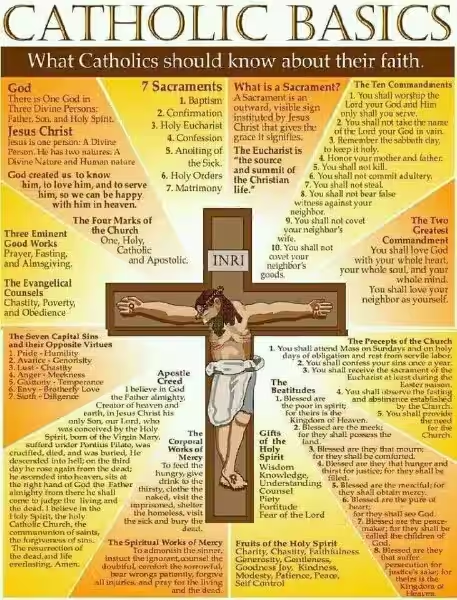
There are seven sacraments in our Catholic faith: Baptism, Confirmation, the Eucharist, Penance (Reconciliation), Anointing of the Sick, Holy Orders, and Matrimony. These sacraments are not merely symbolic rituals; they are efficacious signs that truly confer the grace they signify. For instance, Baptism washes away original sin and incorporates us into the Body of Christ, while the Eucharist nourishes our souls with the very Body and Blood of Jesus.
Baptism and Confirmation: Entry into the Faith Community
Baptism is the gateway to the Christian life and the first sacrament received in our Catholic faith. Through the pouring of water and the invocation of the Trinity, we are cleansed of sin, reborn as children of God, and become members of the Church. It is a foundational sacrament, marking the beginning of our lifelong journey of faith. Imagine being welcomed into a loving family – Baptism is our divine welcoming into God’s eternal family.
Confirmation, often received later in life, strengthens the baptismal grace and seals us with the Holy Spirit. It empowers us to be more courageous witnesses to Christ in the world. This sacrament equips us with the spiritual gifts necessary to live out our faith and to contribute to the mission of the Church. It’s like receiving a special empowerment for the ongoing mission of living out our Catholic faith in our daily lives.
The Eucharist: The Source and Summit of Christian Life
The Eucharist, also known as Holy Communion, is considered the source and summit of Christian life within our Catholic faith. In this sacrament, through the consecration by a priest, the bread and wine become the true Body and Blood of Jesus Christ (transubstantiation). Receiving the Eucharist is a profound act of communion with Christ and with fellow believers, an intimate encounter with the divine presence.
The Mass, the central act of worship in our Catholic faith, culminates in the celebration of the Eucharist. It is a re-presentation of Christ’s sacrifice on the cross, a spiritual banquet that sustains us on our spiritual journey. For Catholics, the Eucharist is not just a ritual; it’s a living encounter with Jesus, offering strength, healing, and the promise of eternal life. The profound mystery of the Eucharist is a constant source of wonder and devotion for those within our Catholic faith.
Living Our Catholic Faith: A Path of Love and Service
Our Catholic faith is not meant to be confined to Sundays or to the walls of a church; it is a way of life that permeates every aspect of our existence. It calls us to live out the Gospel message through acts of love, compassion, and service to others. This outward expression of faith is essential to its vitality and authenticity.
Living our Catholic faith involves striving for holiness, which means growing in our love for God and striving to become more like Christ. This is a lifelong process, marked by both triumphs and struggles. We are called to cultivate virtues such as charity, humility, patience, and justice, and to actively participate in the mission of the Church. The teachings of our Catholic faith provide a moral compass for navigating the complexities of life.
Prayer and Spiritual Practices: Nurturing Our Relationship with God
Prayer is the foundation of any relationship, and in our Catholic faith, it is our primary means of communicating with God. From the communal prayers of the Mass to the personal prayers of adoration, thanksgiving, confession, and petition, prayer sustains and deepens our connection with the divine. There are many forms of prayer within our Catholic faith, including the Rosary, the Liturgy of the Hours, and meditative prayer.
Beyond formal prayer, spiritual practices such as reading Scripture, fasting, almsgiving, and seeking spiritual direction are vital for nurturing our spiritual lives. These practices help us to detach from worldly distractions and to become more attuned to God’s voice. They are essential tools for growth not only for individuals but also for the collective spiritual health of the community that embraces our Catholic faith.
Charity and Social Justice: Responding to the Call of Christ
Central to our Catholic faith is the commandment to love our neighbor. This love is not passive; it calls for active engagement in works of charity and the pursuit of social justice. The Church teaches that every human person is created in the image of God and possesses inherent dignity, and thus deserves to be treated with respect and compassion.
From feeding the hungry and clothing the naked to advocating for the oppressed and working for peace, the call to serve is an integral part of living out our Catholic faith. Catholic social teaching provides a framework for understanding our responsibilities towards one another and towards creation. It encourages us to build a more just and loving world, reflecting the values of the Kingdom of God. Embracing our Catholic faith means actively participating in this transformative mission.
Conclusion: A Living Faith for a Meaningful Life
Our Catholic faith is a rich and multifaceted tradition that offers profound answers to life’s deepest questions. It is a journey of faith, hope, and love, guided by the teachings of Jesus Christ and sustained by the grace of the sacraments. It provides a strong sense of community, a moral compass, and an enduring hope for eternal life.
Whether you are drawn to its ancient rituals, its profound theological insights, or its unwavering commitment to love and service, our Catholic faith offers a path for a deeply meaningful and purposeful life. It invites us to encounter the living God, to grow in holiness, and to become agents of His love and justice in the world. This religion, with its enduring strength and universal appeal, continues to inspire and transform lives across the globe.
Frequently Asked Questions about Our Catholic Faith
What is the Catholic Church?
The Catholic Church is the original Christian Church founded by Jesus Christ. It is a global communion of churches headed by the Pope, who is the successor of Saint Peter. The Church teaches that it is the one, holy, catholic, and apostolic Church, preserving the fullness of Christ’s teachings and sacraments.
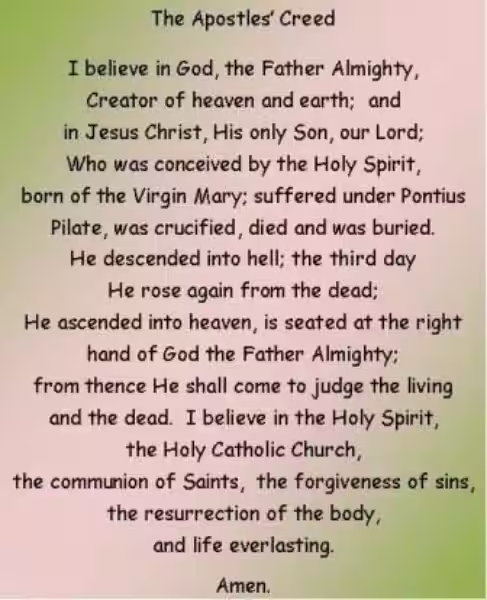
Catholics believe in one God who exists as a Trinity: the Father, the Son (Jesus Christ), and the Holy Spirit. They believe Jesus Christ is the Son of God, who became human, died for our sins, and rose again. Key beliefs include the inspiration of the Bible, the importance of sacraments (like Baptism, Eucharist, and Reconciliation) as channels of God’s grace, the communion of saints, and the resurrection of the body and life everlasting.
What is the role of the Pope?
The Pope is the Bishop of Rome and the visible head of the Catholic Church on Earth. Catholics believe he is the successor of Saint Peter, whom Jesus appointed as the leader of his apostles. The Pope has supreme authority in teaching, governing, and sanctifying the Church.
What are the Sacraments?
Sacraments are outward signs instituted by Christ to give grace. The Catholic Church recognizes seven sacraments: Baptism, Confirmation, the Eucharist, Penance (Reconciliation), Anointing of the Sick, Holy Orders, and Matrimony. These sacraments are seen as tangible means through which God’s love and presence are communicated to believers.
What is the Eucharist?
The Eucharist, also known as Holy Communion, is the central sacrament of the Catholic faith. Catholics believe that during Mass, the bread and wine consecrated by the priest truly become the Body and Blood of Jesus Christ (this is known as transubstantiation). Receiving the Eucharist is seen as a profound spiritual communion with Christ and with fellow believers.
What is the Bible in Catholicism?
The Bible is considered the inspired Word of God. Catholics believe it is a collection of sacred books that reveal God’s plan for salvation. The Catholic Bible includes both the Old Testament and the New Testament, with the latter focusing on the life and teachings of Jesus Christ and the early Church.
What is the role of Mary, the Mother of Jesus?
Catholics hold Mary in high esteem as the Mother of God. She is venerated as the holiest of all saints, the Mother of the Church, and a powerful intercessor. Key Marian dogmas include her Immaculate Conception (being conceived without original sin) and her Assumption into heaven.
What is the significance of prayer in Catholicism?
Prayer is essential for a Catholic’s relationship with God. It encompasses various forms, including vocal prayer, meditation, and contemplative prayer. Catholics pray to God, Jesus, and the Holy Spirit, and also ask saints and Mary to pray for them (intercessory prayer).
How does one become a Catholic?
Becoming a Catholic typically involves a process of formation and instruction called the Rite of Christian Initiation of Adults (RCIA). This process includes learning about Catholic teachings, participating in church life, and receiving the sacraments of Baptism, Confirmation, and Eucharist.
What is Catholic social teaching?
Catholic social teaching is a body of doctrine developed by the Church on matters of social justice, human dignity, and the common good. It emphasizes principles such as the dignity of the human person, the common good, solidarity, and the preferential option for the poor and vulnerable, guiding Catholics on how to live out their faith in the world.