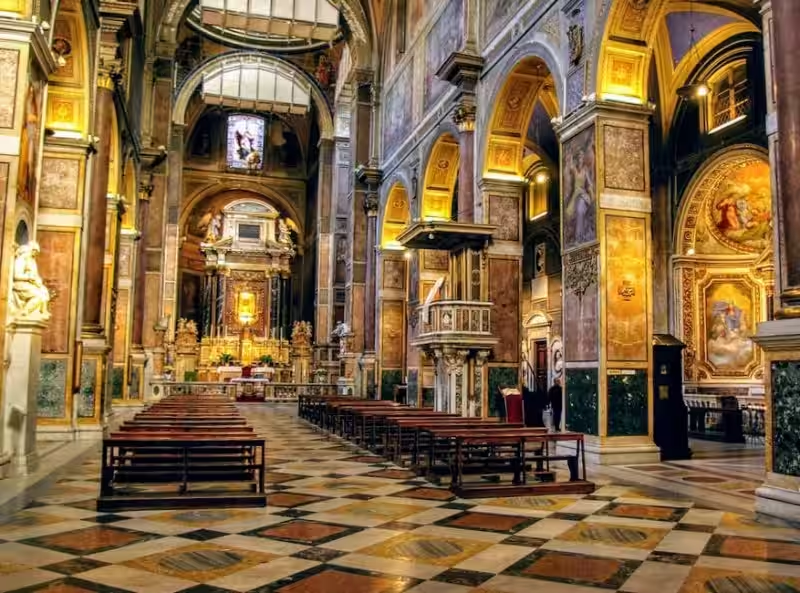
From the awe-inspiring frescoes in ancient cathedrals to the haunting melodies of sacred hymns, art has always held a profound connection with religion. It transcends mere decoration, acting as a powerful conduit for spiritual experience, a visual and auditory language that speaks directly to the soul. This article explores the concept of artistic proofs – how art, in its myriad forms, can serve as compelling evidence, not in a scientific sense, but in its capacity to evoke, inspire, and affirm religious belief. We’ll delve into how these artistic expressions can shape our understanding of the divine, foster devotion, and offer deeply personal encounters with the sacred, making faith not just a matter of doctrine, but a tangible, felt reality.
For centuries, artists have grappled with the ineffable, striving to capture the essence of the divine and man’s relationship with it. Their creations, whether sculpted from stone, painted on canvas, or woven into narrative, become artistic proofs of a spiritual dimension, offering glimpses into truths that words alone might struggle to convey. These proofs are not about logical deduction, but about emotional resonance, about the way a piece of art can stir something deep within us, prompting introspection, wonder, and a sense of connection to something larger than ourselves. We often find ourselves drawn to religious art not because we are intellectually convinced by its message, but because it touches us on a visceral level, bypassing the rational mind and speaking directly to our hearts.
The Visual Language of the Divine: Iconography and Symbolism
One of the most potent ways art functions as an artistic proof in religion is through its rich vocabulary of iconography and symbolism. These visual cues are not arbitrary; they are carefully chosen elements imbued with layers of meaning, painstakingly developed over generations of religious tradition. Think of the halo around a saint’s head, signifying their holiness and divine favor, or the lamb, a universal symbol of Christ’s sacrifice. Each symbol acts as a shorthand, a visual mnemonic that instantly communicates complex theological concepts to the faithful, often more effectively than lengthy sermons.
Consider the enduring power of the crucifix. It is not merely a depiction of a historical event; it is a potent artistic proof of sacrifice, redemption, and divine love. The agony etched onto Christ’s face, the outstretched arms, the stark simplicity of the form – all these elements work in concert to evoke empathy and contemplation. Similarly, in Buddhism, the lotus flower, rising unstained from muddy waters, serves as a powerful artistic proof of enlightenment and spiritual purity, a visual metaphor that resonates deeply with practitioners seeking to overcome worldly defilements.
Icons as Windows to the Sacred
In Orthodox Christianity, icons are far more than just religious paintings; they are considered artistic proofs that act as “windows to the divine.” These sacred images are not meant to be worshipped in themselves, but to facilitate prayer and communion with the holy figures they represent. The meticulous, often stylized, depiction of Christ, the Virgin Mary, or saints is designed to transcend earthly realism and point towards a spiritual reality. The use of gold leaf, for example, symbolizes the uncreated light of God, and the frontal, unblinking gaze of the figures is intended to engage the viewer directly, fostering a sense of presence and spiritual dialogue.
The creation of an icon is itself a prayerful act, adhering to strict canons and theological principles. This dedication to tradition and spiritual intent imbues the icon with a palpable sense of sacredness. When a believer gazes upon an icon, they are not simply looking at paint and wood; they are engaging with a sacred tradition, an artistic proof that has guided and inspired countless generations. The experience can be deeply personal, a moment of quiet connection where the earthly and divine seem to converge, offering solace, guidance, and affirmation of faith.
Music and the Evocation of Spiritual States
While visual art offers tangible artistic proofs of religious belief, music possesses an almost unparalleled ability to bypass intellectual filters and directly access our emotional and spiritual core. The soaring melodies of a Gregorian chant, the thunderous power of a Bach cantata, or the heartfelt lyrics of a gospel hymn can evoke profound feelings of reverence, awe, and devotion. Music has a unique capacity to unite a congregation, to create a shared emotional landscape that fosters a sense of community and collective worship.
Think about the experience of singing hymns in a church or temple. The shared act of raising your voice in song, harmonizing with others, often transforms a group of individuals into a unified spiritual body. This collective experience can be a powerful artistic proof of faith, demonstrating the shared values and beliefs that bind them together. The vibrations of the music, the rhythmic pulse, and the evocative lyrics can create a palpable sense of the sacred, leading to moments of profound spiritual insight and emotional catharsis for many.
The Power of Sacred Choirs and Hymns
Sacred choirs, with their meticulously trained voices and precise harmonies, are masters at creating an immersive spiritual atmosphere. Their performances are not mere concerts; they are carefully crafted artistic proofs designed to elevate the listener’s spirit. The intricate counterpoint in a Renaissance motet, for instance, can be seen as a sonic representation of divine order and complexity, while a simple, heartfelt hymn can evoke a profound sense of personal connection to the divine. The sheer power and beauty of the human voice raised in sacred song can be an overwhelming experience, leading to tears, moments of deep reflection, and renewed commitment to one’s faith.
Furthermore, the very act of composing and performing sacred music is often understood as an act of worship in itself. The composer, through their musical creation, offers a unique artistic proof of their devotion and understanding of religious tenets. The performers, by bringing this music to life, become conduits for that devotion, sharing it with an audience in a way that words alone cannot achieve. This shared experience, this sonic journey into the sacred, is a testament to the enduring power of music as a spiritual force.
Narrative Art and the Reinforcement of Belief
Beyond static images and melodies, narrative art in its various forms – from illuminated manuscripts and stained-glass windows to epic poems and religious plays – serves as a crucial artistic proof by weaving compelling stories that reinforce religious beliefs and moral teachings. These narratives provide relatable human experiences within a divine framework, making abstract theological concepts accessible and memorable for believers.
Imagine the visual storytelling of stained-glass windows in medieval cathedrals. These vibrant artworks were not just decorative; they were the “Bibles of the poor,” translating complex biblical narratives into a language that everyone, regardless of literacy, could understand. The stories of creation, the life of Christ, and the lives of saints were vividly depicted, serving as constant visual reminders of core tenets and inspiring moral conduct. Each panel, a carefully crafted artistic proof, contributed to a larger, overarching narrative that shaped the spiritual understanding of the community.
Literature and Theatre as Spiritual Testaments
Religious literature, from ancient scriptures to modern devotional poetry, offers profound artistic proofs of faith through the power of language and storytelling. The parables of Jesus, for example, are simple yet profound narratives that use everyday situations to convey deep spiritual truths. These stories are so effective because they resonate with our own human experiences, making the divine message relatable and actionable. Similarly, epic poems like Dante Alighieri’s “Divine Comedy” offer a detailed, imaginative journey through the afterlife, serving as a powerful artistic proof of theological concepts and moral consequences.
Religious theatre also plays a significant role in presenting faith as a living, breathing experience. Passion plays, for instance, reenact the crucifixion of Christ with dramatic fervor, allowing audiences to connect with the suffering and sacrifice on a deeply emotional level. These performances are not just historical retellings; they are potent artistic proofs that aim to inspire awe, repentance, and renewed commitment to faith. By immersing the audience in the drama of salvation, these theatrical productions offer a powerful and memorable affirmation of religious narratives and their enduring significance.
The Experiential Nature of Artistic Proofs
Ultimately, the power of artistic proofs in religion lies not in their logical validity but in their experiential nature. They offer a path to faith that is deeply personal, intuitive, and emotional. While intellectual assent is important, it is often through the encounter with beauty, harmony, and compelling narrative that belief is truly stirred and sustained. These artistic expressions provide tangible manifestations of the intangible, allowing us to feel, see, and hear the divine in ways that intellectual arguments alone cannot achieve.
Consider the feeling of awe you might experience standing before Michelangelo’s David, contemplating its perfect form and the implied power within. This is an artistic proof of human potential, yes, but for many, it also evokes a sense of the divine spark inherent in creation. Or the profound sense of peace that can wash over you while listening to a meditative chant. These are not intellectual proofs; they are deeply felt experiences that can solidify, deepen, and even awaken faith. The lasting impact of religious art lies in its ability to invite us into a personal dialogue with the sacred, leaving an indelible mark on our spiritual journey.
Frequently Asked Questions about Artistic Proofs and Religion
What are artistic proofs in the context of religion?
Artistic proofs, in a religious context, refer to the ways in which art (visual, auditory, performative, etc.) can be used to convey, reinforce, or challenge religious beliefs, doctrines, and experiences. They are not formal logical arguments but rather persuasive appeals to emotion, imagination, and intuition that can lead individuals to faith or deepen their existing religious commitment.
How does art serve as proof for religious claims?
Art can serve as proof by:
* Illustrating abstract concepts: Visual representations of divine beings, historical religious events, or spiritual states can make them more tangible and understandable.
* Evoking emotional connection: Music, hymns, stained glass windows, and devotional imagery are designed to stir feelings of awe, reverence, devotion, or even empathy, which can be interpreted as evidence of a transcendent reality.
* Creating shared experience: Communal art forms like liturgy, congregational singing, or ritualistic performances foster a sense of unity and shared belief, reinforcing the validity of the religious claims being expressed.
* Bearing witness to tradition: Ancient religious art or texts preserved and revered over centuries can be seen as testament to the enduring power and truth of the religious tradition they represent.
* Inspiring personal reflection and revelation: Art can prompt introspection, contemplation, and even moments of perceived spiritual insight, which the viewer or participant might interpret as direct evidence of religious truths.
Are artistic proofs considered valid arguments for religious belief?
The validity of artistic proofs is a matter of philosophical and theological debate. They are generally not considered formal logical or empirical proofs in the same way as scientific or philosophical arguments. Their persuasive power lies in their ability to resonate with an individual’s subjective experience, emotions, and cultural context. For believers, artistic expressions of faith can be profoundly convincing and serve as powerful personal “proofs.” For skeptics, they might be seen as beautiful but ultimately subjective interpretations or cultural artifacts.
Can art be used to challenge religious beliefs?
Yes, art can also be used to question, critique, or subvert religious doctrines and institutions. Satirical art, protest art, or art that explores themes of doubt and suffering can provoke theological reflection and lead individuals to re-examine their faith or adopt different perspectives. In this sense, art can also function as a form of “proof” against certain religious claims, by highlighting inconsistencies, injustices, or irrelevancies.
What are some examples of artistic proofs in different religions?
Christianity: Stained glass windows depicting biblical narratives, devotional paintings of saints, Gregorian chant, cathedral architecture, and passion plays.
Islam: Intricate geometric patterns and calligraphy in mosques, Sufi music and dance (Sema), and illuminated manuscripts of the Quran.
Buddhism: Mandalas, thangkas (scroll paintings), Buddhist statues, chanting, and temple architecture.
Hinduism: Elaborate temple sculptures depicting deities and myths, classical Indian dance and music, and devotional poetry (bhajans).
Judaism: Synagogue architecture, liturgical music (nigunim), and illuminated Hebrew manuscripts.