The journey of a man is often marked by questions, profound inquiries into purpose, morality, and the very fabric of existence. While the world bombards us with fleeting trends and superficial advice, there exists a deeper wellspring of wisdom, readily accessible through the pages of books that all men should read, particularly those grappling with the spiritual and religious dimensions of life. These are not mere historical artifacts; they are living testaments to human experience, offering guidance, solace, and a framework for understanding our place in the universe. This article aims to illuminate some of these cornerstone texts, not as prescriptions for dogma, but as invitations to explore diverse perspectives and enrich your inner landscape.
Embarking on this intellectual and spiritual exploration can feel daunting, especially when faced with a vast ocean of religious literature. However, approaching these texts with curiosity and an open mind can transform the experience from a chore into a rewarding adventure. Think of it like learning a new skill; the initial stages might require effort, but the rewards of mastery and understanding are immeasurable. These religious books are not meant to be passively consumed; they are catalysts for introspection and growth, prompting us to examine our own beliefs and cultivate a more meaningful existence.
Foundations of Faith: Ancient Wisdom for Contemporary Lives
The bedrock of many spiritual traditions lies in ancient texts, weathered by time but unwaveringly relevant. These foundational works offer timeless insights into human nature, ethical conduct, and the search for divine connection. They speak to universal human experiences, from joy and sorrow to love and loss, providing a rich tapestry of narratives and teachings that have shaped civilizations and continue to guide individuals.
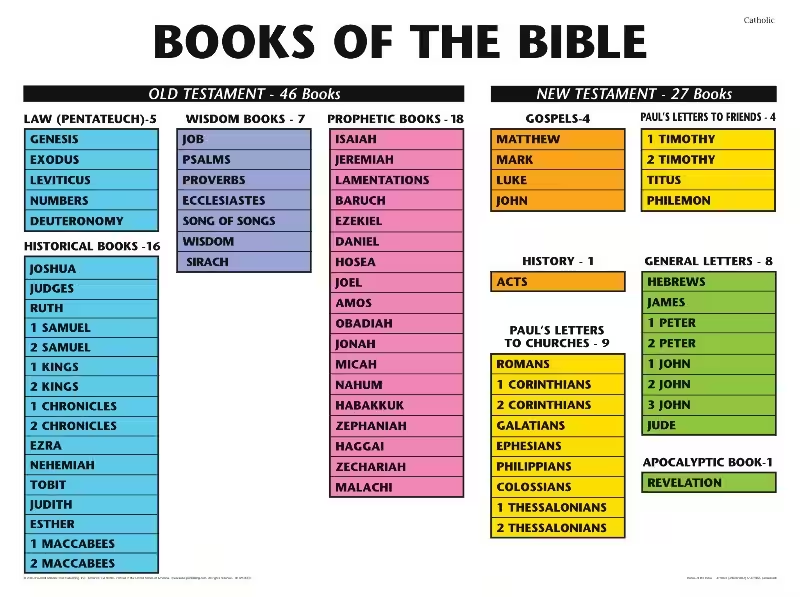
One such foundational text, essential reading for any man seeking spiritual depth, is the Bible. Beyond its religious significance, it’s a masterpiece of literature, history, and ethical philosophy. From the creation narratives in Genesis, which offer profound reflections on beginnings and purpose, to the wisdom literature of Proverbs, brimming with practical advice for living a virtuous life, the Bible presents a complex and compelling portrait of humanity’s relationship with the divine and with itself. Consider the parables of Jesus; they are simple yet profound stories that illustrate complex moral and spiritual truths, making them accessible to all. The Psalms, a collection of songs and poems, offer an unfiltered expression of human emotion, from despair to exultation, providing a powerful mirror to our own inner lives.
Another indispensable collection of ancient wisdom is the Quran. For billions, it is the literal word of God, a guide to life, morality, and spiritual enlightenment. Its teachings emphasize submission to the divine will, compassion, justice, and the importance of community. The Quran’s verses, rich in poetic language and profound meaning, offer a comprehensive framework for living a righteous life, addressing everything from personal conduct to social responsibility. Reading the Quran is not just an act of religious devotion; it’s an engagement with a profoundly influential cultural and philosophical document that has shaped the course of history. Understanding its central tenets can provide invaluable context for understanding a significant portion of the world’s population and a deeper appreciation for diverse faith traditions.
Eastern Philosophies: Pathways to Inner Peace and Understanding
Beyond the Abrahamic traditions, the East has gifted the world with profound philosophical and spiritual systems that offer alternative, yet often complementary, paths to understanding existence. These traditions frequently emphasize internal exploration, mindfulness, and the interconnectedness of all things. They provide practical tools and conceptual frameworks for navigating the complexities of life with greater equanimity and wisdom.
The Bhagavad Gita stands as a jewel of Hindu philosophy and a truly transformative read. This epic dialogue between Prince Arjuna and Lord Krishna, his charioteer and divine guide, delves into duty, destiny, the nature of reality, and the path to spiritual liberation. It explores concepts like karma (action and its consequences), dharma (righteous duty), and moksha (liberation from the cycle of rebirth). The Gita’s teachings are remarkably practical, offering guidance on how to live a purposeful life amidst the chaos of the world, emphasizing the importance of acting without attachment to results. For a man facing difficult decisions or feeling overwhelmed by life’s pressures, the Gita offers a powerful perspective on finding inner strength and clarity.
Similarly, the Tao Te Ching, attributed to the ancient Chinese philosopher Lao Tzu, presents a unique and subtle wisdom. This slim volume is a masterclass in living in harmony with the Tao, the natural order of the universe. It advocates for simplicity, humility, spontaneity, and the power of “wu wei” (non-action or effortless action). The Tao Te Ching challenges conventional notions of control and ambition, suggesting that true power lies in yielding and flowing with the natural currents of life. Its cryptic yet profound verses offer a refreshing antidote to the constant striving that often characterizes modern masculinity. For men seeking a more balanced and less stressful approach to life, the Tao Te Ching offers a gentle yet profound reorientation.
Modern Reflections and Personal Journeys: Contemporary Voices on Faith
While ancient texts provide the bedrock, contemporary voices offer fresh perspectives and relatable narratives that bridge the gap between timeless wisdom and the challenges of modern life. These books, often written with a personal touch, explore the ongoing journey of faith, doubt, and spiritual growth in an ever-changing world. They demonstrate that the quest for meaning is not confined to the past but is a vibrant, ongoing human endeavor.
Alan Watts, a prolific philosopher and writer, offers brilliant and accessible introductions to Eastern philosophies that resonate deeply with a modern audience. His works, such as “The Wisdom of Insecurity”, explore the human tendency to worry about the future and regret the past, advocating for a more present-moment awareness. Watts masterfully deconstructs societal pressures and the ego’s relentless pursuit of validation, urging readers to embrace the present and find peace in the unfolding of life. His ability to translate complex philosophical ideas into clear, engaging prose makes him an ideal guide for men grappling with existential questions and seeking a less anxious way of being.
For men navigating the intersection of faith and doubt, C.S. Lewis’s “Mere Christianity” is an essential read, regardless of one’s religious background. Lewis, a renowned scholar and author, presents a logical and compelling defense of the core tenets of Christianity, but his arguments are framed in a way that appeals to reason and common sense. He addresses fundamental questions about morality, the nature of God, and the problem of suffering with intellectual rigor and profound empathy. Even for those who don’t identify as Christian, Lewis’s exploration of universal moral principles and the human yearning for transcendence offers valuable insights into the nature of belief and the search for meaning. His work is a testament to the power of thoughtful inquiry in understanding faith.
The Ongoing Conversation: Embracing the Journey of Spiritual Discovery
Ultimately, the purpose of engaging with these books that all men should read concerning religion is not to arrive at a definitive answer, but to embark on a lifelong journey of spiritual discovery. Each text offers a unique lens through which to view our existence, challenging our assumptions, expanding our understanding, and fostering a deeper connection to ourselves, others, and the universe. The beauty of these works lies in their capacity for continuous revelation, offering new insights with each re-reading and as our own lives evolve.
Approaching these texts with humility and a willingness to learn is paramount. There will be passages that resonate deeply, and others that may challenge your current beliefs. This is not a sign of failure, but an indication that you are engaging with the material on a meaningful level. Think of it as a conversation across time and cultures, where the wisdom of the ages is offered for your consideration. Consider keeping a journal to jot down your thoughts, questions, and any shifts in perspective that emerge. This active engagement will deepen your understanding and make the learning process far more rewarding.
The exploration of religious and philosophical texts is a profoundly personal endeavor, and there is no single “right” way to approach it. Whether you delve into the epic narratives of ancient scriptures, the subtle wisdom of Eastern philosophies, or the reasoned arguments of modern thinkers, the act of seeking knowledge and understanding is itself a spiritual practice. These books offer not just information, but transformation, inviting men to cultivate greater wisdom, compassion, and a more profound sense of purpose in their lives. The journey is ongoing, and the rewards are immeasurable.
Frequently Asked Questions: Books Men Should Read and Religion
What are some foundational books that all men should consider reading?
While “essential” reading is subjective and can vary greatly by individual interests, here are a few titles that offer broad insights into history, philosophy, and human nature:
* “Meditations” by Marcus Aurelius: A collection of personal writings by the Roman Emperor, offering timeless stoic wisdom on virtue, reason, and living a good life.
* “The Odyssey” by Homer: An epic tale of adventure, perseverance, and the journey home, exploring themes of courage, loyalty, and the human condition.
* “Man’s Search for Meaning” by Viktor Frankl: A psychiatrist’s account of his experiences in Nazi concentration camps and his development of logotherapy, emphasizing the human drive for purpose.
* “Sapiens: A Brief History of Humankind” by Yuval Noah Harari: A sweeping overview of human history from the Stone Age to the present, examining how Homo sapiens came to dominate the planet.
* “The Art of War” by Sun Tzu: An ancient Chinese military treatise that offers strategic principles applicable to both conflict and everyday life.
What are different perspectives on religion that men might explore?
Exploring religion can involve understanding various theological viewpoints, historical contexts, and philosophical arguments. Here are some avenues for exploration:
* Monotheistic Religions: Understanding the core tenets of Judaism, Christianity, and Islam, which share Abrahamic roots and a belief in one God, but differ in their specific doctrines, scriptures, and practices.
* Eastern Religions: Examining the philosophies and practices of Hinduism, Buddhism, Taoism, and Confucianism, which offer diverse approaches to spirituality, ethics, and the nature of reality.
* Atheism and Agnosticism: Exploring philosophical arguments against the existence of God (atheism) and the view that the existence of God is unknowable (agnosticism).
* Secular Humanism: Understanding a worldview that emphasizes reason, ethics, and justice, without recourse to supernatural beliefs, focusing on human agency and responsibility.
* Comparative Religion: Studying the commonalities and differences among various religious traditions to gain a broader understanding of human spiritual and cultural development.
How can reading about different religions be beneficial for men?
Engaging with diverse religious texts and philosophies can foster intellectual growth, empathy, and a deeper understanding of the world:
* Broadened Worldview: Exposure to different belief systems can challenge preconceived notions and expand one’s perspective on morality, meaning, and existence.
* Enhanced Critical Thinking: Analyzing religious arguments and historical narratives encourages critical evaluation of evidence and reasoning.
* Cultural Understanding: Religion plays a significant role in shaping cultures, so understanding its various forms can lead to better comprehension of different societies and their values.
* Self-Reflection: Examining the diverse ways humans have sought answers to existential questions can prompt introspection about one’s own beliefs and values.
* Improved Dialogue: Knowledge of different religious traditions can facilitate more informed and respectful conversations with people from diverse backgrounds.