In the grand tapestry of human experience, we often find ourselves seeking direction. We yearn for certainty, for a guiding hand to lead us through life’s labyrinthine paths. For many, religion offers a structured framework, a set of doctrines and traditions that provide comfort and a sense of belonging. Yet, there’s a deeper, more intimate form of guidance available, one that transcends mere adherence to rules and rituals: the profound, personal leading of the Holy Spirit. This article explores the transformative power of allowing the Holy Spirit to be our compass, contrasting it with a life solely governed by external religious structures.
Think of your faith journey. Have you ever felt a nudge, a quiet conviction, or an undeniable inner pull towards a certain decision or action, even if it wasn’t explicitly laid out in your religious texts? This is often the whisper of the Holy Spirit, a divine intelligence at work within us. While religious frameworks are valuable, they can sometimes become rigid, leading to a focus on outward performance rather than inward transformation. The Bible speaks of this distinction: “For the letter kills, but the Spirit gives life” (2 Corinthians 3:6). This isn’t to dismiss the importance of scripture, but to emphasize that the living application of its truth, empowered by the Spirit, is where true vitality lies.
Religion, in its essence, provides a moral compass and a community for believers. It offers guidelines, historical narratives, and established practices that have shaped societies for centuries. These can be immensely beneficial, offering a foundation for understanding God and living a righteous life. For instance, the Ten Commandments, a cornerstone of many religions, provide clear boundaries and ethical principles. However, when our faith becomes solely about ticking boxes and adhering to regulations, we risk missing the heart of the matter.
Consider the Pharisees in Jesus’ time. They meticulously followed every jot and tittle of the Law, yet Jesus often rebuked them for their hypocrisy. He pointed out that their outward observance masked an inward lack of love and understanding. They were focused on the letter of the law, but missed its spirit. This demonstrates that a religion without the animating power of the Holy Spirit can become a hollow shell, a performance rather than a partnership with the divine.
When Rules Become a Cage, Not a Guide
Imagine a gardener who meticulously prunes every single leaf on a plant, ensuring it perfectly conforms to a pre-determined shape. While the gardener might achieve a specific aesthetic, they could inadvertently stifle the plant’s growth and prevent it from producing the most vibrant blooms. Similarly, when we rigidly adhere to religious rules without seeking the Spirit’s direction, our spiritual lives can become stunted. We might avoid certain actions for fear of breaking a rule, but not because we’ve been internally convinced of a better way.
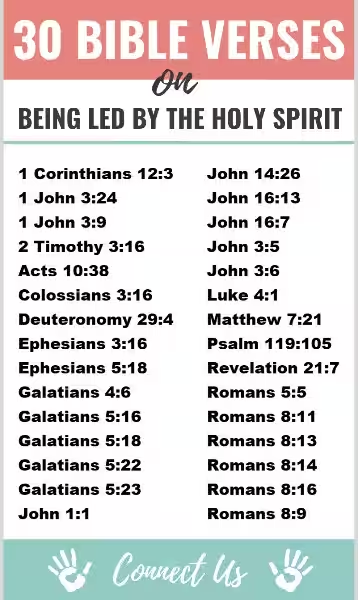
The Bible encourages us to be sensitive to the Spirit’s leading. Jesus Himself said, “But when he, the Spirit of truth, comes, he will guide you into all the truth” (John 16:13). This promise suggests a dynamic, ongoing relationship, not a static set of pronouncements. True spiritual maturity isn’t just knowing what the rules are; it’s understanding why they exist and how to live them out with love, grace, and wisdom, prompted by the Spirit.
The Transformative Power of the Holy Spirit’s Guidance
The Holy Spirit is far more than a fleeting feeling or an occasional impulse. He is the very presence of God dwelling within believers, actively working to sanctify, empower, and guide us. This guidance is personal, intuitive, and deeply rooted in God’s character and will. It’s about discerning God’s heart in every situation, rather than simply knowing what is “allowed” or “forbidden.”
The Apostle Paul frequently spoke of this inner leading. He wrote in Romans 8:14, “For those who are led by the Spirit of God are the children of God.” This statement is profound. It implies that active, Spirit-led living is a hallmark of genuine sonship and daughtership. It’s a continuous conversation, a partnership where we learn to discern God’s voice amidst the noise of our own thoughts and the world’s demands.
Experiencing God’s “Nudges” and “Pulls”
Think about a time you felt a strong urge to pray for someone you hadn’t spoken to in years, or a sudden conviction to offer help to a stranger. These aren’t random occurrences; they are often the Holy Spirit orchestrating divine encounters and prompting us to act in love. This is far more impactful than simply attending a religious service. Jesus Himself promised, “But the Advocate, the Holy Spirit whom the Father will send in my name, will teach you all things and will remind you of everything I have said to you” (John 14:26).
This teaching and reminding are ongoing. The Spirit helps us understand scripture in a deeper, more applicable way. He convicts us of sin, not to condemn, but to lead us to repentance and freedom. He empowers us to live lives that are not only outwardly moral but inwardly transformed, reflecting the character of Christ. This internal transformation is the true fruit of Spirit-led living.
So, how do we cultivate this sensitivity to the Holy Spirit’s voice? It’s a skill that develops through practice, prayer, and a willingness to listen. Just as you learn to recognize the voice of a loved one in a crowd, you can learn to distinguish the Spirit’s gentle promptings from your own thoughts and desires.
Here are some practical ways to foster this connection:
Prioritize Prayer: Engage in regular, heartfelt prayer, asking the Spirit to guide you. Don’t just recite words; listen for His response.
Immerse Yourself in Scripture: The Word of God is the Spirit’s primary tool for communication. As you read, ask Him to reveal its truth to your heart. Meditate on His Word.
Seek Stillness: In our often-noisy world, creating moments of quiet is crucial. Find moments of silence to be present with God and receptive to His voice.
Obey Promptings: When you feel a nudge to do something, even if it seems small or inconvenient, act on it. Obedience builds trust and opens the door for further guidance.
Test the Spirits: While the Holy Spirit’s leading is always consistent with God’s character, the Bible warns us to “test the spirits to see whether they are from God” (1 John 4:1). His guidance will never contradict scripture or lead you into sin.
Developing this intimate relationship with the Holy Spirit transforms our faith from a set of external obligations into a vibrant, dynamic journey. It allows us to navigate life with divine wisdom and supernatural empowerment, moving beyond the limitations of mere religious observance into the fullness of God’s purpose for our lives. This is not about abandoning religious traditions, but about infusing them with the life-giving power of the Spirit, ensuring our faith is both deeply rooted and dynamically alive.
Frequently Asked Questions: Being Led by the Holy Spirit vs. Religion
What is the difference between being led by the Holy Spirit and following a religion?
The primary difference lies in the source and nature of guidance. Being led by the Holy Spirit is a personal, internal, and dynamic experience of divine direction, conviction, and empowerment, rooted in a relationship with God. Religion, on the other hand, is typically a structured system of beliefs, practices, and doctrines often codified in texts and followed through communal adherence and external rules. While religion can provide a framework for spirituality, the Holy Spirit’s leading is a direct, ongoing communication from God.
Can I be led by the Holy Spirit and still participate in organized religion?
Yes, absolutely. Many people find that their personal experience of the Holy Spirit’s leading informs and enriches their participation in religious communities. Religion can provide valuable community, shared teachings, and a context for spiritual growth. The Holy Spirit can guide individuals to discern which aspects of religious practice are beneficial and aligned with God’s will, and which might be less so.
How do I know if I am being led by the Holy Spirit?
Discernment is key. Signs of being led by the Holy Spirit often include a sense of peace concerning a decision or direction, a conviction that aligns with biblical principles and God’s character (love, truth, justice), a prompting towards good deeds or service, and a deepening of faith and relationship with God. It’s a gentle but firm inner voice or impression that draws you closer to God’s purposes.
Is religious doctrine a reliable guide if I am seeking the Holy Spirit’s leading?
Religious doctrine can be a valuable guide, offering wisdom and historical understanding of God’s interactions with humanity. However, it should be viewed as a framework rather than an absolute endpoint. The Holy Spirit can help you interpret doctrine in a way that is relevant to your life and situation, and may even lead you to understand or apply biblical truths in new ways. It’s important to test all teachings, including doctrines, against the character of God and the overall message of scripture, illuminated by the Spirit.
Does being led by the Holy Spirit mean I can ignore religious rules or traditions?
Not necessarily. The Holy Spirit often leads individuals to fulfill the spirit of the law rather than just the letter. This means that while religious rules and traditions might be followed, the motivation and understanding behind them are transformed by the Spirit. Sometimes, the Holy Spirit may lead someone to step outside of a particular religious tradition or to challenge a tradition that no longer aligns with God’s love and truth, but this is usually done with discernment and a focus on furthering God’s kingdom.
How does the Holy Spirit’s leading relate to biblical scripture?
The Holy Spirit is often referred to as the “Spirit of Truth” and is understood to be the author of scripture. Therefore, the Holy Spirit’s leading will always be consistent with and confirm the truths found in the Bible. Scripture provides the foundational principles and narrative of God’s redemptive plan, while the Holy Spirit applies these truths to your personal life and guides you in their application. The Holy Spirit illuminates scripture, helping you understand its deeper meaning and how to live it out.