For millennia, the Book of Psalms has served as a wellspring of spiritual nourishment, emotional expression, and historical testament for people of faith across diverse traditions. These ancient poems, often referred to as historical psalms, are not mere relics of the past; they are living, breathing narratives that connect us to the profound experiences of our ancestors, offering guidance, comfort, and a tangible link to the unfolding story of religion. Understanding these psalms allows us to delve deeper into the human journey of faith, grappling with joy, sorrow, doubt, and unwavering hope.
The very essence of historical psalms lies in their ability to capture timeless human emotions and spiritual struggles within a specific historical context. They are songs of celebration following miraculous deliverance, laments in times of profound suffering, and declarations of trust in God’s enduring faithfulness. By exploring their origins and meanings, we gain invaluable insights into how individuals and communities navigated their relationship with the divine, offering a rich tapestry of religious expression that continues to resonate powerfully today.
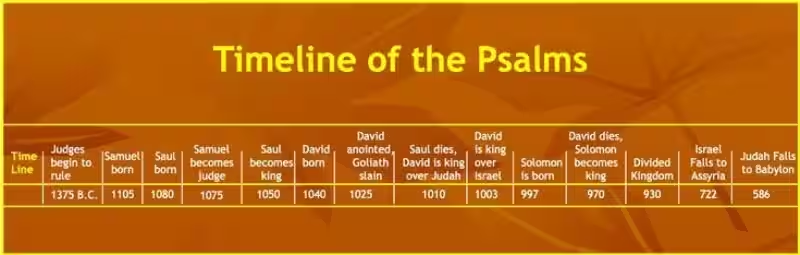
The collection of psalms attributed to various authors, most notably King David, offers a unique window into the religious landscape of ancient Israel. These weren’t abstract theological treatises; they were the heartbeats of a people living out their faith in real-time. When we read psalms that recount historical events, such as the Exodus or the establishment of the monarchy, we are engaging with the very songs that sustained their faith during pivotal moments. These historical psalms acted as communal memory keepers, reinforcing their identity and their covenant with God.
Consider, for instance, psalms celebrating God’s mighty acts in leading the Israelites out of Egypt. These narratives, woven into poetic verse, served as powerful reminders of God’s power and commitment. They were sung during festivals and times of reflection, ensuring that the lessons of the past were not forgotten. This practice of embedding historical events within sacred song is a crucial aspect of how religion is transmitted and internalized across generations, making the historical psalms invaluable religious artifacts.
Psalms of Victory and Deliverance: Remembering God’s Hand
One of the most compelling categories within the historical psalms comprises those that celebrate divine intervention and miraculous rescues. These songs are filled with exultant praise, recounting how God delivered His people from formidable enemies, natural disasters, or periods of profound oppression. They are testaments to unwavering trust, offering a powerful reminder that throughout history, individuals and communities have found strength in the belief that God is actively involved in their lives, offering protection and guidance.
Imagine a community facing an overwhelming army. The songs they would sing, imbued with the spirit of psalms like Psalm 18 (“I love you, Lord, my strength!”) or Psalm 124 (“If the Lord had not been on our side…”), would serve not only as expressions of relief after victory but also as a profound act of faith during the struggle. These historical psalms provide a template for gratitude and remembrance, teaching us to acknowledge and celebrate God’s help in our own lives, no matter how big or small the challenges may seem. They are spiritual anthems for every victory, big or small.
Psalms of Lament and Trust: Navigating Troubled Times
However, the historical psalms are not solely about triumphant victories. They also offer profound solace and relatable expressions of sorrow, doubt, and despair. Many psalms are deeply personal laments, where individuals pour out their hearts to God in times of sickness, betrayal, or persecution. These are the psalms that resonate with us when we feel abandoned, misunderstood, or overwhelmed by life’s difficulties. They demonstrate that the religious journey is not always smooth but is often characterized by periods of intense struggle and questioning.
Psalms like Psalm 22 (“My God, my God, why have you forsaken me?”) or Psalm 130 (“Out of the depths I cry to you, Lord!”) are powerful examples of how ancient believers articulated their pain to God. These expressions of raw emotion, far from being disrespectful, are seen as acts of profound faith, demonstrating a belief that even in our darkest moments, God is present and hears our cries. The act of voicing our struggles, as modelled in these historical psalms, can be incredibly cathartic and can strengthen our resolve to persevere, knowing that we are not alone in our suffering.
The Enduring Relevance of Historical Psalms in Modern Religion
The power of historical psalms extends far beyond their ancient origins. In contemporary religious practice, they continue to serve as vital tools for spiritual formation, communal worship, and personal reflection. Their timeless themes of love, loss, justice, and redemption speak to the human condition in every era, offering a universal language of faith that transcends cultural and temporal boundaries. For many, engaging with these ancient poems is like having a direct conversation with those who walked the path of faith before us.
Today, these psalms are recited, sung, and studied in synagogues, churches, and mosques around the world. They form the backbone of liturgical services, providing both a structure for worship and a rich source of theological reflection. Whether used in a formal setting or as part of a private devotional practice, the historical psalms offer a consistent source of spiritual grounding and a reminder of the enduring faithfulness of God throughout human history. They are a wellspring of wisdom, offering guidance for navigating the complexities of modern life.
Psalms as a Guide for Ethical Living and Social Justice
Beyond personal devotion, many historical psalms carry a strong message of social justice and ethical conduct. They call for fairness, compassion, and righteousness, often condemning oppression and advocating for the vulnerable. These psalms remind us that our faith is not meant to be lived in isolation but should actively engage with the world around us, striving for a more just and equitable society. The concept of “shalom”, encompassing peace, wholeness, and well-being, is a recurrent theme, urging believers to work for the betterment of all.
Psalms that speak out against injustice, such as Psalm 82 (“God presides in the heavenly court… Defend the weak and the fatherless; uphold the cause of the poor and the oppressed.”), serve as powerful calls to action for people of faith today. They challenge us to examine our own actions and to actively participate in creating a world where justice and compassion prevail. These historical psalms provide a biblical framework for social engagement, inspiring movements for change and encouraging individuals to be agents of good in their communities.
Psalms for Personal Spiritual Growth and Connection
For individuals seeking a deeper connection with the divine, the historical psalms offer an unparalleled resource. They provide a framework for expressing the full spectrum of human experience before God, from profound joy to deep sorrow, from utter dependence to unwavering trust. By internalizing the language and sentiments of these psalms, believers can develop a more nuanced and authentic relationship with their faith, learning to approach God with honesty and vulnerability.
Engaging with texts like Psalm 139 (“Search me, God, and know my heart…”) encourages introspection and self-awareness, fostering a deeper understanding of one’s own spiritual journey. The repetitive act of reading, reciting, or meditating on these historical psalms can cultivate a sense of spiritual discipline and create a sacred space for personal communion with God. They are not just ancient texts; they are living prayers that invite us to participate in a timeless dialogue of faith.
Conclusion: The Timeless Resonance of Historical Psalms
The historical psalms are far more than just ancient poetry; they are vibrant testaments to the enduring power of faith, the resilience of the human spirit, and the transformative nature of a relationship with the divine. They offer us a rich heritage of worship, a profound understanding of human emotion, and a compelling call to live lives of justice and compassion. By delving into these sacred verses, we connect with the echoes of faith that have shaped our world and discover a source of strength and inspiration that continues to resonate powerfully today.
In an age often characterized by uncertainty and rapid change, the historical psalms provide a stable anchor of spiritual truth. They remind us that the challenges we face are not new and that throughout history, individuals and communities have found solace, hope, and direction in their faith. The wisdom contained within these historical psalms is a gift, inviting us to engage with the deepest questions of life and to discover the profound peace that comes from trusting in something greater than ourselves.
Frequently Asked Questions about Historical Psalms
What are historical psalms?
Historical psalms are songs or poems found within the Book of Psalms in the Bible that recount significant events from Israel’s past. They often reflect on God’s actions in history, such as the Exodus, the wilderness wanderings, or the establishment of the monarchy, and offer theological interpretations of these events.
The primary purpose of historical psalms is to remind the people of Israel of God’s faithfulness and power as demonstrated throughout their history. They serve as a means of teaching, encouraging faith, and fostering corporate memory, reinforcing their identity as a people chosen and guided by God.
Can historical psalms be considered historical records?
While historical psalms draw upon historical events, they are not strictly narrative historical accounts in the modern sense. They are theological reflections and poetic interpretations of history, shaped by the faith and perspective of the psalmists. They offer insights into how ancient Israelites understood their past and its significance for their present and future.
What are some examples of historical psalms?
Some well-known examples of historical psalms include Psalm 78, which recounts God’s dealings with Israel from the Exodus to the time of David; Psalm 105, which praises God for His covenant promises and His deliverance of the Israelites from Egypt; and Psalm 106, which laments Israel’s unfaithfulness while acknowledging God’s persistent mercy.
How do historical psalms relate to the concept of religion?
Historical psalms are deeply intertwined with the concept of religion, specifically the religion of ancient Israel. They express core religious beliefs about God’s sovereignty, His covenant relationship with His people, His justice, and His mercy. They demonstrate how religious faith was expressed through remembering and celebrating God’s historical interventions.
What theological themes are prominent in historical psalms?
Key theological themes include God’s covenant faithfulness, His divine election of Israel, His power over creation and history, the consequences of obedience and disobedience, and the concept of divine redemption and deliverance. They often highlight the contrast between God’s steadfast love and Israel’s recurring sinfulness.
Do historical psalms offer a unique perspective on God?
Yes, historical psalms offer a unique perspective on God by portraying Him as an active participant in human history. They emphasize His long-suffering, His judgment, and His ultimate redemptive purposes, which are revealed through His interactions with His chosen people over centuries. This historical dimension is crucial to understanding the God of Israel.
How are historical psalms different from prophetic psalms or wisdom psalms?
While all psalms are religious in nature, historical psalms specifically focus on recounting and reflecting upon past divine actions. Prophetic psalms often convey divine messages or oracles for the present and future. Wisdom psalms offer guidance and instruction on living a righteous life, often through proverbs and reflections on life’s experiences. Historical psalms ground these religious concepts in the tangible events of Israel’s journey.