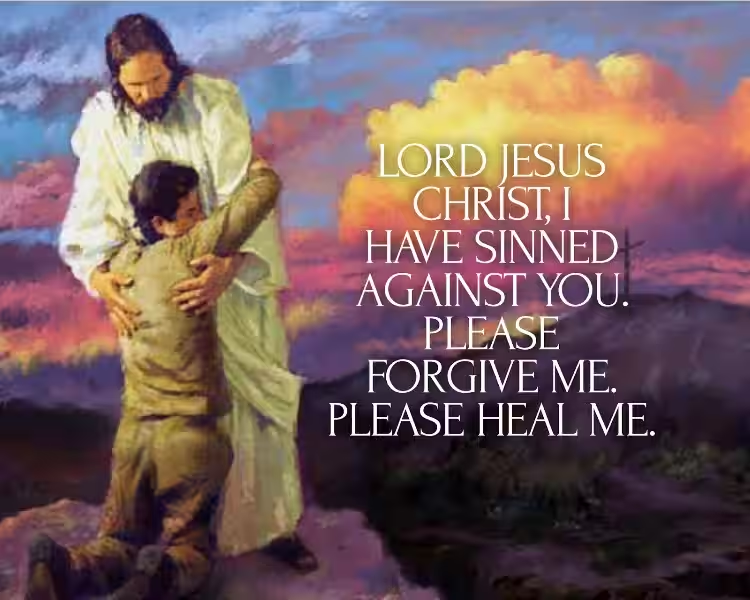
In the quiet of our lives, beneath the veneer of daily routines and outward composure, there often lies a profound internal dialogue. It’s a conversation with ourselves, with our conscience, and for many, with a higher power. This conversation frequently takes the form of a heartfelt plea, a raw and honest expression of our fallibility: “Lord, please forgive me for my sins.” This simple, yet potent, declaration is the cornerstone of repentance, a universal human yearning for grace and a pathway toward spiritual healing within the framework of religion.
Religion, in its myriad forms, offers a vast tapestry of beliefs and practices designed to guide individuals toward a life of righteousness and peace. At its core, however, lies the acknowledgment of imperfections – the stumbles, the misjudgments, the moments where we fall short of our ideals or the divine will. It is in these moments of introspection, when the weight of our actions settles upon us, that the cry, “Lord, please forgive me for my sins,” becomes a lifeline, a beacon of hope in the darkness of guilt.
Understanding the Weight of “Sins” in Religious Context
The concept of “sin” can often feel abstract or even overwhelming. In many religious traditions, a sin isn’t merely a mistake; it’s a departure from a divinely ordained path, an act that offends God and harms our spiritual well-being, and often, the well-being of others. This understanding is crucial because it elevates the plea, “Lord, please forgive me for my sins,” from a casual utterance to a deeply significant act of spiritual humility.
Consider the everyday actions that might lead to such a prayer. It could be a moment of impatience with a loved one, a harsh word spoken in anger, a deceitful thought, or even the neglect of a duty that we know we should perform. These are not necessarily grand transgressions, but rather the subtle erosions of our moral compass that, when left unaddressed, can lead to a gnawing sense of unease. The acknowledgment of these smaller failings, and the subsequent plea, “Lord, please forgive me for my sins,” is often the first step toward genuine spiritual growth and a renewed commitment to living a life aligned with faith.
Repentance is more than just saying the words; it’s a profound internal shift. When we genuinely utter “Lord, please forgive me for my sins,” we are not just seeking absolution; we are embarking on a journey of transformation. This journey involves acknowledging our wrongdoings, feeling remorse, and making a conscious decision to change our behavior. The power of this act lies in its ability to break the cycle of guilt and shame, allowing us to move forward with a clean slate and a renewed sense of purpose.
Think of it like this: if you spill ink on a clean page, the stain remains. Simply wishing it away won’t work. However, if you acknowledge the spill, understand its impact, and take steps to clean it up, you can then begin to write on a fresh part of the page, or even start a new one. The act of saying, “Lord, please forgive me for my sins,” is akin to that initial acknowledgment and the desire to rectify the situation. It opens the door for divine intervention and personal redirection, helping us to mend our spiritual pages.
The Act of Confession and its Religious Roots
Across various religions, the act of confession plays a vital role in the process of seeking forgiveness. Whether it’s through private prayer, communal worship, or a formal sacrament, confession is the courageous act of bringing our transgressions into the light. It is during these moments that the plea, “Lord, please forgive me for my sins,” takes on a tangible form, often accompanied by a sincere expression of regret and a commitment to amendment.
In the Catholic tradition, for instance, the Sacrament of Reconciliation involves confessing sins to a priest, who acts as an intermediary for God’s grace. In many Protestant denominations, confession is often a more personal and direct dialogue with God, where individuals lay bare their hearts and seek forgiveness. Regardless of the specific ritual, the underlying principle remains the same: acknowledging our faults and trusting in God’s mercy is the pathway to healing. The simple, yet profound, utterance of “Lord, please forgive me for my sins” is the essential first step in this sacred exchange.
Ultimately, the effectiveness of the plea, “Lord, please forgive me for my sins,” rests heavily on our faith in a merciful God. Religions universally teach that God is not a punitive judge waiting to condemn, but a loving parent who desires reconciliation. This divine mercy is the bedrock upon which our hope for forgiveness is built. Understanding this aspect of faith empowers us to approach God with confidence, knowing that our sincere plea for pardon will be heard and considered.
Imagine a child who has broken a family heirloom. While they may feel immense guilt, their hope for forgiveness comes from the knowledge that their parents love them and are willing to forgive them, especially if the child expresses genuine sorrow and a promise to be more careful. Similarly, our faith in God’s boundless love and willingness to forgive is what gives the prayer, “Lord, please forgive me for my sins,” its true power and transformative potential. It’s a testament to the belief that even in our fallen state, we are never beyond the reach of divine grace.
Frequently Asked Questions: Seeking Forgiveness for Sins
What does it mean to ask for forgiveness from God?
Asking for forgiveness from God is a sincere expression of remorse for wrongdoing, a recognition of one’s fallibility, and a plea for divine pardon and reconciliation. It’s an act of humility and faith, believing in God’s mercy and willingness to absolve those who genuinely repent.
Is asking for forgiveness a one-time event or an ongoing process?
For many religious traditions, seeking forgiveness is both a singular event and an ongoing process. While a profound act of confession and repentance can bring immediate peace, the journey of faith often involves continuous self-reflection, seeking to live a life aligned with divine will, and regularly seeking forgiveness for imperfections and lapses.
Why is forgiveness important in religion?
Forgiveness is a cornerstone of most religions as it reflects God’s love, mercy, and justice. It allows for spiritual cleansing, the mending of one’s relationship with the divine, and fosters a sense of hope and renewal. It also encourages individuals to extend forgiveness to others, promoting peace and reconciliation within communities.
What are the key elements of a sincere prayer for forgiveness?
A sincere prayer for forgiveness typically includes: acknowledging the sin or wrongdoing, expressing genuine remorse and sorrow, a commitment to turn away from the sin (repentance), and a request for God’s mercy and pardon. It’s often accompanied by faith in God’s ability to forgive.
Does God always forgive when asked?
Most religious teachings suggest that God’s forgiveness is abundant and available to those who truly repent. However, the emphasis is often on the sincerity of the repentance and the individual’s willingness to change their ways. It’s not simply a ritualistic utterance but a transformation of the heart and mind.
How does seeking forgiveness impact one’s relationship with God?
Seeking forgiveness is essential for maintaining and deepening one’s relationship with God. It removes the barriers created by sin, allowing for renewed communion, peace, and a stronger connection to the divine. It signifies a desire to align oneself with God’s will and purpose.
Are there specific rituals or practices associated with seeking forgiveness in different religions?
Yes, different religions have various practices. These can include: confession to a religious leader, specific prayers or supplications, acts of penance, fasting, acts of charity, and communal worship. The core intent remains the same: to express remorse and seek divine absolution.
What if I don’t feel forgiven?
Doubt and feelings of unworthiness can be common. In such cases, it’s often advised to focus on God’s promises of mercy, continue to pray and seek His presence, study scriptures that speak of forgiveness, and perhaps speak with a trusted spiritual advisor. Faith is often about trusting God’s word even when feelings fluctuate.