For centuries, the quest to understand the Bible has been a profound journey for countless individuals. Many seek a connection to the divine, a guide for life, and a deeper comprehension of their faith. This pursuit often leads to a crucial question: which Bible translation best reflects the original intent and meaning of the ancient texts? The answer, for many, lies in the pursuit of the most literal Bible translation. This isn’t about finding a translation that sounds archaic or difficult to read, but rather one that prioritizes faithfulness to the source text’s grammar, syntax, and vocabulary above all else.
Understanding the nuances of biblical translation is paramount for anyone serious about their religious journey. While some translations aim for readability and theological interpretation, others strive for an uncompromising adherence to the Hebrew and Greek originals. This dedication to literalness can unlock profound insights, allowing readers to engage with the text in a way that feels more immediate and authentic. It’s a journey that appeals to those who believe that in the most literal Bible translation, the unvarnished truth of scripture can be most clearly discovered.
Why Literalness Matters: Connecting with the Original Voice
The desire for a most literal Bible translation stems from a deep-seated respect for the original authors and the divine inspiration they conveyed. When translators prioritize literalness, they are essentially acting as transparent conduits, aiming to transmit the very words and sentence structures as closely as possible. This approach minimizes the interpretive lens that can be introduced by more dynamic or idiomatic translations, which often seek to convey the meaning by paraphrasing rather than translating word-for-word.
Imagine trying to understand a personal letter from a dear friend who speaks a different language. A translation that tries to capture the feeling and overall message might be enjoyable, but it could also miss crucial details or subtle emotions. Conversely, a most literal Bible translation would strive to render each word and phrase as accurately as possible, allowing you to feel closer to your friend’s direct expression. This is the core appeal for many believers: to hear the Bible as if the original authors were speaking directly to them, in their own linguistic framework.
The Challenges and Rewards of Word-for-Word Translation
Translating ancient languages is an inherently complex undertaking, filled with potential pitfalls. The most literal Bible translation faces the challenge of balancing absolute accuracy with comprehensibility. Hebrew and Greek sentence structures, for instance, can differ significantly from English, leading to translations that might sound awkward or even confusing if rendered too strictly. Key considerations for literal translations include:
Vocabulary: Choosing English words that most closely match the semantic range of the original Hebrew and Greek words.
Syntax: Attempting to preserve the order of words and phrases as much as possible, even if it deviates from natural English flow.
Grammar: Reflecting the grammatical nuances of the original languages, such as verb tenses, moods, and cases, with precision.
Despite these challenges, the rewards of engaging with a most literal Bible translation are substantial. For the diligent student of scripture, it offers a richer understanding of textual nuances, allowing for a deeper appreciation of the original authors’ rhetorical strategies and theological emphases. This can lead to breakthroughs in personal study and a more robust foundation for theological reflection.
Navigating the Landscape of Literal Translations
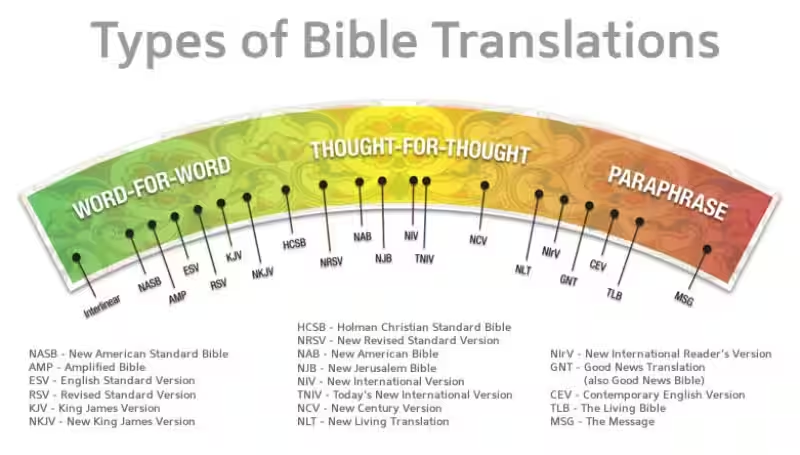
The search for the most literal Bible translation can feel like navigating a vast ocean of choices. It’s important to understand that even within the category of “literal” translations, there are varying degrees of adherence to the original languages. Some translations lean more heavily into word-for-word equivalence, while others might allow for slightly more idiomatic rendering when a strictly literal translation would become unintelligible. Here are a few examples of translations often cited for their literal approach:
The New American Standard Bible (NASB): Renowned for its commitment to word-for-word accuracy, the NASB is a popular choice for those seeking a translation that prioritizes the preservation of the original text’s structure and vocabulary. It strives for maximum fidelity to the source languages, making it a valuable tool for in-depth study.
The King James Version (KJV): While an older translation, the KJV remains a benchmark for many due to its remarkable literalness for its time. Its influence on the English language is undeniable, and its poetic phrasing, while sometimes challenging, often reflects a close adherence to the original Hebrew and Greek.
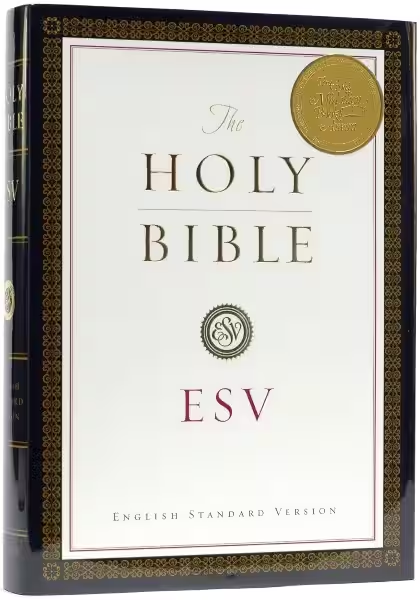
The English Standard Version (ESV): Often described as a balance between literalness and readability, the ESV aims to be “essentially literal”. It seeks to convey the precise wording and grammatical structure of the original languages while remaining accessible to contemporary readers.
Choosing the most literal Bible translation for your personal study is a decision that should be prayerfully considered. It’s not about finding a single “perfect” translation, but rather identifying one that aligns with your goals for understanding and engaging with scripture.
The Role of Literalness in Theological Study and Personal Devotion
For scholars and those deeply involved in theological study, a most literal Bible translation is often an indispensable tool. It allows for precise comparative analysis of different passages, facilitates the study of original language terms, and provides a solid basis for developing theological arguments. When examining specific doctrines or grappling with complex passages, the ability to see the direct rendering of Greek and Hebrew words can be revelatory. For example, understanding the precise verb tense used in a particular passage can dramatically alter its theological implications.
On a personal devotional level, engaging with a most literal Bible translation can foster a deeper sense of intimacy with God’s Word. It’s akin to listening to a heartfelt confession or a profound piece of advice delivered without any intermediaries. This direct connection can lead to a renewed sense of awe and wonder at the depth and richness of scripture. While some passages may require careful consideration and perhaps cross-referencing with other translations for clarity, the effort often yields a more authentic and impactful encounter with the divine message. The pursuit of the most literal Bible translation is, ultimately, a pursuit of the clearest possible echo of God’s voice throughout the ages.
Most Literal Bible Translation
What is the most literal Bible translation?
The title of “most literal” can be debated, as different translations prioritize slightly different aspects of literalness. However, the New American Standard Bible (NASB) is widely considered one of the most literal word-for-word translations available. Other translations often cited for their literalness include the King James Version (KJV) and the English Standard Version (ESV).
Literal translations aim to convey the original Hebrew and Greek words and sentence structures as closely as possible into English. This can be important for:
Precise study: Allowing readers to examine the nuances of the original languages.
Understanding historical context: Preserving the original phrasing can offer insights into the cultural and historical setting of the biblical text.
Avoiding interpretation bias: Minimizing the translator’s interpretation and allowing the reader to form their own understanding based on the text.
What are the drawbacks of highly literal translations?
While valuable for study, highly literal translations can sometimes be:
Difficult to read: The sentence structures and word choices may sound archaic or awkward in modern English, making them less accessible for casual reading.
Less flowing: They can sometimes sacrifice natural English rhythm and style for the sake of sticking closely to the original.
Potentially misleading: In some cases, a word-for-word translation might not fully capture the intended meaning if idiomatic expressions or cultural nuances are not accounted for.
How does a literal translation differ from a dynamic equivalence translation?
A literal translation (also called a formal equivalence translation) focuses on translating each word and grammatical structure from the original language into the closest equivalent in the target language.
A dynamic equivalence translation (also called a functional equivalence translation) prioritizes conveying the meaning and intent of the original text, even if it means departing from word-for-word accuracy. These translations aim for natural, easy-to-understand English. Examples include the New Living Translation (NLT) and the Good News Translation (GNT).
Should I only use literal translations for Bible study?
Not necessarily. Many scholars and pastors recommend using a combination of translations for a well-rounded understanding. A literal translation is excellent for in-depth study and exegesis, while a more dynamic equivalence translation can be helpful for grasping the overall message and for devotional reading. Comparing different translations can reveal deeper insights into the text.