The story of Iran Christianity is far more than a simple footnote in the annals of religious history; it’s a vibrant, enduring narrative woven into the very fabric of Iranian culture and society. For centuries, Christian communities have existed and persevered within the borders of what is now the Islamic Republic of Iran, demonstrating a remarkable resilience and adaptation. Understanding this dynamic requires looking beyond the headlines and delving into the rich historical roots, the present-day realities, and the intricate relationship between faith and identity in a predominantly Muslim nation. This exploration aims to illuminate the multifaceted experience of Christians in Iran, offering a comprehensive and relatable perspective.
When we speak of Iran Christianity, we are not referring to a monolithic entity. Instead, we encounter a diverse array of denominations, each with its own unique traditions, theological nuances, and historical trajectories. From the ancient Assyrian Church of the East to Armenian Apostolic churches and Protestant communities, the Christian presence in Iran has always been characterized by its variety. This diversity, much like the varied landscapes of Iran itself – from the Alborz mountains to the deserts of Dasht-e Kavir – reflects a long and often complex history of interaction, coexistence, and sometimes, tension.
The presence of Christianity in Persia, the historical predecessor to modern-day Iran, stretches back to the very early centuries of the faith. Indeed, some accounts suggest that Christianity arrived in the region almost as early as it did in Rome. The Apostle Thomas, a figure revered in Christian tradition, is believed by some to have traveled as far east as Persia and even India. While direct historical verification of such early missions can be challenging, the evidence of a significant Christian population by the 3rd and 4th centuries AD is undeniable.
This early period saw the Church of the East, often mistakenly called Nestorianism, become particularly prominent. This branch of Christianity flourished, establishing bishoprics and thriving communities across the vast Persian Empire. It played a crucial role in translating religious and philosophical texts, contributing to the intellectual and spiritual landscape of the time. Imagine these early Christians as pioneers, carrying their faith across vast distances, establishing vibrant congregations in cities like Ctesiphon, the ancient Parthian and Sasanian capital, laying the groundwork for a continuous Christian presence that would endure for millennia.
Armenian and Assyrian Communities: Pillars of Enduring Faith
Among the most visible and historically significant Christian communities in Iran are the Armenians and Assyrians. These groups have maintained a distinct cultural and religious identity for centuries, deeply intertwined with the history of Iran. The Armenian Apostolic Church has a particularly strong presence, with ancient churches and monasteries dotting regions like Jolfa in Isfahan, a testament to their long-standing heritage. These communities have often served as vital bridges between Iran and the wider world, bringing their unique artistic traditions, craftsmanship, and intellectual contributions.
The Assyrian Church of the East also boasts a rich and ancient lineage within Iran. Their journey has been marked by periods of both prosperity and immense hardship, particularly during the tumultuous events of the early 20th century. Despite facing significant challenges, the Assyrian community has persevered, preserving their Syriac language, ancient liturgy, and distinctive cultural practices. The resilience of these communities, like a tenacious vine clinging to ancient stone walls, is a powerful illustration of deep-seated faith and cultural pride.
Christianity in Modern Iran: Navigating a Complex Religious Landscape
In the contemporary Islamic Republic of Iran, the situation for Christians is multifaceted and often complex. The Iranian constitution recognizes certain religious minorities, including Christians, Jews, and Zoroastrians, granting them limited rights and protections. However, this recognition exists within a framework where Islam holds a preeminent position, and the application of laws can sometimes create challenges for non-Muslim communities.
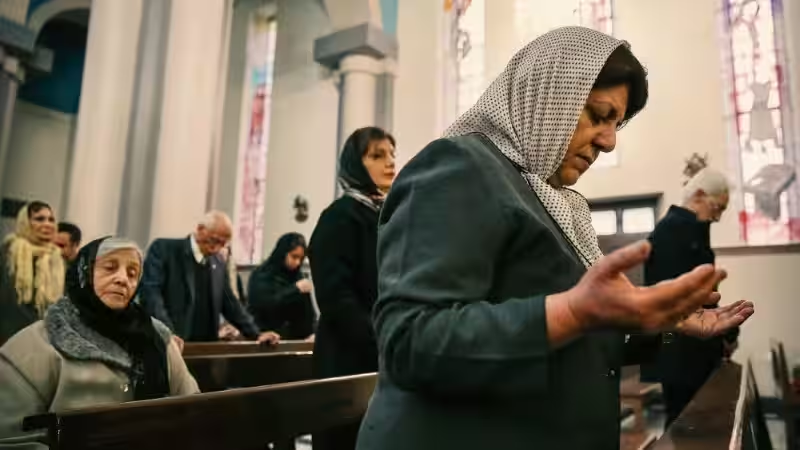
For recognized Christian denominations like the Armenian and Assyrian churches, there is a degree of freedom to practice their faith within their own communities. They can maintain their churches, conduct services, and educate their children in their religious traditions. However, proselytizing to Muslims is strictly forbidden, and any attempt to do so can carry severe legal consequences. This presents a significant limitation, impacting the growth and outreach potential of these established Christian groups within the broader Iranian population.
The Rise of the “House Church” Movement
Beyond the officially recognized churches, a significant and growing phenomenon within Iran Christianity is the emergence of house churches. These informal gatherings, often comprised of ethnic Iranians who have converted to Christianity, represent a dynamic and often clandestine form of religious expression. Operating outside the state-sanctioned structures, these house churches provide a space for spiritual fellowship, worship, and discipleship for a new generation of believers.
The growth of the house church movement is often attributed to a desire for a more personal and direct relationship with God, coupled with a dissatisfaction with the perceived formalities or limitations of traditional religious structures. For many, these gatherings offer a sense of community and belonging. However, participation in house churches, especially for converts from Islam, carries inherent risks. Members can face scrutiny, interrogation, and even arrest by authorities who view such activities with suspicion, particularly if they are perceived as attempts to undermine the state religion or engage in unauthorized proselytization.
Challenges and Persecution: The Other Side of the Coin
It is crucial to acknowledge that for many Christians in Iran, particularly those who have converted from Islam, the path of faith is fraught with significant challenges and potential persecution. While the constitution offers protections, the reality on the ground can be different. Converts often face intense pressure from their families, communities, and the state. They may be ostracized, lose their jobs, and experience difficulties in accessing education or public services.
Religious freedom in Iran remains a contentious issue. Reports from international human rights organizations consistently highlight concerns regarding the treatment of religious minorities, especially converts. The government often views the spread of Christianity among Muslims as a threat to national security and religious identity. This can lead to arrests, detentions, and imprisonment for individuals involved in house church activities or for those perceived as promoting Christianity. The bravery of these individuals, who choose to follow their faith despite these risks, is a testament to the profound impact of their beliefs.
Reasons for Growth and Conversion
Despite the inherent challenges, the Christian faith continues to attract individuals in Iran. Several factors contribute to this growth. For some, it’s a spiritual search for meaning and purpose that they may not have found elsewhere. The message of hope, love, and redemption offered by Christianity resonates deeply with many. The perceived authenticity and personal connection offered by house churches, in particular, seem to appeal to a generation seeking deeper spiritual fulfillment.
Furthermore, the influence of satellite television and the internet has played a significant role in disseminating Christian teachings and testimonies to a wider audience within Iran. These media provide access to information and perspectives that might otherwise be unavailable, allowing individuals to explore different faiths and engage with Christian messages directly. This digital outreach has created new avenues for individuals to encounter and consider the Christian message, often in private and safe environments.
The Future of Iran Christianity: Hope and Uncertainty
The future of Iran Christianity is a subject of both hope and considerable uncertainty. On one hand, the enduring presence of ancient churches and the burgeoning house church movement demonstrate a vibrant and resilient faith community. The commitment of believers, both within established denominations and newer movements, speaks to a deep spiritual conviction that transcends political and social pressures.
On the other hand, the broader geopolitical context and the internal religious policies of Iran continue to shape the landscape. The ongoing challenges to religious freedom and the potential for further restrictions cast a shadow over the long-term prospects for open Christian practice and growth. However, history has shown that faith can persevere even in the most challenging circumstances, and the story of Iran Christianity is far from over. It is a narrative that continues to unfold, a testament to the enduring human quest for spiritual truth and connection.
Frequently Asked Questions About Christianity in Iran
What is the legal status of Christianity in Iran?
While the Iranian constitution recognizes Christians as a religious minority, they face significant restrictions and discrimination. proselytizing by Christians is illegal, and conversions from Islam to Christianity are considered apostasy, punishable by death.
Are there many Christians in Iran?
The exact number of Christians in Iran is difficult to ascertain due to the clandestine nature of many house churches. Estimates vary, but it is generally understood to be a small minority, likely less than 1% of the total population. The majority of Christians are Armenian and Assyrian, with a growing number of converts from Islam.
What are house churches?
House churches are informal gatherings of Christians that meet in private homes, often out of necessity due to restrictions on public worship and the closure of many official churches. These gatherings are often underground and operate discreetly.
Are there any official churches for Christians in Iran?
Yes, there are officially recognized Armenian Apostolic and Assyrian Church churches, primarily in larger cities like Tehran, Isfahan, and Shiraz. However, these churches are generally restricted to members of these ethnic groups and are not permitted to evangelize to Muslims.
What challenges do Christians face in Iran?
Christians in Iran face a range of challenges, including:
* Government surveillance and harassment: House churches and their members are often monitored by security forces.
* Arrests and imprisonment: Many Christians, particularly converts from Islam, have been arrested and imprisoned on charges related to national security, proselytizing, or acting against the Islamic Republic.
* Discrimination in employment and education: Christians may face difficulties in securing certain jobs or advancing in their careers due to their religious affiliation.
* Restrictions on religious expression: Public expression of Christian faith is heavily controlled, and evangelism is forbidden.
* Pressure to conform: Converts from Islam often face immense pressure from their families and society to renounce their faith.
Can Christians freely practice their faith in Iran?
Freedom of religious practice for Christians in Iran is severely limited. While ethnic Armenian and Assyrian Christians have some protected space for worship within their own communities, they cannot evangelize to Muslims. Converts from Islam face the most severe restrictions and dangers.
What is the historical presence of Christianity in Iran?
Christianity has a long history in Persia, dating back to the early centuries of the faith. Significant Christian communities, particularly among Armenians and Assyrians, have existed for centuries and played important roles in the region’s cultural and intellectual life.