The Bible, a cornerstone of faith for billions, is not a single, monolithic book but rather a collection of divinely inspired writings. Within this sacred library, two distinct yet interconnected sections stand out: the Old Testament and the New Testament. Understanding the difference between the Old Testament and the New Testament is crucial for grasping the full narrative of salvation and the unfolding of God’s plan for humanity. While both are considered God’s word, they offer different covenants, perspectives, and fulfillments, painting a rich and evolving picture of divine love and justice.
Think of it like a grand unfolding story. The Old Testament lays the foundation, introducing the world to God, His laws, and His promises. It’s a story of creation, humanity’s fall, the establishment of a chosen people, and the anticipation of a coming Messiah. The New Testament, on the other hand, is the dramatic climax and continuation of that story. It reveals the fulfillment of those ancient promises in the person of Jesus Christ, the establishment of a new covenant, and the expansion of God’s kingdom to all nations. This transformative shift is at the heart of the distinction.
The Old Testament: A Foundation of Law and Promise
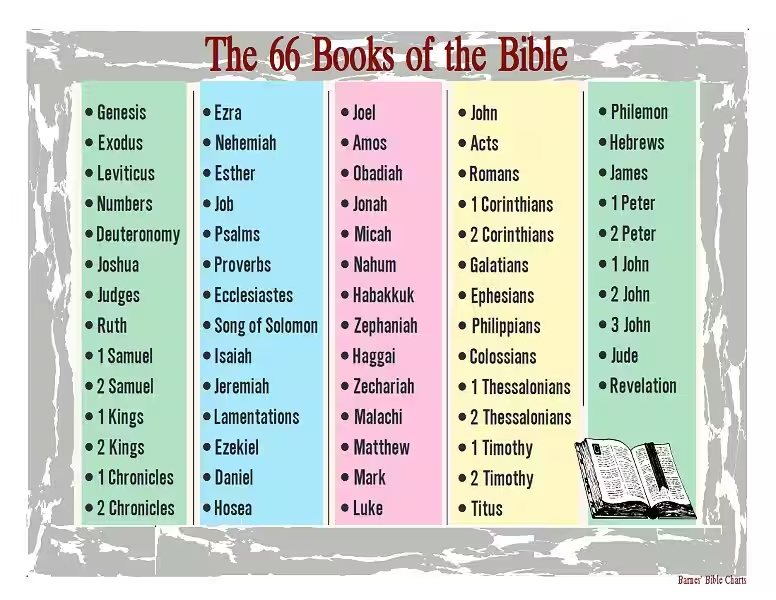
The Old Testament, also known as the Hebrew Bible or the Tanakh, comprises 39 books and chronicles the history of the Israelites from creation to the period just before the birth of Jesus. Its primary purpose was to reveal God’s character, His righteous standard (the Law), and His faithfulness to His covenant promises. It establishes the understanding that humanity is in need of redemption due to sin, and it foreshadows a future deliverer who would bridge the gap between a holy God and a fallen people.
Within the Old Testament, we encounter foundational narratives like the creation of the world, the flood, the calling of Abraham, the exodus from Egypt, and the giving of the Ten Commandments on Mount Sinai. These events illustrate God’s power, His judgment on sin, and His unwavering commitment to His chosen people. The Law, meticulously detailed in books like Leviticus and Deuteronomy, served as a pedagogical tool, demonstrating humanity’s inability to perfectly keep God’s commands and thus highlighting the necessity of divine intervention. It was a system of sacrifices and rituals designed to atone for sin and maintain a relationship with a holy God, but it was always pointing towards something greater.
The Covenant of Law: A Mirror to Our Need
The Mosaic Covenant, established through Moses, forms the bedrock of the Old Testament’s legal framework. This covenant was conditional, based on Israel’s obedience to the Law. Failure to uphold these laws resulted in consequences, both individually and nationally. The Old Testament is replete with examples of Israel’s struggles with obedience, their cycles of sin, repentance, and subsequent disciplinary actions from God. This constant struggle underscores a crucial theological truth: humanity, on its own, cannot achieve righteousness through mere adherence to rules.
Consider the story of the Israelites in the wilderness. Despite witnessing God’s miraculous provision, they often grumbled, rebelled, and fell into idolatry. This wasn’t a sign of God’s failure, but rather a demonstration of humanity’s inherent sinfulness and its deep-seated need for something more than external regulations. The Old Testament Law, therefore, acted as a “schoolmaster”, as the Apostle Paul later described it, preparing the way for a new understanding of righteousness that would come through faith. Its purpose was not to condemn eternally, but to reveal the depth of our sin and point us towards the solution.
Throughout the Old Testament, prophets emerged as God’s messengers, calling the people back to faithfulness and, crucially, foretelling the coming of a Messiah. These prophecies are a vital part of understanding the difference between the Old Testament and the New Testament. They spoke of a coming King, a Suffering Servant, and a Prince of Peace who would usher in a new era of salvation. Figures like Isaiah, Jeremiah, and Ezekiel provided detailed glimpses into the nature and work of this future deliverer, offering hope amidst despair.
These prophetic pronouncements were not mere predictions; they were divine assurances that God’s plan of redemption would not be abandoned. The constant anticipation of the Messiah fueled the faith of many, even as they lived under the limitations of the Old Covenant. The Old Testament, therefore, is a testament to God’s enduring faithfulness and His intricate preparation for the ultimate act of love and reconciliation. It’s a story of promise and anticipation, a yearning for the arrival of the One who would fully satisfy God’s justice and His mercy.
The New Testament: The Fulfillment and the New Covenant
The New Testament, comprising 27 books, chronicles the life, teachings, death, and resurrection of Jesus Christ, and the subsequent spread of His message. It marks a radical shift from the Old Testament, introducing the New Covenant established through Jesus’ sacrifice. This covenant is not based on external laws and human effort, but on God’s grace and the transformative power of the Holy Spirit. The difference between the New Testament and the Old Testament is most profoundly seen in this transition from a covenant of law to a covenant of grace.
The Gospels (Matthew, Mark, Luke, and John) are the heart of the New Testament, presenting Jesus as the promised Messiah, the Son of God, who perfectly embodied God’s love and fulfilled the prophecies of the Old Testament. His teachings challenged the status quo, emphasizing inner transformation over outward observance, and His miracles demonstrated His divine authority. His crucifixion and resurrection are the central events of Christian faith, offering atonement for sins and the promise of eternal life to all who believe. This is the fulfillment the Old Testament pointed towards.
Jesus Christ: The Culmination of God’s Plan
Jesus’ arrival was not an accident of history but the divine intervention the Old Testament had been preparing for. He perfectly obeyed God’s law, something no human before Him could do, and then voluntarily offered Himself as the ultimate sacrifice for humanity’s sins. This act of substitutionary atonement satisfied the demands of God’s justice, allowing for the forgiveness of sins and reconciliation with God. The difference between the Old Testament and the New Testament is stark here: the Old required constant sacrifices performed by humans, while the New presents a single, perfect sacrifice by God Himself.
Think of it this way: the Old Testament was like a doctor prescribing a strict diet and exercise regimen to manage a serious illness, with the understanding that it was a temporary measure pointing to a future cure. Jesus, in the New Testament, is the miracle cure itself, permanently eradicating the disease. His life and ministry demonstrated unconditional love, radical forgiveness, and the power of God’s grace in a way that the Old Covenant, with its emphasis on strict adherence, could only foreshadow.
The New Covenant: Grace, Faith, and the Holy Spirit
The New Covenant, established through Jesus’ blood, is a covenant of grace, not works. It is entered into through faith in Jesus Christ, not by perfectly keeping the Law. This is a fundamental difference between the Old Testament and the New Testament. The Holy Spirit is given to believers to empower them to live a new life, to understand God’s word, and to bear witness to Christ. This internal transformation is a hallmark of the New Covenant, replacing the need for external regulations to govern behavior.
The Apostle Paul, in his letters, extensively explains this concept. He teaches that salvation is a gift from God, received by grace through faith, and not earned by any merit of our own. This liberation from the burden of trying to achieve perfection through the Law is a central theme of the New Testament. Instead of focusing on what we can do for God, the New Testament emphasizes what God has done for us through Jesus and how we can respond with faith and love. The imdwelling Holy Spirit becomes our guide and empowers us to live a life pleasing to God, a life of true freedom.
The Expansion of God’s Kingdom
While the Old Testament focused primarily on God’s relationship with the nation of Israel, the New Testament proclaims the universal reach of God’s salvation. Jesus’ commission to His disciples was to “go and make disciples of all nations,” breaking down ethnic and religious barriers. The early church, as depicted in the book of Acts, saw the Gospel spreading beyond its Jewish origins to Gentiles, demonstrating that God’s love and plan of redemption are for all humanity.
This inclusive vision is another significant difference between the Old Testament and the New Testament. The Old Testament laid the groundwork for a chosen people, but the New Testament reveals that through Christ, all who believe become part of God’s spiritual family. The kingdom of God, once primarily associated with the nation of Israel, is now an accessible reality for every believer, regardless of their background. This expansion signifies the completeness of God’s redemptive work, extending His grace and love far beyond what was previously understood.
In conclusion, the difference between the Old Testament and the New Testament is not one of contradiction, but of progression and fulfillment. The Old Testament lays the essential foundation, revealing God’s holiness, humanity’s sin, and the foreshadowing of a Savior. The New Testament reveals that Savior in Jesus Christ, inaugurates a new covenant of grace, and extends God’s salvation to the ends of the earth. Together, these two testaments form a cohesive and powerful narrative of God’s enduring love and His ultimate plan to redeem and restore humanity. Understanding this progression enriches our faith and deepens our appreciation for the full scope of God’s magnificent plan.
Frequently Asked Questions: The New Testament and Old Testament
What is the difference between the Old Testament and the New Testament?
The Old Testament and the New Testament are the two major divisions of the Christian Bible. The Old Testament, largely comprising texts considered sacred by Judaism, tells the story of God’s covenant with the Israelites, their history, laws, and prophecies leading up to the coming of a Messiah. The New Testament focuses on the life, teachings, death, and resurrection of Jesus Christ, and the establishment of the early Christian church.
What are the main themes of the Old Testament?
Key themes in the Old Testament include God’s creation of the world, the establishment of his covenant with Abraham and his descendants, the Law given through Moses, the history of Israel as a nation, the message of the prophets, and the anticipation of a coming Savior.
What are the main themes of the New Testament?
The central themes of the New Testament revolve around Jesus Christ: his identity as the Son of God and Messiah, his teachings on love, forgiveness, and the Kingdom of God, his sacrificial death for the redemption of sins, his resurrection, and the spread of the Gospel through his followers.
Who wrote the Old Testament?
The Old Testament is a collection of books written by many different authors over a period of centuries, including prophets, priests, kings, and scribes. Traditional authorship is attributed to figures like Moses (for the first five books, the Torah), David, Solomon, Isaiah, Jeremiah, and others.
Who wrote the New Testament?
The New Testament books were written by various individuals associated with Jesus and the early church, including apostles like Matthew, John, Paul, Peter, and James, as well as Mark and Luke, who were companions of the apostles.
Are the Old Testament and New Testament contradictory?
Christians generally view the Old Testament as foundational and prophetic, pointing towards the fulfillment found in the New Testament. While there are differences in emphasis and covenant, the New Testament is understood to build upon and fulfill the promises and themes of the Old Testament, rather than contradicting them.
Is the Old Testament still relevant for Christians?
Yes, the Old Testament is considered highly relevant for Christians. It provides the historical and theological context for Jesus’ ministry, reveals God’s unchanging character and his plan for humanity, and offers moral and ethical guidance. It is seen as an integral part of God’s revelation.
Does the New Testament replace the Old Testament?
Christians do not typically view the New Testament as a replacement for the Old Testament, but rather as its fulfillment. The New Covenant established through Jesus is seen as a new phase of God’s relationship with humanity, superseding aspects of the Old Covenant while affirming its enduring principles.