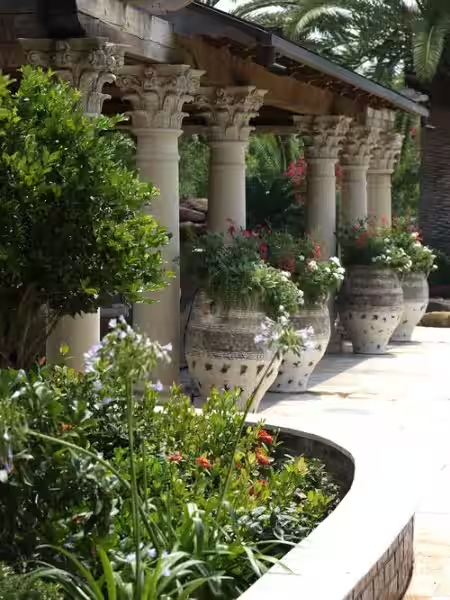
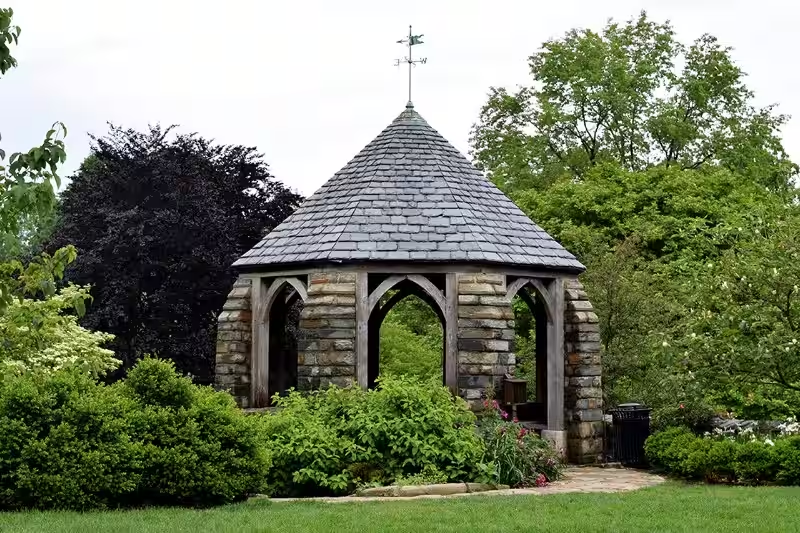
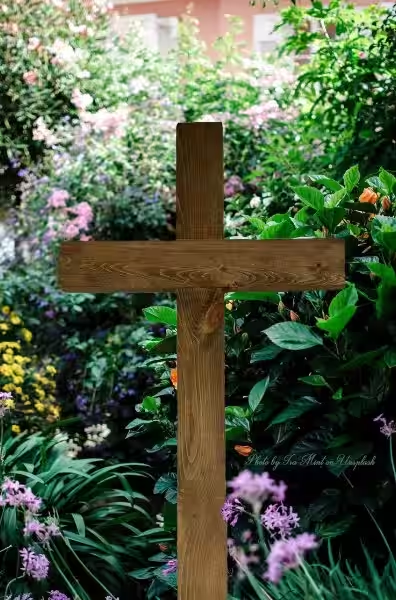
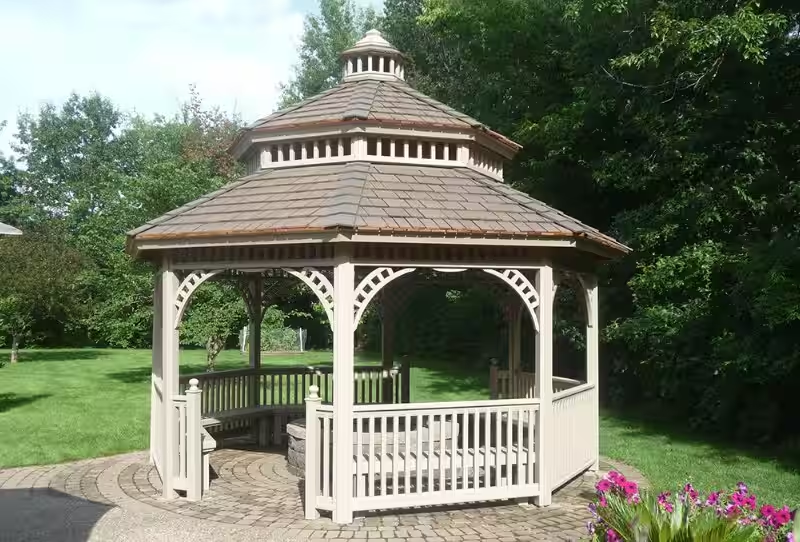
The humble garden pillar, often seen as a mere decorative element, can hold a profound and often overlooked significance, especially when viewed through the lens of religion. Beyond its aesthetic appeal, a garden pillar can symbolize a spiritual anchor, a vertical connection between the earthly and the divine, and a tangible representation of faith. Many ancient cultures and religious traditions have incorporated vertical structures into their sacred spaces, and the garden pillar, in its own way, echoes this deep-seated human need to mark and honor the transcendent.
Consider the feeling of standing before a towering monument or a sacred grove. There’s often a sense of awe, a recognition of something larger than ourselves. A well-placed garden pillar can evoke a similar sentiment, inviting contemplation and a moment of spiritual reflection amidst the natural beauty of a garden. It can serve as a silent sermon, its very presence speaking of permanence, aspiration, and the enduring power of belief. This article will explore the multifaceted religious symbolism of the garden pillar, offering a fresh perspective on how these structures can enrich our spiritual lives and our connection to the sacred.
Echoes of the Sacred: Ancient Roots of the Garden Pillar
The concept of verticality as a sacred marker is as old as human civilization. Across diverse cultures, from the towering ziggurats of Mesopotamia to the obelisks of ancient Egypt and the totem poles of indigenous peoples, vertical structures have consistently been employed to bridge the gap between the earthly realm and the heavens. These monumental constructions were not just architectural feats; they were cosmic connectors, points of contact with the divine, and symbols of authority and spiritual power. The garden pillar, though often on a far more modest scale, inherits this ancient lineage.
Think of the desire to reach upwards, to touch the sky, to be closer to the stars. This innate human aspiration is mirrored in the form of the garden pillar. Whether it’s a simple stone column supporting climbing roses or an ornate, carved structure, its upward thrust draws the eye and the spirit skyward. This symbolism is particularly potent in religious contexts. For instance, in many traditions, columns represent strength and stability, vital qualities in the foundation of any faith. A garden pillar can thus become a personal sanctuary, a place where one can find solace and reaffirm their connection to their beliefs, even in the quiet solitude of their own garden.
In a world that often feels chaotic and transient, a garden pillar can offer a sense of steadfastness and permanence. It stands firm against the elements, a visual representation of unwavering faith. Many religious traditions imbue certain objects and locations with sacred power, and a garden pillar can easily become such a focal point. It can serve as an informal outdoor altar, a place to leave offerings, light candles, or simply pause for prayer and meditation. The act of tending to the plants that might adorn the pillar, such as fragrant jasmine or resilient ivy, can itself become a meditative practice, a form of devotion.
Imagine a small, weathered stone pillar in your garden. Perhaps you’ve placed a small crucifix, a statue of a beloved saint, or even a simply smooth, significant stone upon it. This simple act transforms the garden pillar from a mere garden feature into a sacred space. It becomes a focal point for personal devotion, a quiet corner where one can connect with their chosen faith. The dedication of the pillar, through prayer or ritual, solidifies its spiritual purpose, making it a tangible reminder of divine presence in the everyday landscape of your life. It’s a personal sanctuary, a place to return to, to find peace and reaffirm your spiritual journey.
Verticality and Aspiration: Reaching Towards the Divine
The inherent verticality of a garden pillar speaks volumes about human aspiration. It’s a symbol of growth, of striving, of reaching for something greater. In many religions, the upward direction is associated with the divine, with ascension, and with the pursuit of enlightenment. A garden pillar, by its very form, encourages us to look up, to consider what lies beyond the immediate and the material. This upward gaze can be a powerful catalyst for spiritual introspection and personal growth.
Consider the act of planting a vine to climb a garden pillar. As the plant grows, its tendrils reaching upwards, it visually embodies the journey of faith. The steady, persistent growth of the plant mirrors the development of one’s spiritual life. This organic connection between the pillar and the living plant creates a dynamic symbol of burgeoning faith. It’s a reminder that spiritual growth, like the climbing vine, requires support, patience, and a consistent upward trajectory, ultimately aiming towards a higher purpose, much like the pillar itself points towards the heavens.
Personalizing Faith: The Garden Pillar as a Sacred Icon
The beauty of a garden pillar as a religious symbol lies in its personalizability. Unlike grand, established religious structures, a garden pillar can be imbued with meaning specific to your individual faith journey. It can be adorned with symbols that resonate deeply with your beliefs, or it can serve as a blank canvas for your spiritual expression. This intimate connection makes the garden pillar a uniquely potent religious artifact.
You might choose to decorate your garden pillar with a mosaic of stones representing different aspects of your faith, or perhaps you’ll hang wind chimes whose gentle melody evokes a sense of peace and divine presence. The possibilities are as varied as the faiths themselves. This DIY sacred space allows for a deeply personal and meaningful engagement with your spirituality, integrated seamlessly into the natural beauty of your garden. It’s a testament to the idea that sacredness can be found and created anywhere, even in the humble confines of one’s own backyard.
Transforming the Mundane: Everyday Spirituality
In our busy lives, finding time for dedicated spiritual practice can be a challenge. A garden pillar offers a way to integrate spirituality into the everyday. It’s a constant, gentle reminder of your beliefs, visible during moments of relaxation, gardening, or simply stepping outside for fresh air. This seamless blending of the sacred and the secular can foster a more consistent and mindful approach to faith.
Just as a priest might have an altar in a church, or a yogi might have a meditation mat, your garden pillar can become your personal sacred space. It’s a place to pause, to breathe, and to reconnect with your spiritual center. The simple act of watering the plants around it, or wiping away dust from its surface, can become a mindful ritual, a moment of quiet reverence. This embodies the principle that spirituality is not confined to specific times or places, but can be woven into the fabric of our daily lives, making the garden pillar a powerful tool for consistent spiritual grounding.
Ultimately, the garden pillar, when viewed through a religious lens, transcends its material form. It becomes a symbol of connection, aspiration, and deeply personal faith. Whether you choose to acknowledge its spiritual potential explicitly or simply feel drawn to its quiet strength, the garden pillar offers a unique and accessible way to cultivate a more profound and integrated spiritual life within the sanctuary of your own garden.
Frequently Asked Questions about Garden Pillars
What is a garden pillar?
A garden pillar is a decorative and often functional vertical structure used in landscaping and garden design. They can be made from various materials like stone, concrete, metal, or wood and are used to support plants, display ornaments, or simply add architectural interest to an outdoor space.
Support climbing plants like roses, clematis, or ivy.
Hold decorative items such as planters, statues, or lanterns.
Mark entrances or pathways.
Create focal points in garden beds.
Add verticality and dimension to a landscape.
Define outdoor living spaces.
What materials are garden pillars typically made from?
Common materials include natural stone (like sandstone, granite, or limestone), concrete, brick, metal (such as iron or steel), and wood. The choice of material often depends on the desired aesthetic, durability, and budget.
Can garden pillars be used for religious purposes?
While not inherently religious, garden pillars can be incorporated into spaces with religious significance or used to display religious imagery. For example, a pillar might be used to support a statue of a religious figure, hold a prayer flag, or be part of a memorial garden with spiritual undertones. Their use in a religious context is often symbolic or decorative, depending on the individual’s or community’s beliefs and practices.
Are there specific religious traditions that use garden pillars?
There aren’t specific religious traditions that mandate the use of garden pillars. However, many religions utilize various forms of sacred structures, monuments, or decorative elements in their places of worship or spiritual gardens. A garden pillar could be adapted to fit within such a context by holding a relevant symbol, statue, or inscription. For instance, in some spiritual practices, pillars might symbolize strength, connection to the divine, or a place of contemplation.
How do I choose the right garden pillar for my space?
Consider the overall style of your garden, the intended use of the pillar, the available space, and your budget. Think about the material that best complements your existing landscaping and the climate in your region. For functional use, ensure the pillar is sturdy enough to support the intended weight.
How do I install a garden pillar?
Installation methods vary depending on the pillar’s size, weight, and material. Generally, it involves digging a hole, setting the pillar in place (often with a concrete base for stability), and ensuring it is plumb and secure. It’s advisable to follow the manufacturer’s instructions or consult a landscaping professional for larger or heavier installations.