Religion, in its myriad forms, often speaks of a deep and abiding connection between the divine and humanity. Within many faith traditions, this connection is facilitated and nurtured by individuals set apart for sacred service. One of the most significant and transformative of these roles is that of the priest, and the process by which someone is called to this vocation is known as priestly ordination. This is not merely a ceremony; it is a profound spiritual undertaking, a public affirmation of a life dedicated to God and to the people of faith. For many, the journey to priestly ordination is a lifelong discernment, a path marked by prayer, study, and service, culminating in an act of divine grace and human commitment.
The concept of a mediator or an intermediary between the human and the divine is ancient, appearing in various religious narratives across cultures and history. Priestly ordination, in essence, formalizes this role, equipping individuals with the authority and the spiritual gifts necessary to perform sacred rites, to offer guidance, and to shepherd their communities. It represents a sacred trust, a profound responsibility to live a life that mirrors the values and teachings of their faith, and to serve as a visible embodiment of divine love and mercy within the world. The journey is often long and arduous, demanding immense dedication and sacrifice, but for those who answer the call, it is a path of unparalleled fulfillment.
The Journey of Discernment: Answering the Call to Priesthood
The path to priestly ordination is rarely a sudden decision. Instead, it is typically a gradual unfolding, a period of intense reflection and spiritual growth known as discernment. This process involves deep introspection, prayer, and often, guidance from experienced spiritual directors. Individuals who feel a pull towards this vocation might begin by engaging more deeply in their faith community, perhaps through volunteer work, liturgical ministries, or theological studies. They wrestle with questions of worthiness, of suitability, and of God’s specific will for their lives. It’s a time of listening, not just to their own desires, but more importantly, to the subtle whispers of the divine.
Consider the analogy of a young musician who feels an undeniable urge to master an instrument. Initially, they might be drawn to the sound, the beauty, the emotional expression. But as they practice, as they study, and as they receive instruction, their understanding deepens. They learn not just the notes, but the theory, the history, the artistry. Similarly, a candidate for priestly ordination begins with a feeling, a sense of purpose, but the discernment process allows this feeling to be tested, refined, and deepened through education, spiritual direction, and increasingly profound engagement with the sacred texts and traditions of their religion. It’s a period where the initial spark is nurtured into a steady flame, illuminating the path ahead.
Formation and Education: Building the Foundation for Sacred Service
Once a candidate has discerned a genuine call and is accepted into a seminary or a similar formation program, the rigorous process of education and spiritual development truly begins. This is where the theoretical underpinnings of their faith are explored in depth, alongside practical training for pastoral ministry. Priestly ordination requires a comprehensive understanding of scripture, theology, church history, and canon law. Beyond academic pursuits, formation programs emphasize spiritual growth, fostering a deep prayer life, and developing virtues such as humility, obedience, and charity. Candidates are taught how to preach, administer sacraments, and offer counsel to individuals struggling with life’s challenges.
The years spent in preparation are akin to an apprentice learning a craft from a master. They are not just acquiring knowledge; they are cultivating a way of being. Imagine a future doctor undergoing extensive medical training, learning anatomy, physiology, and surgical techniques, all while developing empathy and a commitment to healing. Likewise, those preparing for priestly ordination are immersed in a holistic environment designed to shape them into capable and compassionate spiritual leaders. They learn to celebrate Mass or lead worship, to hear confessions or offer spiritual direction, and to be present with people in their joys and sorrows. This comprehensive training ensures they are well-equipped to serve their communities effectively and faithfully.
The Rite of Ordination: A Sacrament of Transformation
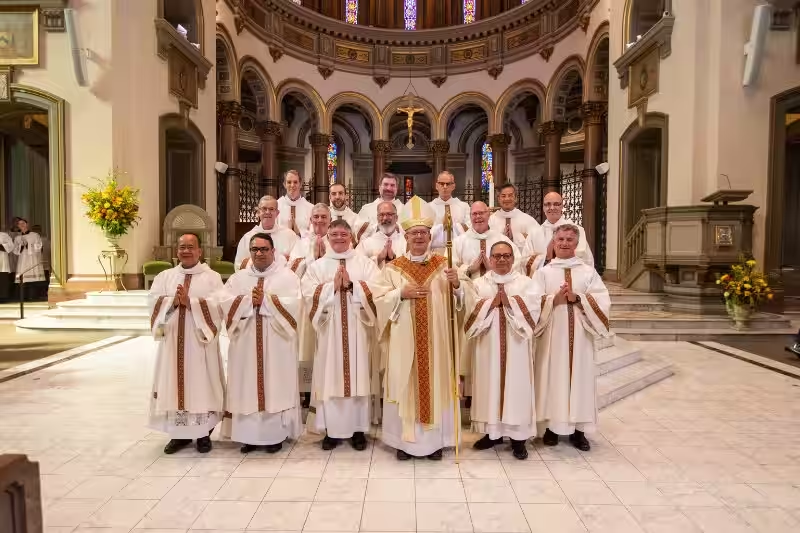
The culmination of years of prayer, study, and formation is the ceremony of priestly ordination itself. This is a sacred rite, often a solemn and deeply moving event within the context of a religious service. It is understood within many traditions as a sacrament, a visible sign of an invisible grace. During the ordination, the candidate kneels before the bishop or other presiding minister, who then lays hands upon their head, a gesture of profound symbolic significance that invokes the Holy Spirit. This act bestows the spiritual character and the authority to act in the person of Christ or to serve in a priestly capacity within the religion.
The laying on of hands is a practice with roots stretching back to ancient times, signifying the transmission of spiritual power and authority. Think of a baton being passed in a relay race; the runner who receives the baton carries forward the momentum and the responsibility of the team. In priestly ordination, the bishop, as the successor to the apostles, passes on a sacred trust. This is often accompanied by specific prayers and anointing with sacred oil, further imbuing the candidate with the grace needed for their ministry. The commitment made during ordination is not just personal; it is a public vow to serve God and the Church, a promise that shapes the entirety of their future life.
The Role of the Ordained Priesthood: Shepherding the Flock
Once ordained, priests are entrusted with a multifaceted role within their religious communities. Their responsibilities often include presiding over sacraments such as baptism, communion, and marriage, preaching the word of God, providing spiritual guidance, and caring for the pastoral needs of their congregations. They are called to be shepherds, leading their flock with wisdom, compassion, and unwavering faith. The life of an ordained priest is one of constant service, requiring a deep commitment to the spiritual well-being of others. It’s a calling that demands patience, understanding, and a willingness to be present in the lives of people from all walks of life.
The ordained priest acts as a vital link in the chain of their religion’s tradition and continuity. They are the ones who continue to administer the sacraments that are central to the faith, ensuring that the spiritual nourishment and guidance promised by their religion are accessible to believers. For instance, a priest might baptize a new infant, offering them a spiritual beginning, and later preside over their wedding, marking a significant life transition. This consistent presence and sacramental ministry are fundamental to the lived experience of many adherents, making the role of the ordained priest indispensable to the health and vitality of the religious community. The journey towards priestly ordination, therefore, is not just an individual quest but a vital component in the ongoing story of faith.
Frequently Asked Questions: Priestly Ordination
What is priestly ordination?
Priestly ordination is a sacrament in certain Christian denominations, particularly Catholicism, Eastern Orthodoxy, and Anglicanism, through which a man is consecrated to serve God and the Church as a priest. It is considered a spiritual gift and a calling.
Who can be ordained a priest?
Typically, only baptized men who have reached a certain age, meet specific educational and spiritual requirements, and are deemed worthy by the Church hierarchy are considered for priestly ordination.
What are the requirements for priestly ordination?
Requirements vary by denomination but generally include a deep faith, a commitment to celibacy (in many traditions), theological education, spiritual maturity, and a virtuous character. A period of discernment and formation in a seminary is usually mandatory.
What is the role of a priest?
A priest’s primary roles include celebrating the sacraments (such as the Eucharist, Baptism, Confession, Anointing of the Sick), preaching the Gospel, offering pastoral care and guidance to the faithful, and leading the community in worship and spiritual formation.
Is priestly ordination the same in all Christian denominations?
No, the understanding and practice of priestly ordination differ among Christian denominations. While some denominations recognize the validity of ordinations from others, many have distinct theological views on the sacrament and its effects.
What does it mean to be “called” to the priesthood?
A “calling” to the priesthood is understood as a divine invitation or inspiration to dedicate one’s life to the service of God and the Church as a priest. It is often discerned through prayer, spiritual direction, and an internal conviction of God’s will.
Can a married man be ordained a priest?
In the Roman Catholic Church in the West, priests are generally required to be celibate. However, in some Eastern Catholic Rites and in the Eastern Orthodox Church, married men can be ordained priests, though bishops must be celibate. Some Protestant denominations that practice ordained ministry may allow married clergy.
What is the difference between a priest and a bishop?
A bishop is considered to have received the fullness of the sacrament of Holy Orders, with the authority to ordain priests and deacons, to govern a diocese, and to teach and sanctify the faithful. A priest is ordained by a bishop and serves under the bishop’s authority, typically ministering in a parish.
What is the significance of ordination in the life of a priest?
Ordination is a permanent spiritual transformation that marks a man as set apart for sacred ministry. It is believed to confer a special grace and authority to act in the person of Christ, particularly in the celebration of the sacraments.