Unveiling the Fatima Prayer: A Call to Hope and Conversion
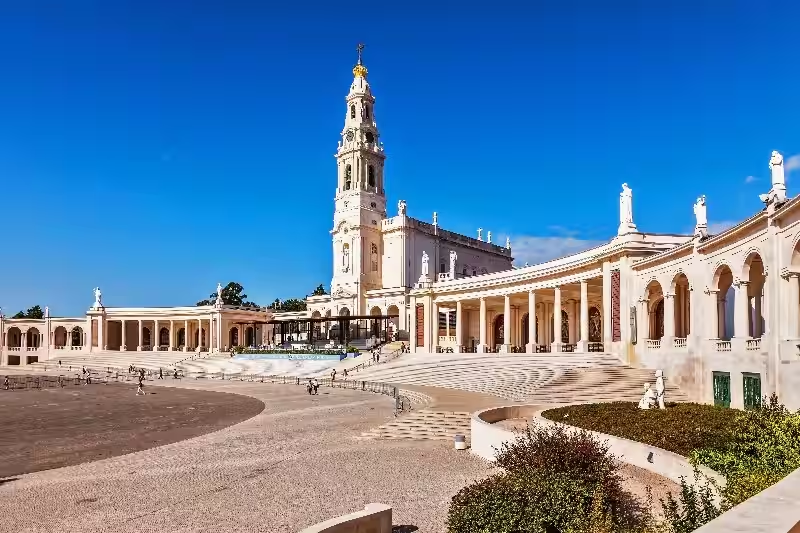
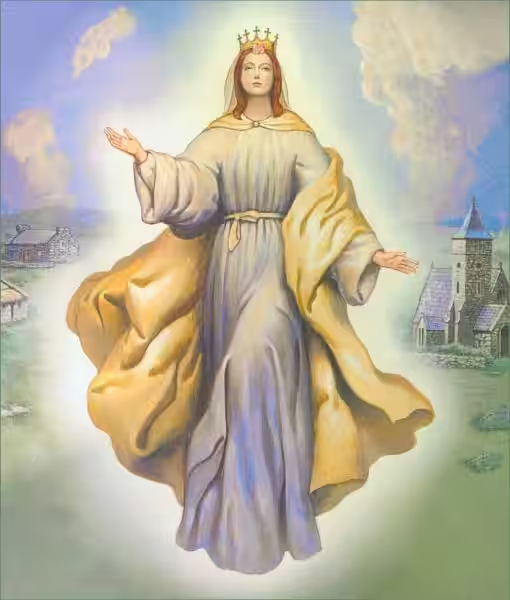
In the tapestry of Catholic devotion, certain prayers stand out for their profound spiritual resonance and the powerful intercession they invoke. Among these, the Fatima prayer, often referred to as the “O My Jesus” prayer, holds a special place. It emerged from the miraculous apparitions of the Blessed Virgin Mary in Fatima, Portugal, in 1917, a time of immense global upheaval and spiritual weariness. Our Lady appeared to three young shepherds – Lucia dos Santos, Francisco Marto, and Jacinta Marto – delivering messages of prayer, penance, and hope. The Fatima prayer was one of the key elements of these heavenly pronouncements, offering a direct plea for mercy for those in spiritual darkness.
The prayer itself is a concise yet potent plea: “O my Jesus, forgive us our sins, save us from the fires of hell, and lead all souls to Heaven, especially those in most need of Thy mercy.” This simple articulation encapsulates a deep understanding of humanity’s fallen state and our desperate need for God’s divine intervention. It’s a prayer that speaks to the core of our existence, acknowledging our imperfections while simultaneously reaching out for eternal salvation. The emphasis on “especially those in most need of Thy mercy” highlights Mary’s universal love and her desire for the salvation of all, particularly the most vulnerable and those furthest from God’s grace. Reciting the Fatima prayer is an act of intercessory prayer, extending our concern beyond ourselves to encompass the entire human family.
The Rosary: A Meditative Journey Through the Life of Christ
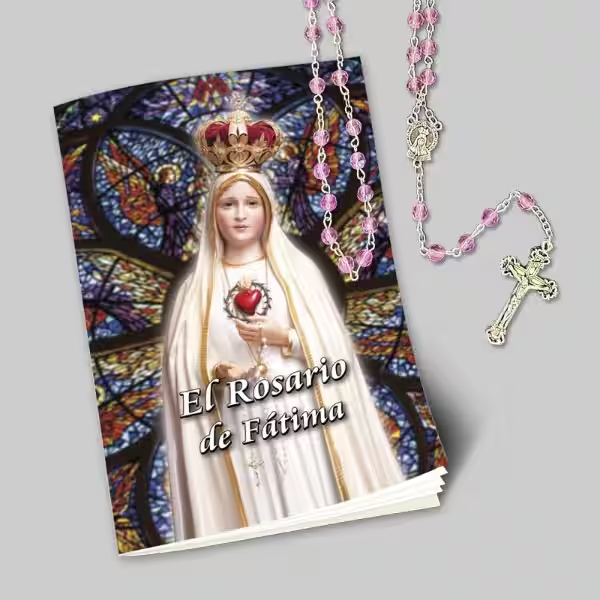
While the Fatima prayer is a powerful standalone invocation, its spiritual depth is often amplified when integrated into the practice of the Holy Rosary. The Rosary, a beloved prayer in the Catholic tradition, is far more than just a repetitive recitation of Hail Marys. It is a meditative journey through the pivotal moments in the lives of Jesus and Mary, known as the Mysteries. By contemplating these events – the Joyful, Luminous, Sorrowful, and Glorious Mysteries – we are invited to walk alongside Christ, to experience His joys, His sufferings, and His ultimate triumph. Each bead of the Rosary serves as a marker, guiding us through these sacred narratives, allowing us to grow in our understanding and love of Jesus.
The beauty of the Rosary lies in its accessibility and its multifaceted nature. It can be prayed individually in quiet contemplation or communally, fostering a sense of shared faith and unity. As we pray the Hail Marys, our minds are meant to be engaged with the Mysteries. For example, while praying the first decade of the Joyful Mysteries, focusing on the Annunciation, we can ponder Mary’s humble “yes” to God’s plan and reflect on our own willingness to embrace His will in our lives. The Fatima prayer, with its plea for forgiveness and mercy, can be seamlessly woven into this contemplative practice, often recited at the end of each decade or at the conclusion of the entire Rosary, adding another layer of spiritual petition to our meditations.
The Intertwined Power: Fatima Prayer and the Rosary in Practice
The apparitions at Fatima emphasized the importance of praying the Rosary daily. Our Lady herself instructed the children to “Pray the Rosary every day, in order to bring about peace in the world and an end to the war.” This directive underscores the transformative power of this prayer. When we combine the daily recitation of the Rosary with the heartfelt invocation of the Fatima prayer, we create a powerful spiritual synergy. Imagine yourself at the end of a decade, perhaps reflecting on the Agony in the Garden. In that moment of profound sorrow and understanding of Christ’s suffering, reciting the Fatima prayer – “O my Jesus, forgive us our sins, save us from the fires of hell…” – takes on a new dimension of penitential depth and empathetic connection to Christ’s sacrifice.
For many, incorporating the Fatima prayer into their Rosary routine has become a cornerstone of their spiritual life. It serves as a consistent reminder of the mercy of God and the urgent need for prayers for the conversion of sinners. This practice is not about rote repetition; it’s about a heartfelt engagement with God’s love and a commitment to His divine plan. Whether you are a seasoned practitioner of the Rosary or new to this form of prayer, weaving in the Fatima prayer offers a direct and profound way to deepen your relationship with God and to participate in His mission of salvation. It’s a tangible way to answer Mary’s call and to contribute to the spiritual well-being of the world.
The Fatima Prayer: A Universal Plea for Mercy
The Fatima prayer is more than just a sequence of words; it’s an act of faith and a profound expression of our reliance on God’s boundless mercy. Its origins in the apparitions lend it a special authority, a direct message from heaven to earth. The prayer’s simplicity makes it accessible to everyone, regardless of age or spiritual maturity. Its core message – forgiveness, salvation from hell, and the hastening of all souls to heaven, with a special emphasis on those in greatest need – addresses the fundamental human condition. It’s a prayer that acknowledges our sinfulness while simultaneously placing our trust in the infinite compassion of Jesus.
When we pray the Fatima prayer, we are actively participating in the spiritual battle for souls. We are extending a lifeline of hope to those who are lost or struggling. The phrase “especially those in most need of Thy mercy” is particularly poignant. It reminds us that our prayers are not just for ourselves but for our brothers and sisters who may be facing immense trials, spiritual dryness, or even the brink of eternal separation from God. This aspect of the Fatima prayer cultivates a spirit of altruism and universal charity, urging us to pray for the salvation of all, echoing the very heart of God’s desire for humanity. It’s a profound call to intercessory prayer, an act of love that transcends personal boundaries.
Integrating the Fatima Prayer into Your Daily Rosary
Making the Fatima prayer a regular part of your Rosary devotion can profoundly enrich your prayer life. A simple yet effective way to do this is to recite it after each decade of the Rosary. As you complete a Mystery and transition to the next, take a moment to offer this specific petition. For example, after praying the fifth Joyful Mystery, the Finding of Jesus in the Temple, you might pause and say, “O my Jesus, forgive us our sins, save us from the fires of hell, and lead all souls to Heaven, especially those in most need of Thy mercy.” This consistent inclusion ensures that the themes of repentance and mercy are woven throughout your entire meditation.
Another common practice is to offer the Fatima prayer at the end of the entire Rosary, perhaps after the concluding prayers. This serves as a powerful final appeal, summarizing your intentions and offering a concentrated plea for divine mercy for all souls. Many find that dedicating specific Rosaries to certain intentions, such as praying for the conversion of a loved one or for peace in a troubled region, is made even more potent by the inclusion of the Fatima prayer. This prayer acts as a spiritual amplifier, directing our intentions with a specific, heaven-sanctioned grace, making our Rosary practice a more purposeful and impactful act of faith.
The Enduring Relevance of Fatima’s Message
The apparitions of Our Lady of Fatima and the Fatima prayer she entrusted to the world remain extraordinarily relevant today. In a world still grappling with conflict, division, and spiritual apathy, the call to prayer, penance, and conversion is as urgent as ever. The Rosary, with its contemplative focus, provides a sanctuary for reflection and a powerful means of seeking God’s peace. The Fatima prayer, when prayed with sincerity, becomes a potent weapon in the spiritual arsenal, a direct appeal for the divine intervention that our world so desperately needs.
By embracing the Fatima prayer and integrating it into our devotion to the Rosary, we align ourselves with the heart of Mary’s message. We become active participants in bringing about the peace she promised and in hastening the salvation of souls. This practice is not merely a religious obligation; it is a pathway to deeper conversion, a means of drawing closer to the sacred heart of Jesus, and a powerful way to contribute to the spiritual healing of our world. The Fatima prayer and the Rosary are enduring gifts, offering us hope, solace, and a profound connection to the divine.
Frequently Asked Questions: The Fatima Prayer and Rosary
What is the Fatima Prayer?
The Fatima Prayer is a short prayer often recited during the Rosary. It is traditionally said after the Glory Be at the end of each decade of the Rosary. The prayer is: “O my Jesus, forgive us our sins, save us from the fires of hell, lead all souls to Heaven, especially those in most need of Thy mercy.”
What is the significance of the Fatima Prayer?
The Fatima Prayer is believed to have been revealed by the Blessed Virgin Mary to the three shepherd children in Fatima, Portugal, during her apparitions in 1917. It is a prayer for mercy, forgiveness, and the salvation of souls, particularly those in greatest need.
What is the Rosary?
The Rosary is a traditional Catholic devotion that involves meditating on the mysteries of the lives of Jesus and Mary while reciting specific prayers. It is prayed using a rosary, which is a string of beads.
How do you pray the Rosary?
The Rosary is prayed by reciting the Apostles’ Creed, the Our Father, three Hail Marys, and the Glory Be, followed by a decade of the Rosary. Each decade consists of one Our Father, ten Hail Marys, and one Glory Be, with the Fatima Prayer often added at the end of each decade. While reciting the prayers, one meditates on a specific mystery (Joyful, Sorrowful, Glorious, or Luminous).
What are the mysteries of the Rosary?
The mysteries of the Rosary are events from the lives of Jesus and Mary that are meditated upon during the devotion. They are divided into four sets:
* The Joyful Mysteries: (Recited on Mondays and Saturdays) The Annunciation, The Visitation, The Nativity, The Presentation of Jesus in the Temple, The Finding of Jesus in the Temple.
* The Sorrowful Mysteries: (Recited on Tuesdays and Fridays) The Agony in the Garden, The Scourging at the Pillar, The Crowning with Thorns, The Carrying of the Cross, The Crucifixion.
* The Glorious Mysteries: (Recited on Wednesdays and Sundays) The Resurrection, The Ascension, The Descent of the Holy Spirit, The Assumption of Mary, The Coronation of Mary.
* The Luminous Mysteries: (Recited on Thursdays) The Baptism of Jesus in the Jordan, The Wedding at Cana, The Proclamation of the Kingdom of God, The Transfiguration, The Institution of the Eucharist.
What is the “religion” in relation to the Fatima Prayer and Rosary?
The Fatima Prayer and the Rosary are deeply rooted in the Catholic religion. They are forms of prayer and devotion recognized and encouraged by the Catholic Church, which views them as powerful spiritual tools for deepening one’s faith and relationship with God and Mary.