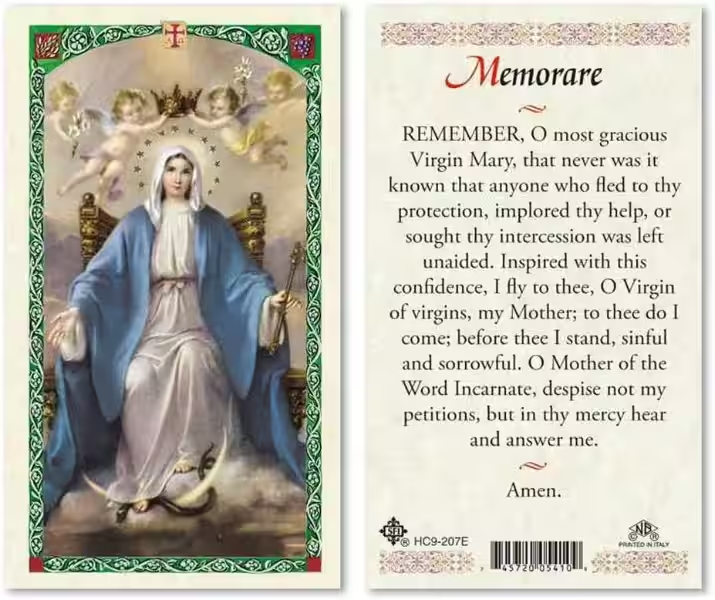
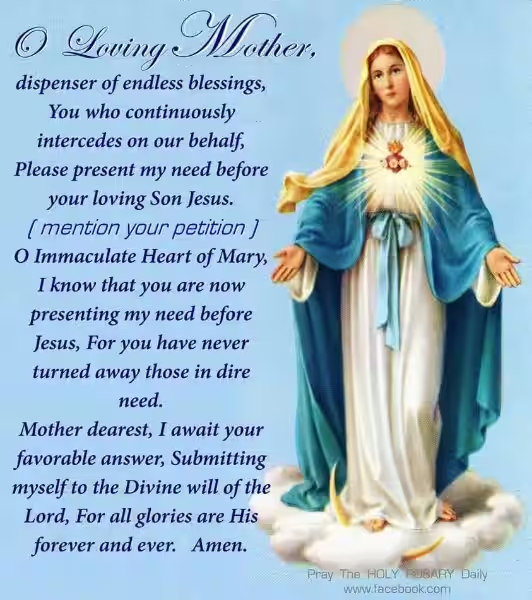
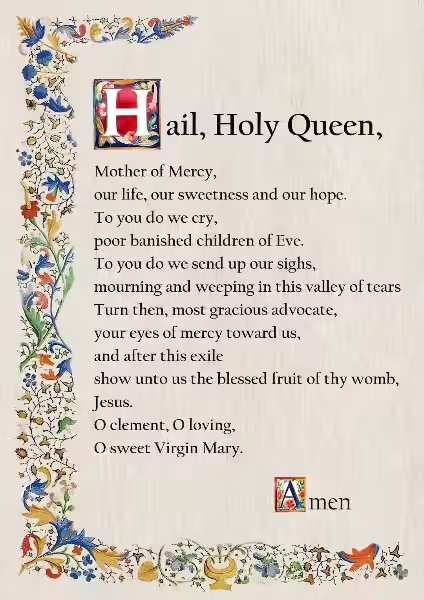
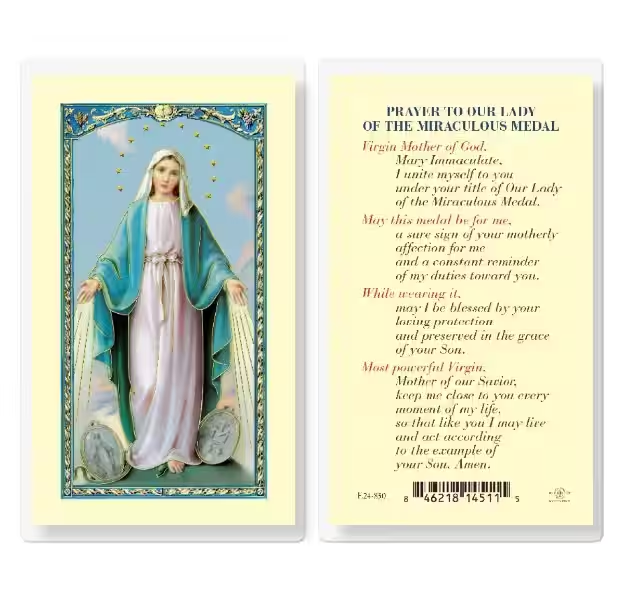
In the tapestry of faith, certain threads are woven with a particular strength, offering solace and guidance across generations. Among these, the prayer “Remember, O most gracious Virgin Mary, that it has never been heard that anyone who had recourse to your protection, who implored your help, or who sought your intercession, was left unaided” stands as a beacon of hope for countless individuals. This ancient invocation, deeply rooted in Christian tradition, speaks to a profound and enduring belief in the compassionate intercession of Mary, the Mother of God. Its power lies not just in its words, but in the lived experiences of those who have turned to it in moments of desperation, doubt, and deep personal need.
This prayer is far more than a rote recitation; it’s a heartfelt plea, a testament to the human desire for connection and understanding, especially during life’s inevitable storms. It acknowledges our vulnerability and our longing for a maternal presence, a guiding hand that can lead us through darkness towards light. The very act of praying “Remember, O most gracious Virgin Mary” is an act of faith, a declaration that we believe in a love that is boundless and a mercy that is ever-present.
Understanding the Heart of the Prayer: Maternal Love and Divine Mercy
At its core, the “Remember, O most gracious Virgin Mary” prayer is an expression of profound trust in Mary’s maternal love and her powerful intercession with her divine Son. It’s not about worshipping Mary, but about recognizing her unique role as a mother figure in the spiritual lives of believers. Just as a child instinctively turns to their mother for comfort and support, so too do many Christians turn to Mary, believing she understands the complexities of human suffering and possesses a deep empathy for our struggles.
The prayer’s assertion that “it has never been heard” that anyone seeking her aid was left unaided is a powerful statement of divine mercy channeled through her intercession. It’s a promise, whispered through centuries, that no sincere plea is ever ignored. This doesn’t mean every prayer is answered with a direct “yes” to our immediate desires, but rather that Mary, in her wisdom and love, will present our needs to God in the most beneficial way for our souls, offering comfort, strength, and guidance. Think of it like a child asking for a toy; a loving parent might not buy that specific toy but will instead offer a comforting hug and a different, perhaps more appropriate, gift.
The Historical Roots and Enduring Appeal of the Invocation
The origins of the “Remember, O most gracious Virgin Mary” prayer can be traced back to the early centuries of Christianity, with its most famous early written form attributed to Saint Bernard of Clairvaux in the 12th century. However, the sentiment it expresses – the veneration of Mary as a powerful intercessor – is much older, deeply embedded in the collective memory and devotional practices of the Church. Its enduring appeal lies in its universal themes of petition, reliance, and unwavering hope.
Throughout history, this prayer has been a constant companion for individuals facing persecution, illness, loss, and spiritual turmoil. It has been whispered in monastic cells, prayed in bustling churches, and murmured in the quiet solitude of personal prayer. The relatability of the prayer stems from its acknowledgment of our human condition – our need for help, our moments of weakness, and our yearning for divine favor. It offers a tangible link to a tradition that spans millennia, connecting us to the faith of our ancestors and the countless souls who have found solace in its embrace.
How the “Remember, O Most Gracious Virgin Mary” Prayer Offers Practical Comfort
In the context of our daily lives, the “Remember, O most gracious Virgin Mary” prayer offers a surprisingly practical form of comfort. When faced with overwhelming challenges, be it a difficult work situation, a strained family relationship, or a personal health crisis, the act of praying this invocation can provide a much-needed sense of empowerment and perspective. It shifts our focus from the seemingly insurmountable problem to the infinite wellspring of divine grace.
The prayer acts as a spiritual anchor, grounding us in faith when the winds of adversity threaten to capsize us. It reminds us that we are not alone in our struggles. For example, imagine a student facing a daunting exam period. While they still need to study diligently, reciting “Remember, O most gracious Virgin Mary” can instill a sense of calm, a belief that their efforts are being supported by a higher power, and that they have a spiritual advocate in their corner. This can reduce anxiety and improve focus, making the hard work more manageable.
Applications in Daily Life: From Small Concerns to Great Sorrows
The beauty of the “Remember, O most gracious Virgin Mary” prayer is its adaptability to a wide spectrum of human experience. It can be a source of comfort for small daily anxieties, such as a delayed train or a forgotten appointment. Turning to it in these moments can cultivate a habit of mindfulness and trust, reminding us that even minor inconveniences can be offered up for spiritual growth. This continuous reliance on divine aid, even in the mundane, strengthens our spiritual muscles.
More profoundly, the prayer offers profound solace during times of great sorrow and suffering. Whether grappling with grief, facing a serious illness, or navigating betrayal, the words “Remember, O most gracious Virgin Mary” become a lifeline. It’s an acknowledgment that our pain is seen and heard, and that there is a compassionate intercessor who will bring our deepest needs before God. This is not a magic wand, but a deeply meaningful act of surrender and hope, allowing us to carry our burdens with greater strength and a quiet confidence in divine providence.
Incorporating the Prayer into Your Spiritual Practice
Integrating the “Remember, O most gracious Virgin Mary” prayer into your spiritual life can be a simple yet profoundly impactful practice. There’s no single “right” way to pray it; the most important element is sincerity and devotion. You can recite it silently in your heart, speak it aloud, or even write it down and keep it in a special place. The key is to approach it with a receptive heart, open to the graces it can impart.
Consider incorporating it into your existing prayer routine. Perhaps you can begin your morning with it, setting a tone of reliance and trust for the day ahead. Alternatively, you might find yourself turning to “Remember, O most gracious Virgin Mary” during moments of specific need or contemplation. Consistency and personal connection are more valuable than rigid adherence to a prescribed method.
Tips for Deeper Engagement with the Prayer
To deepen your engagement with the “Remember, O most gracious Virgin Mary” prayer, consider the following:
Meditate on the words: Don’t just recite the prayer; pause and reflect on each phrase. What does it mean to you that Mary is “gracious”? What does “recourse to your protection” truly signify? This mindful approach can unlock new layers of meaning and connection.
Visualize Mary’s compassion: As you pray, try to picture Mary as a loving mother, her gaze full of tenderness and understanding. This visualization can enhance the emotional and spiritual impact of the prayer.
Combine it with other devotions: The “Remember, O most gracious Virgin Mary” prayer can be beautifully integrated with other forms of Marian devotion, such as the Rosary or the Angelus. This can create a richer and more comprehensive prayer experience.
Journal your experiences: Keep a journal of times when you’ve prayed this invocation and experienced its comfort or seen its effects. This can serve as a powerful reminder of Mary’s intercession and strengthen your faith over time.
Pray for others: Extend the grace of this prayer by reciting it with the intention of interceding for loved ones or those you know who are struggling. This act of charity can be incredibly rewarding.
Ultimately, the “Remember, O most gracious Virgin Mary” prayer is a timeless gift of faith, offering an unwavering reminder of divine love and maternal care. Its enduring power lies in its ability to connect us to a profound spiritual tradition and to assure us that, in our moments of greatest need, we are never truly alone.
Frequently Asked Questions about the “Remember Oh Most Gracious Virgin Mary” Prayer
What is the “Remember Oh Most Gracious Virgin Mary” prayer?
The “Remember Oh Most Gracious Virgin Mary” prayer is a devotional prayer to the Virgin Mary, often attributed to Saint Bernard of Clairvaux. It is a plea for her intercession and mercy, reminding her of her maternal love and compassion for humanity.
What is the origin of this prayer?
While traditionally attributed to Saint Bernard of Clairvaux, the exact historical origin of the prayer is debated. It has been a popular devotion for centuries within the Catholic Church.
What is the purpose of praying this prayer?
This prayer is typically prayed to:
Seek the intercession of the Virgin Mary for personal needs and difficulties.
Express devotion and love for Mary.
Ask for her mercy and guidance.
Obtain graces and spiritual strength.
Is this prayer part of Catholic doctrine?
The prayer itself is a devotional practice and not a dogma of faith. However, the veneration of the Virgin Mary and the belief in her role as an intercessor are central to Catholic belief and practice.
What does it mean to ask Mary for intercession?
In Catholicism, asking Mary for intercession means asking her to pray to God on our behalf. Catholics believe she, as the Mother of Jesus, has a special closeness to God and can effectively present our petitions to Him.
Can people of other Christian denominations pray this prayer?
While this prayer is most commonly associated with the Catholic tradition, individuals from other Christian denominations who hold a respect for Mary may also choose to pray it as a personal devotion.
Are there specific times or occasions to pray this prayer?
This prayer can be prayed at any time. Some people choose to pray it during difficult times, when seeking guidance, or as part of their daily prayer routine. It is often prayed during the month of May, which is traditionally dedicated to Mary.
What is the significance of calling Mary “most gracious”?
Calling Mary “most gracious” acknowledges her fullness of grace, her inherent goodness, and her loving disposition towards humanity. It highlights her role as a dispenser of God’s grace.
How does this prayer relate to the concept of Mary as the Mother of God?
The prayer invokes Mary’s maternal relationship with Jesus. By reminding her of her role as the “Mother of God,” the prayer appeals to her natural love and concern for her children (humanity), whom Jesus died for.