In the quiet corners of chapels, in the bustling centers of churches, and even in the humble homes of the faithful, a familiar and profoundly comforting image has become increasingly prevalent: the Saint Faustina statue. This sculpted representation is far more than mere artistic craftsmanship; it is a tangible link to a powerful message of God’s boundless love and forgiveness, a message entrusted to a humble Polish nun in the 20th century. The enduring appeal of the Saint Faustina statue speaks volumes about our innate human yearning for hope, healing, and divine connection in a world often fraught with challenges.
For many, encountering a Saint Faustina statue is an invitation to pause, reflect, and open their hearts to the transformative power of Divine Mercy. It serves as a visual reminder of Sister Faustina Kowalska’s extraordinary mystical experiences and the vital role she played in spreading the devotion to Jesus as the Divine Mercy. This article will explore the significance of the Saint Faustina statue within the context of religious devotion, its impact on individual lives, and its lasting legacy as a symbol of God’s unwavering love.
The Life and Legacy of Saint Faustina: The Inspiration Behind the Statue
Before delving into the physical presence of the Saint Faustina statue, it is crucial to understand the woman whose life and visions gave it meaning. Born Helena Kowalska in Poland in 1905, Sister Faustina entered the Congregation of the Sisters of Our Lady of Mercy, dedicating her life to prayer and service. Her journey was marked by profound mystical encounters, most notably with Jesus Himself, who appeared to her numerous times, revealing His desire for a special devotion to His Divine Mercy.
Jesus instructed Sister Faustina to become the “apostle of Divine Mercy,” a role she embraced with humble obedience, despite facing skepticism and misunderstanding from some within the Church hierarchy. Her diary, meticulously kept under divine inspiration, documented these visions and the specific prayers and imagery associated with Divine Mercy, including the iconic image of Jesus with rays of red and white emanating from His heart. The widespread dissemination of these teachings, often facilitated by the visual presence of a Saint Faustina statue, has brought solace and spiritual renewal to millions worldwide.
The Divine Mercy Image and its Connection to the Statue
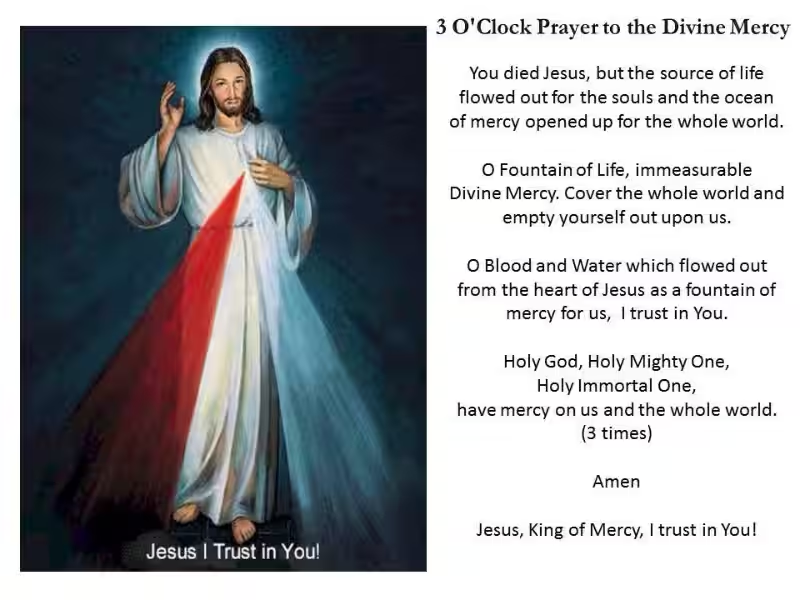
Central to the devotion inspired by Sister Faustina is the Image of the Divine Mercy. Jesus appeared to her, instructing her to have a painting made according to the vision she saw: Jesus standing, with His right hand raised in a blessing, and His left hand touching His heart from which two rays, one red and one pale, emerged. The red ray represents the blood that is the life of souls, and the pale ray represents the water which makes souls righteous. This image, now famously replicated in countless forms, including the Saint Faustina statue, is a powerful visual sermon.
The Saint Faustina statue often depicts her in prayer or adoration, gazing towards heaven, her hands clasped or extended in a gesture of offering. Sometimes, she is shown holding her diary, a testament to her role as the messenger of mercy. The presence of this statue in homes and churches serves as a constant visual reminder of Sister Faustina’s intercession and the perpetual flow of God’s mercy. It is a reminder that even in our darkest moments, the light of God’s love, as depicted in the rays from Jesus’ heart and embodied by the humble figure of Saint Faustina, is always accessible.
The Significance of the Saint Faustina Statue in Religious Practice
The Saint Faustina statue holds a place of profound significance within Catholic devotional practices. For many believers, it is a focal point for prayer, meditation, and petition. The silent, yet potent, presence of the statue can evoke a sense of peace and connection to the divine, offering a tangible anchor in a world of fleeting experiences. Its placement in homes often signifies a domestic church, a space dedicated to faith and family prayer, where the message of mercy is actively lived and shared.
Beyond personal devotion, the Saint Faustina statue is a common fixture in parishes and shrines dedicated to Divine Mercy. These sacred spaces become pilgrimage destinations for those seeking spiritual solace, healing, or a deeper understanding of God’s merciful love. The statue acts as a silent witness to countless confessions, acts of charity, and fervent prayers, embodying the very essence of the mercy it represents. It is a constant, unwavering reminder that God’s love is not a distant concept but a present reality, accessible through faith and prayer.
Fostering a Deeper Relationship with God’s Mercy
The visual representation provided by a Saint Faustina statue can be incredibly effective in helping individuals grasp abstract theological concepts like Divine Mercy. For a child, seeing the statue might spark curiosity about the stories of Saint Faustina and Jesus’ message. For an adult struggling with guilt or despair, the statue can be a source of comfort and reassurance, reminding them that God’s forgiveness is always available. It simplifies the profound theological truth into an accessible, relatable form.
Many people report feeling a profound sense of peace and hope when in the presence of a Saint Faustina statue. It can inspire them to pray the Divine Mercy Chaplet, to engage in acts of charity, and to strive to live more merciful lives themselves. The statue acts as a visual sermon, prompting introspection and encouraging a more active participation in the life of faith. It is a constant invitation to turn to God’s immense love, especially during times of personal trial or global uncertainty. The simple act of gazing at the statue can be a powerful catalyst for spiritual growth and a deeper relationship with the Divine.
Where to Find and How to Appreciate a Saint Faustina Statue
The beauty of the Saint Faustina statue lies in its accessibility. They can be found in a wide array of religious supply stores, both physical and online, catering to various budgets and artistic preferences. From small, devotional statues perfect for a bedside table to larger, more ornate pieces intended for church altars or garden shrines, there is a Saint Faustina statue to suit every need and space.
When choosing a Saint Faustina statue, consider the craftsmanship and the emotional connection it evokes. Some statues are rendered in traditional styles, while others offer more contemporary interpretations. The key is to select a piece that resonates with your personal faith journey and serves as a meaningful reminder of God’s mercy. Regardless of the style, the presence of a Saint Faustina statue in your home or prayer space can be a constant source of spiritual strength and inspiration, encouraging a life lived in the embrace of God’s boundless love.
Incorporating the Statue into Daily Prayer and Reflection
The Saint Faustina statue is not meant to be merely decorative; it is a catalyst for deeper engagement with the message of Divine Mercy. Many individuals place their statue in a prominent location where they can see it regularly, perhaps on a home altar or a dedicated shelf. This constant visual cue can serve as a prompt for daily prayer, a moment to pause and reflect on God’s love.
Consider incorporating the Saint Faustina statue into specific devotional practices. For instance, you might begin your day with a brief prayer before the statue, asking for the grace to live mercifully. You could also use it as a focal point when praying the Divine Mercy Chaplet, visualizing Saint Faustina’s intercession as you recite the prayers. The simple act of gazing at the statue, contemplating the serenity and hope it embodies, can be a powerful form of prayer in itself, drawing you closer to the heart of God’s unending mercy.
Conclusion: A Lasting Symbol of Hope and Mercy
The Saint Faustina statue stands as a powerful and enduring testament to the profound message of Divine Mercy entrusted to Sister Faustina Kowalska. It is more than just a religious artifact; it is a beacon of hope, a tangible reminder of God’s infinite love and forgiveness that is always available to us. Its presence in churches, homes, and private prayer spaces continues to touch lives, offering comfort, inspiration, and a path towards a deeper spiritual life.
As we continue to navigate the complexities of life, the silent yet powerful presence of the Saint Faustina statue serves as a constant invitation to turn towards the source of all mercy. It encourages us to embrace God’s love, to extend compassion to others, and to live lives marked by the transformative power of His grace. The legacy of Saint Faustina, embodied in her statue, is a timeless message that resonates deeply in our hearts, reminding us that we are never alone and that God’s mercy is ever-present, waiting to embrace us.
Frequently Asked Questions about the Statue of Saint Faustina
What is the significance of a statue of Saint Faustina?
A statue of Saint Faustina serves as a visual representation and reminder of her life, her devotion to the Divine Mercy of Jesus, and her role as the “Apostle of Divine Mercy.” It can inspire prayer, devotion, and reflection on her messages about God’s boundless love and mercy.
Where can I find a statue of Saint Faustina?
Statues of Saint Faustina are commonly found in Catholic churches, particularly those dedicated to the Divine Mercy. They can also be purchased from religious goods stores, online religious retailers, and some devotional art shops.
What materials are Saint Faustina statues made from?
Saint Faustina statues are made from a variety of materials, including resin, plaster, marble, bronze, and wood. The choice of material often influences the price and durability of the statue.
How should I care for a Saint Faustina statue?
The care of a Saint Faustina statue depends on the material. For most statues, gentle dusting with a soft cloth is sufficient. For more delicate materials like marble or wood, consult specific care instructions. Avoid harsh chemicals or abrasive cleaners.
Can I pray in front of a Saint Faustina statue?
Yes, praying in front of a statue of Saint Faustina is a common and encouraged practice for Catholics. It can help focus prayer and meditation on her intercession and the Divine Mercy she championed.
What prayers are associated with Saint Faustina?
Several prayers are strongly associated with Saint Faustina, most notably the Divine Mercy Chaplet. Other prayers include the Chaplet of the Precious Blood, prayers to Saint Faustina for her intercession, and personal prayers inspired by her diary, “The Diary of Saint Maria Faustina Kowalska.”
What is the primary message associated with Saint Faustina?
The primary message associated with Saint Faustina is the Divine Mercy of Jesus. She was chosen by Jesus to be a messenger of His infinite mercy to the world, emphasizing that God’s love and forgiveness are greater than any sin.
What is the Divine Mercy image as depicted with Saint Faustina?
The Divine Mercy image, often associated with Saint Faustina, depicts Jesus with His right hand raised in a blessing gesture and His left hand on His chest. From His pierced heart, two rays of light emanate: one red (representing the blood of Jesus) and one pale (representing water, which is a source of life for souls). This image is a powerful symbol of God’s mercy and love.