The concept of a Holy Year, often referred to as a Jubilee, is a profound and deeply spiritual occasion within the Catholic Church. It’s a time of intensified prayer, reflection, and a special call to conversion and reconciliation. But what truly sets a Holy Year apart, offering a tangible pathway to spiritual renewal, are the Holy Year indulgences. These are not merely spiritual “get out of jail free cards,” but rather a profound theological concept rooted in the Church’s understanding of God’s boundless mercy and the communion of saints. For believers, participating in the rituals and acts of devotion associated with a Holy Year, and seeking an indulgence, represents a powerful opportunity to draw closer to God and experience His forgiveness in a unique and transformative way.
Imagine the feeling of embarking on a long journey, not just through physical lands, but through the landscape of your own soul. A Holy Year is precisely that kind of journey, and Holy Year indulgences are like spiritual milestones along the way, offering encouragement and grace. They are designed to remind us of God’s immense love and His desire for our healing and reconciliation. This article will delve into the heart of what Holy Year indulgences are, how they function, and what they mean for the spiritual life of a believer, offering a relatable and informative guide to this significant aspect of Catholic tradition.
The Divine Economy of Mercy: Unpacking the Concept of Indulgences
At its core, the doctrine of indulgences is intricately linked to the Church’s understanding of divine mercy. It stems from the belief that God’s forgiveness is not only complete but also extends beyond our earthly existence. When we sin, we not only offend God but also damage our relationship with Him and with the wider Church community. The sacrament of Penance and Reconciliation offers us God’s forgiveness for the eternal punishment due to grave sin. However, St. Paul speaks of a “temporal punishment” that may remain, akin to the lingering effects of a wound that, while healed, still bears a scar and requires time and care to fully recover.
An indulgence is defined by the Church as “the remission before God of the temporal punishment due to sins, the guilt of which has already been forgiven.” This doesn’t mean we can earn our way into heaven or bypass the need for genuine repentance. Rather, it’s about accessing the superabundant merits of Christ and the saints, a spiritual treasure chest that the Church, through the authority given to her by Christ, can dispense. Think of it like a loving parent who, after forgiving their child for breaking a precious vase, might offer to help mend the broken pieces or alleviate some of the lingering sadness associated with the event. The forgiveness is complete, but the process of healing and restoration can be aided.
Forgiveness and the Communion of Saints: A Spiritual Partnership
The concept of indulgences is deeply intertwined with the communion of saints. This doctrine teaches that all the faithful, both living and deceased, are united in Christ, forming one mystical body. The merits of Christ are infinite, and the virtues and good works of the saints are also considered to be part of this shared spiritual treasury. When we gain an indulgence, we are drawing upon this spiritual wealth, which is far greater than anything we could earn on our own. It’s a beautiful testament to our interconnectedness in faith, where the prayers and sacrifices of one can benefit another.
Consider a family working together to complete a large project. If one member has a particular skill or resource that can help the others overcome a challenge, they readily share it. Similarly, in the communion of saints, those who are in heaven or in purgatory have offerings of merit that can be applied to us on earth. This spiritual partnership means that our prayers for indulgences are not only for ourselves but can also be offered for the souls in purgatory, assisting them in their purification and eventual entry into full communion with God. This act of charity, of extending spiritual assistance to others, is a powerful expression of our faith and love.
The Special Grace of Holy Years: A Time for Extraordinary Mercy
While indulgences are available throughout the year for various pious acts, Holy Years represent a special season of grace where the Church offers extraordinary opportunities to gain indulgences. These periods are typically proclaimed by the Pope and are marked by specific spiritual emphases, often revolving around themes of penance, reconciliation, and the experience of God’s mercy. The very nature of a Holy Year is designed to be a time of intensified spiritual effort and a profound encounter with the divine.
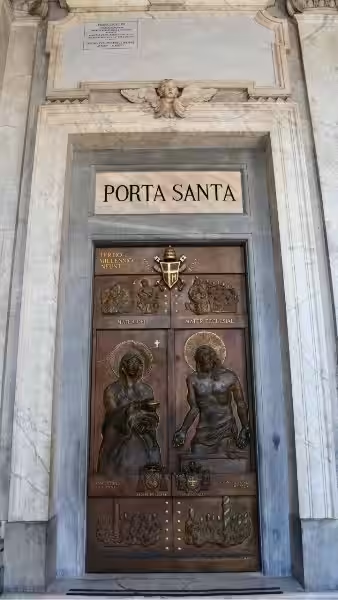
During a Holy Year, certain actions or pilgrimages are designated as particularly meritorious for gaining indulgences. These might include making a pilgrimage to Rome, crossing one of the Holy Doors opened in St. Peter’s Basilica or other major basilicas, or undertaking specific charitable works. These acts are not magic formulas, but rather outward expressions of an inner disposition of faith, repentance, and a desire for spiritual purification. They serve as tangible focal points for the deeper spiritual work that a Holy Year encourages.
Pilgrimage and Prayer: Pathways to Spiritual Renewal
One of the most iconic elements of a Holy Year is the pilgrimage. Traditionally, this involves a journey to a sacred site, often undertaken with a spirit of prayer and sacrifice. The physical act of walking, of leaving one’s comfort zone, mirrors the spiritual journey of leaving behind old habits and embracing a new life in Christ. The Holy Year indulgence associated with a pilgrimage is not merely for the journey itself, but for the prayerful disposition and devout fulfillment of specific conditions during that journey.
To gain the Holy Year indulgence through pilgrimage, a believer typically needs to:
Make a prayerful pilgrimage to a designated holy site, such as one of the Papal Basilicas in Rome or other significant churches.
Pass through a Holy Door, which is only opened during a Jubilee year, symbolizing an opening to God’s grace.
Receive Holy Communion with devotion, preferably on the day of the pilgrimage or within a few days.
Make a Confession within a reasonable period before or after the pilgrimage, to be in a state of grace.
Pray for the intentions of the Pope, such as the unity of the Church and the welfare of the world.
These conditions are designed to ensure that the indulgence is received with the proper spiritual disposition, emphasizing repentance, faith, and charity.
Navigating the Conditions: Practical Steps for Gaining an Indulgence
Understanding the specific conditions for gaining a Holy Year indulgence is crucial for experiencing its full spiritual benefit. It’s not about ticking boxes, but about engaging with these acts as genuine expressions of faith. For instance, receiving Holy Communion should be done with awareness of the profound gift of Christ’s presence, not just as a routine action. Similarly, prayer for the Pope’s intentions calls us to broaden our spiritual focus beyond our own needs to the needs of the entire Church and the world.
It’s also important to note the requirement for Confession. This sacrament is the primary means by which we receive forgiveness for our sins and are restored to full communion with God and the Church. Approaching an indulgence with a contrite heart and a sincere desire for God’s mercy, having already received the sacrament of Penance, ensures that we are truly open to the graces being offered. The Church encourages us to see these conditions not as burdens, but as invitations to a deeper spiritual engagement, enriching our experience of God’s love and forgiveness during this special time.
Beyond the Legalistic: The Heart of the Indulgence
It’s easy to get bogged down in the technicalities of Holy Year indulgences, perhaps viewing them as a complex set of rules. However, it’s vital to remember the underlying spirit of the Church’s teaching. Indulgences are not about loopholes or clever ways to shorten one’s time in purgatory. They are about healing, conversion, and a deepening relationship with God. The Church, in her maternal wisdom, offers these spiritual aids to help us on our journey toward holiness.
The ultimate goal of seeking a Holy Year indulgence is to be more fully united with God. When we strive to fulfill the conditions with a sincere heart, we are actively participating in the spiritual disciplines that draw us closer to Him. It’s about fostering an attitude of gratitude for God’s mercy, a desire to overcome our own imperfections, and a commitment to living a life more fully in Christ. The indulgence is a tangible reminder that God’s forgiveness is always available, and that through the Church, we have access to the boundless riches of His grace.
Living the Spirit of the Jubilee: A Lasting Transformation
While the temporal aspect of a Holy Year eventually concludes, the spiritual fruits of participating in its devotions and seeking its indulgences can have a lasting impact on a believer’s life. The intensified prayer, the acts of charity, and the focus on reconciliation can foster a renewed commitment to living out the Gospel message throughout the year. The grace of the indulgence is meant to be a catalyst for ongoing conversion and a deeper spiritual life.
Therefore, approaching a Holy Year and its associated indulgences with a spirit of humility, faith, and a genuine desire for God’s grace is paramount. It’s an opportunity to experience God’s mercy in a profound way, to be healed, and to be empowered to live a more Christ-centered life. The Holy Year indulgence is not just a spiritual footnote; it’s a powerful testament to God’s unending love and His desire for our salvation, a true pilgrimage of grace in the heart of our faith.
Frequently Asked Questions about Holy Year Indulgences
What is a Holy Year Indulgence?
A Holy Year Indulgence is a special remission of temporal punishment for sins, granted by the Church during a Holy Year. This remission applies to both the living and the deceased.
What is Temporal Punishment for Sin?
When a person confesses and receives absolution for their sins, the eternal punishment for those sins is remitted. However, a temporal punishment may still remain. This temporal punishment is a purification that one must undergo, either in this life through penance, prayer, and good works, or in purgatory after death, to make amends for the remaining effects of sin.
How is a Holy Year Indulgence obtained?
To gain a Holy Year Indulgence, the faithful must fulfill specific conditions set by the Church. These typically include:
* Making a pilgrimage to a designated holy site (e.g., St. Peter’s Basilica in Rome, or other designated churches).
* Passing through a Holy Door.
* Receiving the Sacrament of Reconciliation (Confession) within a reasonable time before or after the pilgrimage.
* Participating in Holy Mass and receiving Holy Communion.
* Praying for the intentions of the Holy Father (e.g., reciting the Our Father, Hail Mary, and Glory Be).
* Performing acts of charity and penance.
Can I gain an Indulgence for someone who has died?
Yes, Holy Year Indulgences can be applied to the souls of the faithful departed. This means that by fulfilling the conditions for the indulgence, you can offer its spiritual benefit to someone in purgatory.
What is the significance of the Holy Door?
The Holy Door is a symbolic gateway representing the entrance into a time of grace and reconciliation. Passing through it during a Holy Year is a tangible act that signifies a spiritual journey of conversion and renewed commitment to faith.
Are Holy Year Indulgences automatic?
No, indulgences are not automatic. They require the individual to actively participate in the prescribed spiritual activities and to have the correct disposition of heart, which includes detachment from all sin, even venial sin.
Where can I find information about the specific requirements for the next Holy Year?
Official announcements and detailed information regarding the specific conditions and timings for obtaining Holy Year Indulgences are released by the Vatican and local dioceses well in advance of the Holy Year. It is advisable to consult official Church publications and websites for accurate guidance.