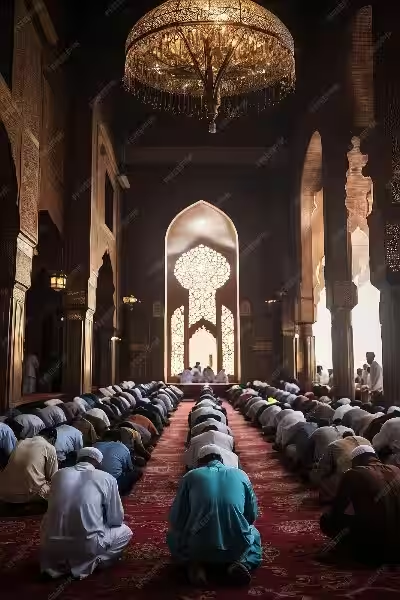
The question of whether Muslims believe in the same God as Christians is one that often sparks curiosity and sometimes, misunderstanding. At its core, this inquiry delves into the very foundations of two of the world’s largest monotheistic religions. To navigate this complex theological landscape, we must embark on a journey of exploration, examining shared roots, distinct interpretations, and the profound commonalities that bind these faiths. Understanding this relationship is not just an academic pursuit; it’s a pathway to fostering greater interfaith dialogue and appreciating the rich tapestry of human belief.
Many people, both within and outside these religious traditions, find themselves pondering this fundamental question. It’s a natural curiosity, born from observing the outward expressions of these faiths and the historical connections they share. The answer, while complex, is ultimately affirmative in its most essential aspect: yes, Muslims and Christians worship the same God. However, the way this singular God is understood, worshipped, and revealed differs significantly, leading to unique theological frameworks and practices. This article aims to illuminate these nuances in a clear, accessible, and informative way, helping you to better grasp the intricate relationship between Islam and Christianity.
The most compelling starting point for understanding the connection between Islam and Christianity lies in their shared Abrahamic heritage. Both religions trace their spiritual lineage back to Abraham, a pivotal figure in religious history. For Muslims, Abraham (known as Ibrahim in Arabic) is revered as a prophet of God, a devout monotheist who submitted entirely to God’s will. This concept of submission is central to Islam, hence its very name, which means “submission to God.”
Similarly, Christians also hold Abraham in high regard, recognizing him as the “father of faith.” The narratives surrounding Abraham, his covenant with God, and his unwavering devotion are foundational to both traditions. This shared ancestor provides a powerful common ground, a testament to a singular divine origin that predates the distinct formations of Judaism, Christianity, and Islam. This shared narrative is crucial when considering whether Muslims believe in the same God as Christians, as it points to a common wellspring of divine revelation.
The Concept of God: Allah and Yahweh
When we ask do Muslims believe in the same God as Christians, a key element to explore is the terminology used. Muslims refer to God as Allah, an Arabic word that translates to “The God.” This is not a different deity; it is simply the Arabic word for the one, true God, the same God worshipped by Arabic-speaking Christians and Jews. Think of it like different languages having different words for the same concept – “dog” in English, “perro” in Spanish, and “chien” in French all refer to the same animal.
Therefore, when a Muslim says “Allah,” they are invoking the one, supreme creator, the sustainer of the universe, the source of all mercy and compassion. This is the same God that Christians refer to as God, or frequently, through the name Yahweh (or Jehovah, derived from the Hebrew YHWH), which is understood as God’s proper name revealed in the Old Testament. The divine attributes described in Islamic theology – omnipotence, omniscience, justice, mercy – are remarkably congruent with the attributes ascribed to God in Christian theology. Both faiths emphasize God’s oneness, transcendence, and absolute sovereignty.
Prophets and Revelation: A Continuum of Divine Guidance
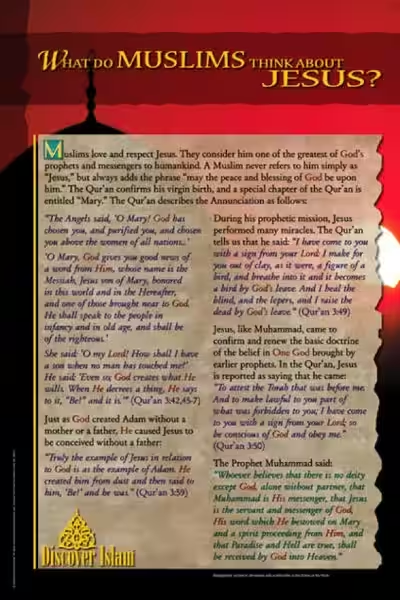
A significant aspect of the relationship between Islam and Christianity, and indeed Judaism, is the concept of prophets and divine revelation. Muslims believe that God has sent a series of prophets throughout history to guide humanity. These prophets include many figures revered in the Christian tradition, such as Adam, Noah, Abraham, Moses, and Jesus. Muslims view Jesus (Isa in Arabic) as a highly revered prophet of God, born of a virgin, who performed miracles and delivered God’s message.
However, a crucial distinction arises in the understanding of Jesus’s role. While Christians believe Jesus is the Son of God, divine in nature, and part of the Holy Trinity, Muslims believe Jesus was a human prophet, albeit one of immense importance and closeness to God. Muslims firmly reject the concept of the Trinity and the divinity of Jesus, adhering strictly to the absolute oneness of God (Tawhid). This difference in Christology is a primary theological divergence, yet it doesn’t negate the shared belief in a single Creator God, when considering do Muslims believe in the same God as Christians.
Core Beliefs: Commonalities and Divergences
Delving deeper into the core tenets of each faith reveals both striking similarities and significant differences. When we ask do Muslims believe in the same God as Christians, it’s essential to look at their foundational beliefs about God’s nature and relationship with humanity. Both religions are fundamentally monotheistic, meaning they believe in one God. This is a cornerstone of their faith and a profound point of convergence.
The concept of divine judgment and an afterlife is also a strong commonality. Both Muslims and Christians believe in a Day of Judgment where individuals will be held accountable for their actions in this life and will face either eternal reward or punishment. The emphasis on morality, compassion, justice, and love as divine attributes and principles to be emulated by believers further underscores their shared ethical framework, originating from the same Divine source.
The Nature of God: Oneness vs. Trinity
The most significant theological divergence lies in the Christian doctrine of the Trinity. Christians believe that God is one being in three co-equal persons: the Father, the Son (Jesus Christ), and the Holy Spirit. This concept is central to Christian theology and is understood as a mystery of faith. For Muslims, this doctrine is incompatible with the concept of Tawhid, the absolute and indivisible oneness of God.
Muslims believe that associating any partners with God, or believing in multiple gods, is the gravest sin. Therefore, their understanding of God is strictly unitarian. When considering do Muslims believe in the same God as Christians, this distinction in how God’s nature is understood is paramount. However, it’s crucial to remember that both faiths are worshipping a single, supreme, all-powerful Creator, even if their theological frameworks for describing God’s essence differ. It’s like two people describing the same magnificent mountain from different vantage points; the mountain itself remains the same, but their perspectives and the details they choose to highlight may vary.
Divine Law and Guidance: Scripture and Practice
Both Islam and Christianity rely on sacred scriptures as the revealed word of God. Christians hold the Bible (comprising the Old and New Testaments) as their holy book, believed to be divinely inspired. Muslims believe the Quran is the literal word of God revealed to Prophet Muhammad, the final prophet in a line of messengers. While the Quran acknowledges the divine origin of scriptures revealed before it, such as the Torah and the Gospels, it states that they were altered or corrupted over time, and that the Quran is the final and complete revelation from God.
This difference in scripture leads to distinct religious laws and practices. Islamic law (Sharia) is derived from the Quran and the Sunnah (the teachings and practices of Prophet Muhammad) and guides Muslims in all aspects of life, from personal conduct to societal organization. Christian practice, while also guided by biblical teachings, often emphasizes grace and the teachings of Jesus, with varying interpretations and traditions across different denominations. Understanding these scriptural differences is key to grasping the nuances when asking do Muslims believe in the same God as Christians.
The Path to Salvation: Faith, Works, and Grace
The ultimate goal for believers in both Islam and Christianity is salvation and achieving eternal paradise. Here too, we find common threads and distinct approaches. Both faiths emphasize the importance of faith in God and living a righteous life. However, the pathways to achieving salvation are elaborated upon differently.
For Christians, salvation is primarily attained through faith in Jesus Christ and his atoning sacrifice for the sins of humanity. While good works are seen as a natural outgrowth of this faith, the emphasis is often on God’s grace and redemption through Christ. Muslims, on the other hand, believe that salvation is achieved through submission to God’s will, which involves both sincere faith and performing righteous deeds as prescribed by Islamic teachings. Mercy from God is paramount, but it is earned through a combination of belief and action, with no intermediaries.
The Role of Jesus: Prophet or Divine Savior?
The role of Jesus Christ is perhaps the most significant point of theological divergence. As mentioned earlier, Muslims revere Jesus as a noble prophet, the Messiah, born of a virgin, who performed miracles and conveyed God’s message. They believe he was raised to heaven by God and will return before the Day of Judgment. However, they do not believe Jesus is divine or the Son of God in a literal, biological sense, nor do they believe he was crucified in the manner commonly understood by Christians. Instead, they believe God saved him and raised someone else to appear as him on the cross.
Christians, conversely, believe Jesus is the incarnation of God, the Son of God, whose death and resurrection offer atonement for humanity’s sins, making salvation possible for those who believe in him. This fundamental difference in the nature and role of Jesus is crucial when discussing whether Muslims believe in the same God as Christians. While both venerate Jesus, their theological understanding of his personhood and his relationship to God are vastly different.
Shared Values: Love, Compassion, and Justice
Despite theological differences, the ethical and moral teachings within Islam and Christianity share a profound commonality, stemming from the same divine source. Both faiths strongly advocate for love, compassion, kindness, forgiveness, and justice. The emphasis on caring for the poor, the needy, and the marginalized is a central tenet in both religions. Jesus’s teachings on loving your neighbor as yourself resonate deeply within Islamic ethics, which also stresses the importance of empathy and social responsibility.
Prophet Muhammad, like Jesus, emphasized the importance of mercy and compassion. The Quran is replete with verses calling for acts of charity and kindness. When believers from both traditions engage in humanitarian work or advocacy for social justice, they are often acting upon core values that are deeply rooted in their shared Abrahamic heritage and their common understanding of a benevolent, just God, regardless of the specific theological labels they use. This shared ethical compass offers a powerful bridge when considering do Muslims believe in the same God as Christians.
So, to circle back to our initial question: do Muslims believe in the same God as Christians? The unequivocal answer is yes, at the most fundamental level. Both faiths worship one, indivisible, eternal, and all-powerful Creator. They share a lineage tracing back to Abraham, a belief in divine revelation, prophets, judgment, and an afterlife. The Arabic word “Allah” refers to the same singular God that Christians call God or Yahweh.
The divergences arise not in the who they worship, but in the how they understand God’s nature and the how of salvation. The Christian doctrine of the Trinity and the divinity of Jesus represent a significant theological difference from Islam’s strict adherence to Tawhid and its view of Jesus as a revered human prophet. These are not minor distinctions; they are central to each faith’s identity. However, these differences should not obscure the profound oneness of God that both traditions affirm. It is this shared belief in a single, supreme deity, the source of all existence and morality, that forms the bedrock of their shared monotheistic identity. Understanding this intricate relationship fosters respect, encourages dialogue, and highlights the enduring human quest to connect with the divine.
Frequently Asked Questions: Do Muslims Believe in the Same God as Christians?
Do Muslims believe in the same God as Christians and Jews?
Yes, Muslims, Christians, and Jews all worship the same God. Islam recognizes the same God of Abraham, who is also the God of Moses and Jesus. In Arabic, the word for “God” is “Allah,” and Muslims believe that this is the same singular, all-powerful Creator that Christians and Jews refer to as God.
What are the key similarities in the belief of God among Muslims, Christians, and Jews?
All three Abrahamic religions share fundamental beliefs about God:
Monotheism: The absolute oneness and uniqueness of God.
Creator: God is the sole creator and sustainer of the universe.
Omnipotence and Omniscience: God is all-powerful and all-knowing.
Mercy and Justice: God is both merciful and just.
Divine Revelation: God communicates with humanity through prophets and scriptures.
What are the main differences in how Muslims understand God compared to Christians?
While Muslims, Christians, and Jews believe in the same God, there are distinct theological differences. In Islam, the concept of God’s oneness (Tawhid) is paramount and absolute. Muslims reject the Christian doctrine of the Trinity, believing it to be a form of polytheism or associating partners with God. They do not believe Jesus is the son of God in a literal, divine sense, but rather a highly revered prophet.
How do Muslims refer to God?
Muslims primarily refer to God as “Allah.” They also frequently use the 99 Names of Allah, as mentioned in the Quran, which describe His attributes, such as “Ar-Rahman” (The Most Gracious), “Ar-Rahim” (The Most Merciful), and “Al-Aleem” (The All-Knowing).
Are the scriptures of Christians and Jews considered divine by Muslims?
Muslims believe that the Torah (given to Moses) and the Gospels (given to Jesus) were originally divine revelations from God. However, they believe that these scriptures have been altered or corrupted over time. The Quran, revealed to the Prophet Muhammad, is considered by Muslims to be the final and complete revelation of God’s word, preserving the original message without alteration.