Introduction: The Brief, Bright Flame of Pope John Paul I
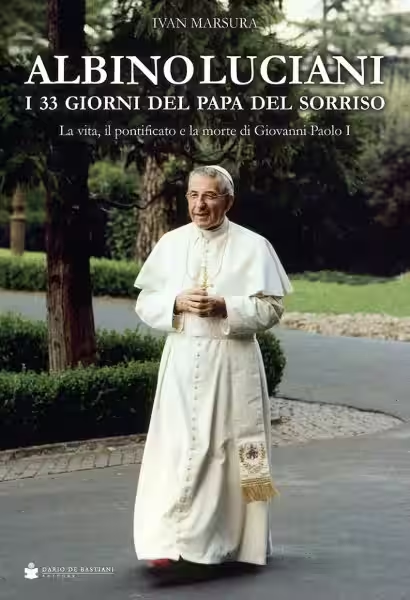
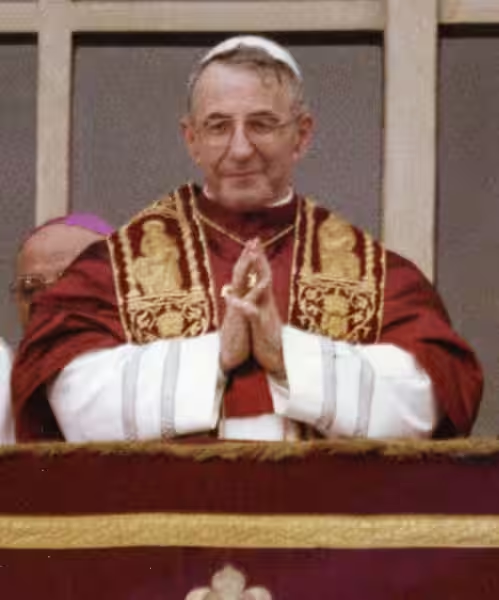
The annals of papal history are filled with figures who have left an indelible mark, their pontificates shaping the course of the Catholic Church for generations. Yet, few have captured the imagination and sparked as much curiosity and speculation as Pope John Paul I, born Albino Luciani. His reign, lasting a mere 33 days in the autumn of 1978, was tragically short, a flickering candle extinguished before its full potential could be realized. However, within that brief period, Albino Luciani, the “Smiling Pope,” offered a glimpse of a different kind of papacy, one characterized by humility, simplicity, and a profound desire for pastoral renewal. His unexpected death, shrouded in mystery for many, has fueled countless theories, but beyond the speculation lies the enduring legacy of a man who aimed to bring the Gospel’s message closer to the hearts of ordinary people.
The world was captivated by the gentle demeanor and approachable nature of Albino Luciani. In a world often perceived as distant and hierarchical, he represented a breath of fresh air, a pontiff who seemed genuinely connected to the struggles and joys of everyday life. His election itself was a significant moment, signaling a potential shift in the Church’s direction, a move towards a more accessible and relatable papacy. While his time on the throne was fleeting, the questions surrounding his brief pontificate and the man himself continue to resonate, inviting us to explore the profound impact a single individual, even for a short while, can have on religious thought and practice.
Humble Beginnings: From a Small Italian Village to the Vatican
The Rise of a Shepherd of Souls
Albino Luciani’s journey to the papacy was not one of meteoric ambition but a steady, dedicated ascent fueled by a genuine love for service and an unwavering faith. Born in a modest village in the Veneto region of Italy, his early life was marked by the simple realities of rural existence. From these unassuming origins, he demonstrated an early aptitude for theological study, eventually entering the seminary and dedicating his life to the priesthood. His pastoral work was characterized by a profound empathy for his flock, a quality that would define his episcopacy and ultimately, his brief papacy.
Throughout his career, from parish priest to bishop and then to cardinal, Luciani consistently championed simplicity and closeness to the people. He was known for his engaging sermons, often peppered with anecdotes and parables that made complex theological ideas understandable and relatable. For instance, instead of abstract pronouncements, he might use a story about a fisherman to illustrate patience or a farmer tending his crops to explain perseverance. This down-to-earth approach resonated deeply with those he served, setting him apart as a truly pastoral leader who prioritized the spiritual well-being of individuals.
As a bishop and later as a cardinal, Albino Luciani consistently advocated for ecclesiastical reform that would bring the Church closer to the common person. He believed that the teachings of Christ were meant to be lived out in the everyday lives of believers, not confined to the abstract pronouncements of distant authorities. This vision extended to his views on social justice and poverty, areas where he felt the Church had a crucial role to play. He wasn’t afraid to speak out against inequality and oppression, advocating for a more compassionate and equitable world.
His approach was not about radical upheaval but about a deepening of existing principles. He emphasized the importance of the Bible and the Catechism as guides for daily living, encouraging a more personal and engaged relationship with faith. This focus on lay involvement and empowerment was a subtle yet significant shift, suggesting a papacy that would actively encourage the participation of all members of the Church in its mission. The seeds of his envisioned reforms were sown in his actions and words, hinting at a papacy that would be both spiritually profound and practically engaged.
The “Smiling Pope”: A Papacy of Unprecedented Warmth
A New Face in the Vatican
The election of Albino Luciani as Pope John Paul I in August 1978 was met with a wave of optimism and delight. His predecessor, Pope Paul VI, had been a figure of immense gravitas, but John Paul I brought a different kind of charisma to the papal office. His warm smile and gentle eyes immediately endeared him to millions, both within and outside the Catholic Church. He was often referred to as the “Smiling Pope,” a moniker that perfectly encapsulated his benevolent and approachable demeanor. This was a stark contrast to the more formal and often distant image of previous pontiffs.
His willingness to engage with the media in a more direct and open manner was also a notable departure. He didn’t shy away from interviews or public appearances, and his simple, honest answers often disarmed critics and won over skeptics. This new accessibility fostered a sense of connection, making the papacy feel less like an imposing institution and more like a guiding presence. For many, his election represented a hope for a more human and relatable Church, one that could better understand and address the needs of its followers.
A Philosophy of Simple Truths
During his short pontificate, Pope John Paul I consistently articulated a philosophy centered on simple, profound truths. He believed that the core of Christian faith lay in love, charity, and humility. His sermons and addresses were devoid of complex theological jargon, instead focusing on the practical application of biblical teachings in daily life. He often used relatable analogies, much like he did in his earlier pastoral work, to illustrate his points. For example, he might compare the importance of forgiveness to a gardener tending to his plants, emphasizing that unforgiveness can choke out spiritual growth.
One of his most memorable teachings was his emphasis on “theological optimism.” He believed that despite the world’s challenges, there was always reason for hope grounded in God’s enduring love and mercy. This wasn’t a naive optimism but a faith-filled conviction that could inspire resilience in the face of adversity. His repeated calls for fraternity and understanding among all people, regardless of their faith, also signaled a desire for a more unified and peaceful world, a testament to his universalist vision of compassion and goodwill.
The Mystery of His Passing: Unanswered Questions and Enduring Legacies
A Sudden and Shocking End
The abrupt death of Pope John Paul I on September 29, 1978, sent shockwaves across the globe. The official cause of death was reported as a heart attack, a tragic end to a pontificate that had promised so much. However, the circumstances surrounding his passing, coupled with the Vatican’s initial handling of the news, fueled a myriad of theories and speculations. For many, the idea that such a seemingly healthy and vibrant leader could be gone so suddenly was difficult to accept, leading to whispers of foul play and conspiracies.
The lack of immediate transparency from the Vatican, understandable perhaps in the context of the time, inadvertently created a vacuum that was quickly filled by rumors. The speed at which his body was reportedly embalmed and the initial accounts of who discovered him all contributed to the lingering sense of unease. These questions, while perhaps rooted in a desire for closure, have overshadowed the positive impact of his brief but meaningful time as pontiff for some, turning a gentle shepherd into a figure of intrigue and mystery.
The Enduring Impact of Albino Luciani
Despite the brevity of his papacy and the lingering questions about his death, the legacy of Albino Luciani, Pope John Paul I, remains significant. He is remembered for his unwavering commitment to pastoral care, his simple yet profound teachings, and his infectious warmth. He demonstrated that a leader in the highest office of the Catholic Church could also be a humble servant, deeply connected to the spiritual needs of ordinary people. His emphasis on evangelization through love and compassion continues to inspire many within and beyond the Church.
The very questions surrounding his passing, while unfortunate, have also kept his memory alive in a unique way. They prompt a deeper examination of his character, his vision, and the potential he held for the Church. For those who seek a more authentic and accessible faith, the example of Albino Luciani serves as a powerful reminder that true spiritual leadership often lies in simplicity, humility, and an unyielding love for humanity. His brief flame, though extinguished too soon, cast a profound and lasting light.
Frequently Asked Questions about Pope John Paul I (Albino Luciani)
Who was Pope John Paul I?
Pope John Paul I, born Albino Luciani, was the 263rd Pope of the Catholic Church. He served as Pope for a brief period of 33 days in 1978, from August 26 to September 28.
What is significant about his papacy?
His papacy is significant for its extreme brevity, leading to much speculation and interest. He was also notable for being the first Pope to choose a double papal name, combining the names of his two immediate predecessors, John XXIII and Paul VI. He was also one of the few popes in modern history not to be crowned, opting for a simpler inauguration ceremony.
What was his religious background?
Albino Luciani was born into a devoutly Catholic family in a small village in northern Italy. He was ordained a priest and later became the Bishop of Vittorio Veneto, then the Patriarch of Venice, before his election to the papacy. He was known for his pastoral heart, his theological scholarship, and his commitment to social justice and the poor.
What were his theological beliefs?
Pope John Paul I was a staunch defender of Catholic doctrine. He was known for his accessible and pastoral approach to theology, often explaining complex religious concepts in simple, understandable terms, particularly in his widely read book “Illustrissimi” (Letters to Famous People). He emphasized the importance of faith, hope, and charity, and the love of God.
Is there any controversy surrounding his death?
Yes, the suddenness of his death after only 33 days in office has led to various theories and speculations, including some suggesting foul play. However, official accounts and medical reports state that he died of a heart attack. The Catholic Church has not officially recognized any of these speculative theories.
What legacy did he leave behind?
Despite his short pontificate, Pope John Paul I is remembered for his kindness, humility, and his genuine pastoral care. He is often referred to as the “Smiling Pope” due to his warm demeanor. His brief papacy left a lasting impression on many, and he remains a figure of interest and affection within the Catholic Church.