The tapestry of Catholic tradition is richly woven with the lives of its saints. Among these venerable figures, the stories of Catholic saints men hold a special resonance, offering a profound wellspring of inspiration, guidance, and a tangible connection to the divine. These individuals, men from diverse walks of life and historical periods, demonstrated extraordinary faith, courage, and love, leaving behind legacies that continue to shape the spiritual landscape for countless believers today. Their journeys, often marked by profound personal struggles and unwavering devotion, serve as powerful testaments to the transformative power of God’s grace and the enduring strength of the human spirit when aligned with divine purpose.
For men navigating the complexities of modern life, the exemplos of these holy men provide not just abstract ideals, but relatable narratives of overcoming challenges. Whether confronting personal temptations, societal pressures, or even persecution, these saints offer practical wisdom and unwavering hope. Their lives are not distant, unattainable myths, but rather practical blueprints for living a life deeply rooted in faith, reason, and charity. Understanding their stories can empower men to embrace their own spiritual potential and to live out their faith with authenticity and conviction.
The spectrum of Catholic saints men is as varied as humanity itself. We find among them royalty and beggars, scholars and laborers, soldiers and fishermen. This diversity underscores a fundamental tenet of the faith: that holiness is attainable by all, regardless of social standing, profession, or background. Each saint, in their unique context, found ways to serve God and their neighbor, demonstrating that faith is not confined to monasteries or pulpits, but is meant to be lived out in the messy, beautiful reality of everyday existence. Their individual journeys offer distinct perspectives on the challenges and opportunities inherent in following Christ.
Consider the intellectual rigor of someone like St. Thomas Aquinas, a philosopher and theologian whose profound writings continue to shape Catholic thought. His dedication to understanding and articulating the truths of faith through reason provides a model for men seeking to integrate their intellectual pursuits with their spiritual lives. Contrast this with the humble service of St. Francis of Assisi, who renounced wealth and status to embrace poverty and live in solidarity with the marginalized, demonstrating a radical commitment to evangelical simplicity and compassion. These contrasting figures, and countless others, illustrate that there is no single mold for sainthood, but rather an infinite variety of ways to express God’s love and truth in the world.
The lives of Catholic saints men are, at their core, chronicles of virtue personified. They exemplify qualities that are universally admired and deeply needed in contemporary society: courage, integrity, compassion, patience, and perseverance. These are not passive virtues, but active forces that shaped their actions and enabled them to stand firm in their beliefs, even in the face of adversity. Their commitment to these virtues, often at great personal cost, serves as a powerful antidote to the fleeting trends and superficial values that can sometimes dominate our culture.
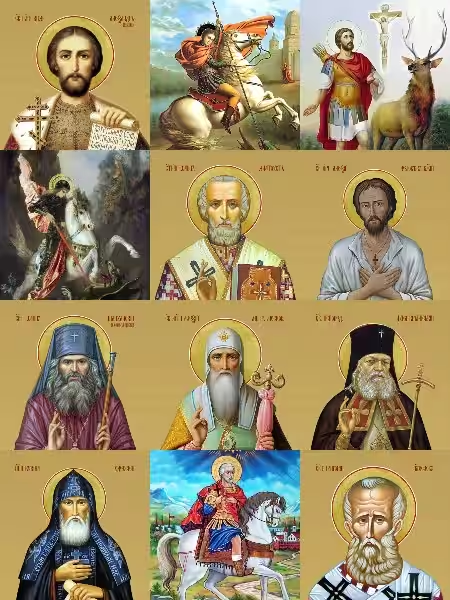
For men grappling with the pressures of leadership, family responsibilities, or professional challenges, the example of St. Joseph, the earthly father of Jesus, offers profound insights. His quiet strength, his protective love, and his unwavering obedience to God’s will in difficult circumstances are truly inspiring. He navigated uncertainty with faith, providing a stable and loving environment for the Holy Family. Similarly, the martial prowess and unwavering loyalty to Christ of St. George or St. Michael the Archangel can resonate with men who are called to protect and defend what is good and true, embodying spiritual and physical courage.
Navigating Daily Life with Saints as Guides
The spiritual journey is often a winding path, filled with moments of joy and periods of trial. In these moments, turning to the wisdom and intercession of Catholic saints men can provide significant solace and direction. These are not distant, impersonal figures, but brothers and fathers in faith who have already walked the path and can offer encouragement and insight. Their prayers, offered eternally in heaven, are believed to be a powerful force for good in our lives.
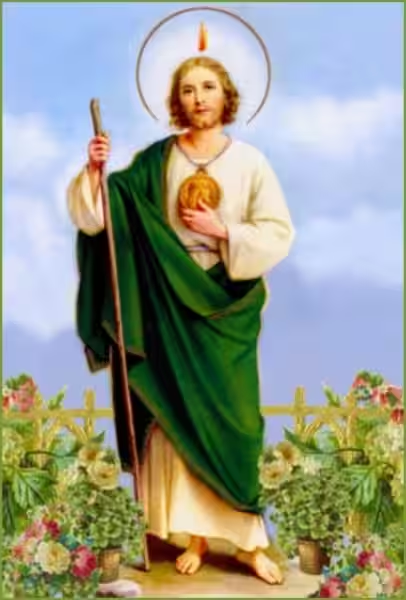
For example, when facing a difficult decision or struggling with a particular sin, one might turn to St. Augustine, whose own journey from a life of sin to profound conversion is a testament to God’s mercy and the power of repentance. His writings, such as his “Confessions,” offer raw honesty and relatable struggle, reminding us that even the greatest saints were imperfect humans who found their way through faith. For men seeking to grow in humility and service, the example of St. Martin of Tours, who famously shared his cloak with a beggar, embodies a radical generosity and compassion that can inspire us to look beyond ourselves and to see Christ in those in need. The practice of invoking specific saints for particular needs, such as St. Jude for lost causes or St. Anthony of Padua for finding lost items (physical or spiritual), is a time-honored tradition that connects us to these intercessors.
The Enduring Power of Their Witness
The legacies of Catholic saints men are more than just historical anecdotes; they are living testaments to the enduring power of faith. Their stories continue to inspire men across generations to strive for holiness, to embrace virtue, and to live lives of purpose and meaning. In a world often characterized by doubt and division, the unwavering faith exemplified by these holy men offers a beacon of hope and a tangible reminder of God’s constant presence and love.
By engaging with the lives of Catholic saints men, we are not simply learning about the past; we are forging a connection to a timeless tradition of spiritual excellence. Their witness challenges us to examine our own lives, to identify areas where we can grow in faith and virtue, and to draw strength from their example. Whether through prayer, studying their lives, or striving to imitate their virtues, these holy men remain invaluable companions on our own spiritual journeys, offering guidance, encouragement, and the profound assurance that God’s grace is always available to those who seek it with a sincere heart.
Frequently Asked Questions: Catholic Saints (Men)
Who are Catholic saints?
Catholic saints are individuals recognized by the Catholic Church for their exceptional holiness and virtue. They are believed to be in heaven and can be invoked as intercessors for believers.
What does it mean for a man to be a Catholic saint?
For a man to be a Catholic saint, he lived a life of profound faith, charity, and obedience to God’s will, demonstrating exemplary Christian virtues. The Church canonizes these men after a rigorous process of investigation.
What are some examples of famous Catholic male saints?
Some of the most well-known Catholic male saints include Saint Peter, Saint Paul, Saint Joseph, Saint Francis of Assisi, Saint Augustine of Hippo, Saint Thomas Aquinas, and Saint John Paul II.
What roles did male saints play in the early Church?
Early male saints, such as the Apostles Peter and Paul, played crucial roles in spreading Christianity, establishing churches, and developing theological doctrines. Many also served as martyrs, sacrificing their lives for their faith.
Are there specific patron saints for men?
While many saints are venerated by people of all genders, some male saints are particularly invoked for guidance in certain aspects of life. For example, Saint Joseph is the patron saint of fathers and workers, and Saint Sebastian is a patron of soldiers.
How does one become a Catholic saint?
The Catholic Church has a formal canonization process. It begins with the deceased individual being declared a “Servant of God.” If deemed to have lived a life of heroic virtue, they are declared “Venerable.” Then, after at least one authenticated miracle attributed to their intercession, they are beatified and declared “Blessed.” A second authenticated miracle is typically required for canonization as a “Saint.”
What is the significance of venerating male saints?
Venerating male saints means honoring them as examples of Christian living and asking for their intercession. It is not worship, but a recognition of their closeness to God and their ability to pray for us. Their lives offer inspiration and guidance for believers.