March, often a month of transition, where winter’s chill begins to yield to spring’s gentle warmth, holds a rich tapestry of spiritual significance for many. Beyond the changing seasons, the Catholic Church and other Christian traditions honor a remarkable array of saints during this month. These saint feast days in March offer us not just historical markers, but profound opportunities for reflection, inspiration, and connection to a living faith. They are moments to pause, to learn from the lives of those who strove for holiness, and to draw strength from their enduring legacies.
This exploration will guide you through some of the most prominent and meaningful saint feast days in March, delving into their stories, the virtues they embody, and how their lives can resonate with our own in the 21st century. From the steadfast faith of a desert hermit to the profound love of a patron saint of the vulnerable, each day presents a unique lens through which to view our spiritual journey.
The Early Days of March: Pillars of Faith and Mercy
As March dawns, we are immediately greeted by figures who exemplify unwavering devotion and profound compassion. These early days offer powerful examples of living a life of faith even in the face of adversity.
Saint David of Wales (March 1st): A National Patron and Spiritual Guide
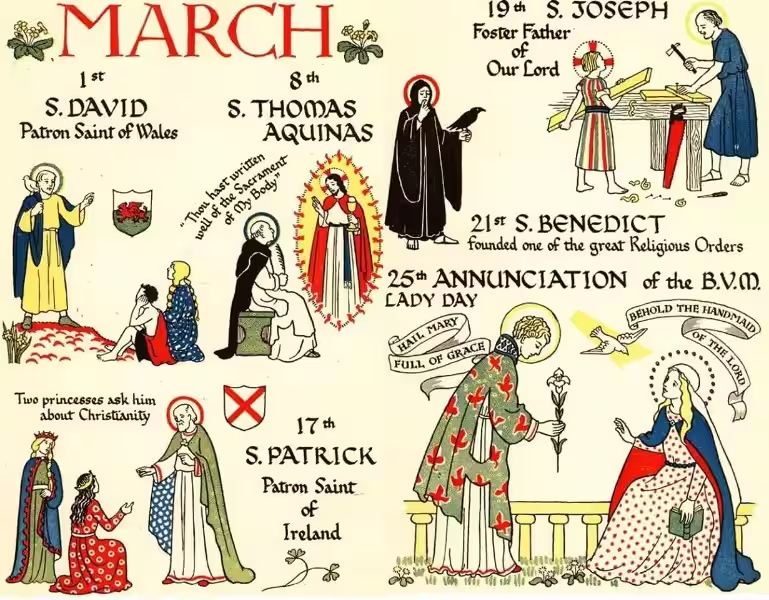
Our journey begins with Saint David of Wales, the patron saint of Wales. His life, steeped in monastic tradition and evangelization, showcases a deep commitment to spiritual discipline and pastoral care. He founded numerous churches and monasteries, spreading Christianity throughout his homeland. His famous saying, “Be joyful, keep your faith, do the little things,” is a timeless reminder that even seemingly small acts of kindness and devotion can have a profound impact.
Consider the impact of this simple yet powerful motto. In our busy lives, we often feel overwhelmed by grand gestures or monumental tasks. Saint David reminds us that consistent effort in the everyday, in the “little things” of our spiritual practice and our interactions with others, is what truly builds a life of holiness. This could be anything from a moment of prayer, a kind word to a stranger, or a humble act of service.
Saint Perpetua and Saint Felicity (March 7th): Courageous Witnesses to Christ
March 7th is a day to remember Saint Perpetua and Saint Felicity, two early Christian martyrs who faced persecution with extraordinary courage and faith. Their story, documented in their own writings and those of their contemporaries, is a testament to the power of conviction and the willingness to sacrifice everything for one’s beliefs. Despite their different social standings and maternal circumstances, their shared commitment to Christ united them in their ultimate sacrifice.
The narrative of Perpetua, a noblewoman, and Felicity, a slave, highlights the egalitarian nature of God’s love. Their willingness to face martyrdom, rather than renounce their faith, serves as a powerful example of unwavering allegiance to Christ. Their story encourages us to examine where our own true allegiances lie and to consider the courage it takes to stand firm in our convictions, even when faced with societal pressure or personal hardship.
Mid-March: Illuminating Lives and Devotion
As we move into the heart of March, the feast days continue to present us with inspiring figures whose lives illuminate different facets of Christian devotion and service. These saints offer diverse paths to holiness, reminding us that God’s call is unique for each individual.
Saint Patrick (March 17th): The Apostle of Ireland
Perhaps one of the most widely recognized saint feast days in March is that of Saint Patrick. Though many associate him with shamrocks and a general celebration of Irish culture, his life was far more profound. Captured as a young man and taken to Ireland as a slave, he eventually escaped and returned years later as a missionary, dedicating his life to evangelizing the Irish people. His perseverance and deep faith in the face of immense challenges are truly remarkable.
Saint Patrick’s journey from captivity to becoming a beloved apostle is a powerful story of redemption and divine purpose. It shows us that even in our darkest moments, God can work through us and use our experiences for a greater good. His dedication to bringing the Gospel to a new land, despite the dangers and difficulties, is a testament to the missionary spirit that continues to inspire Christians today.
Saint Joseph (March 19th): The Silent Protector and Humble Father
The feast of Saint Joseph, celebrated on March 19th, is a cornerstone of Christian devotion, particularly within Catholicism. Joseph, the earthly father of Jesus and the husband of Mary, is often depicted as a silent, steadfast figure. His humility, his trust in God’s plan, and his unwavering commitment to protecting and providing for his family make him an exceptional model of virtuous fatherhood and quiet strength. He is also known as the Patron Saint of Workers, a title that resonates with the dignity of labor.
Think of Joseph’s quiet acceptance of his extraordinary role. He didn’t question or demand explanations; he simply obeyed God’s will through the angel’s message. This silent obedience and profound trust are qualities we can all strive to cultivate. His patronage of workers reminds us that every honest labor has inherent dignity and that our work, when offered with a good heart, can be a form of prayer and service.
The final days of March continue to offer powerful spiritual insights, focusing on themes of divine love, sacrificial giving, and the enduring promise of hope. These saints remind us that the Christian journey is one of continuous growth and unwavering faith.
The Annunciation of the Lord (March 25th): A Divine “Yes” and the Incarnation
While not a saint’s feast day in the traditional sense, The Annunciation of the Lord on March 25th is a pivotal moment in the Christian calendar. It commemorates the angel Gabriel’s visit to Mary, announcing that she would conceive Jesus, the Son of God. Mary’s humble and courageous “Fiat” – “Be it done to me according to your word” – marks her profound acceptance of God’s will and the pivotal moment of the Incarnation. This day celebrates divine intervention and human cooperation.
The Annunciation is a powerful reminder of God’s desire to be intimately involved in our lives. Mary’s “yes” is an invitation for us to also respond with openness and trust when God calls us to something beyond our understanding. It’s about recognizing that even in the seemingly ordinary, the extraordinary can unfold when we align ourselves with God’s purposes.
Saint John of Egypt (March 28th): A Hermit’s Devotion and Spiritual Wisdom
March 28th often honors Saint John of Egypt, a desert hermit known for his asceticism, prayerfulness, and spiritual wisdom. Living a life of extreme simplicity and solitude, he dedicated himself to constant communion with God. Despite his reclusive lifestyle, his profound spiritual insights and the holiness that radiated from him attracted many who sought his guidance. His life is a testament to the power of deep prayer and detachment from worldly possessions.
Saint John’s extreme dedication to prayer and solitude might seem distant from our modern lives, yet his example speaks to the universal need for spiritual grounding. It reminds us that finding moments of quiet contemplation, even amidst the busyness of life, can nourish our souls. His wisdom, gained through deep communion with God, underscores the idea that true understanding often comes from stillness and introspection.
March, therefore, is more than just a transitional month; it’s a vibrant period in the liturgical year. The saint feast days in March offer us a rich treasury of human experience lived in the light of faith. They are invitations to learn, to be inspired, and to integrate their virtues into our own lives. Whether it’s the unwavering conviction of martyrs, the quiet strength of fathers, the evangelistic zeal of missionaries, or the profound wisdom of hermits, these holy men and women provide enduring guidance for our spiritual journeys. By reflecting on their lives and embracing their examples, we can indeed “do the little things” that lead to a life of deeper faith and greater love.
Saint Feast Days are special days in the Christian liturgical calendar dedicated to commemorating the life, virtues, and martyrdom of saints. These observances often include special readings, prayers, and reflections on the example set by the saint.
What are some prominent Saint Feast Days in March?
Some prominent Saint Feast Days in March include:
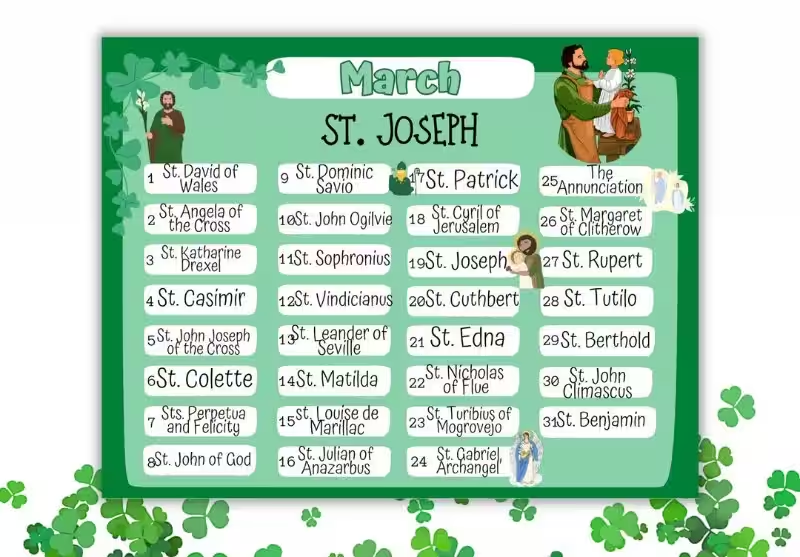
* March 7: Saints Perpetua and Felicity – Two early Christian martyrs in Carthage.
* March 17: Saint Patrick – The patron saint of Ireland, a missionary who converted much of Ireland to Christianity.
* March 19: Saint Joseph – The husband of Mary and foster father of Jesus.
* March 25: The Annunciation of the Lord – Commemorates the angel Gabriel’s announcement to Mary that she would conceive Jesus. While not solely a saint’s feast day, it is a significant Marian feast day within the broader context of Christian celebrations.
Why are Saint Feast Days observed?
Saint Feast Days are observed for several reasons:
* To remember and honor the lives and sacrifices of saints.
* To learn from their examples of faith, virtue, and love.
* To seek their intercession in prayer.
* To mark important events in salvation history and the life of the Church.
Is the observance of Saint Feast Days the same across all Christian denominations?
Observance of Saint Feast Days can vary significantly across different Christian denominations. While many traditions, particularly Catholic and Orthodox churches, have extensive calendars of saints’ days, Protestant denominations often place less emphasis on them, with some observing only a few major feast days.
How are Saint Feast Days celebrated?
Celebrations can include attending special church services, praying the Rosary or other devotional prayers, reading about the lives of the saints, and sometimes fasting or feasting in their honor. In some cultures, specific traditions and customs are associated with particular Saint Feast Days.