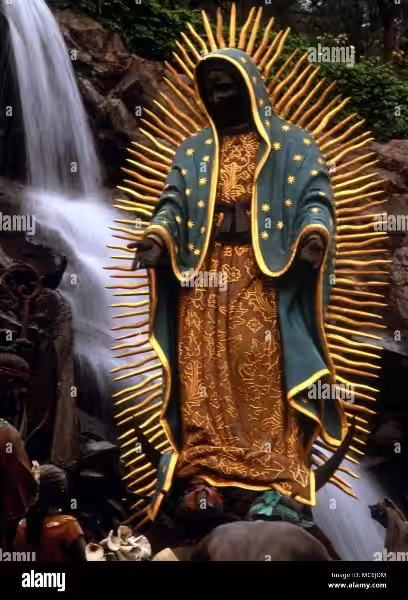
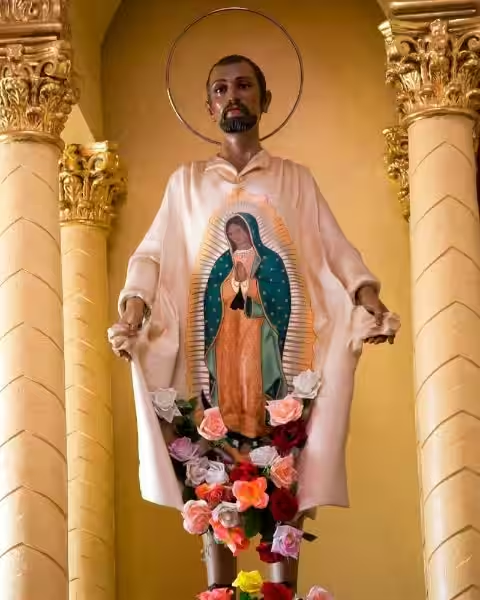
In the tapestry of faith, certain icons resonate with a power that transcends simple devotion. The Virgen Negra de Guadalupe, the Black Virgin of Guadalupe, is one such figure. Her image, steeped in history and shrouded in a profound spiritual aura, has become a cornerstone of religious practice and cultural identity, particularly within the Catholic tradition. More than just a statue or a painting, she represents a complex interplay of faith, history, and the enduring human quest for solace and understanding. Her story, and the devotion she inspires, offers a compelling glimpse into the very heart of what religion means to millions.
The allure of the Virgen Negra de Guadalupe is not a recent phenomenon. For centuries, pilgrims have journeyed to her sanctuaries, seeking her intercession and finding comfort in her presence. Her dark complexion, often a point of contemplation, has led to interpretations that connect her to indigenous roots and the struggles of marginalized communities, adding layers of meaning to her already rich symbolism. Understanding her significance requires delving beyond the surface, exploring the historical context, the theological interpretations, and the emotional resonance she evokes.
The Historical Roots and the Emergence of a Devotion
The legend of the Virgen Negra de Guadalupe is inextricably linked to the apparitions reported in 1531 to Juan Diego, an indigenous man, on Tepeyac Hill near Mexico City. According to the narrative, Mary appeared to him, speaking in his native Nahuatl language, and requested that a church be built in her honor. This miraculous image, imprinted on Juan Diego’s cloak (the tilma), is the iconic representation that has captivated hearts for generations. The initial awe and wonder surrounding this event laid the foundation for a devotion that would grow exponentially.
The historical context of the Spanish conquest and the subsequent evangelization of indigenous populations is crucial to understanding the impact of the Virgen Negra de Guadalupe. Her appearance to an indigenous peasant, rather than a Spanish noble or cleric, was seen by many as a divine affirmation of their people. The portrayal of Mary with darker skin, often interpreted as a blending of European and indigenous features, resonated deeply with a population grappling with cultural upheaval and the imposition of a new faith. This early connection fostered a sense of ownership and a unique spiritual bond that continues to thrive.
The Significance of the “Black Virgin” Iconography
The term “Black Virgin” itself is a descriptor for a category of Marian statues and icons that are dark-skinned, often due to age, pigment oxidation, or deliberate artistic choice. The Virgen Negra de Guadalupe is perhaps the most famous example, but she is part of a larger tradition found across Europe and the Americas. These dark-skinned Madonnas have often been associated with fertility, healing, and a connection to the earth, drawing parallels to ancient earth goddesses. Their darkness can also symbolize humility, the mysteries of the divine, and the universality of God’s love, embracing all peoples regardless of complexion.
The specific features of the Virgen Negra de Guadalupe on Juan Diego’s tilma are rich with symbolic meaning, meticulously studied by theologians and art historians. Her posture, the stars on her mantle, the crescent moon beneath her feet, and the angel supporting her – each element is interpreted as conveying profound theological messages. For instance, the crescent moon is often seen as a symbol of victory over paganism, while the stars on her blue mantle are believed to correspond to constellations visible at the time of her apparition. This visual language speaks volumes to believers, offering layers of spiritual insight and reinforcing the miraculous nature of her appearance.
The Virgen Negra de Guadalupe’s Role in Religious Practice and Spirituality
The devotion to the Virgen Negra de Guadalupe is not merely passive admiration; it is an active and vibrant component of religious life for millions. Churches dedicated to her are often sites of pilgrimage, drawing vast crowds during her feast day, December 12th. People come to offer prayers, light candles, and seek her intercession for personal intentions, family well-being, and the needs of their communities. This communal aspect of worship reinforces faith and provides a sense of belonging and shared purpose.
The personal connection many feel to the Virgen Negra de Guadalupe is profound. She is seen not just as a distant divine figure, but as a maternal presence, a protector, and a compassionate listener to their prayers and supplications. Many recount personal stories of receiving grace or finding strength through her intercession during difficult times. This intimate relationship, built on faith and personal experience, underscores her enduring power as a spiritual guide and a source of unwavering hope. Her image serves as a tangible reminder of divine love and mercy.
Throughout history, numerous accounts of miraculous interventions attributed to the Virgen Negra de Guadalupe have circulated, further solidifying her revered status. These testimonials range from sudden healings of physical ailments to profound spiritual conversions and the resolution of seemingly insurmountable problems. While the nature of miracles is often debated, for believers, these stories are powerful affirmations of her divine power and loving concern for humanity.
These personal testimonies form a crucial part of the living tradition surrounding the Virgen Negra de Guadalupe. They are passed down through families, shared in communities, and often displayed in churches or shrines as tangible evidence of her active presence in the lives of believers. For many, these stories are more compelling than theological treatises, offering a relatable and inspiring glimpse into the transformative power of faith and divine intervention. The belief in her continued intercession fuels a dynamic and evolving spirituality.
Cultural Impact and Enduring Legacy
The influence of the Virgen Negra de Guadalupe extends far beyond religious circles; she is a potent cultural symbol deeply embedded in the identity of Mexico and its diaspora. Her image adorns everything from religious artifacts and art to everyday objects, signifying a profound cultural connection. She is a national icon, representing not just faith but also heritage, resilience, and a unique blend of indigenous and European traditions.
The enduring legacy of the Virgen Negra de Guadalupe is a testament to her ability to adapt and resonate across generations and cultures. She continues to inspire artists, musicians, and writers, her image reinterpreted and celebrated in countless forms of expression. Her presence offers a sense of continuity and belonging, particularly for those who have migrated and seek to maintain a connection to their roots. The universal themes of motherhood, compassion, and divine protection that she embodies ensure her relevance for centuries to come.
Frequently Asked Questions about the Virgin of Guadalupe and Religion
Who is the Virgin of Guadalupe?
The Virgin of Guadalupe, also known as La Virgen Morena, is a title given to the Virgin Mary in Mexico. She is the patroness of Mexico and the Americas.
According to tradition, in 1531, the Virgin Mary appeared to a poor indigenous man named Juan Diego on Tepeyac Hill, near Mexico City. She asked him to request that the bishop build a church in her honor on that spot. As proof, she miraculously caused Castilian roses to bloom on the barren hill in December. When Juan Diego presented the roses to the bishop, they fell from his cloak, revealing a miraculous image of the Virgin Mary imprinted on the fabric.
What does the image of the Virgin of Guadalupe depict?
The image on Juan Diego’s cloak shows the Virgin Mary with dark skin and indigenous features, dressed in robes that symbolize her divine nature and royal status. Her posture and symbols are interpreted in various ways, often relating to Aztec cosmology and Christian theology.
What is the religious significance of the Virgin of Guadalupe?
She is a central figure in Mexican Catholicism and a powerful symbol of faith, hope, and national identity. Her image is believed to be miraculous and a source of comfort and intercession for believers. She is particularly revered as a protector of the poor, the marginalized, and indigenous peoples.
How is the Virgin of Guadalupe venerated?
The Basilica of Our Lady of Guadalupe in Mexico City is one of the most visited Catholic pilgrimage sites in the world. Millions of pilgrims visit annually to pray, offer thanks, and seek her intercession. She is also celebrated with feasts, processions, and special masses, especially on her feast day, December 12th.
Is the Virgin of Guadalupe unique to Mexico?
While her most famous apparition and devotion are in Mexico, the concept of the Virgin Mary as a divine mother figure is universal within Christianity. However, the specific title and image of the Virgin of Guadalupe are intrinsically linked to Mexico and its history.