The titles “Lord” and “Lady” carry an undeniable weight, evoking images of nobility, authority, and profound respect. While often associated with earthly kingdoms and aristocratic hierarchies, these appellations have a far older, deeper resonance within the spiritual and religious landscapes of humanity. For millennia, across diverse faiths, these words have served as powerful identifiers of the divine and the sacred, shaping how we conceive of and interact with the ultimate powers that govern our existence.
From the whispered prayers in ancient temples to the grand pronouncements in modern cathedrals, the concept of a supreme being, often addressed as “Lord,” has been central to countless religious traditions. Similarly, while less ubiquitous, the notion of a “Lady” or a divine feminine aspect has also held significant spiritual importance. Understanding the religious context of these titles can unlock a richer appreciation for the complex tapestry of human devotion and belief, revealing how we project our understanding of order, power, and grace onto the divine.
“Lord” as the Ultimate Authority: Divine Kingship and Sovereignty
The most common and profound use of the title “Lord” in religion is to denote absolute sovereignty and ultimate authority. In monotheistic faiths, such as Judaism, Christianity, and Islam, God is unequivocally the “Lord” of all creation. This isn’t merely a polite form of address; it signifies His unquestioned dominion over the universe, His role as the creator, sustainer, and judge. Think of it like a king who not only rules his kingdom but also established its very foundations. This divine kingship implies that everything, from the smallest atom to the grandest galaxy, exists at the behest of this ultimate Lord.
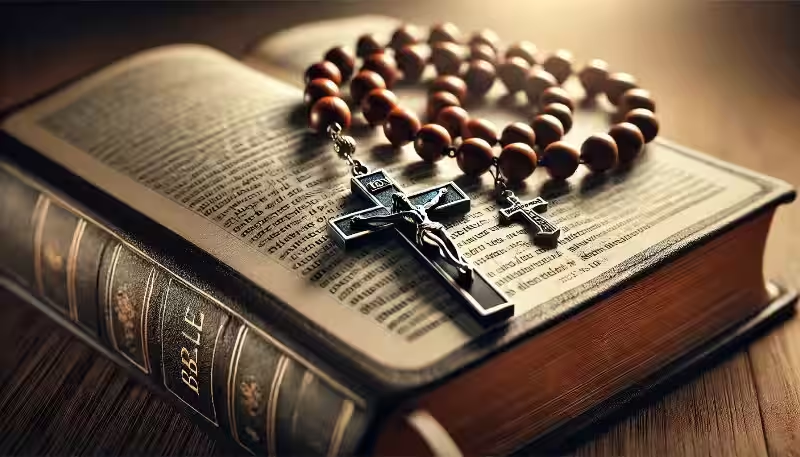
This concept of divine lordship permeates religious texts and practices. In Christianity, Jesus is often referred to as “Lord,” signifying his divine nature and his authority over believers’ lives. The Old Testament is replete with references to “Yahweh, the Lord,” emphasizing His covenantal relationship with Israel and His protective, guiding presence. Even in more polytheistic traditions, while there might be a pantheon of deities, there is often a supreme “Lord of the Gods” who presides over the others. This inherent understanding of a supreme, ruling entity provides a framework for understanding cosmic order and purpose, offering solace and guidance to the faithful who recognize themselves as subjects to this divine King.
The Lord’s Creation and Covenant
The title “Lord” is deeply intertwined with the concept of creation. When we speak of the “Lord” as creator, we are acknowledging His power to bring existence into being from nothingness. This act of creation is not a one-time event but an ongoing process, with the Lord continuously sustaining and governing His creation. This understanding fuels a sense of awe and wonder, reminding believers of the immense power and infinite wisdom inherent in the divine. The Lord’s creative act is often seen as a demonstration of His benevolence and a purposeful design, inspiring gratitude and a desire to live in accordance with His will.
Furthermore, the concept of the “Lord” is frequently linked to the idea of a divine covenant. A covenant is a solemn agreement or promise, and in religious contexts, it signifies a special relationship between God and humanity, or a chosen people. For example, the Abrahamic religions emphasize covenants made by the Lord with figures like Abraham, Moses, and Noah. These covenants often involve promises of protection, guidance, and blessings in exchange for obedience and faithfulness. This relational aspect transforms the Lord from a distant, abstract ruler into a personal, covenant-keeping deity, fostering a sense of intimacy and trust between the divine and the human.
“Lady” as Divine Feminine and Nurturing Grace
While the title “Lord” often emphasizes authority and sovereignty, the concept of a “Lady” in religion frequently points towards the divine feminine, nurturing aspects of the sacred, and often, embodiment of grace and compassion. In some traditions, this might manifest as a specific goddess, while in others, it represents a more abstract, yet equally powerful, feminine principle within the divine. The presence of a divine “Lady” offers a crucial complement to the masculine imagery of power, providing a more holistic understanding of the divine attributes. This can be as simple as recognizing the earth as a nurturing “Mother” or the moon as a gentle, guiding light.
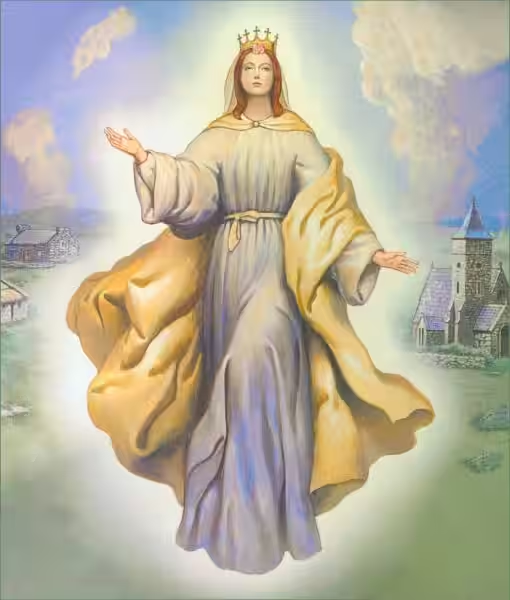
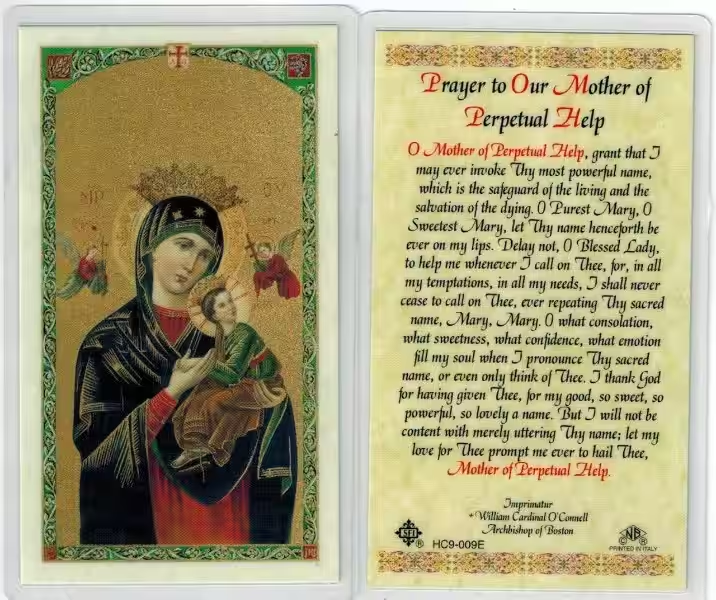
Consider the reverence shown to Mary, the mother of Jesus, in Christianity. While not always explicitly called “Lady” in the same way as God is “Lord,” her veneration as the Mother of God imbues her with a profound spiritual authority and a role as intercessor. She embodies maternal love, purity, and unwavering faith, offering comfort and a path to divine mercy. Similarly, in some Eastern religions, goddesses like Shakti or Kali represent the creative and destructive forces of the universe, embodying a fierce yet nurturing power. The recognition of a divine feminine principle acknowledges the essential role of creation, life-giving energy, and intuitive wisdom within the spiritual realm.
Embodiments of Compassion and Wisdom
The “Lady” figure often serves as an embodiment of divine compassion and merciful grace. Where the “Lord” might represent judgment and justice, the “Lady” often embodies understanding, empathy, and the willingness to forgive. This is particularly evident in traditions where a divine feminine figure acts as an intercessor. Believers might turn to her with their troubles, confident that she will plead their case with the divine power or offer solace directly. This aspect highlights the relational and emotional dimensions of faith, acknowledging that the divine is not solely about power, but also about love and connection.
Moreover, the “Lady” can also be seen as a symbol of divine wisdom and intuition. This wisdom is not always the logical, analytical kind, but rather a deeper, innate understanding of life’s mysteries. She might represent the intuitive insights that guide us, the creative spark that ignites new ideas, or the inner knowing that leads us toward truth. For example, figures like Sophia (Wisdom) in Gnosticism or certain aspects of the Virgin Mary in Catholic tradition are seen as conduits of divine knowledge, offering believers guidance and enlightenment beyond the purely intellectual. The embrace of these “Lady” figures allows for a more rounded and emotionally resonant spiritual experience, recognizing the multifaceted nature of the divine.
The Interplay of Titles: Complementary Divine Aspects
It is crucial to understand that the titles “Lord” and “Lady” in religious contexts are rarely mutually exclusive or in opposition. Instead, they often represent complementary aspects of the divine, offering a more complete and nuanced portrait of ultimate reality. The divine is not a simple, one-dimensional entity, but a complex interplay of power and tenderness, order and chaos, reason and intuition. Recognizing both the “Lord” and the “Lady” allows for a richer, more balanced spiritual perspective.
Think of it like the sun and the moon. The sun, with its brilliant light and life-giving warmth, can be seen as analogous to the “Lord” – the source of all power and energy. The moon, with its gentle glow and its cycles that influence tides, could represent the “Lady” – embodying a softer, more subtle, yet equally essential, influence. Both are necessary for the harmony and balance of the cosmos. In many spiritual traditions, these titles are not about gender in a human sense, but about symbolic representations of divine energies and functions, allowing for a deeper and more inclusive understanding of the sacred.
Modern Relevance and Personal Connection
In today’s world, where many seek meaning and connection, the enduring echo of the titles “Lord” and “Lady” remains powerful. For many, addressing the divine as “Lord” provides a sense of comforting order and unwavering guidance in a chaotic world. It speaks to a fundamental human desire for something greater than ourselves, a benevolent power to which we can entrust our lives. This personal connection to a divine Lord offers a foundation of faith and hope, shaping ethical choices and providing a sense of ultimate purpose.
Conversely, the recognition of the “Lady” as a divine feminine aspect can be particularly empowering for those who feel overlooked or marginalized by purely patriarchal religious structures. It offers a path to connect with a divine source of nurturing, intuition, and creative potential. Whether through personal meditation, prayer, or participation in spiritual communities that embrace feminine divinity, the “Lady” offers a powerful avenue for spiritual growth and self-discovery. Ultimately, the enduring use of these titles, “Lord” and “Lady,” speaks to their profound ability to articulate the ineffable, to bridge the gap between the human and the divine, and to foster a deeply personal and meaningful relationship with the sacred.
Frequently Asked Questions about “Lord or Lady” Religion
What does “Lord or Lady” mean in a religious context?
In some religious or spiritual contexts, “Lord” is often used as a title for a supreme deity or a male divine figure. “Lady” can be used similarly for a female divine figure, or sometimes as a more general term of respect for a divine feminine principle. The specific meaning and application of these terms can vary greatly between different belief systems.
Are “Lord” and “Lady” titles used in all religions?
No, the titles “Lord” and “Lady” are not universally used across all religions. They are more commonly found in traditions that have a patriarchal or dualistic view of the divine, or in certain Neopagan and Wiccan traditions that emphasize divine pairings or specific deities. Many religions have different or no such honorific titles for their divine figures.
Can a person be a “Lord” or “Lady” in relation to a religion?
While the primary use of “Lord” and “Lady” is for deities, in some specific spiritual or organizational structures, these titles might be bestowed upon human leaders or members as a sign of rank, authority, or spiritual attainment within that particular tradition. This is not a common practice across most major religions.
What is the difference between “Lord” and “Lady” in monotheistic religions?
In monotheistic religions like Christianity and Judaism, “Lord” is overwhelmingly used as one of the primary names or titles for the singular God. The term “Lady” is not typically used for God in these traditions. However, in some interpretations or devotional practices, the divine feminine might be acknowledged, though not usually with the title “Lady.”
How are “Lord” and “Lady” used in Neopaganism or Wicca?
In many Neopagan and Wiccan traditions, “Lord” and “Lady” are often used to represent the divine masculine and divine feminine, respectively. They are seen as complementary forces that embody the universe. The specific deities referred to as Lord and Lady can vary widely, from the Horned God and the Triple Goddess to specific pantheon deities.