The question of whether Muslims believe in the same God as Christians is a profound and frequently asked question, touching upon the very heart of two of the world’s largest monotheistic religions. It’s a query that often arises from a general understanding that both Islam and Christianity worship a singular, supreme being, yet also from an awareness of significant theological differences. To truly understand this, we must delve into the foundational texts, historical connections, and core beliefs that shape each faith.
Exploring this topic isn’t just an exercise in religious scholarship; it’s about fostering mutual understanding and respect in an increasingly interconnected world. When we ask, “Do Muslims believe in the same God as Christians?”, we are opening a dialogue that can bridge divides and highlight the shared spiritual landscape that unites billions across the globe. This article aims to provide a clear, informative, and relatable answer, illuminating the common ground and the distinct theological expressions of these Abrahamic faiths.
At the core of both Islam and Christianity lies the unwavering belief in one God. This fundamental principle, known as monotheism, is the bedrock upon which both religions are built. For Muslims, this concept is encapsulated in the Arabic word “Tawhid,” which signifies the absolute oneness and uniqueness of Allah. Christians, similarly, profess faith in one God, often referred to as the Trinity – God the Father, God the Son (Jesus Christ), and God the Holy Spirit – a concept that is a key point of divergence from Islamic theology.
The shared lineage of these faiths is often referred to as the Abrahamic religions, a testament to their common spiritual ancestor, Abraham. Both Muslims and Christians revere Abraham as a prophet of God and a pivotal figure in the history of monotheism. They see themselves as inheritors of Abraham’s covenant with God, tracing their spiritual lineage back to his submission and devotion. This shared heritage provides a crucial starting point for understanding how they relate to the divine.
Who is Allah? The Islamic Conception of God
In Islam, Allah is the Arabic word for God. It is not a different deity from the God worshipped by Christians or Jews; rather, it is the proper name of the one and only God. Muslims believe that Allah is unique, eternal, all-powerful, all-knowing, and the creator and sustainer of the universe. The Quran, the holy book of Islam, is replete with verses describing Allah’s attributes, emphasizing His mercy, compassion, justice, and sovereignty.
For Muslims, the absolute oneness of Allah is paramount. This means that nothing and no one can be associated with Him in worship or divinity. This principle, Tawhid, is the most important concept in Islam and is reflected in the Shahada, the declaration of faith: “There is no god but Allah, and Muhammad is His messenger.” This declaration underscores the exclusive devotion required of a Muslim.
The Christian Conception of God: The Trinity and the Person of Jesus
Christians also believe in one God, but their understanding of this oneness is expressed through the doctrine of the Holy Trinity. This doctrine posits that God exists as three co-equal and co-eternal persons in one divine essence: God the Father, God the Son (Jesus Christ), and God the Holy Spirit. This is not a belief in three gods, but rather one God in three persons.
The divinity of Jesus Christ is a cornerstone of Christian faith. Christians believe that Jesus is God incarnate, the Son of God who came to earth to redeem humanity. His life, death, and resurrection are seen as central to God’s plan for salvation. This belief in Jesus as divine is a significant theological difference from Islam, where Jesus is revered as a prophet but not as divine.
Points of Convergence: Prophets, Scriptures, and Shared Values
Despite the differing theological expressions, there are significant areas of overlap between Islam and Christianity that highlight their shared roots. Both religions acknowledge a line of prophets sent by God to guide humanity, with many prophets being recognized in both traditions. Figures like Adam, Noah, Abraham, Moses, and Jesus are all revered in both Islam and Christianity, albeit with varying roles and theological interpretations.
The concept of divine revelation is also a shared principle. Muslims believe that the Quran is the final and complete revelation of God’s word, revealed to the Prophet Muhammad. Christians believe that the Bible, comprising the Old and New Testaments, is the inspired word of God, with Jesus Christ himself being the ultimate revelation of God. Both faiths emphasize the importance of sacred scriptures as a guide for life.
The Role of Jesus: Prophet, Son of God, and Savior
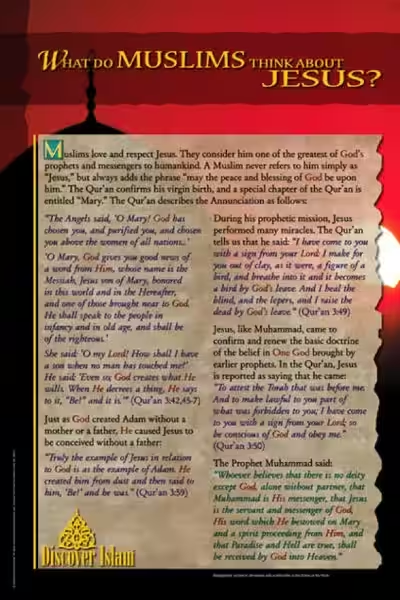
In Islam, Jesus (Isa in Arabic) is a highly revered prophet of God. Muslims believe he was born of the Virgin Mary (Maryam), performed miracles, and delivered God’s message to his people. However, Islam does not believe Jesus is the Son of God in a literal, divine sense, nor do they believe he was crucified in the way Christians understand it. Islamic theology teaches that Jesus was raised to heaven by God before he could be crucified.
For Christians, Jesus is far more than a prophet; he is the Messiah, the Son of God, and the Savior of humanity. His crucifixion and resurrection are central to Christian theology, representing the atonement for sins and the promise of eternal life. This fundamental difference in the nature and role of Jesus is one of the most significant distinctions between the two faiths.
Both Islam and Christianity place immense importance on their holy books as direct communications from God. The Quran, believed by Muslims to be the literal word of God revealed to Prophet Muhammad, serves as the ultimate source of guidance and law. It is considered inimitable and perfect.
The Bible, comprised of the Old and New Testaments, is considered by Christians to be the inspired word of God. It contains narratives, teachings, prophecies, and accounts of Jesus’ life and ministry. While Muslims acknowledge the divine origin of the Torah and the Gospels, they believe the Quran supersedes and corrects them, offering a complete and final message.
Key Distinctions: Theology, Practice, and the Path to Salvation
While the shared belief in one God and the Abrahamic lineage are undeniable, the theological frameworks and practical expressions of Islam and Christianity diverge in crucial ways. These differences shape the understanding of salvation, the nature of worship, and the role of intermediaries.
One of the most significant distinctions lies in the concept of sin and redemption. In Christianity, salvation is achieved through faith in Jesus Christ’s atoning sacrifice. In Islam, salvation is attained through submission to Allah’s will, good deeds, and sincere repentance. The emphasis is on direct accountability to God without intermediaries.
The Concept of Divine Revelation and its Finality
The understanding of divine revelation is a point of divergence. Muslims believe that the Quran is the final and complete revelation of God’s message to humanity, delivered through the Prophet Muhammad. This implies that no further prophets or divine scriptures will come after Muhammad.
Christians, while revering the Bible as God’s word, do not view it as the final revelation in the same absolute sense, especially regarding the unfolding of God’s plan through Jesus Christ. The completion of revelation in the Quran is a foundational tenet of Islam.
The Path to Salvation: Grace vs. Submission and Deeds
The primary path to salvation differs significantly. Christian theology emphasizes salvation by grace through faith in Jesus Christ. This means that through belief in Christ’s sacrifice, individuals are forgiven of their sins and reconciled with God, regardless of their own merits.
Islam, conversely, emphasizes submission to Allah’s will (Islam) and the importance of righteous deeds and sincere repentance as the means to attain Paradise. While God’s mercy is central, the emphasis is on actively living according to His commands and seeking His forgiveness through one’s actions. This is often summarized as faith and good works.
So, do Muslims believe in the same God as Christians? The answer is nuanced, but the core of it is yes, in the fundamental sense of worshipping the one, supreme, creator God. Both faiths are rooted in the worship of the God of Abraham, a God who is eternal, omnipotent, and the source of all existence. They share a reverence for prophets, scriptures, and a moral framework that emphasizes justice, compassion, and accountability.
However, the distinct theological interpretations regarding the nature of God (Trinity vs. Tawhid), the divinity and role of Jesus Christ, and the paths to salvation create significant differences that define each religion. These distinctions are not a matter of worshipping different deities, but rather of understanding and relating to the one God in profoundly different ways. Recognizing both the shared reverence and the distinct expressions allows for a more informed and respectful dialogue between these two great monotheistic traditions.
Frequently Asked Questions: Do Muslims and Christians Worship the Same God?
Do Muslims believe in the same God as Christians?
Yes, Muslims and Christians worship the same God. Both religions are Abrahamic faiths, meaning they trace their spiritual lineage back to the prophet Abraham. Muslims refer to God as Allah, which is the Arabic word for God and is the same God that Christians worship.
What are the key similarities in the beliefs about God?
Both religions share core beliefs about God’s oneness (monotheism), His role as the creator and sustainer of the universe, His attributes of mercy, justice, and power, and the importance of worshipping Him alone. Both also believe in God’s prophets, His scriptures, and the concept of divine judgment.
Are there any differences in how Muslims and Christians view God?
While the fundamental belief in one God is shared, there are theological differences. For instance, Christianity’s doctrine of the Trinity (God as Father, Son, and Holy Spirit) is not accepted in Islam, which strongly emphasizes the absolute oneness and uniqueness of God (Tawhid). Islam also views Jesus as a prophet of God, not as divine or the Son of God in a literal, physical sense.
How do the scriptures of Islam and Christianity reflect their beliefs about God?
The Quran, the holy book of Islam, repeatedly emphasizes God’s oneness and His unique attributes, presenting a narrative of God’s interaction with humanity through prophets, including those recognized in Christianity. The Bible, the holy scripture of Christianity, also speaks of one God, though its theological interpretations, particularly concerning the nature of God, differ from Islamic understanding.
In essence, can we say Muslims and Christians worship the same God?
Yes, in the most fundamental sense of believing in and worshipping the one, supreme creator and sustainer of the universe, Muslims and Christians worship the same God. The differences lie primarily in theological interpretations and the understanding of God’s nature and His relationship with humanity.