Mexico, a land steeped in history and vibrant traditions, possesses a spiritual landscape as colorful and diverse as its people. At the heart of this spiritual fabric lies the profound veneration of saints, figures who bridge the earthly and the divine, offering comfort, guidance, and intercession. The concept of a Mexico saint is not merely a religious tenet; it’s an ingrained part of cultural identity, woven into the daily lives of millions. From grand cathedrals to humble home altars, the presence of these holy individuals is palpable, shaping beliefs, practices, and even the very rhythm of Mexican society.
The relationship between the Mexican people and their patron saints is deeply personal. These are not distant, abstract figures, but rather approachable intermediaries who understand the struggles and joys of everyday life. Whether it’s Santa Clara for protection against poverty, San Isidro Labrador for a bountiful harvest, or the ever-present Virgin of Guadalupe, each Mexico saint embodies specific virtues and offers solace for particular needs. This intimate connection fosters a sense of devotion that transcends mere observance, becoming a living, breathing expression of faith.
The Roots of Devotion: From Indigenous Beliefs to Catholic Influence
The rich tapestry of Mexican religion is a fascinating blend of ancient indigenous spiritualities and the Catholicism introduced by Spanish colonizers. Long before the arrival of Europeans, indigenous civilizations like the Maya and Aztec had their own pantheons of gods and goddesses, embodying natural forces and human experiences. These ancient beliefs, with their emphasis on cyclical time, connection to the earth, and the importance of community, laid a fertile ground for the integration of new spiritual concepts.
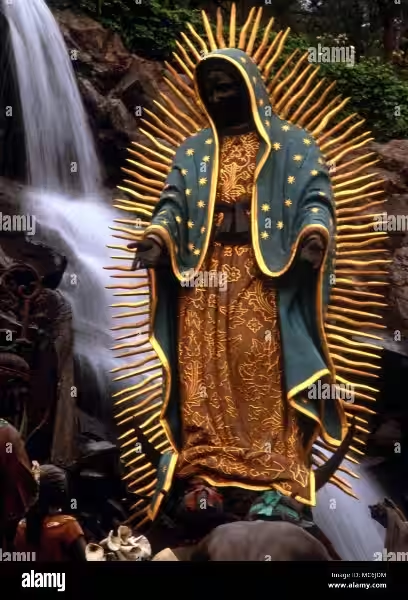
When Catholicism arrived, it did not simply overwrite existing beliefs. Instead, a remarkable process of syncretism occurred. Indigenous deities and their attributes were often reinterpreted or associated with Catholic saints, creating a unique Mexico saint landscape. For instance, the powerful mother goddess Tonantzin, a significant figure in pre-Hispanic Mexico, is widely believed to have merged with the veneration of the Virgin of Guadalupe, whose apparition is deeply rooted in Mexican identity. This fusion allowed for a smoother transition and a more relatable spiritual experience for the indigenous population, preserving elements of their ancestral faith within the new religious framework.
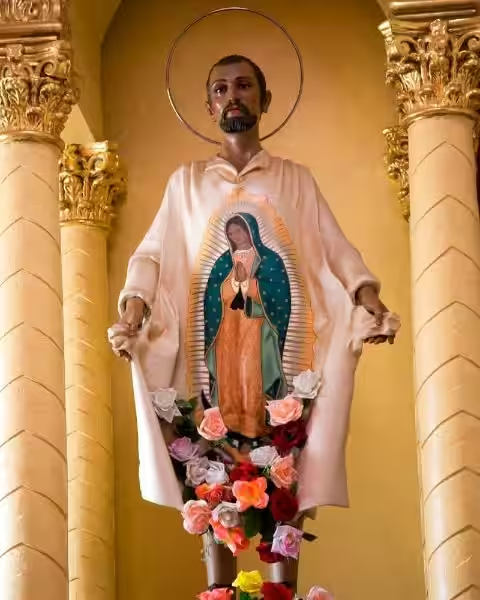
No discussion of Mexico saint figures would be complete without acknowledging the unparalleled significance of the Virgin of Guadalupe. Her story, dating back to 1531 when she is said to have appeared to Juan Diego, an indigenous peasant, on Tepeyac Hill, is central to Mexican Catholicism. The image imprinted on Juan Diego’s cloak, a miraculous depiction of a dark-skinned Madonna, resonated deeply with the indigenous population and became a powerful symbol of national identity and religious devotion.
The Virgin of Guadalupe is more than just a religious figure; she is the “Madre de México”, a maternal protector watching over her people. Her feast day, December 12th, is a national holiday and a time of immense celebration, drawing millions to her basilica in Mexico City. This devotion extends far beyond religious observance; it’s a cultural cornerstone, influencing art, music, and everyday conversations. The Virgin’s multifaceted persona, embodying compassion, strength, and maternal love, makes her a universally relatable Mexico saint for all walks of life.
Beyond Guadalupe: A Pantheon of Beloved Saints
While the Virgin of Guadalupe holds a preeminent position, Mexico’s spiritual landscape is populated by a vast and diverse array of saints, each with their own unique stories and spheres of influence. These figures, canonized over centuries, offer specific intercessions and embody virtues that resonate with the daily challenges and aspirations of Mexicans. Understanding this rich pantheon provides deeper insight into the practical application of faith in Mexican life.
From the humble farmer praying for a good harvest to the anxious parent seeking protection for their child, there is a Mexico saint ready to lend an ear. This accessibility and specificity of devotion make the saints integral to the Mexican religious experience. It’s common to find individuals with a personal devotion to a particular saint, perhaps one whose name they share, or whose story mirrors their own struggles. This creates a dynamic and personal connection to the divine, where faith is not abstract but actively engaged with.
Popular Saints and Their Roles
The popularity of certain saints can vary by region and community, but some figures consistently appear in the hearts and homes of Mexicans.
San Judas Tadeo: Revered as the patron saint of desperate causes, San Judas Tadeo is a popular figure among those facing seemingly insurmountable challenges. His image, often depicted with a club and a medallion, is a common sight in homes and small chapels, especially among those seeking hope in difficult times.
Santa Clara: Patroness of the poor and of good eyesight, Santa Clara offers solace to those struggling with financial hardship and a tangible reminder of divine care for physical well-being.
San Isidro Labrador: This agricultural saint is crucial for rural communities, where prayers for a successful harvest are a matter of survival. His feast day is celebrated with processions and blessings of the fields.
San Miguel Arcángel: As a powerful warrior against evil, San Miguel Arcángel is invoked for protection against spiritual and physical threats, a symbol of strength and divine justice.
San Antonio de Padua: Known as the patron saint of lost things, San Antonio is a familiar figure for anyone who has ever misplaced a treasured item or searched for something important.
These are just a few examples, highlighting the practical and relatable nature of saint veneration in Mexico. Each Mexico saint represents a facet of human experience, offering a specific point of contact for prayer and petition.
The Living Tradition: Saints in Everyday Mexican Life
The veneration of saints in Mexico is not confined to the solemnity of churches or the pages of religious texts. It is a vibrant, living tradition that permeates the everyday fabric of life. From the vibrant “altares de muertos” (Day of the Dead altars) adorned with the images of departed loved ones and patron saints, to the small retablos (small ex-voto paintings) depicting miraculous interventions, the presence of saints is a constant reminder of divine grace and protection.
In many homes, a dedicated “rincón de oración” (prayer corner) will feature images of the Virgin Mary, Jesus Christ, and a selection of beloved saints. These spaces serve as focal points for personal prayer, family blessings, and moments of reflection. The act of lighting a candle for a saint, offering a rosary, or simply whispering a prayer is a deeply ingrained practice, a testament to the enduring faith in the intercessory power of a Mexico saint.
The festivals and celebrations dedicated to specific saints are also integral to Mexican culture, often blending religious devotion with lively community gatherings. These events showcase a beautiful fusion of solemnity and festivity, where processions, mariachi music, traditional dances, and delicious food all come together to honor the chosen Mexico saint. These celebrations are not just religious acts; they are communal expressions of identity and shared faith, reinforcing the bonds between people and their spiritual protectors. The enduring popularity and profound impact of Mexico saint veneration underscore its vital role in the nation’s spiritual and cultural landscape.
Frequently Asked Questions about Mexico and Saint Religion
What is the primary religion in Mexico?
The primary religion in Mexico is Christianity, with Roman Catholicism being the predominant denomination.
Are there any patron saints of Mexico?
Yes, the most prominent patron saint of Mexico is the Virgin of Guadalupe.
Who is the Virgin of Guadalupe and why is she important to Mexico?
The Virgin of Guadalupe is a Marian apparition that appeared to Juan Diego, an indigenous peasant, in 1531. She is a central figure in Mexican Catholicism and a symbol of Mexican identity and faith. Her feast day, December 12th, is a major religious holiday.
Are there other important saints in Mexico?
While the Virgin of Guadalupe is the most recognized, many other saints are venerated throughout Mexico, often associated with specific towns, cities, or aspects of life (e.g., San Isidro Labrador for farmers, Saint Anthony of Padua for finding lost items).
Is religion a significant part of Mexican culture?
Yes, religion, particularly Catholicism, is deeply intertwined with Mexican culture, influencing traditions, festivals, art, music, and social customs.
What role do churches play in Mexican communities?
Churches are often the focal point of communities in Mexico, serving as places of worship, social gathering, and historical landmarks. Many are architecturally significant and hold deep cultural importance.
Do other religions exist in Mexico?
While Catholicism is dominant, Mexico is also home to a growing number of Protestant and Evangelical Christians, as well as smaller communities of other faiths, including indigenous spiritual practices, Judaism, Islam, and Buddhism.
How does the Mexican government view religion?
Mexico has a secular government that guarantees freedom of religion. While the state is separate from religious institutions, the influence of religion on society remains significant.