Tim O’Brien’s seminal work, “The Things They Carried,” is a profound exploration of the Vietnam War, delving into the tangible and intangible burdens carried by soldiers. While the novel masterfully depicts the physical weight of their gear – the M-16s, the ammunition, the water canteens – it also subtly unveils a deeper, often unspoken, load: their spiritual and religious convictions, or the stark absence of them. The ‘things they carried,’ it turns out, extended far beyond the battlefield, encompassing prayers whispered in foxholes, rosaries clutched in fear, and the quiet, internal wrestling with a higher power amidst unimaginable chaos. Understanding this often-overlooked dimension of their burdens offers a richer, more empathetic perspective on their experiences and the enduring impact of their service.
The ‘things they carried’ in this spiritual sense were not always grand pronouncements of faith, but often quiet acts of devotion or, conversely, profound moments of disillusionment. These weren’t necessarily about organized religion in its traditional sense, but about the fundamental human need for meaning, for solace, and for a framework to understand existence when faced with its most brutal realities. The ‘things they carried’ were, for many, a desperate attempt to anchor themselves in something larger than the immediate horror of war.
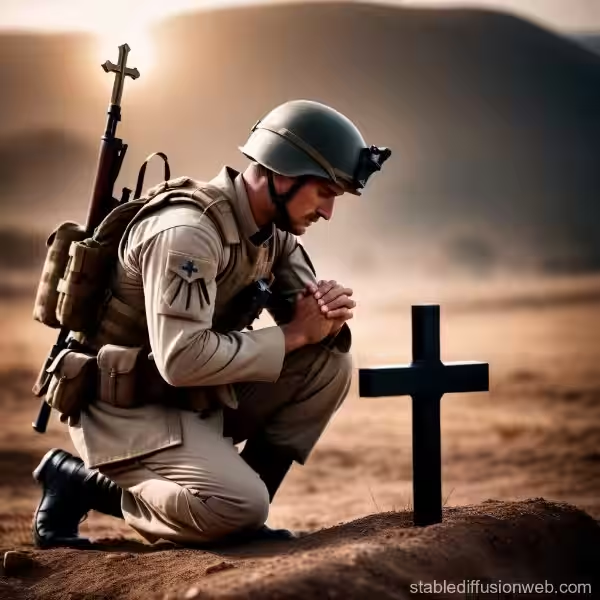
For many of the young men thrust into the jungles of Vietnam, faith was a familiar comfort, a habit ingrained from childhood. The ‘things they carried’ included not just the physical necessities of survival, but also the spiritual accoutrements of their upbringing. These could manifest in small, everyday rituals: a quick prayer before consuming meager rations, a silent plea for protection before a patrol, or the discreet tracing of a crucifix. These acts, though seemingly insignificant in the face of overwhelming violence, provided a sense of order and control in a world that felt utterly chaotic. Consider Martha’s letters to Jimmy Cross, filled with innocent tokens of affection; imagine a soldier carrying a small, worn Bible alongside such mementos, finding in its pages a different kind of solace, a promise of something beyond the present suffering.
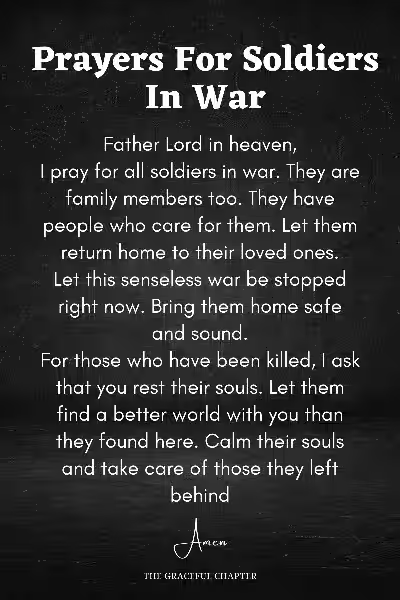
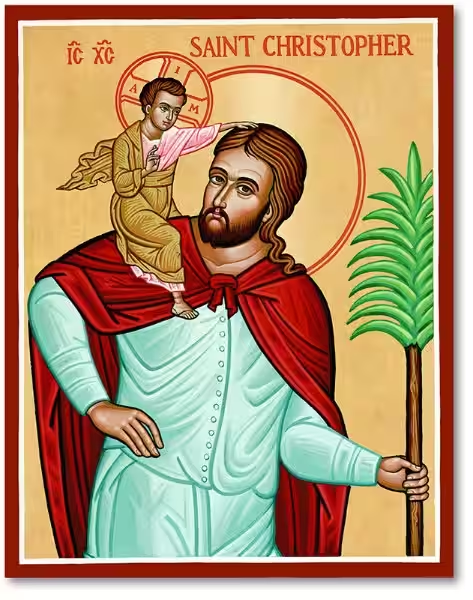
The ‘things they carried’ in this devotional aspect were deeply personal. Some might have carried a specific saint’s medal, a tangible symbol of intercession. Others might have recited family prayers, the familiar cadence a comforting echo of home and a world untainted by war. These spiritual practices were not always about a deep theological understanding; they were often instinctive responses to fear, attempts to connect with a benevolent force that might offer a reprieve from the relentless threat of death. The sheer act of praying, of articulating a plea, could itself be an act of defiance against the nihilism of war, a declaration that life, and perhaps even the soul, held inherent value.
Beyond the internal prayers and meditations, the ‘things they carried’ sometimes took on a more concrete form, reflecting the soldiers’ diverse religious backgrounds. For Catholic soldiers, a rosary was a common companion, its smooth beads a familiar texture in the sweaty palm, each recitation a step closer to a moment of peace. Jewish soldiers might carry a small Star of David or a Hebrew prayer book, its presence a constant reminder of their heritage and identity. Even for those with less formalized religious beliefs, the ‘things they carried’ could include lucky charms or photographs of loved ones, items that, while not strictly religious, served a similar purpose of providing hope and a connection to a life worth returning to.
These physical objects were more than just trinkets; they were potent symbols of belonging and of a moral compass. They represented a world where values like love, family, and faith held sway, a stark contrast to the dehumanizing environment of combat. The weight of these ‘things they carried’ was not measured in ounces, but in the immense emotional and psychological support they provided. They were anchors, tethering the soldiers to their humanity and to a future that, however distant it seemed, was worth fighting for. The common thread running through these disparate objects was the universal human desire for meaning and for transcendence.
When Prayers Went Unanswered: The Erosion of Faith
However, for many, the relentless brutality of Vietnam proved to be a crucible that tested, and often broke, their faith. The ‘things they carried’ were not just the physical burdens, but also the shattered remnants of deeply held beliefs. Witnessing the senseless death of comrades, the indiscriminate violence, and the moral ambiguities of the war could lead to profound disillusionment. Prayers that went unanswered, pleas for mercy that were met with further suffering, would erode the foundations of their spiritual world. The very notion of a benevolent God seemed to crumble in the face of such pervasive evil.
The ‘things they carried’ in this sense were the heavy weight of doubt and existential questioning. The soldiers were forced to confront the possibility that there was no divine plan, no inherent justice, and that their lives, and the lives of those they fought with and against, were ultimately meaningless. This internal struggle was as taxing, if not more so, than the physical exertions of war. The absence of faith left them feeling vulnerable and adrift, stripped of the comfort and guidance that religion had previously offered. This disillusionment, once a quiet internal struggle, could manifest in various ways: cynicism, despair, or an embrace of hedonism as a coping mechanism.
The ‘things they carried’ became a stark reminder of the silence that often greeted their prayers. Imagine a soldier, his hands still slick with the blood of a fallen friend, whispering a prayer for understanding, only to be met by the deafening roar of artillery. These moments of apparent divine abandonment were deeply scarring. The absence of miraculous intervention, the failure of faith to provide solace or protection, could lead to a profound sense of betrayal. The once-sacred texts might now feel like empty words, the rituals hollow performances.
This loss of faith was not a simple abandonment; it was often a painful tearing away. The ‘things they carried’ on their backs were heavy, but the weight of lost faith could feel crushing. It left a void, a spiritual emptiness that was difficult to fill. This disillusionment contributed to the long-term psychological struggles many veterans faced, the difficulty in reintegrating into a society that they felt no longer understood them, and the lingering sense that the world itself was fundamentally flawed. The ‘things they carried’ were, for some, the ghosts of lost beliefs, haunting their every step.
Finding Meaning Beyond Doctrine: The New “Things They Carried”
Yet, even in the face of profound doubt, the human spirit possesses an incredible capacity for resilience and for finding new sources of meaning. The soldiers in “The Things They Carried” often forged their own spiritual compasses, developing a fierce loyalty to their brothers-in-arms and a deep empathy for the suffering of others. These became the new ‘things they carried,’ their personal creeds forged in the fires of war.
The ‘things they carried’ evolved beyond religious doctrine. They carried the weight of responsibility for each other, the unspoken understanding of shared trauma, and the fierce determination to survive and to protect. This camaraderie, this brotherhood, often became a more potent force than any dogma. It was a practical, lived spirituality born out of necessity and mutual reliance. The ‘things they carried’ were no longer just about individual salvation, but about the collective survival and the preservation of their shared humanity in the face of dehumanizing circumstances.
The Legacy of Spiritual Journeys
The ‘things they carried’ from Vietnam, both tangible and intangible, continue to shape the lives of veterans long after their return. For some, the war may have solidified their faith, providing a renewed appreciation for its power. For others, it may have led to a lifelong grappling with existential questions, prompting a search for meaning outside traditional religious frameworks. The enduring impact of these spiritual journeys is a testament to the complex and multifaceted nature of human experience, even in the most extreme circumstances.
Ultimately, Tim O’Brien’s novel reminds us that the ‘things they carried’ are a potent metaphor for the burdens we all bear. For the soldiers of “The Things They Carried,” their spiritual journeys, whether marked by unwavering faith, profound doubt, or the forging of new beliefs, were as crucial to their survival as any weapon. They carried the weight of their souls, the hope for redemption, and the unyielding spirit of humanity into the heart of the conflict, and those invisible burdens continue to resonate long after the last shot was fired.
Frequently Asked Questions about Religion in “The Things They Carried”
What is the significance of religion in “The Things They Carried”?
Religion plays a multifaceted role in the novel, serving as a source of comfort, a marker of identity, and sometimes, a point of contention or questioning for the soldiers. It reflects the diverse backgrounds of the men and the ways they grapple with faith, doubt, and the moral complexities of war.
How do the soldiers’ religious beliefs or lack thereof affect them?
For some, faith provides solace and a connection to home, offering a sense of order and meaning in the chaos of war. Others find their faith challenged or broken by the violence and suffering they witness. The novel explores how these varying spiritual landscapes shape their experiences and their ability to cope.
Are there specific religious symbols or practices mentioned in the book?
Yes, the novel alludes to various religious elements, including mentions of prayer, chaplains, and differing denominational backgrounds. These details, though sometimes brief, contribute to the characters’ individual identities and the broader cultural context of the war.
Does the novel suggest that religion is helpful or harmful in wartime?
The novel doesn’t offer a definitive judgment on religion’s impact. Instead, it presents a nuanced portrayal where religion can be both a source of strength and a cause for internal conflict. The soldiers’ individual relationships with their faith are what matter most in their personal struggles.
How does Tim O’Brien explore the theme of faith and disbelief in the context of Vietnam?
O’Brien uses the characters’ experiences to examine how war can test and transform individuals’ spiritual beliefs. The extreme circumstances of combat often force soldiers to confront fundamental questions about life, death, morality, and the existence or absence of a divine presence.