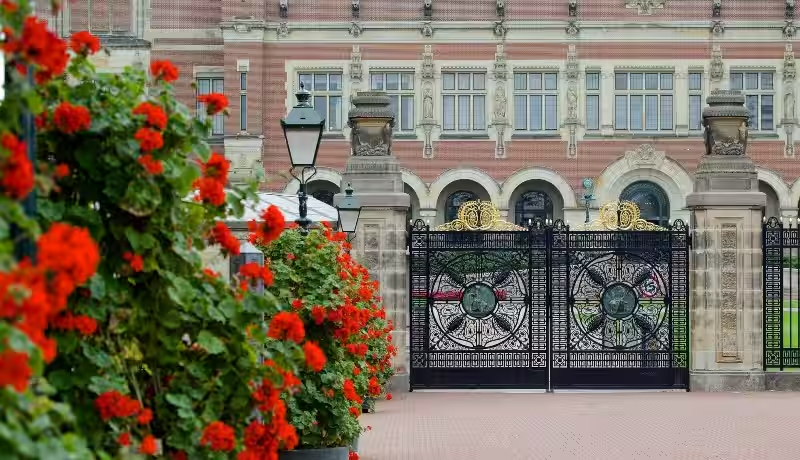
The pursuit of peace, a concept deeply woven into the fabric of human spirituality, finds a tangible manifestation in the Peace Palace. More than just a magnificent architectural marvel, it is a living testament to the enduring desire for global harmony and a beacon for those seeking to understand the interplay between religion and peacebuilding. Embarking on a Peace Palace tour offers a unique opportunity to delve into the historical, legal, and philosophical underpinnings of international cooperation, often drawing direct inspiration from the diverse religious traditions that have shaped our world.
These tours are not merely academic exercises; they are immersive experiences that connect visitors with the profound aspirations that led to the creation of this iconic institution. Imagine standing in halls where international treaties have been forged, where legal scholars have debated the principles of justice, and where the very idea of a world united in its pursuit of non-violence has been nurtured. Within these hallowed spaces, the echoes of centuries of human striving for understanding and coexistence resonate, often fueled by the moral imperatives found within every major faith system.
The Divine Mandate for Peace: Religious Foundations
Across the vast spectrum of religious belief, a common thread binds humanity: the inherent value of peace and the call for compassion. From the Abrahamic faiths – Judaism, Christianity, and Islam – with their emphasis on shalom, agape, and salam respectively, to the Eastern traditions like Buddhism and Hinduism, which champion ahimsa (non-violence) and the pursuit of enlightenment through inner peace, the core message is remarkably consistent. These spiritual teachings provide a powerful moral compass, guiding individuals and communities towards reconciliation and mutual respect.
During a Peace Palace tour, one can often find subtle, yet significant, nods to these foundational religious principles. The very ethos of the institutions housed within the Palace, such as the Permanent Court of Arbitration and the International Court of Justice, are rooted in the idea of peaceful dispute resolution, a concept directly paralleled in religious doctrines that advocate for forgiveness, dialogue, and the resolution of conflict through understanding rather than aggression. Think of the story of Abraham negotiating with God over Sodom and Gomorrah, or the Buddhist parable of the two monks and the river; these narratives, though ancient, embody the spirit of diplomacy and empathy that the Peace Palace strives to uphold on a global scale.
Peace Palace Tours: Witnessing the Manifestation of Religious Ideals
The Peace Palace tours offer a tangible connection to how these religious ideals are translated into practical, international frameworks. As you walk through the opulent halls, you might notice architectural details or artwork that subtly allude to themes of universal brotherhood or the divine spark within all beings – concepts deeply cherished across numerous religious doctrines. The very existence of an institution dedicated to international law and peaceful arbitration, funded and supported by nations with diverse cultural and religious backgrounds, is a testament to the shared human yearning for a world free from war and strife, a yearning that finds its deepest roots in spiritual aspirations.
Consider the powerful imagery often found in religious art and texts depicting harmony between different peoples or the idealized state of humanity living in tranquility. The Peace Palace, in its own way, aims to create the practical conditions for such an ideal to flourish. Peace Palace tours provide insights into the mechanisms that enable nations to set aside their differences and engage in constructive dialogue, mirroring the spiritual journeys of individuals seeking inner peace through meditation, prayer, or acts of service. It’s a space where the secular pursuit of global order is undeniably influenced by the enduring ethical and moral frameworks provided by faith traditions.
The Role of Faith in Diplomacy and the Peace Palace
The influence of religion on international diplomacy is often underestimated, yet it plays a crucial role in shaping perspectives, fostering understanding, and building bridges between nations. Many religious leaders and communities actively engage in peacebuilding efforts, mediating conflicts, advocating for human rights, and promoting interfaith dialogue. These efforts, though sometimes operating outside the direct purview of institutions like the Peace Palace, create a cultural and spiritual environment conducive to peaceful coexistence.
During your Peace Palace tour, you’ll learn about the legal frameworks that govern international relations, but it’s important to remember that these frameworks are often built upon a foundation of shared humanistic values, many of which are deeply embedded within religious teachings. For example, the concept of universal human rights, a cornerstone of international law, finds strong parallels in the religious emphasis on the inherent dignity of every individual, regardless of their background or beliefs. This shared ethical ground is vital for fostering trust and cooperation between nations, even those with vastly different religious practices.
Exploring Interfaith Harmony Through Peace Palace Tours
The Peace Palace tours can also illuminate the growing importance of interfaith dialogue in achieving lasting peace. In a world increasingly interconnected, understanding and respecting the diverse religious landscapes of different nations is paramount. The institutions within the Peace Palace, while secular in their operation, are built on the premise that nations can find common ground and work towards shared goals. This echoes the spirit of interfaith initiatives that aim to break down barriers, dispel misconceptions, and foster a sense of shared humanity among people of different faiths.
Imagine the parallels between a Peace Palace tour that highlights the collaborative efforts of nations to address global challenges and an interfaith conference where leaders from various religions come together to discuss pressing social issues. Both endeavors are driven by a belief in the power of collective action and the possibility of achieving greater good through cooperation. The very architecture of the Peace Palace, with its emphasis on grandeur and solemnity, can evoke a sense of reverence, not unlike the feeling one might experience in a sacred space, reminding us of the profound human need for meaning, purpose, and, ultimately, peace.
A Future Forged in Peace: The Legacy and Lessons of the Peace Palace
The Peace Palace stands as a powerful symbol of humanity’s enduring commitment to resolving conflicts through legal means and diplomatic engagement. Its history is intertwined with moments of both great hope and profound challenge, reflecting the complex journey of nations striving for a more peaceful world. Peace Palace tours offer a crucial opportunity to learn from these experiences, to understand the evolution of international law, and to appreciate the continuous effort required to maintain global stability.
Ultimately, the lessons learned from a Peace Palace tour extend far beyond the realm of international law. They touch upon the fundamental human desire for harmony, a desire that has been articulated and nurtured by religious traditions for millennia. By understanding the religious underpinnings of peace and recognizing the shared values that unite us across diverse faith backgrounds, we can contribute to a more just, equitable, and peaceful world, one where the ideals embodied by the Peace Palace can truly flourish. The journey towards peace is ongoing, and the Peace Palace, with its rich history and enduring mission, serves as an indispensable guide and inspiration for us all.
Frequently Asked Questions: Peace Palace Tours and Religion
Are there specific religious services or ceremonies held at the Peace Palace?
The Peace Palace is primarily a venue for international law and justice institutions. It does not host regular religious services or ceremonies. Its focus is on peaceful dispute resolution through legal means.
Can I request a tour of the Peace Palace that incorporates a religious perspective?
While the Peace Palace tours focus on the history, architecture, and judicial functions of the building, guides are generally knowledgeable about the diverse backgrounds of the individuals and nations involved in international law. However, a tour specifically tailored to a religious perspective is not a standard offering.
Are there any religious symbols or artwork prominently displayed within the Peace Palace?
The Peace Palace houses a collection of artworks and architectural elements that reflect a range of historical and cultural influences. While specific religious iconography is not a central theme, visitors may observe art and design that has been influenced by various cultural and historical contexts, which may include subtle religious or spiritual undertones as part of broader artistic traditions.
Does the Peace Palace have any affiliation with any particular religion?
No, the Peace Palace is an institution dedicated to international law and justice and maintains a strict neutrality regarding any religious or political affiliations. Its mission is to promote peace and cooperation among all nations, regardless of their religious or cultural backgrounds.