The name “Saint Sophie” resonates not just as a historical figure but as a profound symbol within the realm of religion. Often associated with divine wisdom, her legacy transcends mere historical accounts, offering a timeless source of inspiration for individuals seeking spiritual understanding and a deeper connection to the divine. While the historical accuracy of Saint Sophie as a singular individual with a documented biography remains a subject of theological and historical discussion, the concept she embodies – Sophia, the personification of divine wisdom – has been a cornerstone in various religious traditions, particularly within Christianity, Gnosticism, and even influencing certain Jewish mystical thought.
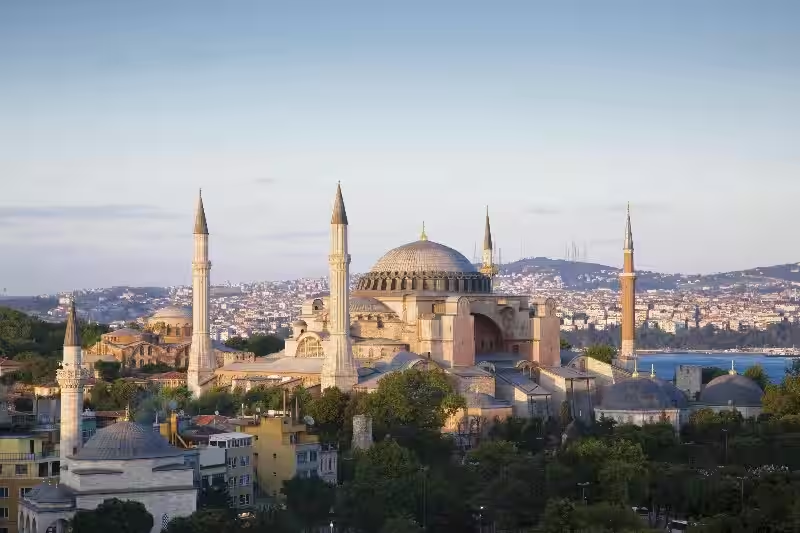
Across centuries, the veneration of Saint Sophie has manifested in numerous ways, from architectural marvels like the Hagia Sophia in Istanbul, famously dedicated to “Holy Wisdom,” to the personal devotion of countless believers. This enduring presence speaks to the universal human yearning for guidance, insight, and a connection to something greater than ourselves. Whether viewed as a saintly intercessor or as the very essence of God’s wisdom made manifest, the figure of Saint Sophie continues to illuminate the path for seekers of truth and spiritual fulfillment.
Understanding Sophia: The Personification of Wisdom
The concept of Sophia, or Holy Wisdom, is central to understanding the significance of Saint Sophie. In many theological frameworks, Sophia is not merely an abstract idea but a divine attribute, an active force that emanates from God and interacts with creation. This personification allows for a more tangible understanding of God’s intelligence and providence. Think of it like this: we can understand the concept of “love” academically, but when we see an act of selfless love, like a parent sacrificing for their child, we grasp its power more profoundly. Sophia, in this sense, is the divine embodiment of that profound, life-giving intelligence.
Within early Christian thought, particularly in the writings of the Church Fathers and in apocryphal texts, Sophia is often depicted as a divine intermediary, a guide through the complexities of faith and life. She is the one who reveals divine mysteries, offers counsel, and empowers believers to live righteous lives. The idea is that by seeking and embracing Sophia’s wisdom, individuals can align themselves with God’s will and achieve spiritual maturity. This isn’t about simply acquiring knowledge; it’s about cultivating a discernment that leads to right action and a deeper understanding of the divine plan.
In Orthodox Christianity, the veneration of Holy Wisdom (Agia Sophia) is particularly prominent. The Hagia Sophia, a former cathedral and now a mosque, stands as a monumental testament to this devotion. Its very name signifies the sacredness of divine wisdom, suggesting that the building itself was consecrated to this divine attribute rather than a specific human saint. This distinction is important; it highlights the belief in an immanent divine presence accessible through wisdom.
Beyond architectural grandeur, the concept of Sophia permeates Christian liturgy and theology. She is seen as the “Wisdom of God” mentioned in scripture, guiding the Church and illuminating the minds of the faithful. For the individual believer, engaging with the concept of Saint Sophie is an invitation to cultivate virtues like humility, patience, and a thirst for truth. It’s about actively seeking God’s wisdom in prayer, scripture, and through the teachings of the Church, allowing it to shape one’s thoughts, words, and actions.
Sophia in Gnostic and Mystical Traditions
The role of Sophia takes on a more complex and nuanced interpretation within Gnostic traditions. Here, Sophia is often depicted as a divine emanation that, through a moment of error or longing, played a role in the creation of the material world. This perspective, while differing from mainstream Christian theology, still emphasizes Sophia’s crucial involvement in the cosmic drama and her connection to the divine essence. It underscores the idea that even in the seemingly flawed material realm, a spark of divine wisdom persists.
In Jewish mysticism, particularly within Kabbalah, the concept of Chochmah (Wisdom) shares a similar resonance with Sophia. Chochmah is one of the primary divine emanations (Sefirot), representing the primal spark of divine intuition and creative energy. Like Sophia, Chochmah is seen as the source of understanding and revelation, a conduit through which the divine light flows into the world. The contemplation of these divine attributes, whether termed Sophia or Chochmah, encourages a deeper engagement with the divine mysteries and a recognition of God’s presence in all aspects of existence.
The Practical Application of Saint Sophie’s Wisdom
The teachings and symbolism associated with Saint Sophie are not confined to ancient texts or theological debates; they offer practical guidance for navigating the challenges of everyday life. In a world often characterized by confusion, conflict, and superficiality, the pursuit of Sophia’s wisdom provides an anchor and a compass. It encourages us to move beyond fleeting opinions and to seek deeper, more enduring truths.
Embracing the spirit of Saint Sophie means actively cultivating qualities that lead to sound judgment and spiritual growth. This can involve several key practices: Mindful reflection: Taking time to pause and consider our actions and motivations, rather than reacting impulsively. Seeking knowledge and understanding: Engaging with scripture, theological teachings, and reasoned discourse to deepen our comprehension of faith. Cultivating virtues: Actively practicing patience, humility, compassion, and a commitment to truth. Prayer and contemplation: Opening ourselves to divine guidance and seeking wisdom through a direct connection with God.
Navigating Life’s Challenges with Wisdom
Life inevitably presents us with difficult decisions and unforeseen obstacles. The wisdom symbolized by Saint Sophie offers a framework for approaching these situations not with fear or despair, but with clarity and resilience. When faced with a dilemma, for instance, instead of simply asking “What do I want?”, the pursuit of Sophia’s wisdom might prompt us to ask, “What is the wisest, most truthful, and most compassionate course of action?” This shift in perspective can lead to more ethical and fulfilling outcomes.
Consider a workplace conflict. While anger and frustration might be the immediate reactions, embodying the wisdom of Saint Sophie would encourage a more measured approach. This might involve listening actively to understand the other person’s perspective, seeking common ground, and striving for a resolution that upholds justice and promotes harmony. It’s about applying divine principles to earthly situations, transforming challenges into opportunities for spiritual development.
The Role of Saint Sophie in Personal Growth
The journey of faith is often a journey of personal transformation. The figure of Saint Sophie serves as a powerful reminder that spiritual growth is an ongoing process of learning and refinement. It is about continuously striving to align our inner selves with divine truth. This involves a willingness to examine our own shortcomings and to be open to correction and growth.
For many, the veneration of Saint Sophie is a source of comfort and encouragement. Knowing that divine wisdom is accessible, and that there are spiritual forces that guide and support us, can provide immense strength during times of doubt or hardship. It reinforces the belief that even in our struggles, we are not alone, and that God’s wisdom is always available to illuminate our path. This inherent hope, fueled by the enduring legacy of Saint Sophie, is a profound aspect of her religious significance.
Frequently Asked Questions about Saint Sophia and Religion
Who was Saint Sophia?
Saint Sophia was a Christian saint, an early martyr. She is venerated for her faith and her three daughters, Faith, Hope, and Charity (Pistis, Elpis, and Agape in Greek). The story of their martyrdom is a significant one in Christian tradition.
What is the significance of Saint Sophia in Orthodox Christianity?
In Orthodox Christianity, Saint Sophia is a revered saint, often depicted in iconography. Her feast day is celebrated, and she is invoked for strength in faith, particularly in times of suffering and persecution. Her story serves as an example of Christian endurance and devotion.
Is Hagia Sophia a church dedicated to Saint Sophia?
Yes, the iconic Hagia Sophia in Istanbul was originally built as a Christian patriarchal basilica, dedicated to the Holy Wisdom of God (Hagia Sophia in Greek). While often associated with the saint, the primary dedication is to the divine wisdom itself, a concept deeply rooted in both Orthodox and other Christian traditions.
What religious traditions venerate Saint Sophia?
Saint Sophia is venerated primarily within Orthodox Christianity. She is also recognized in some traditions within Western Christianity, although her veneration is more prominent in the East.
What does the name “Sophia” mean in a religious context?
In a religious context, particularly in Greek, “Sophia” means “wisdom.” In Christianity, it often refers to Divine Wisdom, the wisdom of God. Saint Sophia embodies this concept through her steadfast faith and the virtues of her daughters.