In the vast tapestry of religious devotion, there exists a profound and intimate concept that resonates across traditions: the prayer heart. It’s more than just reciting words or following rituals; it’s about cultivating a receptive, open, and devoted disposition from the very core of one’s being. This inner sanctuary, the prayer heart, is where genuine connection with the divine truly blossoms, transforming mere observance into a lived and felt experience of faith. It’s the quiet hum beneath the surface of our religious lives, a constant invitation to draw nearer to something greater than ourselves.
Understanding the prayer heart isn’t about mastering complex theological doctrines, but about embracing a posture of humility, surrender, and earnest desire. It is the fertile ground within us, ready to receive the seeds of spiritual growth and understanding. In a world often filled with noise and distraction, nurturing this inner space becomes an act of radical self-care and profound spiritual discipline. This article will explore the multifaceted nature of the prayer heart, offering insights into its cultivation and its transformative power within the landscape of religion.
What is the Prayer Heart? Beyond Words and Rituals
The prayer heart is not a physical organ, but rather a metaphor for our innermost spiritual disposition, our capacity for deep, sincere engagement with the Divine. It represents the intention, the attitude, and the emotional readiness with which we approach prayer. Think of it like preparing a special vessel for a precious liquid; the vessel itself, its purity and openness, is as crucial as the liquid it holds. A closed or impure vessel cannot truly receive or hold what is offered. Similarly, a reluctant or distracted prayer heart limits the depth of our spiritual communion.
This concept transcends specific religious practices. Whether in the silent contemplation of a monk, the fervent supplication of a parent for their child, or the communal hymns sung in a place of worship, the essence of the prayer heart remains the same: a sincere yearning for connection. It’s the feeling that underlies every whispered plea, every grateful acknowledgment, and every moment of quiet reflection. It’s the palpable sense of reaching out, of being vulnerable, and of trusting in a power and presence beyond our immediate comprehension. This inner disposition allows us to move beyond rote memorization and into a space of genuine, heartfelt dialogue.
The Components of a Prayerful Heart
Cultivating a prayer heart involves nurturing several key inner qualities that work in harmony to foster a richer spiritual life. These are not always easy to achieve, but their pursuit is the very essence of spiritual discipline. They are the active ingredients that make our prayers resonate.
Sincerity and Authenticity: This is the bedrock of the prayer heart. It means praying from a place of genuine feeling, not putting on a performance. It’s about being honest with oneself and with the Divine about our joys, our struggles, our doubts, and our hopes. For example, instead of just saying “I am happy,” a sincere prayer might articulate the specific reasons for that happiness and offer gratitude.
Receptivity and Openness: A prayer heart is one that is willing to listen and receive. It’s not just about speaking our desires, but about being open to receiving guidance, comfort, or even challenges that may arise from our spiritual connection. This is like having an open window, allowing fresh air and light to enter, rather than a tightly shut door.
Humility and Surrender: Recognizing our limitations and acknowledging a power greater than ourselves is fundamental. A humble prayer heart understands that it doesn’t have all the answers and is willing to entrust its burdens and its future to a higher wisdom. This isn’t about feeling insignificant, but about recognizing our place within a grander design and finding liberation in letting go of the need to control everything.
Devotion and Love: At its core, the prayer heart is fueled by love and devotion. It’s a desire to be close to the Divine, to experience that love more fully, and to express our own love in return. This devotional aspect adds a warmth and depth to our prayers, transforming them from requests into expressions of intimate relationship.
These components are not separate entities but interconnected threads woven together to create the rich fabric of a prayer heart. When these qualities are present, our prayers become more than just words; they become conduits of grace and transformation. It’s the difference between a polite request and a heartfelt conversation with a beloved friend.
Cultivating the Prayer Heart: Practical Approaches in Religion
Nurturing the prayer heart is an ongoing journey, not a destination. It requires intentional effort and consistent practice within the framework of our religious traditions. These practices act as the tools and techniques that help us refine and strengthen our inner spiritual disposition. It’s about tending to a garden, where consistent watering and pruning lead to bountiful growth.
Many religions offer a wealth of practices designed to cultivate this inner space. These can range from structured rituals to more fluid forms of meditation and contemplation. The key is to find approaches that resonate with us personally and to engage with them with the intention of deepening our connection. The goal is to allow these outward forms to become expressions of our inner prayer heart.
Daily Practices for a Deeper Connection
Integrating the prayer heart into our daily lives can be achieved through various accessible practices. These are the small, consistent steps that build momentum over time, making our spiritual lives more robust and meaningful. Think of them as building blocks for a stronger spiritual foundation.
Mindful Mornings: Instead of immediately diving into the day’s demands, dedicate even a few minutes upon waking to a simple prayer or moment of reflection. This sets a tone of spiritual awareness for the entire day. A brief prayer of gratitude for the new day, or a quiet request for guidance, can powerfully shape our perspective.
Journaling Your Inner Landscape: Writing down your thoughts, feelings, and prayers can be incredibly cathartic and revealing. It allows you to process your emotions and to see patterns in your spiritual journey. Your journal can become a sacred space for dialogue, a tangible record of your prayer heart‘s evolution.
Sacred Reading and Reflection: Engaging with sacred texts from your religious tradition with an open and receptive prayer heart can unlock profound insights. Don’t just read the words; ponder their meaning, ask how they apply to your life, and allow them to speak to your soul. This is more than just academic study; it’s a spiritual encounter.
Moments of Stillness and Silence: In a busy world, deliberately carving out moments of quiet can be revolutionary. This could be a few minutes of deep breathing, gazing at nature, or simply sitting in silence. These moments of stillness allow the voice of the Divine to be heard above the clamor of daily life, fostering a tranquil prayer heart.
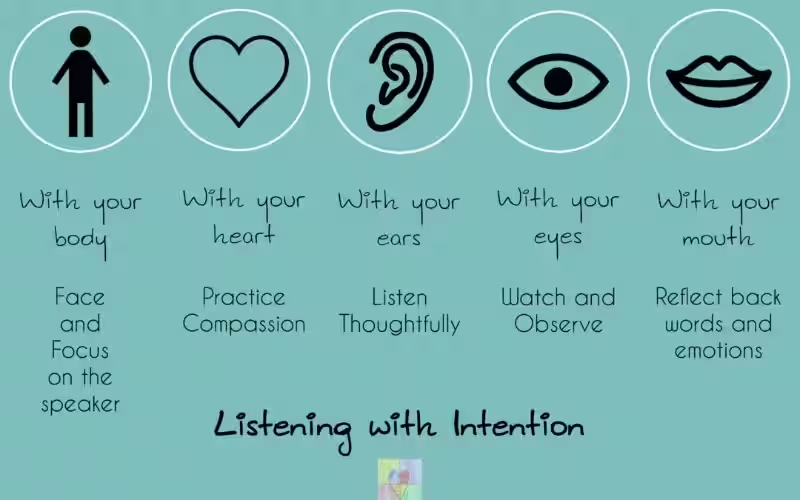
Active Listening in Prayer: True prayer is a two-way street. When you pray, make an effort to be present and to listen for any subtle nudges, insights, or feelings that arise. This cultivated receptivity is a hallmark of a truly engaged prayer heart.
These practices, when undertaken with genuine intention, can transform our relationship with religion from a passive observance to an active, vibrant communion. They are the keys that unlock the deeper dimensions of our spiritual lives, allowing the prayer heart to flourish.
The Transformative Power of the Prayer Heart
When the prayer heart is cultivated with sincerity and consistency, its effects ripple outwards, transforming not only our individual spiritual lives but also our interactions with the world around us. It’s like a gentle wave that, once set in motion, affects the entire shoreline. This inner transformation is the ultimate aim of religious devotion.
The genuine opening of the prayer heart leads to a profound shift in perspective. We begin to see challenges not as insurmountable obstacles but as opportunities for growth, and we approach relationships with greater compassion and understanding. This inner strength and peace, born from our connection, allows us to navigate life’s complexities with grace and resilience. The prayer heart becomes a wellspring of inner strength.
Living a Life Guided by the Prayer Heart
A life lived with a nurtured prayer heart is characterized by a deep sense of purpose and a quiet strength that emanates from within. It’s a life where our actions are aligned with our spiritual values, and where our faith is not just a set of beliefs but a guiding principle. This alignment is the fruit of consistent spiritual engagement.
Increased Compassion and Empathy: As we connect with the Divine, we often begin to see the Divine spark in others. This fosters a greater capacity for compassion, empathy, and understanding towards all beings. The prayer heart opens us up to the interconnectedness of all life.
Resilience in the Face of Adversity: The strength derived from a deep spiritual connection can equip us to face life’s inevitable difficulties with greater fortitude. Hope and a sense of divine presence can provide solace and guidance during challenging times. This inner resilience is a hallmark of a strong prayer heart.
A Sense of Peace and Contentment: When we trust in a higher power and have a cultivated prayer heart, a sense of inner peace and contentment often follows. This doesn’t mean the absence of problems, but an inner quietude that allows us to better manage them.
Authentic Service and Contribution: A transformed prayer heart naturally leads to a desire to serve others and contribute positively to the world. Our actions become an extension of our spiritual insights and a way to express our gratitude and love.
Ultimately, the cultivation of the prayer heart is a lifelong, rewarding endeavor. It is the journey of opening ourselves more fully to the divine presence within and around us, leading to a richer, more meaningful, and more impactful life within our religious tradition and beyond.
Frequently Asked Questions about Prayer and the Heart
What is a prayer heart?
A “prayer heart” is not a literal organ, but rather a metaphorical expression representing a heart that is devoted to prayer, open to spiritual connection, and focused on a relationship with the divine. It signifies a state of inner receptivity, sincerity, and longing for spiritual communion.
How does religion relate to the prayer heart?
Religion provides frameworks, traditions, and practices that often center around fostering a prayerful heart. Different religions offer specific prayers, rituals, and teachings aimed at cultivating devotion, mindfulness, and a deeper connection to the sacred. The concept of a prayer heart is central to many religious experiences, emphasizing the importance of inner disposition and intention in one’s spiritual life.
Can anyone have a prayer heart, regardless of their religion?
While religious traditions offer paths and guidance, the capacity for a prayerful heart is often considered a universal human attribute. Many believe that a sincere desire for connection, introspection, and a sense of awe or reverence can lead to a prayerful state, even outside of formal religious structures. The essence lies in the inward orientation and the act of reaching out for something greater than oneself.