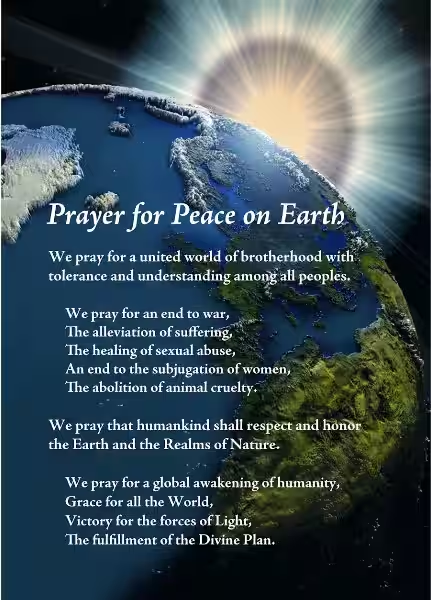
In the quiet moments of dawn, or the hushed stillness of night, a universal human impulse often surfaces: the desire for peace. This yearning transcends borders, cultures, and creeds, manifesting in countless forms of prayer for world peace. It’s a sentiment that resonates deeply within the human heart, a fervent whisper against the clamor of conflict and division. This article will explore the profound and varied ways different religions approach this aspiration, weaving together the threads of faith and the enduring hope for a harmonious global existence.
We live in a world that is both beautifully interconnected and tragically fractured. News cycles bombard us with stories of strife, but amidst the turmoil, the quiet power of prayer for world peace remains a steadfast beacon. It’s not a passive wish, but an active engagement of the spirit, a channeling of intention towards understanding, compassion, and reconciliation. This exploration aims to offer a useful, relatable, and informative perspective on how diverse religious traditions contribute to this vital, ongoing conversation.
The Foundation of Hope: Prayer as a Universal Language
At its core, prayer is a deeply personal yet universally shared act of communication. Whether directed towards a transcendent God, an immanent divine presence, or the collective consciousness of humanity, prayer offers a pathway to express our deepest hopes and concerns. When we pray for world peace, we are not simply wishing for the absence of war; we are actively invoking principles of justice, empathy, and mutual respect into the fabric of our reality. This act of focused intention can have a ripple effect, influencing our own actions and perceptions, and by extension, the world around us.
Think of a single drop of water hitting a still pond. The initial impact is small, but the ripples expand, touching the edges of the pond and eventually influencing the entire surface. Similarly, an individual or a community engaging in prayer for world peace can create subtle but significant shifts. This is not about magical thinking, but about the power of collective intention and the cultivation of inner peace, which then radiates outward. Religions provide structured frameworks and shared rituals that amplify this collective energy, making the aspiration for peace a communal endeavor.
The Abrahamic Traditions: A Covenant of Peace
Judaism, Christianity, and Islam, often referred to as the Abrahamic religions, share a foundational belief in one God and a rich history of prophetic teachings that emphasize peace. In Judaism, the concept of Shalom extends beyond the mere absence of conflict to encompass wholeness, well-being, and divine harmony. The daily Amidah prayer includes petitions for peace upon Israel and all humanity, a constant reminder of their interconnectedness. This profound aspiration is often articulated with phrases like, “May the Almighty grant peace to Israel and to all the inhabitants of the world.”
Christianity, rooted in the teachings of Jesus Christ, places a central emphasis on love, forgiveness, and reconciliation. The Beatitudes, for instance, declare, “Blessed are the peacemakers, for they shall be called children of God.” The Lord’s Prayer, a cornerstone of Christian worship, famously includes the petition, “Your kingdom come, your will be done, on earth as it is in heaven,” which inherently encompasses a vision of a peaceful and just world. This prayer for world peace is woven into the very fabric of Christian devotion, urging followers to actively work towards embodying Christ’s message of peace.
Islam, with its core tenet of submission to the will of Allah, also profoundly values peace, or Salam. The word itself is derived from the same root as Islam. The greeting of Muslims, “As-salamu alaykum” (peace be upon you), is a daily affirmation of this principle. The Quran repeatedly calls for justice, compassion, and peaceful coexistence. Islamic scholars and communities often engage in prayer for world peace, seeking Allah’s guidance and strength to overcome division and foster understanding among all people. A common supplication might be, “O Allah, guide us towards paths of peace and reconciliation, and protect us from all evil and discord.”
Eastern Spiritualities: Harmony and Interconnectedness
The diverse spiritual traditions originating in the East – Hinduism, Buddhism, Jainism, and Sikhism – offer unique perspectives on peace, often emphasizing inner transformation as the key to outer harmony. In Hinduism, the concept of Ahimsa, or non-violence, is central, extending from individual conduct to a global aspiration. The Sanskrit mantra “Lokah Samastah Sukhino Bhavantu” is a powerful prayer for world peace, meaning “May all beings everywhere be happy and free, and may the thoughts, words, and actions of my own life contribute in some way to that happiness and to that freedom for all.”
Buddhism, founded on the teachings of Siddhartha Gautama, the Buddha, advocates for the cessation of suffering through the understanding of impermanence and the cultivation of compassion and mindfulness. While not always framed as a direct “prayer for world peace” in the Western sense, Buddhist meditation practices and ethical guidelines are inherently geared towards fostering a harmonious existence. Chanting and communal prayers often express a deep desire for the well-being of all sentient beings, recognizing the interdependent nature of all life. A common aspiration voiced is, “May all beings be free from suffering, may all beings know peace.”
Jainism is perhaps the most stringent in its adherence to Ahimsa, viewing even the slightest harm to any living creature as a violation of its ethical principles. This commitment naturally extends to a profound desire for global non-violence and peace. Their prayers and meditations are deeply rooted in cultivating a benevolent mindset towards all beings. Sikhism, a monotheistic religion that emerged in the Punjab region, emphasizes service to humanity (Seva) and the equality of all people. Their prayers, such as the Ardas, often include petitions for the welfare of the entire human family, a powerful prayer for world peace that calls for unity and an end to all forms of oppression and conflict.
Across all religious traditions, prayer for world peace is often amplified through structured rituals and communal gatherings. Whether it’s a group recitation of the rosary, a congregational hymn, or a shared meditation session, the collective energy generated by people praying together can be incredibly potent. These shared practices not only strengthen individual faith but also foster a sense of unity and shared purpose among participants, reminding them that they are not alone in their longing for a better world.
Beyond spoken words and chanted mantras, prayer for peace often inspires tangible acts of peacemaking. Many religious organizations are actively involved in conflict resolution, humanitarian aid, and interfaith dialogue. This is the practical application of prayer – translating spiritual aspirations into concrete actions that alleviate suffering and build bridges of understanding. The prayer for world peace becomes a catalyst for active peacemaking, transforming passive hope into active engagement with the world’s challenges.
Beyond Dogma: The Universal Cry for Harmony
It’s important to recognize that the desire for peace is not solely confined to organized religion. Many individuals, regardless of their formal religious affiliation, find solace and purpose in personal prayer for world peace. These prayers may be whispered in moments of personal reflection, offered during times of crisis, or integrated into daily routines. The underlying intent remains the same: to send out a powerful signal of goodwill and a fervent wish for a less violent, more compassionate world.
In our increasingly globalized society, the lines between different religious and spiritual perspectives are becoming more blurred. This cross-pollination of ideas can lead to a richer understanding of the universal human drive for peace. When we listen to the diverse expressions of prayer for world peace from different cultures and faiths, we discover a common thread of humanity, a shared aspiration that transcends superficial differences. This understanding is crucial for building a truly inclusive and peaceful global community.
Ultimately, prayer for world peace is an expression of our deepest humanity. It is a testament to our capacity for hope, our yearning for connection, and our unwavering belief that a better world is not only possible but achievable. By understanding the diverse ways in which religions and individuals approach this sacred aspiration, we can all find renewed inspiration to contribute to the persistent echo of peace that resonates across our planet.
Frequently Asked Questions about Prayer for World Peace and Religion
What is a prayer for world peace?
A prayer for world peace is a heartfelt petition, supplication, or spiritual invocation directed towards a higher power or the universe, expressing a deep desire for harmony, understanding, and the cessation of conflict among all people and nations. It is a spiritual practice that seeks to foster a global environment free from violence, hatred, and suffering.
How do different religions approach prayer for world peace?
Most major religions incorporate the concept of peace as a central tenet and encourage prayer for its attainment.
Christianity: Prayers often focus on God’s love and mercy, asking for guidance for leaders, reconciliation between peoples, and the embodiment of Christ’s teachings of peace and forgiveness. Many Christian denominations have specific prayers or liturgical practices dedicated to peace.
Islam: The word “Islam” itself derives from the root word for peace. Muslims pray for peace, justice, and compassion, believing that submission to God’s will leads to inner and outer peace. Prayers like Salat often include supplications for the well-being of all creation.
Judaism: Jewish tradition emphasizes Shalom, which means peace, wholeness, and well-being. Prayers for world peace are common, often found in the Amidah (standing prayer) and in communal services, asking for God’s presence to bring peace to Israel and the entire world.
Buddhism: Buddhist prayers and meditations often aim to cultivate compassion and loving-kindness (metta) towards all beings, which naturally leads to a desire for peace. Practices focus on understanding the roots of suffering and conflict and cultivating inner peace as a foundation for outer peace.
Hinduism: Hindu prayers and chants often invoke deities associated with peace and harmony, such as Shanti. The concept of Ahimsa (non-violence) is central, and prayers are offered for the well-being and peaceful coexistence of all living beings.
Sikhism: Sikhism emphasizes selfless service (seva) and universal brotherhood. Prayers are offered for the welfare of all humanity, asking for divine intervention to end injustice and suffering and to establish peace and equality.
Can people of different faiths pray together for world peace?
Yes, interfaith prayer for world peace is a growing practice. Many individuals and communities believe that by coming together, sharing their common desire for peace, and praying in their respective traditions or in unified ways, they can amplify their collective spiritual intention and foster greater understanding and unity across religious divides.
What is the purpose of praying for world peace?
The purpose of praying for world peace is multifaceted. It can:
* Express a deep human yearning for a better world.
* Offer hope and solace in times of conflict.
* Encourage individuals to cultivate peace within themselves and their communities.
* Inspire action towards peace-building and conflict resolution.
* Connect individuals to a spiritual dimension that transcends worldly strife.
* Foster a sense of global solidarity and shared responsibility.
Is prayer for world peace effective?
The effectiveness of prayer is a matter of faith and personal belief. While tangible results of prayer for world peace may not always be immediately apparent or measurable in conventional ways, many believe that prayers can influence hearts and minds, foster positive intentions, encourage compassionate actions, and contribute to a collective consciousness that supports peace. It is often seen as a vital spiritual practice that complements human efforts towards peace-building.