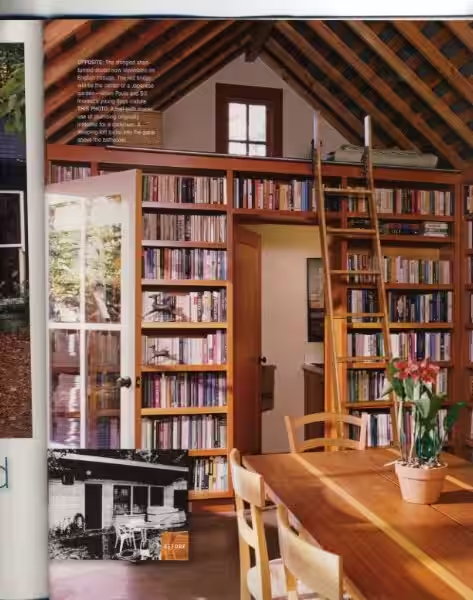
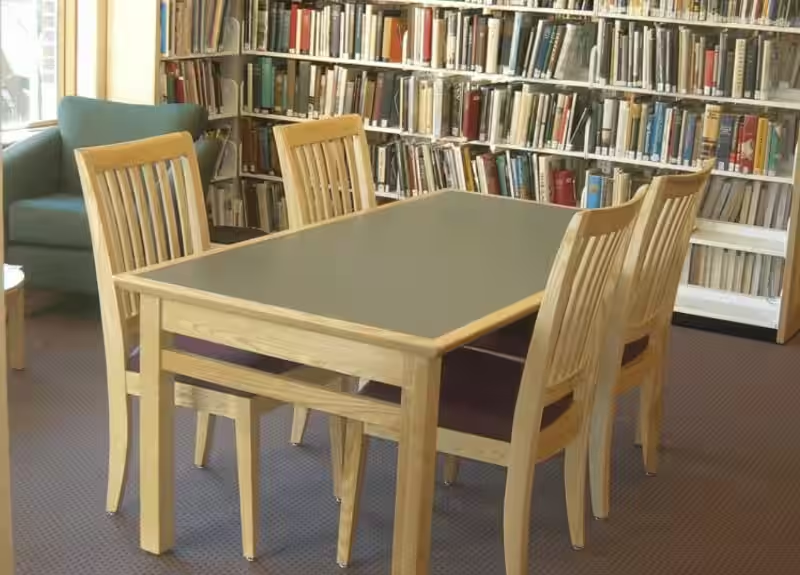
In the quiet corners of our lives, amidst the daily ebb and flow, we often seek spaces that offer solace, inspiration, and a connection to something larger than ourselves. For many, this sanctuary might be a grand cathedral, a bustling community center, or a serene mountaintop. But for a growing number of individuals, it’s a humble, often overlooked structure: the library shed. Far from being just a place to store gardening tools, these repurposed or purpose-built sheds have blossomed into personal libraries, becoming intimate havens for exploring faith, fostering personal growth, and diving deep into the rich tapestry of religious thought.
The concept of a library shed resonates deeply with those who find traditional religious institutions either too formal, too crowded, or simply not fitting their unique spiritual journey. Imagine a dedicated space, perhaps nestled at the back of a garden, filled with shelves groaning under the weight of books. This isn’t just about having a collection; it’s about cultivating a sacred space, a personal chapel of contemplation where the divine can be approached through the wisdom of ages, the insights of scholars, and the personal narratives of fellow seekers.
The very act of creating a library shed is often a spiritual endeavor in itself. It’s a tangible manifestation of a commitment to learning, to growth, and to connecting with the divine through the written word. This dedication to building a personal repository of religious texts can be a deeply fulfilling practice, offering a sense of agency and ownership over one’s spiritual exploration.
Within the library shed, shelves are meticulously arranged, perhaps by denomination, by theological theme, or even by spiritual practice. Here, one might find ancient scriptures like the Bible, the Quran, or the Bhagavad Gita, alongside modern commentaries, theological treatises, and inspirational biographies. The scent of old paper and ink mingles with the earthy aroma of its surroundings, creating a multi-sensory experience that invites deep engagement. For example, a Christian might dedicate a section to early Church fathers, while a Buddhist might curate a collection of Zen koans and mindfulness guides.
The Power of the Written Word in Religious Practice
For centuries, the written word has been a cornerstone of religious tradition. From illuminated manuscripts painstakingly copied by monks to the mass-produced Bibles of today, texts have served as conduits of divine revelation, moral guidance, and historical documentation. A library shed amplifies this power, transforming passive consumption into an active, personalized engagement with these sacred narratives.
Consider the profound impact of having immediate access to a diverse range of religious literature. Instead of relying solely on sermons or weekly services, individuals can delve into the nuances of their own faith or explore the tenets of others at their own pace. This independent study fosters a deeper understanding and allows for a more personalized interpretation of spiritual concepts. For instance, someone grappling with a theological question might find solace and clarity in a particular commentary, all within the quiet confines of their library shed. This accessibility removes barriers and empowers individuals to become their own spiritual scholars.
At the heart of any library shed focused on religion will undoubtedly be its collection of sacred scriptures. These are the foundational texts that have guided billions across millennia, offering narratives of creation, ethical frameworks, and pathways to spiritual enlightenment. Having these readily available, not just in digital form but as physical objects, imbues them with a tangible weight and a sense of historical continuity.
The library shed becomes a personal archive, a place where the reader can physically hold the word of their faith. Imagine tracing the lineage of a particular religious practice through different editions of its core texts or comparing translations to gain a richer understanding. This direct interaction with sacred scriptures can be profoundly moving. For example, a Hindu might spend hours comparing different interpretations of the Upanishads, or a Jewish scholar might pore over multiple editions of the Talmud, all within the intimacy of their personal library shed. This hands-on approach fosters a deeper connection than simply reading online.
Commentaries and Theological Explorations: Deepening Understanding
Beyond the scriptures themselves, a well-appointed library shed will house a rich collection of commentaries and theological works. These secondary sources offer invaluable context, historical perspectives, and diverse interpretations of religious doctrines. They act as guides, illuminating complex passages and fostering a more nuanced understanding of the faith.
The value of these theological explorations cannot be overstated. They allow individuals to engage with the intellectual and philosophical underpinnings of their beliefs. A Christian seeking to understand the intricacies of Trinitarian theology might find a dozen different approaches within their library shed, from early Church creeds to contemporary systematic theologies. Similarly, a Muslim could delve into various schools of Islamic jurisprudence or explore Sufi mystical poetry, all within their personal haven. This curated collection empowers a journey of intellectual and spiritual discovery, moving beyond superficial understanding to profound insight.
Inspirational Narratives and Personal Journeys: Connecting with Humanity
While scriptural and theological texts form the bedrock, a truly enriching library shed will also embrace inspirational narratives and personal journeys. These stories, whether biographies of saints, memoirs of spiritual seekers, or accounts of faith in action, offer relatable human experiences that resonate with our own struggles and triumphs. They remind us that we are not alone in our quest for meaning.
These personal journeys serve as powerful motivators. Reading about the resilience of those who have faced adversity with unwavering faith can be incredibly uplifting. For instance, a person struggling with doubt might find renewed hope by reading the autobiography of a renowned spiritual leader who openly discusses their own periods of questioning. The library shed becomes a place to find solidarity and encouragement, a reminder that the path of faith is often paved with shared human experiences. These narratives, bound within the quiet walls of the library shed, become beacons of hope.
Beyond the Books: The Library Shed as a Holistic Spiritual Space
The library shed is more than just a repository of religious literature; it is often designed to be a holistic space for spiritual practice. The environment itself is carefully curated to foster contemplation, meditation, and a sense of peace. The physical setting plays a crucial role in enhancing the spiritual experience, making the library shed a truly transformative space.
Comfortable seating is a must, inviting long hours of reading and reflection. Perhaps a soft rug, a warm lamp, or even a small altar with symbolic items can further enhance the atmosphere. The goal is to create an environment that is both conducive to focused study and deeply calming. The absence of distractions, a common challenge in our busy modern lives, is a significant advantage of the library shed. This dedicated space allows for uninterrupted spiritual engagement.
Creating an Atmosphere for Reflection
The ambiance of a library shed is paramount. It’s about more than just the books; it’s about cultivating a feeling of serenity and sacredness. This can be achieved through thoughtful decor and a mindful approach to the space. Soft lighting, perhaps from a reading lamp or even natural light filtering through a window, can create a gentle and inviting atmosphere.
The inclusion of elements that promote tranquility, such as a small potted plant or a piece of calming artwork, can further enhance the reflective quality of the library shed. Some individuals might even incorporate elements specific to their faith, like a prayer rug, a statue, or a collection of incense. The intention is to create a sanctuary where the outside world fades away, allowing for deep introspection and connection. This carefully crafted environment makes the library shed a true haven for the soul.
Integrating Practice with Study
The library shed offers a unique opportunity to seamlessly blend spiritual study with personal practice. It’s a space where one can read a passage from a scripture, then immediately engage in prayer or meditation inspired by what they’ve learned. This immediate integration deepens the impact of both study and practice.
Imagine reading about the importance of gratitude in a spiritual text, then taking a few moments within the library shed to reflect on personal blessings and express thanks. Or perhaps delving into a section on compassion and then engaging in a brief loving-kindness meditation. This mindful application of learned principles transforms abstract knowledge into lived experience, making the library shed a dynamic center for spiritual growth and transformation. The synergy between learning and doing within the library shed is truly powerful.
The Library Shed as a Modern Spiritual Movement
The rise of the library shed as a religious and spiritual space is a testament to the evolving landscape of faith. In an era where personalized experiences are highly valued, the library shed offers a distinct and meaningful alternative to traditional religious structures. It empowers individuals to take ownership of their spiritual journeys and to cultivate a faith that is deeply personal and authentically theirs.
This movement reflects a broader trend towards individualized spirituality, where people are seeking more flexible and accessible ways to connect with the divine. The library shed is a tangible embodiment of this desire, providing a dedicated and intimate space for exploration, learning, and spiritual fulfillment. It’s a quiet revolution happening in backyards and on balconies around the world, one library shed at a time, proving that profound spiritual experiences can be found in the most unassuming of places.
Embracing Personal Agency in Spirituality
The library shed is a powerful symbol of personal agency in the realm of spirituality. It signifies a move away from passive adherence towards active engagement and self-directed learning. This empowers individuals to shape their own understanding of faith, free from external pressures or prescribed doctrines.
This shift towards self-guided spiritual exploration can be incredibly liberating. It allows for experimentation with different traditions, the questioning of established beliefs, and the forging of a unique spiritual path. The library shed becomes a laboratory for the soul, a place where individuals can safely explore, discover, and ultimately, grow in their faith. This empowers individuals to be the architects of their own spiritual lives.
A Future for Faith in Intimate Spaces
As our lives become increasingly digitized and often disconnected, the desire for tangible, personal spaces for reflection and connection will only grow. The library shed, with its blend of literature, quietude, and personal intention, is poised to become an even more significant element in the future of religious and spiritual practice.
The library shed offers a timeless solution to a modern need. It’s a reminder that profound spiritual growth can occur not just in grand edifices, but in the quiet, intentional spaces we create for ourselves. This intimate approach to faith, nurtured within the walls of a library shed, promises to foster a deeper, more meaningful connection with the divine for generations to come. The humble library shed is, in its own quiet way, redefining the future of faith for many.
Frequently Asked Questions
What is a library shed?
A library shed is a small, often repurposed, structure that functions as a mini-library or book-sharing station in a community.
How do library sheds work?
Typically, anyone can take a book from the shed and leave a book in its place. It operates on an honor system for the lending and sharing of books.
Who can use a library shed?
Library sheds are generally open to everyone in the community.
What kind of books can I find in a library shed?
The selection varies greatly depending on what people donate. You might find fiction, non-fiction, children’s books, and more.
Can I donate books to a library shed?
Yes, donations are usually welcomed. Check with the specific library shed’s guidelines or organizers for what they accept.
Are library sheds managed by a formal organization?
Some library sheds are part of larger initiatives or managed by community groups, while others are independently started and maintained by individuals or neighbors.
Where can I find a library shed?
Library sheds can be found in various public spaces like parks, community gardens, or on private properties with public access across many neighborhoods and towns.
Is there a cost to use a library shed?
No, library sheds are free to use and operate on a donation and sharing basis.
What are the benefits of library sheds?
They promote literacy, encourage reading, foster community connection, and provide accessible book sharing.
Can I put my own books in a library shed?
Yes, that’s the core idea of a book-sharing library shed – to exchange books with others.