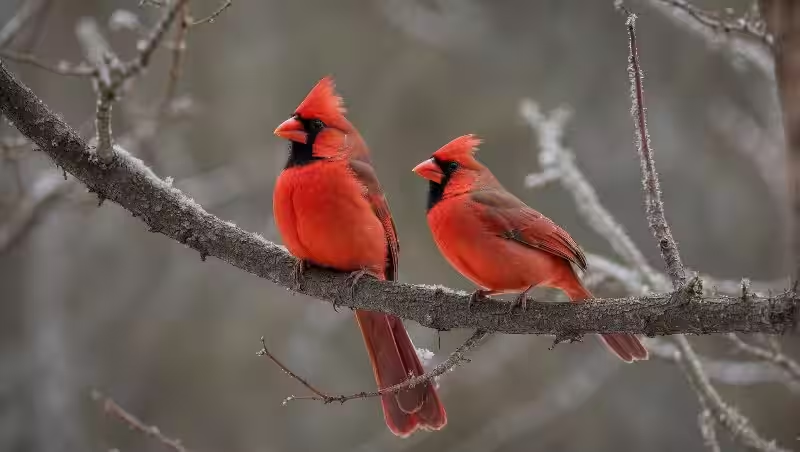
The flash of brilliant red against a winter sky, the cheerful, whistling song that heralds the dawn – the Northern Cardinal is a familiar and beloved sight for many. But beyond their vibrant beauty and melodic calls, a deeper question often lingers in the minds of those who admire them: how long can a cardinal live? This seemingly simple query opens a window into the natural world, the challenges faced by these iconic birds, and surprisingly, can even resonate with profound spiritual reflections on life, endurance, and the divine plan.
While the allure of the cardinal is undeniable, understanding their lifespan requires looking at the intricate tapestry of their existence. It’s a story woven with threads of survival, instinct, and the often-harsh realities of nature. For those who find solace and meaning in their faith, the cardinal’s journey can also serve as a poignant reminder of the cyclical nature of life and the unseen forces that guide us all.
The Natural Lifespan of a Cardinal: A Glimpse into Their World
In the wild, the lifespan of a Northern Cardinal is subject to a multitude of factors, much like our own lives are shaped by circumstance and environment. On average, a wild cardinal might live for about 3 to 7 years. This range is a testament to their resilience but also highlights the inherent dangers they face daily. Think of it like a brave explorer venturing into uncharted territory; their journey can be long and fruitful, or it can be cut short by unforeseen obstacles.
However, under optimal conditions and with good fortune, some cardinals have been recorded living much longer. There are documented cases of wild cardinals reaching 10, 15, and even as many as 20 years. These remarkable individuals are the outliers, the seasoned veterans who have navigated the perils of predation, disease, and harsh weather with exceptional skill and perhaps a touch of luck. Their extended lives become a quiet testament to the strength of their species.
Several crucial elements dictate whether a cardinal will reach the upper end of its potential lifespan. Predation is a significant threat, with hawks, owls, snakes, and even domestic cats posing constant dangers. A sudden rustle in the undergrowth or a shadow overhead can mean the end for an unwary bird. Then there’s the ever-present challenge of finding sufficient food, especially during the lean winter months when insects are scarce, and they rely heavily on seeds and berries.
Furthermore, disease and parasites can weaken a cardinal, making them more vulnerable to predators or the elements. Severe weather, such as prolonged periods of ice or snow, can also be devastating, limiting food availability and increasing the risk of hypothermia. A cardinal’s ability to find safe nesting sites, away from predators and protected from extreme weather, is another vital component for raising young and ensuring the continuation of their lineage. Their success in these areas directly impacts their chances of enjoying a longer, more vibrant life.
Cardinal Lifespan in Captivity: A Different Kind of Existence
When we consider cardinals in captivity, such as in zoos or well-maintained aviaries, their lifespans can often extend significantly beyond their wild counterparts. Freed from the constant pressures of predation and the unpredictable search for food, these birds can lead more sheltered lives. It’s akin to a seasoned soldier retiring to a comfortable, secure home after a lifetime of service; the immediate threats are removed, allowing for a more peaceful existence.
In a controlled environment with specialized care, captive cardinals have been known to live for 20 years or even more. This extended longevity is achieved through consistent access to nutritious food, protection from predators and harsh weather, and prompt veterinary care for any illnesses or injuries. This dramatically different scenario underscores the impact of a safe and nurturing environment on the potential duration of a life.
The Advantages of a Protected Environment
The primary advantage of captivity for a cardinal is the elimination of predation. The constant vigilance required in the wild, which consumes significant energy, is no longer a primary concern. Imagine a child who never has to worry about bumping into furniture or tripping on toys; their movements are freer and less fraught with danger. This allows them to conserve energy for other vital functions.
Moreover, consistent and balanced nutrition plays a crucial role. In the wild, a cardinal’s diet can fluctuate drastically depending on the season and availability. In captivity, they receive a carefully curated diet designed to meet all their nutritional needs, promoting overall health and robust immunity. This steady supply of nourishment is a stark contrast to the feast-or-famine existence many wild birds endure.
Religious Reflections on Cardinal Longevity: A Spiritual Perspective
The question of “how long can a cardinal live” can easily lead us to ponder deeper meanings, especially for those who find spiritual resonance in the natural world. Many religious traditions view the intricate design and endurance of life, even in its smallest forms, as evidence of a divine creator and a purposeful existence. The cardinal, with its striking beauty and tenacious spirit, can serve as a powerful symbol within this framework.
For believers, the lifespan of a cardinal, whether short or long, can be seen as part of a larger, divine plan. It’s a reminder that every creature, from the smallest sparrow to the mightiest whale, has its appointed time and purpose within the grand tapestry of creation. This perspective can offer comfort and a sense of order in a world that often feels chaotic and unpredictable.
Life as a Divine Gift and Lesson
From a religious standpoint, every day a cardinal lives is a gift, a testament to the life-giving power of a higher authority. The challenges they overcome – the harsh winters, the close calls with predators – can be interpreted as lessons in resilience, faith, and perseverance. Just as we are encouraged to face our own trials with courage, the cardinal’s struggle for survival can inspire us to do the same.
Consider the biblical narrative where Jesus speaks of sparrows being cared for by God; this sentiment extends to all of creation. The fact that cardinals, like other birds, have a natural lifespan, a period of flourishing and eventual return to the earth, can be seen as part of a sacred cycle of life and death, mirroring our own spiritual journeys and the promise of eternal life in many faiths. Their vibrant presence, however brief, is a vibrant stroke of divine artistry.
The endurance of a cardinal, particularly those that live longer lives, can also be a powerful symbol of steadfast faith and unwavering hope. In religions that emphasize perseverance through hardship, the cardinal’s ability to survive and thrive against the odds can be a tangible representation of spiritual strength. It’s like a beacon, a constant reminder that even in the darkest of times, life and beauty can persist.
The cardinal’s song, often heard even in the depths of winter, can be interpreted as a melody of praise and an anthem of enduring hope. It’s a sound that cuts through the silence and the cold, a vibrant declaration that life continues, that beauty persists, and that there is always a reason to sing. This resonates deeply with spiritual teachings that encourage us to maintain our faith and our spirit, regardless of the circumstances we face. The crimson flash, a symbol of passion and life, becomes a spiritual emblem of divine presence and enduring grace.
Frequently Asked Questions
How long can a cardinal live?
In the wild, Northern Cardinals typically live for 3 to 5 years. However, in captivity, with proper care and protection from predators, they can live much longer, sometimes up to 10 to 15 years.
Religion
(Please specify what you would like to know about religion in relation to cardinals. This section is currently too broad to provide a specific FAQ.)