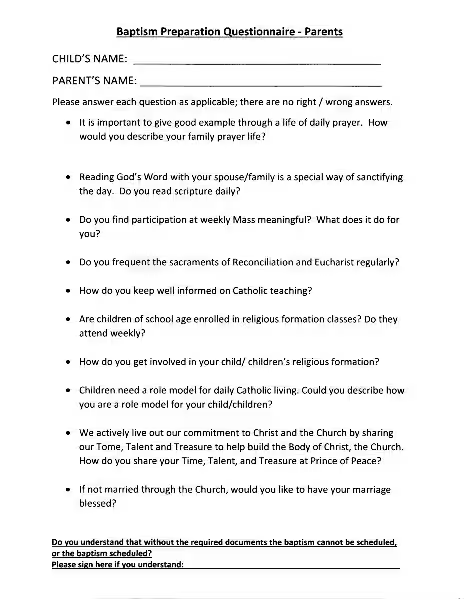
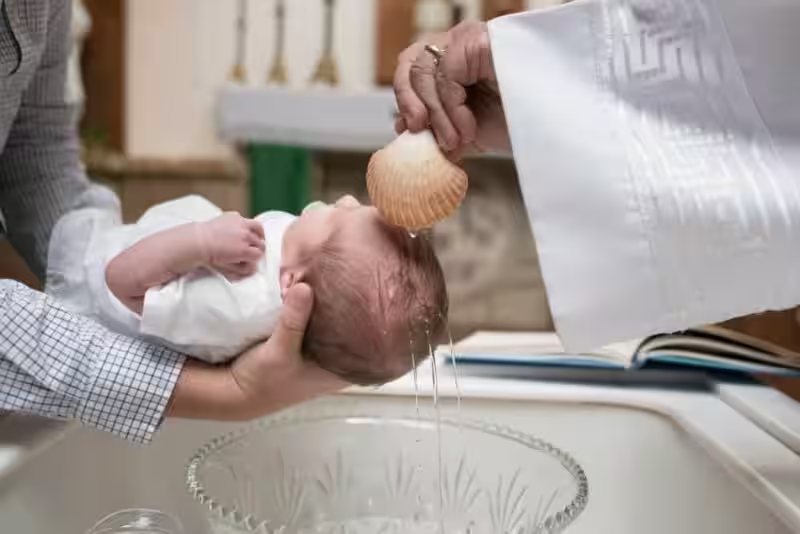
The act of baptism, a profound ritual steeped in tradition and personal conviction, often brings to mind a single, defining moment in a person’s spiritual journey. However, for many, the question of getting baptised again arises, not out of a rejection of their initial experience, but as a deeply personal and often transformative decision. This exploration delves into the multifaceted reasons why individuals might choose to undergo this sacred rite a second time, examining the religious, personal, and theological considerations involved. It’s a journey into understanding how faith can evolve and how significant life changes can prompt a desire for spiritual renewal.
The decision to be baptised again is rarely taken lightly. It often stems from a desire for a more profound connection to one’s faith, a response to significant life events, or a feeling that one’s initial baptism no longer fully represents their current spiritual understanding. This article aims to provide a comprehensive and relatable understanding of this practice, demystifying the process and offering insights for those who might be contemplating or curious about getting baptised again.
At its core, Christian baptism is a sacrament or ordinance that symbolizes spiritual cleansing, death to sin, and rebirth into a new life in Christ. It’s an outward expression of an inward commitment to follow Jesus. The imagery of water is central, representing purification and the washing away of sins. In many traditions, baptism is seen as a public declaration of faith, a welcome into the community of believers, and a sign of God’s covenant with humanity. The symbolism is rich and varied, often encompassing themes of resurrection and new beginnings.
Historically, baptism has been practiced in various forms across different Christian denominations. The mode of baptism – whether by immersion, pouring, or sprinkling – and the age at which it is performed (infant vs. believer’s baptism) are points of theological discussion and practice. Regardless of these variations, the underlying significance of a spiritual initiation and commitment remains a constant. For many, this initial act establishes a foundational relationship with God and the church community.
Interpretations of Baptism Across Denominations
Different Christian traditions hold varying theological perspectives on baptism. Some, like many Protestant denominations and the Catholic and Orthodox Churches, practice infant baptism, believing it initiates the child into the covenant community and marks them as a child of God. For those baptized as infants, the understanding of baptism is often spiritual, with the individual later affirming that commitment during confirmation. Others, particularly Baptists and many Pentecostal groups, practice believer’s baptism, where individuals are baptized only after they have made a personal confession of faith and are old enough to understand its significance. This emphasizes a conscious, volitional act of commitment. The concept of getting baptised again can therefore be viewed differently depending on these theological underpinnings.
For individuals who were baptized as infants in traditions that emphasize personal faith, the desire for believer’s baptism can lead to the consideration of getting baptised again. This isn’t to invalidate their infant baptism, but rather to participate in a ritual that more fully aligns with their current, conscious decision to follow Christ. It’s a way to express a personal appropriation of their faith, making the commitment their own. Understanding these diverse viewpoints is crucial to grasping the motivations behind choosing to be baptized more than once.
Why Consider Getting Baptised Again? Common Motivations
The decision to pursue getting baptised again is deeply personal and often arises from a confluence of spiritual, emotional, and life-stage factors. It’s rarely a casual choice but rather a deliberate step taken to deepen one’s relationship with God or to signify a profound shift in one’s life and faith journey. These motivations are as diverse as the individuals themselves.
One of the most common reasons for getting baptised again is a newfound or recommitted faith. Perhaps someone grew up in a religious household, was baptized as an infant, but their faith became dormant or was never truly embraced as their own. Later in life, through a personal experience, a crisis, or a period of searching, they find themselves drawn back to God with a renewed and vibrant faith. This often sparks a desire to publicly and personally reaffirm their commitment through a baptism that reflects this mature, conscious decision. It’s like coming home after a long journey, wanting to announce your return with a clear and intentional declaration.
For many, getting baptised again serves as a powerful act of reaffirmation. Life’s challenges, spiritual dryness, or periods of doubt can lead a person to feel disconnected from their faith. A subsequent baptism becomes a symbolic washing away of past spiritual weariness and a fresh immersion into God’s grace. It’s a way to say, “I’ve been through a lot, and I’m choosing to recommit my life to Christ with a renewed spirit.” This can be particularly meaningful for those who have experienced significant personal growth or overcome major obstacles. The water becomes a fresh start, a cleansing of the soul, and a visible sign of renewed dedication. For example, someone who has struggled with addiction and found sobriety through their faith might choose getting baptised again as a powerful symbol of their complete transformation and their commitment to a life free from past bondage.
Another significant motivation for getting baptised again is the desire for a more meaningful connection to a specific church community. While one might have been baptized in a particular denomination, they may later find themselves deeply involved in a different Christian tradition whose understanding and practice of baptism resonate more profoundly with them. Joining a new church family and wanting to fully participate in its sacraments can lead to a desire for a baptism that aligns with their beliefs and the practices of their new spiritual home. This is about unity and belonging, about embracing the full spectrum of what their chosen faith community offers and signifies. It’s a way of saying, “This is where I belong now, and I want to mark this new chapter with the rituals that are central to this community.”
Responding to Significant Life Changes
Major life events, such as a profound personal crisis, a near-death experience, a marriage, or even the loss of a loved one, can trigger a deep re-evaluation of one’s life and faith. In the face of such profound moments, individuals may feel called to seek spiritual grounding and a recommitment to their faith. Getting baptised again can be a way to mark this transition, symbolizing a shedding of the old self and an embracing of a new perspective shaped by their experiences. It’s a way of saying, “This event has changed me, and I want to publicly acknowledge my reliance on God and my commitment to live a life that reflects this new understanding.”
For those who were baptized as children without a conscious understanding of its meaning, reaching adulthood and developing a personal faith can lead to the desire for getting baptised again. This is often referred to as believer’s baptism. It’s not a repudiation of their infant baptism but rather an intentional, personal declaration of faith. They are choosing to be baptized because they now understand and believe in what the ritual represents. It’s a powerful affirmation of their personal relationship with God, a deliberate step into a faith that they have actively chosen, rather than one that was chosen for them. This is a crucial distinction for many who feel that their faith journey truly began when they were old enough to make their own informed decisions.
The Process and Considerations of Getting Baptised Again
Deciding to undergo baptism a second time is a significant spiritual step, and understanding the process involved is crucial. While the core symbolism remains the same, the specifics can vary depending on the denomination and the individual’s circumstances. It’s important to approach this decision with prayer, reflection, and open communication with spiritual leaders.
The first step in getting baptised again typically involves consultation with a pastor, priest, or other spiritual leader within a church community. They can provide guidance on the theological implications, the requirements of their specific denomination, and the practical steps involved. This conversation is vital for ensuring that the decision is well-informed and aligns with the teachings of the church. It’s an opportunity to ask questions, share one’s motivations, and receive pastoral support. For instance, a conversation might explore the difference between an infant baptism and a believer’s baptism, and how the individual’s personal journey fits within the church’s understanding of these practices. This dialogue is foundational to a meaningful experience.
Consultation with Religious Leaders and Denominational Practices
Most denominations that practice believer’s baptism will welcome individuals who feel called to be baptized again. This often involves a period of discipleship or a brief course to ensure the individual understands the significance of the sacrament and the core tenets of their faith. Some denominations might have specific requirements, such as being an active member of the congregation or having completed a certain level of spiritual education. For example, a church might require a series of classes on Christian doctrine and the meaning of baptism before proceeding. The goal is not to create hurdles, but to ensure that the individual’s decision is grounded in a clear understanding and a genuine commitment. This thoughtful preparation helps to make the experience of getting baptised again even more profound and meaningful.
In cases where an individual was baptized in one denomination and wishes to be baptized again in another, the process might involve understanding the differences in theological interpretation. For instance, if someone was baptized by sprinkling in one tradition and desires immersion in another for a more symbolic experience, the new church will likely accommodate this. However, some denominations have strict policies. It’s always advisable to research the specific practices of the church you are considering joining. Open communication is key, ensuring that both you and the religious leaders are on the same page regarding the meaning and implications of getting baptised again. This transparency fosters trust and ensures a spiritually enriching experience.
Preparing for the Experience: What to Expect
The preparation for getting baptised again often involves more than just practical arrangements; it’s a time of spiritual introspection and prayer. Individuals are encouraged to reflect on their journey of faith, their reasons for seeking baptism again, and what they hope to experience through the ritual. This might involve journaling, fasting, or dedicating time to prayer. Many churches will also offer pre-baptism classes or counseling sessions to help individuals deepen their understanding and prepare their hearts. It’s a time to truly embrace the symbolic death to the old self and the resurrection to a new life in Christ.
On the day of the baptism, the experience is often deeply emotional and spiritual. Whether it takes place in a formal ceremony or a more intimate setting, the act of being immersed in water or having blessed water poured over them is a powerful physical and spiritual representation of cleansing and new life. Following the baptism, there is often a sense of peace, renewal, and a strengthened connection to God and the church community. This renewed commitment is often celebrated with family and friends, marking a significant milestone in their faith journey. The memory of getting baptised again can serve as a constant reminder of their commitment and the grace they have received.
Theological Perspectives and Personal Conviction
The theological landscape surrounding the question of getting baptised again is rich and varied, reflecting centuries of interpretation and practice within Christianity. While some traditions view baptism as a singular, indelible event, others allow for a subsequent baptism under specific circumstances, emphasizing personal conviction and spiritual growth. The core of the debate often lies in the understanding of baptism’s efficacy and its relationship to an individual’s ongoing journey of faith.
For those who believe in the concept of “once saved, always saved” and view baptism as a symbol of a salvific event that has already occurred, the idea of getting baptised again might be seen as redundant or even a sign of spiritual immaturity. In these views, the initial baptism, regardless of when or how it occurred, is considered a sufficient marker of God’s grace and the believer’s acceptance into the covenant. Therefore, re-baptism might not be seen as theologically necessary or even appropriate. These perspectives prioritize the internal reality of salvation over outward ritualistic repetition, believing that true faith transcends the need for repeated symbolic acts.
Understanding Different Views on Sacramental Efficacy
Theological perspectives on sacramental efficacy play a significant role in how getting baptised again is viewed. Some traditions believe in the objective efficacy of sacraments, meaning they impart grace regardless of the recipient’s subjective feelings or understanding. In these traditions, baptism is a divine act that confers spiritual benefits, and its validity is not dependent on subsequent personal choices. Therefore, a second baptism might be considered unnecessary, as the grace conferred by the first remains. The focus here is on God’s action and the established covenant, not on human repetition of the ritual. This view often emphasizes the importance of infant baptism as a sign of God’s initiating grace.
Conversely, other traditions, particularly those that emphasize believer’s baptism, hold a more subjective view of sacramental efficacy, where the personal faith and understanding of the individual are paramount. In these contexts, getting baptised again is seen as a valid and meaningful expression of a matured faith. It’s about consciously and personally embracing the covenant that was perhaps initiated for them as an infant. This is not to invalidate the initial baptism but to personally appropriate its meaning and significance. It is a public declaration of a present-day faith, a testament to a relationship with God that has been consciously chosen and actively nurtured. For example, someone who experienced a profound spiritual awakening after years of spiritual dormancy might feel that their initial infant baptism doesn’t fully represent their current, deeply felt commitment to Christ.
The Role of Personal Conviction and Experience
Ultimately, the decision to pursue getting baptised again often hinges on personal conviction and transformative life experiences. A deeply felt call to recommit one’s life to God, a profound understanding of sin and repentance, or a desire to publicly profess a faith that has been personally embraced can all lead to this decision. It’s about seeking a ritual that authentically reflects one’s spiritual state and commitment. This is not about seeking salvation again, as many believe salvation is a singular event, but about reaffirming and publicly declaring a faith that has been reborn or deeply renewed within the individual.
The emphasis on personal conviction means that for many, getting baptised again is a deeply spiritual and emotional experience that solidifies their faith journey. It’s a powerful act of obedience and testimony, a declaration to the world and to themselves of their unwavering commitment to Christ. This decision is often met with support from their faith community, who recognize the sincerity and significance of such a step. It is a testament to the dynamic and evolving nature of faith, and the human desire for rituals that can mark profound personal growth and spiritual renewal. For someone who has overcome significant personal struggles and found new life in their faith, the act of getting baptised again can be a powerful declaration of victory and a profound expression of gratitude.
Frequently Asked Questions: Getting Baptised Again
Can I be baptised again?
Whether or not you can be baptised again depends on your current religious affiliation and their specific doctrines. Many Christian denominations recognise baptism as a one-time sacrament signifying a new life in Christ. However, some traditions or individuals may consider re-baptism under certain circumstances, such as a renewal of faith, a change in denomination, or if the original baptism is deemed invalid (e.g., performed with the wrong intent or by an unauthorised person). It is best to consult with a clergy member or leader within your specific religious community for guidance.
Why would someone consider being baptised again?
Reasons for considering re-baptism are varied and personal. Some individuals may feel they have strayed from their faith and seek a symbolic recommitment through baptism. Others might be joining a new denomination with different baptismal practices or beliefs than their previous one. In some cases, people may have questions about the validity or sincerity of their original baptism. Ultimately, the decision to be baptised again often stems from a deep desire for spiritual renewal and a stronger connection to their faith.