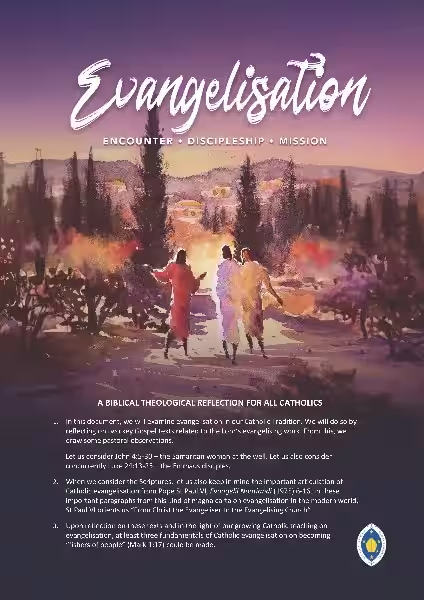
Religion, in its most profound sense, is a journey of discovery, a quest for meaning, and a deep connection to something larger than ourselves. At the core of many faith traditions lies a powerful impulse: to share that discovery, that meaning, that connection with others. This impulse, often referred to as evangelisation, is not about forceful persuasion or aggressive conversion, but rather a vibrant expression of faith lived out loud. It’s the natural overflow of a life transformed, a desire to extend the grace and truth one has found to those who might be seeking it.
In a world often characterized by skepticism and diverse belief systems, understanding evangelisation becomes crucial for grasping the dynamics of religious communities and their engagement with the wider society. It’s a concept that can sometimes evoke strong reactions, conjuring images of proselytizing that felt intrusive. However, a deeper exploration reveals that evangelisation, at its best, is rooted in love, compassion, and a genuine desire for the well-being of others. It’s about offering a beacon of hope, a source of comfort, and a path towards spiritual fulfillment, mirroring the very foundations of religion itself.
At its fundamental level, evangelisation is the act of proclaiming the Gospel, which in its broadest sense means “good news.” This “good news” is central to many religions, offering a message of redemption, hope, and a relationship with the divine. It’s not merely about reciting doctrines; it’s about sharing a lived experience of faith, the transformative power of spiritual conviction, and the principles that guide one’s life. Think of it like discovering a life-saving cure for a widespread illness; wouldn’t you feel compelled to share that information with as many people as possible, especially those suffering?
The methods of evangelisation are as diverse as the religions themselves. They can range from personal testimonies shared in intimate conversations to large-scale public gatherings. It encompasses acts of service, demonstrating the principles of faith through tangible actions that benefit communities. It can be found in the quiet example of a devout individual living a life of integrity, or in the passionate preaching that seeks to awaken spiritual hunger. The key ingredient is always the sharing of something considered profoundly valuable, something that has brought meaning and purpose to the evangelist’s own life within the framework of their religion.
The Nuances of Sharing Faith
It’s important to distinguish between genuine evangelisation and coercive or manipulative tactics. True evangelisation is born out of a place of respect for the individual’s autonomy and their own spiritual journey. It acknowledges that everyone has their unique path and that faith cannot be forced. Instead, it offers an invitation, a sharing of light, allowing the recipient to respond freely. This approach emphasizes relationship building, listening, and understanding rather than a one-sided delivery of information.
Consider the example of a friend who has found immense joy and peace through a particular hobby, like gardening. They might share their passion by inviting you to their garden, teaching you how to plant a seed, and explaining the satisfaction they get from nurturing life. They aren’t forcing you to become a gardener, but they are sharing something that has enriched their life, hoping you might find similar joy. Evangelisation within religion operates on a similar principle, offering the fruits of a spiritual life as an invitation, not a demand.
Evangelisation as an Expression of Love and Compassion
Often, the driving force behind evangelisation is a profound sense of love and compassion for humanity. When individuals experience a deep spiritual connection or find solace and guidance in their religion, they often feel a natural desire to share that source of strength and hope with others who might be struggling or feeling lost. This isn’t about superiority; it’s about empathy and the recognition that everyone, regardless of their background or current beliefs, deserves access to potentially life-affirming truths.
This outward expression of faith can manifest in numerous ways. It could be through volunteering in soup kitchens, offering comfort to the sick, or advocating for justice – all actions stemming from the core tenets of their religious beliefs. These acts of service are a powerful form of evangelisation, demonstrating the practical application of faith and its positive impact on the world. When people witness selfless acts of kindness and dedication, they are often more open to understanding the motivations behind such actions, the religion that inspires them.
Living the Message: The Power of Example
Perhaps the most impactful form of evangelisation is not through words, but through actions. When individuals live their lives in accordance with the values and teachings of their religion – exhibiting patience, kindness, forgiveness, and integrity – they become living testaments to the transformative power of their faith. This quiet, consistent example can speak volumes and often sparks curiosity and dialogue in ways that direct preaching might not.
Imagine someone who consistently faces adversity with grace and resilience, always offering a helping hand and speaking words of encouragement. Their positive outlook and unwavering spirit can be a compelling advertisement for the inner strength and peace that their faith provides. This is evangelisation in its purest form: demonstrating the beauty and efficacy of a life grounded in spiritual truth, inviting others to inquire about the source of such admirable character.
Challenges and Opportunities in Modern Evangelisation
In today’s interconnected yet often fragmented world, evangelisation faces unique challenges. Skepticism towards organized religion, the rise of secularism, and the prevalence of misinformation can create barriers. Furthermore, past negative experiences with aggressive proselytization have understandably led to caution and even resistance for many. Navigating these complexities requires sensitivity, cultural awareness, and a commitment to authentic dialogue.
However, these challenges also present significant opportunities. The digital age offers unprecedented platforms for sharing religious messages and engaging in conversations globally. Evangelisation can now transcend geographical boundaries, reaching individuals through social media, online forums, and digital content. The key lies in adapting these tools to convey messages of love, hope, and understanding in ways that are relevant and accessible to contemporary audiences, fostering genuine connection rather than alienation.
Building Bridges Through Dialogue and Understanding
Effective evangelisation in the modern era hinges on building bridges rather than walls. This means fostering an environment of dialogue, where people feel heard, respected, and valued, regardless of their current beliefs. It involves actively listening to people’s concerns, understanding their perspectives, and engaging in open, honest conversations about faith and life’s big questions. This collaborative approach allows for a more meaningful exchange of ideas and can lead to genuine spiritual exploration.
Instead of presenting faith as a closed system of answers, evangelisation can be about inviting others to explore the journey of faith alongside believers. This might involve sharing personal stories of doubt and discovery, acknowledging the complexities of faith, and demonstrating that spiritual growth is an ongoing process. By embracing humility and a genuine desire to connect, religious individuals can make their religion and its message of hope more accessible and appealing to a wider audience.
The Enduring Significance of Evangelisation
Evangelisation, in its truest and most positive form, remains a dynamic and vital aspect of many religious traditions. It is the natural outpouring of a faith that has brought meaning, purpose, and transformation. While the methods may evolve with the times, the fundamental impulse to share the “good news” – the transformative truths and experiences of religion – endures.
Ultimately, evangelisation is not about winning arguments or forcing conversions. It is about love, compassion, and the sincere desire to offer a path to spiritual fulfillment and a deeper connection with the divine. By embracing ethical principles, fostering authentic relationships, and living out their faith with integrity, religious individuals can continue to share the profound impact of their beliefs in a way that resonates with the needs and aspirations of people in the 21st century, enriching both their own lives and those of others.
Evangelism is the act of spreading the Christian gospel, or any religious belief, to others, often with the aim of conversion. It typically involves sharing one’s faith through preaching, teaching, personal testimony, and acts of service.
Is evangelism only about converting people?
While conversion is often a primary goal, evangelism can also encompass a broader mission of sharing love, compassion, and the teachings of a faith. It can involve building relationships, offering support, and living out one’s beliefs publicly.
What are some common methods of evangelism?
Common methods include preaching in churches or public spaces, door-to-door outreach, distributing religious literature, personal conversations, using media (radio, television, online platforms), and engaging in social justice initiatives that reflect religious values.
Is evangelism always welcomed by others?
No, evangelism can sometimes be met with resistance, skepticism, or even hostility. This can be due to past negative experiences, a feeling of being pressured, or a disagreement with the beliefs being shared. Respectful communication and understanding are crucial.
How can I evangelize respectfully?
Respectful evangelism involves listening to others, understanding their perspectives, sharing your beliefs humbly and without coercion, respecting their right to accept or reject your message, and demonstrating love and compassion in your interactions.
Can I evangelize without being pushy?
Yes, it is possible to share your faith without being pushy. This involves building genuine relationships, being authentic in your beliefs, sharing your personal experiences when appropriate, and allowing others to lead the conversation about their own beliefs and questions.
What is the role of the Holy Spirit in evangelism?
Many Christians believe that the Holy Spirit plays a vital role in evangelism, guiding the evangelist, convicting the hearts of those who hear the message, and empowering believers to share their faith effectively.
Is evangelism only for certain people within a religion?
In many religions, evangelism is seen as a responsibility or calling for all adherents, not just designated leaders or clergy. However, individual gifts and comfort levels can vary.
What are some ethical considerations in evangelism?
Ethical considerations include avoiding manipulation, respecting individual autonomy, not exploiting vulnerable individuals, being truthful and accurate in the information shared, and ensuring that evangelistic efforts do not cause harm or division.
How can I learn more about evangelism?
You can learn more by reading religious texts, studying writings from theologians and evangelists, attending workshops or training sessions offered by religious organizations, and engaging in conversations with experienced individuals within your faith community.