In a world increasingly characterized by its vibrant tapestry of beliefs, understanding and fostering harmony between different religious traditions can seem like an insurmountable task. Yet, amidst the cacophony of differing doctrines and practices, the concept of a consensus document emerges as a powerful tool for building bridges, fostering mutual respect, and illuminating shared values. This isn’t about erasing differences; rather, it’s about identifying the common ground upon which peaceful coexistence and deeper understanding can be built, especially within the complex landscape of religion.
Imagine a family with diverse tastes in music. While one sibling might adore classical symphonies, another might be a die-hard rock fan, and a third could find solace in folk melodies. Without any shared appreciation, family gatherings could become fraught with tension. However, if they discover a mutual enjoyment for a particular artist whose music blends elements of all their preferred genres, they can find a way to connect. A consensus document in religion functions similarly, acting as that shared musical artist, highlighting the aspects that resonate across different faith communities.
What Exactly is a Consensus Document in Religious Contexts?
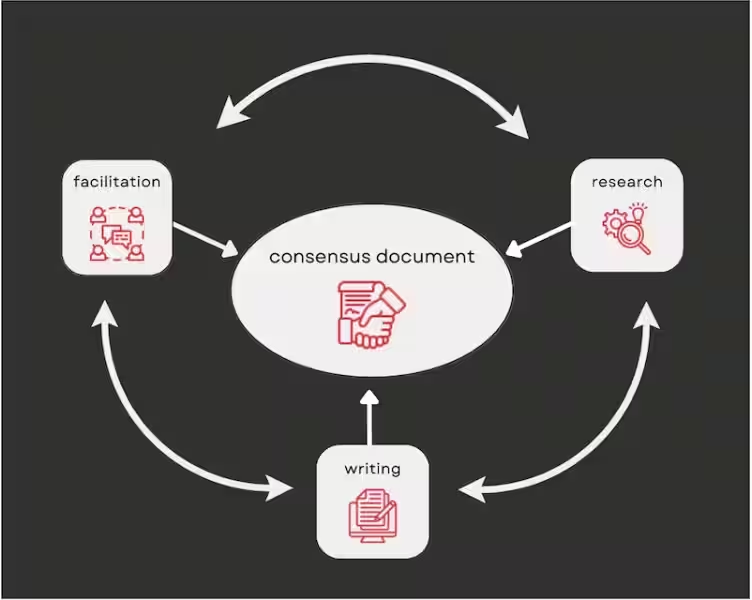
At its core, a consensus document in religion is a statement or declaration that has been agreed upon by representatives from two or more distinct religious groups. It’s not a new dogma or a universal creed designed to replace individual faiths. Instead, it represents an agreed-upon understanding on specific topics, often focusing on shared ethical principles, common spiritual aspirations, or collective responses to societal challenges. The process of creating such a document is typically lengthy and involves extensive dialogue, careful listening, and a genuine commitment to understanding perspectives that may differ significantly from one’s own.
Think of it like a group of scholars from different universities coming together to publish a joint paper on a complex scientific theory. Each scholar brings their unique expertise and theoretical framework, but through rigorous debate and shared research, they arrive at a unified explanation that acknowledges their individual contributions while presenting a cohesive understanding. Similarly, in the realm of religion, a consensus document is the product of such collaborative intellectual and spiritual effort, aiming for clarity and agreement on chosen subjects. It’s a testament to the idea that even with diverse theological starting points, commonalities can indeed be found and articulated.
The Purpose and Significance of Consensus Documents
The primary purpose of a consensus document is to promote interreligious dialogue and understanding. By articulating shared values and beliefs, these documents can serve as a powerful antidote to religious intolerance and misunderstanding. They provide a tangible framework for people of different faiths to see each other not as adversaries, but as fellow travelers on a spiritual journey, each seeking meaning and purpose in life. This can range from agreeing on the sanctity of life to advocating for social justice or environmental stewardship. The impact of such agreements can be profound, fostering a more peaceful and cooperative global society.
Furthermore, a consensus document offers a valuable resource for educators, policymakers, and individuals seeking to learn about the points of convergence between various religions. It can demystify complex theological differences by highlighting the surprising overlaps. For instance, many religions share a core tenet of compassion for the suffering of others, often encapsulated in phrases like the “Golden Rule.” A consensus document might elaborate on this shared principle, exploring its diverse interpretations and practical applications across different faith traditions. This shared understanding can then be used to inform public policy or inspire collaborative humanitarian efforts, demonstrating the real-world benefits of religious agreement.
Examples and Applications of Consensus Documents in Religion
Throughout history, and in more recent times, various consensus document initiatives have emerged, showcasing the practical application of interreligious dialogue. One notable example is the ‘Common Word’ initiative, launched in 2007, which saw prominent Muslim scholars address Christian leaders, proposing a shared foundation for interfaith understanding based on the twin commandments of love of God and love of neighbor. This document, signed by over 138 Muslim scholars and leaders, aimed to foster dialogue by identifying core ethical principles common to both Islam and Christianity.
Another area where consensus documents are proving invaluable is in addressing global challenges. For instance, many religious traditions have strong teachings on the importance of caring for the environment. Collaborative efforts have led to documents outlining shared responsibilities for ecological stewardship, bringing together diverse religious voices to advocate for sustainable practices. These declarations often emphasize the intrinsic value of creation and the moral imperative to protect it for future generations. Such documents are not just theological statements; they are calls to action, urging believers of all faiths to work together for the common good.
The Process of Creating a Consensus Document: Challenges and Triumphs
Creating a consensus document is rarely a simple or swift undertaking. It involves navigating deeply ingrained theological distinctions, historical grievances, and varying cultural interpretations of religious texts. The process demands immense patience, a willingness to listen empathetically, and a commitment to seeking understanding rather than immediate agreement. Representatives often engage in prolonged dialogues, study sessions, and prayerful reflection to identify common threads and articulate them in a way that is respectful to all involved traditions. This can involve establishing clear ground rules for discussion, ensuring that all voices are heard and valued.
Despite the inherent difficulties, the triumphs of achieving consensus are significant. Each consensus document represents a victory for peace and understanding, a testament to the human capacity for dialogue and reconciliation. These documents can serve as powerful symbols of unity in a world often fractured by religious differences. They provide a roadmap for future interfaith engagement, inspiring further collaboration and fostering a deeper appreciation for the richness and diversity of human spirituality. The creation of a consensus document is not an endpoint, but rather a vital stepping stone on the path to a more harmonious and interconnected world.
The Future of Consensus Documents in a Globalized Religious Landscape
As our world becomes increasingly interconnected, the need for interreligious understanding and cooperation will only grow. In this context, the role of the consensus document is poised to become even more crucial. These documents offer a vital framework for navigating the complexities of a globalized religious landscape, providing pathways for dialogue and collaboration on shared challenges such as poverty, conflict resolution, and the promotion of human dignity. The potential for them to influence global discourse and inspire collective action is immense.
Looking ahead, we can anticipate the development of more comprehensive and impactful consensus documents that address a wider range of issues. These might include joint declarations on the ethics of artificial intelligence, shared approaches to mental health support informed by spiritual wisdom, or collaborative efforts to combat misinformation and promote truth. The ongoing evolution of the consensus document in religion promises to be a dynamic and vital aspect of fostering a more peaceful, just, and understanding world for all its inhabitants.
Frequently Asked Questions about Consensus Documents and Religion
What is a consensus document in the context of religion?
A consensus document in a religious context is a statement or declaration that represents the agreed-upon beliefs, practices, or theological positions of a particular religious group, denomination, or tradition. It is typically produced through a process of discussion, deliberation, and agreement among its members or leaders.
Who typically creates religious consensus documents?
Religious consensus documents are usually created by official bodies within a religious organization, such as councils of bishops, synods, assemblies, scholarly committees, or representative groups of clergy and laity. The specific body depends on the organizational structure of the religion.
What is the purpose of a religious consensus document?
The primary purpose is to articulate and affirm shared understandings of faith, doctrine, ethics, or practice. These documents can serve to guide members, clarify teachings for outsiders, address contemporary issues from a religious perspective, or declare official positions on matters of belief and conduct.
How are religious consensus documents developed?
The development process can vary widely. It often involves extensive research, theological reflection, dialogue, drafting, review, and voting or affirmation by designated representatives. The goal is to reach a widely accepted agreement on the content.
Are religious consensus documents binding on all members of a religion?
Whether a consensus document is binding depends on the authority granted to the body that produced it and the specific religious tradition’s hierarchical structure and governance. Some documents may be authoritative doctrines, while others might be pastoral guidelines or pronouncements open to interpretation.
How do religious consensus documents differ from scripture?
Scripture (like the Bible, Quran, Torah, etc.) is generally considered divinely inspired or revealed and foundational to a religion. Consensus documents are human-authored interpretations, elaborations, or applications of those scriptures and traditions. While important for understanding and practicing a faith, they are typically not seen as having the same level of divine authority as scripture.
Can religious consensus documents change over time?
Yes, religious consensus documents can be revised, updated, or superseded by new documents as theological understanding evolves, societal contexts shift, or new issues arise within a religious community. This process of re-evaluation reflects the dynamic nature of religious thought and practice.
What role do consensus documents play in interfaith dialogue?
Consensus documents can be valuable tools in interfaith dialogue by clearly articulating a religion’s core beliefs and stances on specific issues. They can help facilitate understanding and identify areas of commonality or difference between religious traditions.