In the hushed reverence of places of worship, amidst stained-glass light and the murmur of prayers, there often hangs a silent yet eloquent testament to shared belief: the communion banner. More than just a decorative textile, a communion banner serves as a visual focal point, a symbol of profound spiritual significance, and a tangible representation of a community’s journey of faith. Its presence enriches the sacred space, offering a constant reminder of the central act of worship and the enduring covenant it represents.
For generations, these banners have adorned church walls, chapels, and sanctuaries, each stitch and hue imbued with meaning. They are not merely static objects but dynamic elements that can stir emotions, inspire contemplation, and foster a sense of unity among congregants. The simple act of seeing a communion banner can evoke memories of past celebrations, a deeper understanding of theological truths, and a renewed commitment to the spiritual path shared by many.
What is a Communion Banner and Why is it Important?
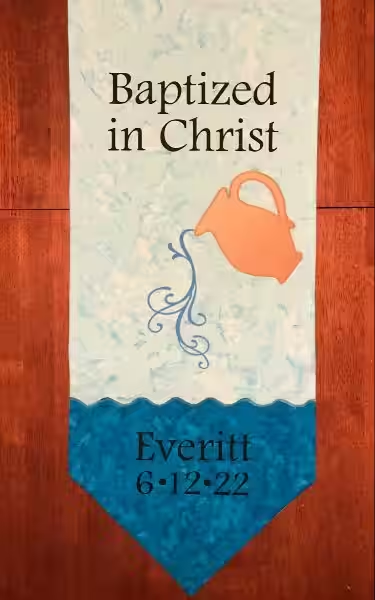
At its core, a communion banner is a fabric art piece, often elaborately designed, displayed during or around the sacrament of Holy Communion or the Eucharist. While the specific imagery and wording can vary widely, the underlying purpose remains consistent: to visualize and venerate the sacred act of communion. Think of it as a visual sermon, a silent proclamation of the core tenets of Christian belief surrounding this central sacrament. The materials themselves, from rich velvets to sturdy linens, speak of reverence, and the artistry often reflects the unique character and history of the congregation.
The importance of a communion banner extends beyond its aesthetic appeal. It acts as a powerful mnemonic device, helping worshippers focus on the meaning of the bread and wine. For newcomers, it can offer an immediate visual cue to a key element of the service, demystifying the ritual. For long-time members, it serves as a constant reminder of their covenant with God and with each other, strengthening the bonds of fellowship within the church community. It’s a unifying element, bridging generations and backgrounds through a shared visual language of faith.
Symbolism Woven into Every Thread
The symbolism embedded within a communion banner is incredibly rich and multifaceted. Common motifs often include:
The Cross: Representing Christ’s sacrifice and resurrection, the ultimate expression of God’s love.
The Chalice and Host: Direct symbols of the bread and wine, the very elements of communion.
Dove: Symbolizing the Holy Spirit, signifying divine presence and guidance.
Lamb: Representing Christ as the “Lamb of God,” who takes away the sins of the world.
Grapes and Wheat: Natural elements that directly link to the creation of the bread and wine.
Light or Rays of Light: Symbolizing Christ as the light of the world and the divine illumination of faith.
Beyond these common symbols, a communion banner can also incorporate specific theological themes relevant to the congregation. For instance, a banner might depict the Last Supper to emphasize the institution of the sacrament, or a scene of Jesus breaking bread to highlight his role as the sustainer of life. The colors chosen also carry significant meaning; white often represents purity and resurrection, gold signifies glory and divine presence, and purple can symbolize royalty and penitence. Therefore, the entire composition of the communion banner becomes a carefully crafted theological statement, designed to deepen understanding and inspire devotion.
The Creation and Evolution of Communion Banners
The tradition of using banners in religious settings is ancient, dating back to the Old Testament where visual symbols were used to identify tribes and direct worship. However, the formalized use of a dedicated communion banner as we often see it today has evolved over centuries. Early Christian communities may have had simple markers, but the development of more elaborate textiles coincided with advancements in weaving, embroidery, and dyeing techniques. The Renaissance and Baroque periods, for example, saw a flourish of opulent religious art, which undoubtedly influenced the design of church furnishings, including banners.
Today, the creation of a communion banner can range from a collaborative effort by a skilled church art committee to the work of a professional textile artist. Many congregations see the process of designing and creating a new communion banner as a spiritual undertaking in itself. It often involves prayer, study of scripture, and discussions about what the community wants to express through their banner. The materials are chosen with care – perhaps locally sourced fabrics or threads that have a special significance. This hands-on involvement further strengthens the banner’s connection to the congregation and its faith journey, making it a truly treasured artifact.
While traditional designs remain popular, modern interpretations of the communion banner are also emerging. Contemporary artists are exploring new materials, abstract designs, and even incorporating digital elements into banner creation. Some churches commission banners that reflect their specific social justice missions or their diverse cultural backgrounds. This ensures that the communion banner remains a vibrant and relevant symbol for each generation. For example, a banner might creatively depict themes of welcome and inclusion alongside traditional eucharistic imagery, signifying that communion is a feast for all.
The enduring relevance of the communion banner lies in its ability to transcend spoken words. In a world often filled with noise and distraction, the visual presence of a well-crafted communion banner offers a moment of pause, a visual anchor for contemplation. It reminds us of the profound mystery of Christ’s presence in communion, a mystery that continues to nourish and sustain believers across time and geography. Whether grand and ornate or simple and profound, the communion banner stands as a testament to the enduring power of faith and the sacred bonds of community.
Frequently Asked Questions about Communion Banners
What is a communion banner?
A communion banner is a decorative banner displayed during a Christian religious service, specifically for the sacrament of Holy Communion or Eucharist. These banners often feature religious symbols, scripture verses, or themes related to the communion.
What is the purpose of a communion banner?
Communion banners serve to enhance the spiritual atmosphere of the church, visually remind congregants of the significance of the communion sacrament, and can be used to express themes of faith, unity, and the presence of Christ.
What kind of religious imagery is typically found on a communion banner?
Common imagery includes the cross, a chalice and host, a dove (representing the Holy Spirit), grapes and wheat (symbols of communion elements), fish (an early Christian symbol), and scripture verses related to communion, such as “Do this in remembrance of me” (Luke 22:19).
Are communion banners used in all Christian denominations?
While widely used in many Protestant denominations, such as Lutheran, Methodist, Presbyterian, and Baptist churches, their use can vary. Some Catholic churches may also use decorative banners during special liturgical seasons or events that might include communion. Their prevalence is more common in traditions that emphasize visual aids in worship.
Communion banners can be created by various individuals or groups within a church community. This might include the church’s art committee, a dedicated group of volunteers, Sunday school classes, youth groups, or even local Christian artists commissioned by the church.
What are communion banners made of?
Communion banners are commonly made from fabric, such as felt, cotton, polyester, or satin. They can be hand-stitched, appliquéd, painted, or printed. Some may also incorporate embellishments like glitter, beads, or metallic threads for added visual appeal.
Can communion banners be personalized for a specific church or event?
Yes, communion banners are often personalized. They can be designed to reflect the specific traditions, colors, or motto of a particular church. They may also be created for special occasions like a church anniversary, a specific communion service, or a youth group’s confirmation.
Where are communion banners displayed?
Communion banners are typically displayed in the sanctuary or worship space of a church. They might be hung near the altar, on the walls of the nave, or in other prominent locations where they can be easily seen by the congregation during the service.
Is there a specific time of year or occasion for using communion banners?
While they can be displayed year-round, communion banners are particularly relevant during services where Holy Communion is celebrated. Some churches might have seasonal banners or banners specifically designed for Holy Week or other significant Christian holidays.
What is the theological significance of a communion banner?
Theological significance lies in their ability to visually represent abstract spiritual concepts. They serve as a constant visual reminder of the sacrifice of Jesus Christ, the nourishment of believers through communion, and the covenant established through this sacrament, reinforcing the teachings and beliefs of the faith.