The phrase “born again” resonates deeply within the Christian faith, signifying a profound spiritual rebirth and a commitment to a new life in Christ. Central to this transformative experience is the practice of born again Christian baptism. It’s more than just a ritual; it’s a public declaration, a symbol of an inward reality, and a cornerstone of many Christian traditions. This article will delve into the meaning, significance, and practice of born again Christian baptism, exploring its theological underpinnings and its relatable impact on the lives of believers.
The Dawn of a New Identity: What it Means to be “Born Again”
The concept of being “born again” originates from Jesus’ conversation with Nicodemus, a prominent Jewish leader, as recorded in the Gospel of John. Jesus declared, “You must be born again” (John 3:7). This statement wasn’t about a literal, physical re-birth, but a spiritual regeneration, a radical internal change initiated by the Holy Spirit. It signifies a turning away from a life lived apart from God and a turning towards Him, embracing faith in Jesus Christ as Lord and Savior.
This spiritual rebirth is characterized by repentance, a sincere sorrow for past sins and a conscious decision to change one’s direction. It involves faith, a deep trust and belief in Jesus’ atoning sacrifice for sin and His resurrection, which offers the promise of eternal life. When someone becomes a born again Christian, they are adopted into God’s family, receiving a new identity as a child of God, marked by forgiveness, grace, and a renewed purpose. This new identity is not earned through good deeds but is a free gift received through faith.
Born Again Christian Baptism: A Public Symbol of an Inner Reality
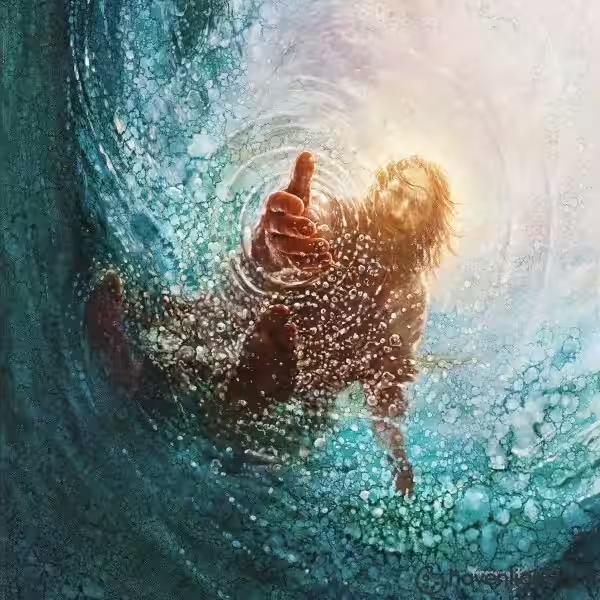
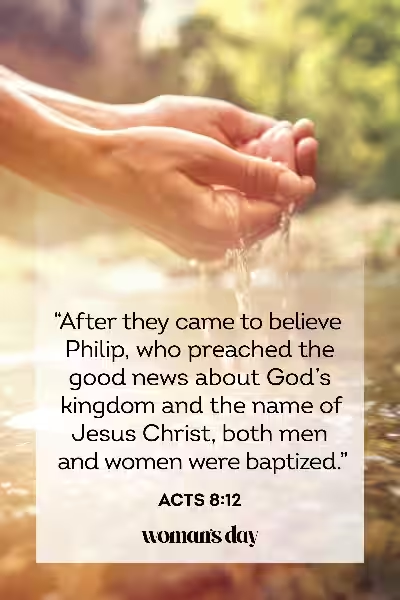
For many born again Christians, baptism is the outward expression of their inward transformation. It is a sacred ordinance, commanded by Jesus, that visually represents the death of the old self and the resurrection to a new life in Christ. The act of being immersed in water symbolizes the believer’s identification with Christ’s death and burial, while emerging from the water signifies their resurrection to new life alongside Him. This is why it’s so intrinsically linked to the born again experience.
The Apostle Paul powerfully describes this in Romans 6:4: “We were therefore buried with him through baptism into death in order that, just as Christ was raised from the dead through the glory of the Father, we too may live a new life.” This passage highlights the symbolic power of baptism, connecting the believer’s spiritual journey with the foundational events of Christian theology. It’s a tangible representation of the unseen work God has done in their heart and the new covenant they have entered into with Him.
Different Perspectives on Baptism
While the core meaning of born again Christian baptism is widely understood, there are varying theological interpretations regarding its timing and mode.
Believer’s Baptism: Many Protestant denominations, particularly those emphasizing the born again experience, practice believer’s baptism. This form of baptism is administered to individuals who have made a personal profession of faith in Jesus Christ. The emphasis is on conscious decision and understanding of the commitment involved. Infant baptism, while practiced by some denominations, is often viewed differently, with some seeing it as a sign of covenant but not necessarily the direct outward expression of a born again experience.
Mode of Baptism: The Bible describes baptism in terms of immersion. Full immersion is practiced by many churches as it most vividly portrays the symbolism of dying and rising with Christ. Other denominations may practice affusion (pouring water) or aspersion (sprinkling water), which they believe also fulfill the symbolic meaning. Regardless of the mode, the intention is to reflect the cleansing and new life offered through Christ, making it a significant step for those identifying as born again Christians.
The Significance of Born Again Christian Baptism
The act of born again Christian baptism carries profound theological and personal significance. It is a public declaration of faith, a way for believers to boldly proclaim their allegiance to Christ before God and the community. This public commitment can be a source of strength and encouragement, knowing that they are not alone in their spiritual journey but are part of a larger body of believers.
Furthermore, baptism is seen as an ordinance of obedience. Jesus Himself commanded His disciples to baptize new believers (Matthew 28:19). By participating in baptism, individuals are demonstrating their willingness to follow Christ’s teachings and submit to His authority. It’s a tangible act of surrender, acknowledging that their life is no longer their own but is dedicated to serving God and living according to His will. This obedience is an integral part of the born again experience.
Practical Aspects of Born Again Christian Baptism
The process of born again Christian baptism typically involves a period of preparation and teaching. Before being baptized, individuals often engage in discipleship classes or pre-baptismal counseling to ensure they understand the theological implications of their decision. This ensures that the baptism is a well-informed and heartfelt commitment, not merely a cultural or social event.
The baptism ceremony itself is often a joyous occasion, celebrated by the church community. It can take place during a regular worship service or at a special event. The individual being baptized, or their parents in the case of infant baptism (though less common for explicit born again emphasis), will typically affirm their faith. This can involve answering questions about their belief in God, Jesus Christ, and the Christian faith. The presence of godparents or sponsors is also common in some traditions, to support and guide the individual in their Christian walk.
A New Life, A New Hope
Ultimately, born again Christian baptism is a powerful symbol of a life-altering encounter with God. It signifies a complete redirection, a turning from darkness to light, and a newfound hope rooted in the resurrection power of Jesus Christ. It’s a commitment to live a life that reflects the teachings and love of Christ, empowered by the Holy Spirit.
For those who have experienced this spiritual rebirth, baptism is a sacred milestone, a beautiful reminder of the day they were washed clean and welcomed into God’s eternal family. It’s not the end of the journey, but a significant and visible beginning of a lifelong pursuit of holiness and a deeper relationship with their Heavenly Father. The born again Christian baptism serves as a constant testament to the transformative power of God’s grace.
Frequently Asked Questions about Born-Again Christian Baptism
What is a “born-again” Christian?
A “born-again” Christian is someone who believes they have experienced a spiritual rebirth through faith in Jesus Christ. This experience signifies a personal transformation and a new relationship with God.
What is baptism in the context of being “born-again”?
For born-again Christians, baptism is an outward and visible sign of an inward spiritual reality. It symbolizes the believer’s death to sin and resurrection to a new life in Christ, mirroring Jesus’ own death and resurrection.
Is baptism a requirement for salvation for born-again Christians?
The primary belief for born-again Christians is that salvation is by grace through faith in Jesus Christ, not by works or rituals like baptism. However, baptism is generally seen as an important act of obedience and a public declaration of one’s faith and commitment to Christ.
What is the typical mode of baptism for born-again Christians?
Most born-again Christians practice baptism by immersion, where the individual is fully submerged in water. This is often seen as the most symbolic representation of dying with Christ and being raised to new life.
When does a born-again Christian typically get baptized?
A born-again Christian is usually baptized after they have made a personal profession of faith in Jesus Christ and have experienced what they believe to be this spiritual rebirth. It’s generally not done in infancy.
Does baptism itself save a person?
Born-again Christians typically believe that baptism is a symbol and an act of obedience, not the means of salvation itself. Salvation is understood to be a gift received through faith in Jesus Christ alone.
Who can perform a baptism?
In most born-again Christian traditions, baptism is performed by a recognized minister or pastor of a church.
Can I be baptized more than once?
For born-again Christians, baptism is generally seen as a one-time event, symbolizing a singular event of spiritual rebirth and commitment. If someone was baptized as an infant in a different tradition or wants to reaffirm their faith, they may be baptized again as a believer.