When we hear the word “love,” our minds often conjure images of romantic affection, familial bonds, or the warmth of friendship. These are undeniably beautiful expressions of love, but the concept of love within the religious context, particularly as defined by the Bible, extends far beyond these familiar territories. It is a divine principle, a foundational pillar of faith, and a transformative force that reshapes our understanding of ourselves, our relationships, and our Creator. Exploring the bible love definition reveals a tapestry woven with threads of sacrifice, commitment, empathy, and an unwavering pursuit of the good of others.
This article delves into the rich and often misunderstood meaning of love as presented in scripture. We will unpack its various dimensions, moving from the initial spark of divine affection to its practical outworking in our daily lives. By examining key biblical passages and illustrating them with relatable examples, we aim to provide a comprehensive and insightful understanding of what it truly means to love according to the Bible. This is not just an academic exercise; it is an invitation to deepen our spiritual lives and to embrace a love that has the power to transform the world.
At the very heart of the bible love definition lies the undeniable truth that God Himself is love. This isn’t merely an attribute; it is His very essence. The Apostle John famously declared, “God is love, and the one who abides in love abides in God, and God abides in him” (1 John 4:16). This statement is profound because it anchors all other forms of love in the divine. Our capacity to love, and indeed the very concept of love as we understand it, originates from this eternal, perfect, and unconditional source. Think of it like a river: while there are many streams and tributaries that branch off, they all ultimately flow from the same vast ocean. God’s love is that ocean, the primary wellspring from which all other love flows.
This divine love is characterized by its selflessness and generosity. It is not dependent on our merit or deservingness. The Bible illustrates this through the ultimate act of love: “For God so loved the world, that he gave his only Son, that whoever believes in him should not perish but have eternal life” (John 3:16). This is a love that sacrifices, a love that gives freely, even when it costs dearly. It’s a powerful example for us, urging us to move beyond transactional relationships and to embrace a love that seeks the best for others, regardless of their actions or our own potential gain. This foundational understanding of God’s love is crucial for grasping the full breadth of the bible love definition.
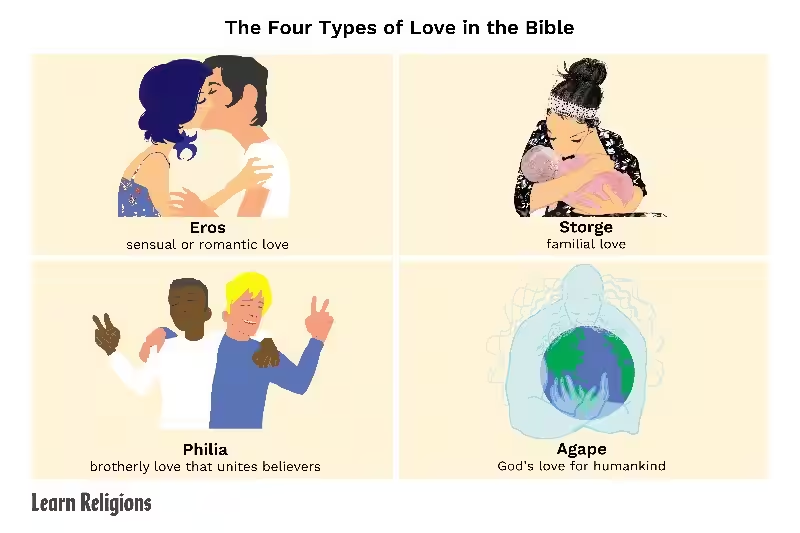
When specifically discussing the bible love definition, the Greek word agape often comes to the forefront. This is not the fleeting emotion of romantic love (eros) or the affectionate bond of friendship (philia). Agape is a deliberate choice, a willful commitment to the well-being of another. It is a love that is not easily provoked, that bears all things, believes all things, hopes all things, and endures all things (1 Corinthians 13:4-7). This is the kind of love that God demonstrates towards humanity, a love that persists even in the face of sin and rebellion. It’s a steadfast, forgiving, and all-encompassing love.
To illustrate agape, consider a parent who continues to support and care for a child who has made significant mistakes. This isn’t blind indulgence, but a persistent belief in the child’s potential and a deep-seated desire for their ultimate good, even when it requires difficult decisions and personal sacrifice. This is the essence of agape. In our own lives, practicing agape means consciously choosing to forgive those who have wronged us, to extend kindness to those who are difficult, and to put the needs of others before our own desires. It is a challenging yet profoundly rewarding aspect of the bible love definition, transforming our interactions and reflecting the very nature of God.
Love for Neighbor: The Practical Application of Divine Love
The bible love definition doesn’t remain a theoretical concept; it demands practical application, most significantly in our relationships with our neighbors. Jesus Himself summarized the law by saying, “‘You shall love the Lord your God with all your heart and with all your soul and with all your mind.’ This is the great and first commandment. And a second is like it: ‘You shall love your neighbor as yourself'” (Matthew 22:37-39). This teaching is revolutionary because it equates the love of God with the love of humanity. Our love for the divine is incomplete if it doesn’t manifest in genuine care and concern for those around us.
Loving our neighbor, as defined by the Bible, goes beyond mere politeness or tolerance. It involves active compassion, empathy, and a willingness to serve. It means seeing the inherent dignity in every person, recognizing that they are created in the image of God, just as we are. For example, instead of simply feeling sympathy for someone experiencing hardship, loving your neighbor compels you to take action: to offer practical help, to lend a listening ear, or to advocate for their needs. This practical embodiment of biblical love is what makes faith tangible and impactful in the world, demonstrating the transformative power of God’s love working through us.
The Commandment to Love One Another: A New Identity
Jesus declared a new commandment to His followers: “A new commandment I give to you, that you love one another: just as I have loved you, you also are to love one another. By this all people will know that you are my disciples, if you have love for one another” (John 13:34-35). This statement is pivotal in understanding the bible love definition. It signifies that love is not just an option for believers; it is their defining characteristic. It’s the hallmark of their identity as followers of Christ. This isn’t a suggestion; it’s a direct mandate that sets them apart.
This profound command suggests that our love for one another should mirror the sacrificial and unconditional love that Christ demonstrated. It’s a love that is radical and counter-cultural, often requiring us to go against our natural inclinations towards self-preservation or favoritism. Imagine a group of individuals from vastly different backgrounds, united by a shared commitment to looking out for each other’s well-being, sharing resources, and offering support during times of crisis, even at personal inconvenience. This is the kind of love that the world should witness and recognize as a sign of authentic faith, a powerful testament to the bible love definition in action.
Love and Forgiveness: Inseparable Components
A crucial element within the bible love definition is its inseparable connection to forgiveness. It is virtually impossible to exhibit true biblical love without cultivating a forgiving heart. Jesus emphasized this repeatedly, stating, “For if you forgive others their trespasses, your heavenly Father will also forgive you, but if you do not forgive others their trespasses, neither will your Father forgive your trespasses” (Matthew 6:14-15). This highlights the reciprocal nature of love and forgiveness in the spiritual life. Our ability to receive God’s grace and forgiveness is directly linked to our willingness to extend it to others.
Think of it this way: we have all received immense forgiveness from God, far more than we will ever be asked to give. When someone wrongs us, it’s often a minor echo of our own offenses against a holy God. Therefore, the biblical imperative is to release the debt, to let go of the hurt and resentment, and to choose a path of reconciliation. This doesn’t mean condoning wrongdoing or forgetting what happened. Instead, it’s about choosing not to let bitterness consume us and understanding that forgiveness is a gift we give to ourselves as much as to the offender, and a vital expression of the bible love definition.
The ultimate outcome of embracing the bible love definition is personal transformation and spiritual wholeness. When we truly seek to love as God loves, we begin to shed the layers of selfishness, pride, and fear that often hold us captive. Love, in its biblical sense, is a disciplining force that guides us toward a more Christ-like character. It leads to greater patience, kindness, humility, and self-control. These are not just abstract virtues; they are the tangible fruits of a life lived in accordance with God’s loving design.
Consider a fractured family that, through the application of biblical love and forgiveness, begins to heal. Through consistent effort, open communication, and a willingness to extend grace, broken relationships can be mended, and a sense of peace and unity can be restored. This is the transformative power of biblical love at work. It doesn’t just change individuals; it can rebuild communities and mend brokenness. The bible love definition, therefore, is not just a theological treatise; it is a blueprint for a life of purpose, meaning, and profound connection with God and with one another. It is a love that heals, restores, and ultimately, brings us closer to the fullness of who we are meant to be.
Frequently Asked Questions: Bible Love Definition & Religion
What is the Bible’s definition of love?
The Bible defines love, particularly in 1 Corinthians 13:4-7, as patient, kind, not envious, not boastful, not proud, not rude, not self-seeking, not easily angered, and keeping no record of wrongs. It rejoices with the truth, protects, trusts, hopes, and perseveres. This love is often described as selfless, sacrificial, and unconditional.
What is religion according to the Bible?
The Bible presents religion as a way of life that involves devotion to God and the practice of righteousness. True religion, as outlined in James 1:27, is defined as caring for orphans and widows in their distress and keeping oneself unstained by the world. It’s about a genuine relationship with God, expressed through obedience, worship, and acts of compassion.