The intersection of art and religion has long been a fertile ground for human expression, a space where the intangible tenets of faith are brought to life through visual and textual means. Among the most captivating of these expressions are arty letters, those beautifully crafted, often illuminated, and deeply symbolic characters that form the very bedrock of our sacred texts. These aren’t just utilitarian symbols; they are visual prayers, imbued with centuries of devotion, artistic skill, and profound theological meaning.
For many, the idea of arty letters might conjure images of ancient manuscripts, perhaps the intricate calligraphy in a Quran or the gilded initial capitals in a medieval Bible. Yet, the concept extends far beyond these historical examples. It encompasses the deliberate artistic choices made in the rendering of any letter that carries religious significance, from the monumental inscriptions on temple walls to the personal, handwritten prayers tucked away in devotional books. Each stroke, each flourish, can be a testament to the artist’s reverence and the profound messages they seek to convey.
At its core, religion often relies on narratives, commandments, and prayers—all conveyed through written language. When this language is elevated to an art form, it transforms the act of reading into a spiritual experience. The arty letters become conduits, not just for information, but for inspiration and connection to the divine. Consider the power of a single, embellished letter starting a sacred passage. It commands attention, signaling importance and inviting contemplation.
The creation of arty letters in religious contexts is rarely a spontaneous act. It is often a meticulously planned and executed endeavor, reflecting a deep understanding of both artistic principles and theological symbolism. Artists might spend weeks, months, or even years perfecting a single page, ensuring that every element—from the color of the ink to the shape of the serifs—contributes to the overall sacred message. This dedication highlights how the very building blocks of religious communication were, and still are, treated with the utmost artistic and spiritual care.
One of the most striking forms of arty letters is found in illuminated manuscripts. These ancient texts are not merely written; they are adorned with vibrant colors, gold leaf, and intricate illustrations. The initial letters, in particular, are often transformed into miniature masterpieces, depicting biblical scenes, symbolic motifs, or portraits of religious figures. This practice served multiple purposes, from enhancing the beauty and prestige of sacred texts to aiding in memorization and interpretation.
Imagine opening a medieval Book of Hours. The opening letter of a significant prayer might be a sprawling, intricate design incorporating floral patterns, mythical beasts, or even scenes from the life of Christ. This isn’t just decoration; it’s a visual commentary, a way of drawing the reader deeper into the text and its spiritual implications. The arty letters become a gateway, inviting the reader to step into the narrative and connect with its divine essence on a visceral level.
Calligraphy as Contemplation: The Discipline of Script
Beyond illumination, the art of calligraphy itself plays a monumental role in religious traditions. In Islam, for instance, Arabic calligraphy is revered as one of the highest forms of artistic expression, intrinsically linked to the Quran. The beauty and precision of the script are seen as reflections of the divine order and the perfection of God’s word. The flowing, elegant lines of arty letters in Islamic calligraphy are not merely aesthetically pleasing; they are an act of worship in themselves.
Think of the meditative process involved in creating such calligraphy. Hours are spent practicing strokes, mastering the subtle curves and angles, all in service of rendering the sacred text with utmost beauty and respect. This focus on disciplined artistry transforms the act of writing into a form of prayerful contemplation. The calligrapher, through their dedication to the arty letters, becomes a conduit for divine beauty, making the written word a tangible manifestation of faith.
Modern Echoes: Contemporary Expressions of Arty Letters
While historical examples are abundant, the tradition of arty letters in religion is far from a relic of the past. Contemporary artists continue to explore the intersection of faith and typography, bringing new perspectives to age-old forms. These modern interpretations can range from abstract explorations of religious concepts through letterforms to bold, graphic designs that re-imagine sacred texts for a new audience. The spirit of devotion and artistic innovation remains, albeit in new and exciting ways.
Many contemporary faith communities utilize arty letters in their architectural designs, stained-glass windows, and even digital media. A beautifully designed logo for a church or mosque, a stylized menorah incorporating Hebrew letters, or a modern interpretation of a mantra in a Buddhist temple – all these are contemporary manifestations of the enduring power of arty letters. They serve to visually communicate identity, values, and spiritual connection in a world increasingly shaped by design.
Personal Devotion: The Intimate Art of the Letter
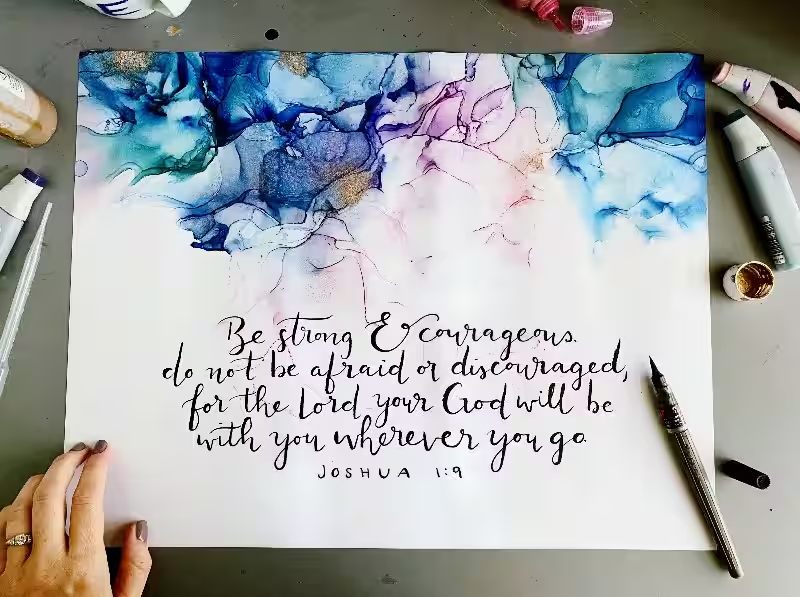
The impact of arty letters isn’t confined to grand public displays. They also find expression in the deeply personal realm of individual faith. Many people still engage in the practice of hand-lettering their prayers, journaling their spiritual reflections, or creating devotional art that features beautifully rendered words. This intimate engagement with arty letters allows for a unique and profound personal connection to one’s faith.
Consider the practice of creating a personal prayer journal. Choosing specific fonts, adding small illustrations next to key phrases, or using different colored inks to highlight important verses can transform a simple notebook into a sacred space. These arty letters, crafted with personal intention and care, become a tangible record of one’s spiritual journey, a testament to the enduring power of the written word in fostering personal faith.
The Enduring Legacy: Arty Letters as a Bridge to the Divine
Ultimately, the phenomenon of arty letters in religion speaks to a fundamental human desire: to make the divine tangible, to express the inexpressible, and to imbue our communication with meaning that transcends the ordinary. Whether found in ancient illuminated manuscripts or modern digital designs, these beautifully crafted characters serve as a bridge, connecting us to something larger than ourselves.
The careful attention paid to the form of the letter, the choice of color, the flourish of a stroke – these are not simply aesthetic choices. They are acts of devotion, expressions of reverence, and powerful tools for conveying the profound messages of faith. The arty letters remind us that even the smallest elements of our sacred traditions can be imbued with immense beauty and spiritual significance, inviting us to look closer, to read deeper, and to feel more profoundly.
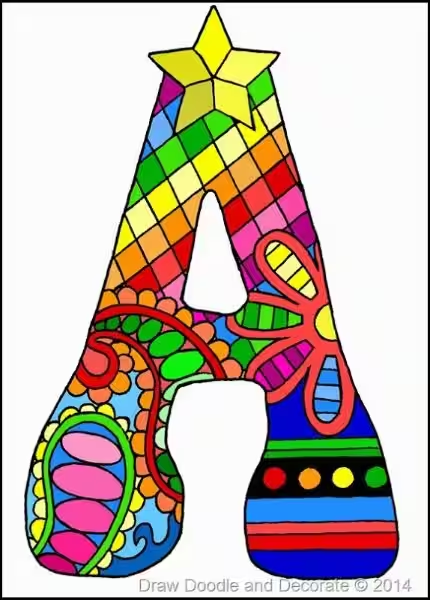
Arty letters are a creative and artistic approach to displaying letters or monograms. They involve embellishing or decorating letters with various art supplies, themes, or intricate designs. This can range from painting and drawing on them to incorporating materials like glitter, fabric, or even small found objects.
Can Arty Letters be used for religious purposes?
Absolutely. Arty letters can be a beautiful and personal way to express religious devotion or to decorate spaces with religious themes. They can be used to spell out religious words, names of deities, or significant phrases relevant to a faith.
How can Arty Letters relate to religion?
Arty letters can be incorporated into religious contexts in several ways:
* Decorative Elements: They can serve as decorative pieces for altars, prayer rooms, or religious spaces, featuring symbols, colors, or motifs associated with a particular religion.
* Personal Devotion: Individuals might create personalized arty letters spelling out their name or significant religious terms as a form of personal devotion or spiritual art.
* Teaching Tools: For religious education, especially for children, arty letters can be used to teach the alphabet while simultaneously introducing religious vocabulary and concepts in an engaging way.
* Gift Giving: Arty letters can be thoughtful and unique gifts for religious milestones such as confirmations, baptisms, or other significant celebrations within a faith.
* Symbolism: The designs and materials used in arty letters can carry symbolic meaning within a religious framework. For example, certain colors or patterns might represent peace, divinity, or specific scriptural elements.