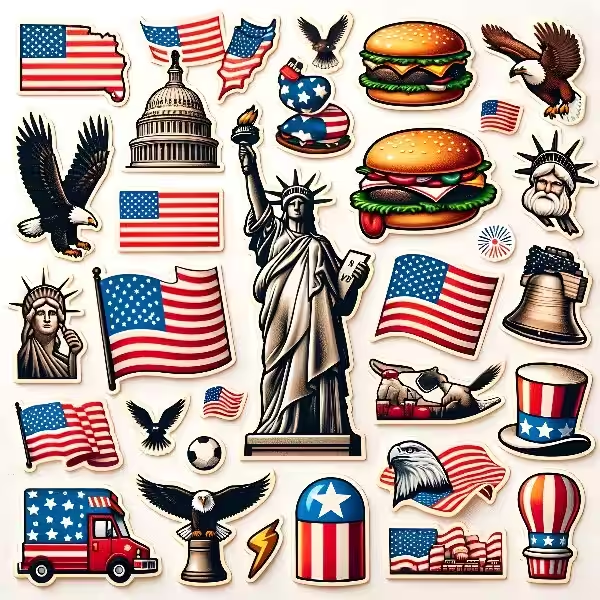
Walk into any American coffee shop, browse through a college bookstore, or even peek into a local hardware store, and you’re bound to see them: the ubiquitous American sticker. These adhesive declarations, plastered on laptops, water bottles, car bumpers, and even skateboards, are more than just simple decorations. They are miniature billboards, broadcasting personal beliefs, affiliations, and passions to the world. Among the vast spectrum of messages conveyed, a significant and often overlooked category speaks to the profound role of religion in the American experience. From subtle symbols to bold pronouncements, the American sticker serves as a fascinating and accessible lens through which to examine the diverse tapestry of faith across the nation.
The appeal of the American sticker lies in its immediacy and affordability. For a few dollars, individuals can express their identity, their allegiances, and their convictions. This democratic form of expression allows for a wide range of messages to be shared, and when it comes to religious expression, the American sticker offers a unique window into how faith manifests in everyday life. It’s a way for people to connect with like-minded individuals, to subtly signal their values, and to engage in a silent, yet visible, conversation about what matters most to them. Understanding this phenomenon requires looking beyond the simple adhesive and into the deeper motivations and meanings behind these colorful pieces of art.
For many Americans, their faith is not confined to the walls of a place of worship or personal prayer. It’s an integral part of their identity, shaping their worldview and their daily actions. The American sticker provides an accessible and public platform for this personal declaration. Think of a simple, elegantly designed sticker featuring a cross, a Star of David, a crescent moon, or a Om symbol. These aren’t just abstract designs; they represent deeply held beliefs, a connection to a spiritual tradition, and a sense of belonging. These stickers act as silent ambassadors of faith, inviting curiosity and sometimes, sparking conversations.
The act of choosing and displaying an American sticker related to religion is often a conscious decision to integrate one’s spiritual life with their public persona. It’s a way of saying, “This is a part of who I am.” For instance, a student might proudly display a sticker from their university’s Hillel or Newman Center on their laptop, signifying their connection to their religious community and their campus involvement. Similarly, a parent might put a sticker of their church’s logo on their car, a subtle nod to their family’s values and a potential point of connection for other parents at school pickup. This visible commitment can foster a sense of solidarity and mutual recognition among those who share similar beliefs.
Religious stickers often transcend mere personal affirmation; they can symbolize shared hope, community, and a commitment to certain values. A bumper sticker proclaiming “Choose Love” with a subtle dove, or a sticker featuring a stylized depiction of interconnected hands, might be rooted in the teachings of a particular faith that emphasizes compassion and unity. These are not always overtly religious in their imagery, but their underlying message resonates deeply within religious frameworks that promote peace and understanding. They invite others to consider the importance of these principles, regardless of their religious affiliation.
Consider the various movements and organizations that utilize the American sticker to spread their message. You might see stickers supporting religious charities, advocating for interfaith dialogue, or promoting specific ethical stances inspired by religious doctrines. These stickers become rallying points, visual cues that connect individuals to a larger cause or community. For example, a sticker supporting a local food bank, perhaps sponsored by a church or mosque, not only promotes the cause but also subtly highlights the charitable ethos often central to religious practice. This form of public art, albeit small, plays a crucial role in disseminating values and fostering a sense of collective purpose.
Diversity in Devotion: A Spectrum of Stickers
The religious landscape of America is incredibly diverse, and the American sticker reflects this rich variety. It’s not just about the major world religions; you’ll find stickers representing a multitude of denominations, spiritual paths, and even non-traditional expressions of faith. From the bold and graphic imagery of evangelical Christian stickers to the intricate calligraphy of Islamic art, and the serene mandalas associated with Buddhist practices, the American sticker acts as a miniature billboard for this multifaceted devotion. This diversity is a hallmark of American religious life, and stickers offer a tangible way to see it in action.
You might encounter stickers that are overtly doctrinal, clearly stating a theological belief or a specific affiliation. For example, a sticker might say “I Believe in Miracles” with a prominent depiction of praying hands, or another might feature the “Fish Symbol” associated with early Christianity. However, many religious stickers are more nuanced and symbolic. A sticker with a simple tree might represent the Tree of Life, a concept found in various spiritual traditions, or a geometric pattern could be a reminder of the divine order as understood within a specific faith. The beauty of the American sticker is this range, allowing for both direct and indirect expressions of faith.
Religion, for many, is not solely about solemnity; it also involves a sense of humor and a recognition of shared human experiences. The American sticker has become a vehicle for this lighter side of faith. You might find witty stickers that play on religious phrases or concepts, offering a humorous perspective that can be both relatable and thought-provoking. For instance, a sticker might read “My Other Ride is a Prayer” or feature a cartoon illustration related to a biblical story. These stickers demonstrate that faith can be integrated into life with a sense of joy and a touch of levity.
This humorous approach to religious expression can also serve to demystify faith and make it more approachable. By using humor, individuals can break down barriers and engage in conversations that might otherwise feel intimidating. A sticker that playfully acknowledges the challenges of maintaining a spiritual practice, or one that celebrates the simple joys of faith, can create a sense of camaraderie. These stickers are a testament to the fact that religious belief is a lived, human experience, full of its own unique blend of seriousness and lightheartedness. They offer a friendly invitation to connect over shared values and a good chuckle.
The American Sticker as a Catalyst for Dialogue
Ultimately, the American sticker, in its religious manifestations, acts as a powerful, albeit informal, catalyst for dialogue. While they are individual declarations, their public nature invites observation, reflection, and sometimes, direct interaction. A person might see a sticker on someone’s car and strike up a conversation, leading to a deeper understanding or even a new friendship. This is the subtle power of these adhesive emblems: they can bridge divides and foster connections in unexpected ways. The simple act of displaying one’s faith publicly, through a sticker, can open doors to meaningful exchanges.
The next time you encounter an American sticker that hints at religious belief, take a moment to consider the story it might be telling. It’s a glimpse into the diverse spiritual lives of your neighbors, your colleagues, and your fellow citizens. These small pieces of art are a testament to the enduring presence and evolving expression of religion in America, a vibrant and visible part of the nation’s cultural mosaic. They remind us that faith is not always confined to grand pronouncements, but can be woven into the fabric of our everyday lives, one colorful sticker at a time.
Frequently Asked Questions: American Stickers and Religion
What are American stickers related to religion?
American stickers related to religion are adhesive labels that feature religious symbols, figures, scripture verses, or messages associated with various faiths practiced in the United States. These can range from Christian crosses and depictions of saints to Star of David for Judaism, crescent moon and star for Islam, Om symbol for Hinduism, and Buddhist imagery, among others.
Where can I find American stickers related to religion?
You can find these stickers in various places, including religious bookstores, gift shops associated with churches, temples, or mosques, online marketplaces like Amazon, Etsy, and specialized religious supply websites. Some secular retailers may also carry them seasonally or in general sticker sections.
What kind of messages are typically found on religious American stickers?
Messages can include Bible verses, quotes from religious texts, prayers, affirmations of faith, expressions of devotion, or spiritual guidance. They might also convey messages of hope, peace, love, or community, reflecting core tenets of various religions.
Are there specific types of religious stickers popular in the US?
Popularity can vary greatly depending on the religious demographic. Christian-themed stickers are widely available, often featuring crosses, fish symbols (Ichthys), or inspirational quotes. Stickers related to other faiths like Judaism, Islam, Hinduism, and Buddhism are also available but may be found more readily in communities that practice those religions or through specialized retailers.
Can American religious stickers be used for decoration or personal expression?
Absolutely. They are commonly used to decorate personal belongings like laptops, water bottles, notebooks, cars, or to personalize religious items such as Bibles or prayer books. They serve as a visible declaration of faith and personal identity for many individuals.
Are there any controversies or sensitivities surrounding religious stickers in the US?
While generally accepted as a form of personal expression, like any religious imagery in public spaces, there can be sensitivities. Some individuals might view certain stickers as proselytizing or intrusive. It’s important to be mindful of the context and audience when displaying religious stickers, especially in shared or public environments.