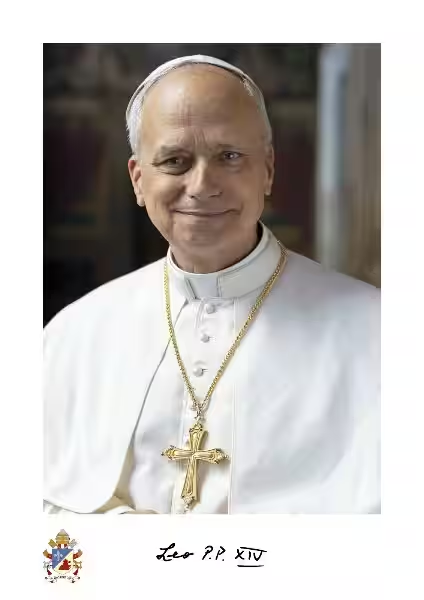
The idea of seeing the Pope is more than just a fleeting thought for many; it’s a deeply spiritual aspiration, a chance to connect with the spiritual heart of Catholicism and witness a living symbol of faith. Whether you’re a devout follower, a curious observer, or simply someone fascinated by this prominent global figure, the question “how can I see the Pope” often arises. It’s a journey that requires planning, understanding, and a touch of serendipity, but the rewards can be profound.
This guide is designed to demystify the process, offering practical advice and heartfelt insights for anyone hoping to catch a glimpse of His Holiness. We’ll explore the various opportunities available, from grand public audiences to more intimate encounters, and provide the information you need to make your dream a reality. Let’s embark on this shared quest, understanding that seeing the Pope is often about more than just a visual sighting; it’s about experiencing a moment of shared humanity and spiritual significance.
The Pope, as the visible head of the Catholic Church, engages in numerous public engagements throughout the year. These events are designed to reach as many people as possible, offering a chance for direct interaction, albeit often at a distance. The most common and accessible opportunities to see the Pope are through Papal Audiences and Angelus Blessings. These are the pillars of public engagement for His Holiness, and understanding them is the first step in answering “how can I see the Pope.”
Papal Audiences are typically held on Wednesdays in Rome, weather permitting, and can take place in St. Peter’s Square or the Paul VI Audience Hall. These events often feature a catechesis (a teaching from the Pope), prayers, and blessings. The Angelus, a traditional Marian prayer, is recited by the Pope every Sunday at noon from the Apostolic Palace window overlooking St. Peter’s Square. Both offer unique opportunities to be in the Pope’s presence, to hear his voice, and to feel the collective energy of thousands gathered in faith.
Papal Audiences: A Deep Dive
Wednesday Papal Audiences are a cornerstone for those asking “how can I see the Pope” in Rome. These are not just fleeting moments; they are structured events where the Pope addresses the faithful, sharing his thoughts on faith, social issues, and the teachings of the Church. The atmosphere is usually one of immense joy and anticipation, with pilgrims from all over the world converging to participate. It’s a chance to feel part of a global community united by a common devotion.
To attend a Wednesday Papal Audience, tickets are required and are free of charge. These tickets can be obtained through various channels, including directly from the Prefecture of the Papal Household, through your local diocese or parish, or via online requests through official Vatican channels. It’s crucial to request tickets well in advance, especially during peak tourist seasons or for significant papal events, as demand can be very high. Arriving early on the day of the audience is also highly recommended to secure a good vantage point, whether you’re hoping to be close to the stage or simply want to be part of the vibrant crowd.
Securing Your Audience Ticket: A Step-by-Step Approach
The journey to obtaining a ticket for a Papal Audience often involves a few key steps. First, identify the dates you plan to be in Rome. Vatican schedules are published, and while Wednesdays are standard, special events or holidays might alter the schedule. Once dates are confirmed, research the official channels for ticket requests. The primary method is usually through the Pontifical Swiss Guard website or the Prefecture of the Papal Household. Many dioceses and Catholic organizations also have a dedicated process for their pilgrims, which can simplify the application.
When filling out the request, be precise with dates and the number of people in your group. It’s also advisable to have a backup date in mind, as popular dates can fill up quickly. Remember, these tickets are a gift, and no payment is required. Once your request is confirmed, you will typically receive an email with instructions on how and where to collect your tickets in Rome, usually from a designated Vatican office a day or two before the audience. This systematic approach is vital for anyone serious about answering “how can I see the Pope” in a structured manner.
For those visiting Rome on a Sunday, the Angelus recitation offers another beautiful opportunity to see the Pope. At noon, His Holiness appears at the window of the Apostolic Palace to lead the faithful in this ancient prayer. This is a less formal, more spontaneous event than a Papal Audience, but no less powerful. The collective act of reciting the Angelus with the Pope is a deeply moving experience, fostering a sense of spiritual connection and shared faith.
To participate in the Angelus, simply make your way to St. Peter’s Square on a Sunday around noon. No tickets are required for this event, making it incredibly accessible. While you might not be able to shake the Pope’s hand, you will be able to see him clearly as he addresses the crowd, offers his reflections, and imparts his blessing. It’s a chance to feel the pulse of the Church and to witness a tradition that has been observed for centuries, directly answering the question “how can I see the Pope” with a simple, yet profound, Sunday plan.
Maximizing Your Angelus Experience
To make the most of your Angelus experience, consider arriving in St. Peter’s Square at least an hour before noon. This will give you ample time to find a good spot with a clear view of the Apostolic Palace window. The atmosphere is usually festive and crowded, filled with people holding banners from their home countries, singing hymns, and sharing in the palpable anticipation. You’ll also have the opportunity to hear the Pope’s address, which is often delivered in multiple languages, including Italian, English, and others.
Beyond just seeing him, you can bring a small booklet with the Angelus prayer to join in the recitation. Many people also bring rosaries to have them blessed by the Pope during the Angelus. It’s a moment of shared devotion that transcends language and nationality. This Sunday tradition provides a consistent and accessible way for many to fulfill their hope of “how can I see the Pope” while experiencing a cornerstone of Catholic practice.
Special Events and Audiences: When the Pope Travels
Beyond the regular weekly events in Rome, the Pope also undertakes apostolic journeys to different countries and cities around the world. When His Holiness travels, he often holds large public liturgies, rallies, or special audiences in the host city. These events are significant opportunities for local communities and visiting pilgrims to see the Pope in a more localized context, often in iconic or significant venues within that region.
If you’re wondering “how can I see the Pope” outside of the Vatican, keeping an eye on the official Vatican news channels and the Pope’s itinerary is crucial. These special events are announced months in advance, allowing for planning. They can range from masses in stadiums to meetings with specific groups, each offering a unique chance for encounter.
Attending Papal Visits Abroad
When the Pope announces an international trip, the question “how can I see the Pope” takes on a global dimension. The logistics for attending these events vary greatly depending on the country. Typically, local Catholic dioceses or organizing committees will manage ticket distribution and event details. It’s essential to monitor official announcements from the Vatican and the host country’s Catholic Church for the most up-to-date information on dates, venues, and how to obtain tickets or access the event grounds.
For major events like World Youth Day (WYD), where the Pope is a central figure, the entire process is often integrated into the broader event registration. If the Pope is visiting your country or a nearby one, registering with the local organizing committee or your national pilgrimage group is often the first step. Be prepared for large crowds and security measures, as these events draw immense attention. Traveling to these events can be a significant undertaking, but for many, the opportunity to see the Pope in their own region or a neighboring one is an unforgettable pilgrimage.
Navigating Papal Travel for a Glimpse
Planning to see the Pope during an international visit requires proactive research and booking. Start by identifying the specific dates and cities the Pope will be visiting. Then, research the local organizing committee’s website for details on public events. Tickets for large masses or rallies might be required, and these are often distributed through dioceses or specific registration portals. For less formal encounters, such as motorcade routes, understanding the schedule and potential viewing points is key.
It’s also wise to consider travel and accommodation well in advance, as these visits can significantly impact local resources. Networking with Catholic groups or pilgrim organizers in the host country can provide invaluable insights and assistance. For many, the question “how can I see the Pope” during his travels translates into a dedicated journey, a true pilgrimage of faith and anticipation, making the planning itself part of the spiritual experience.
Beyond Public Events: Less Common Encounters
While public events are the most common ways to see the Pope, there are other, albeit less frequent and more exclusive, opportunities. These can include special blessings, private audiences, or chance encounters in less formal settings. These moments often require a specific connection, a deeply personal reason, or a remarkable bit of luck. They represent a different facet of answering “how can I see the Pope,” moving beyond the collective to the more personal.
These less predictable encounters are often tied to specific circumstances, such as a papal visit to a hospital, a charitable institution, or a very small, pre-arranged gathering. While not something everyone can plan for, understanding their existence adds another layer to the multifaceted possibilities of encountering His Holiness.
Private Audiences and Delegations
For those with a specific and significant reason, securing a private audience with the Pope is a possibility, though it is highly selective and typically reserved for heads of state, bishops, or individuals with a formal request related to Church matters or significant charitable work. Such audiences are arranged through formal channels, usually via your local bishop or the relevant Vatican dicastery. This is not a casual request but a formal process that requires a compelling justification and substantial lead time.
If you are part of a larger delegation from your diocese or a Catholic organization attending a formal meeting or event at the Vatican, there might be a possibility of a brief encounter or a group blessing. This is not a guarantee, but rather a potential outcome of official engagement. For the average pilgrim asking “how can I see the Pope,” this route is generally not applicable but is important to acknowledge for completeness.
Seeking a Blessing or Special Greeting
In certain situations, it might be possible to request a papal blessing for significant life events, such as a wedding, anniversary, or baptism. These are not direct encounters with the Pope but are official documents bearing his seal and a blessing. These can be obtained through the Office of Papal Charities (Elemosineria Apostolica). While this doesn’t fulfill the desire to “see the Pope” in person, it brings his spiritual presence and endorsement into your life.
Occasionally, during motorcades or less formal movements within the Vatican, the Pope might pause to speak briefly with individuals or bless children. These are serendipitous moments. For those hoping for such an encounter, being present in areas where the Pope is known to travel, such as within the Vatican gardens or along specific routes, might offer a slim chance. However, it’s crucial to approach these possibilities with realistic expectations and a spirit of openness, understanding that the most common and reliable answers to “how can I see the Pope” lie in the structured public events.
Practical Tips for Your Papal Encounter
Regardless of which type of event you aim to attend, preparation is key to a positive experience. This includes everything from understanding the dress code to knowing what to bring and what to leave behind. Being well-informed ensures that your focus remains on the spiritual and personal significance of the encounter, rather than on logistical challenges. When you’re thinking “how can I see the Pope,” also think about how to best prepare yourself for that moment.
Packing appropriately for the weather, bringing essential items like water and comfortable shoes, and being aware of security measures are all part of this preparation. It’s about creating an environment where you can fully absorb the experience and connect with the moment, maximizing your chances of a meaningful encounter.
When attending a Papal Audience or any event where you might see the Pope, modest and respectful attire is essential. This means covering your shoulders and knees. For women, this often translates to dresses, skirts, or trousers that reach the knee or below, and tops with sleeves. For men, trousers and collared shirts are appropriate. While not strictly enforced for general audiences, avoiding overly casual clothing like shorts, tank tops, or beachwear is highly recommended. This shows respect for the sacred setting and the person of the Pope.
As for what to bring, water is crucial, especially during warm months. Comfortable walking shoes are a must, as you may be standing for extended periods. A small bag is advisable for essentials, but be aware that large bags, backpacks, and prohibited items (like sharp objects or large umbrellas) are not allowed and will be confiscated. Many people also bring rosaries or prayer books to be blessed, which can be a beautiful memento of the occasion. Having these items ready will help you focus on the experience of “how can I see the Pope” rather than worrying about practicalities.
Navigating Security and Crowds
Be prepared for airport-style security checks when entering St. Peter’s Square or the Audience Hall. Liquids may be restricted, and all bags will be screened. Patience is a virtue when dealing with large crowds. Arrive early to navigate the security lines and find a suitable viewing spot. If you have mobility issues, inquire in advance about accessibility options. Staying hydrated and aware of your surroundings will make the experience more comfortable and safe.
Remember that you are part of a vast assembly of people, all sharing a similar hope. Be considerate of others, and if you are in a prime spot, be willing to share it. The collective energy of thousands of people united in faith can be overwhelming but also incredibly uplifting. This shared experience is a fundamental part of the answer to “how can I see the Pope,” highlighting the communal aspect of faith.
Conclusion: A Journey of Faith and Anticipation
Seeing the Pope is a deeply personal and often spiritual journey. Whether you’re attending a regular Wednesday audience, participating in a Sunday Angelus, or traveling to a special event abroad, the key is preparation, patience, and an open heart. The question “how can I see the Pope” is answered through a combination of understanding the available opportunities and actively planning to participate in them.
Ultimately, the experience is about more than just a fleeting glimpse. It’s about connecting with a living tradition, feeling part of a global community of faith, and witnessing a symbol of spiritual leadership. The memories you create, the lessons you absorb, and the sense of peace and inspiration you find will be the true treasures of your encounter. May your journey to see His Holiness be filled with grace and meaning.
Frequently Asked Questions: Seeing the Pope
How can I see the Pope?
Seeing the Pope typically involves attending a public event or audience held by the Vatican. The most common opportunities are the General Audience, held on Wednesdays when he is in Rome, and the Sunday Angelus prayer. These events are usually held in St. Peter’s Square or Paul VI Audience Hall. It’s important to note that tickets are often required for these events and should be requested in advance through the Prefecture of the Papal Household or through your local diocese or a Catholic travel agency. For special occasions like Christmas or Easter, or during papal trips, there may be other opportunities, but these also require planning and obtaining tickets.
What religion is the Pope?
The Pope is the head of the Catholic Church, and therefore, his religion is Catholicism. Catholicism is a branch of Christianity that traces its origins back to Jesus Christ and his apostles. Key tenets of Catholicism include belief in the Trinity (God as Father, Son, and Holy Spirit), that Jesus is the Son of God, the importance of sacraments (like baptism and communion), and the authority of the Pope as the successor of Saint Peter.