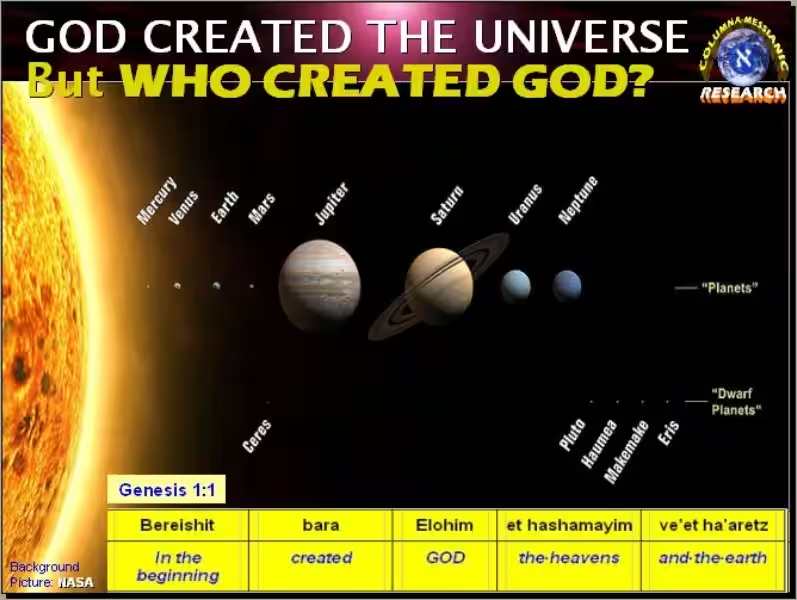
The vastness of the cosmos, the intricate dance of life on our planet, the profound capacity for love, joy, and even sorrow within our own hearts – all these wonders inspire a fundamental question that has echoed through millennia: why did God create us? This isn’t just a theological query; it’s a deeply human yearning to understand our purpose, our place in the grand tapestry of existence. Religion, in its myriad forms, offers a spectrum of compelling answers, each seeking to illuminate the divine intention behind our being.
This exploration delves into the core of religious thought, seeking to unravel the threads of divine purpose woven into our creation. We’ll sift through ancient wisdom, modern interpretations, and the quiet whispers of our own inner knowing, aiming to provide a relatable and informative perspective on this most profound of mysteries. Understanding why did God create us can fundamentally shift how we perceive our lives, our relationships, and our responsibilities.
One of the most pervasive and comforting answers to why did God create us centers on the concept of divine love. Many religious traditions posit that God, in His infinite being and perfect completeness, desired to share this love and experience relationship. Imagine an artist who creates a masterpiece not for themselves, but to share its beauty and evoke a response. Similarly, the creation of humanity is seen as an outpouring of God’s generous and relational nature.
This desire for connection isn’t born of need, but of abundance. God, being self-sufficient and perfect, doesn’t create out of loneliness. Instead, the narrative suggests a God who, in love, chose to bring forth beings capable of reciprocating that love, of experiencing joy, and of participating in a divine drama. This participation allows for the development of virtues like compassion, empathy, and selflessness – qualities that reflect the divine essence. This idea of a God seeking communion is a cornerstone in many faiths, suggesting that our very existence is a testament to His desire for connection.
Beyond mere existence, many religious perspectives emphasize that why did God create us is also tied to the purpose of experiencing the fullness of life and undergoing spiritual growth. The world, with its joys and sorrows, its challenges and triumphs, serves as a crucible for development. Through our interactions, our struggles, and our moments of profound beauty, we are meant to learn, to evolve, and to become more like the divine image we are said to embody.
Consider a gardener who plants seeds not just for them to sprout, but to flourish, bear fruit, and contribute to the ecosystem. In a similar vein, our lives are seen as opportunities for spiritual cultivation. We are given free will, the capacity for moral choice, and the potential for overcoming adversity. Each decision, each act of kindness or resilience, contributes to the unfolding of our divine potential. This journey of growth is not always easy; it often involves facing difficult truths and making sacrifices, but it is this very process that refines us and brings us closer to our intended purpose.
The Mandate of Stewardship and Dominion
Another significant aspect of the answer to why did God create us involves the concept of stewardship and dominion over creation. Many religious texts speak of humanity being given a special role, a responsibility to care for the Earth and all its inhabitants. This isn’t a license for exploitation, but a sacred trust, an invitation to be co-creators and caretakers in partnership with the divine.
Think of a landlord entrusting a tenant with the care of a beautiful estate. The tenant is expected to maintain its beauty, nurture its resources, and ensure its prosperity for future generations. Likewise, we are given the Earth as our home, and our purpose includes protecting and nurturing it. This aspect highlights that our existence is not solely for our own benefit, but also for the well-being of the entire created order, reflecting a God who values all of His creation.
The act of creation, when viewed through a religious lens, often implies a desire for the Creator to be reflected in His creation. Therefore, why did God create us can be understood as a desire for beings who can embody divine attributes in the earthly realm. This means striving to cultivate virtues such as compassion, justice, mercy, patience, and wisdom.
When we act with kindness towards a stranger, when we stand up for what is right, when we show forgiveness to someone who has wronged us, we are, in essence, acting in accordance with the divine nature. These acts are not merely good deeds; they are expressions of the character of God made manifest in human lives. Our purpose, then, is to be living embodiments of these virtues, thereby bringing glory and honor to our Creator through our actions and our very being.
The Mystery of Free Will and Divine Purpose
The question of why did God create us is often intertwined with the profound concept of free will. If God is all-knowing and all-powerful, why would He create beings who have the capacity to choose against His will, to err, and even to cause suffering? This is a complex theological paradox that has been debated for centuries, but many religions offer a compelling perspective.
The argument is often made that true love and genuine relationship cannot exist without freedom. If we were mere automatons programmed to obey, our love would be meaningless. It is the choice to love, to obey, and to follow a moral path that gives our existence its profound significance. God, in His wisdom, understood that for us to truly experience the depth of connection and the richness of moral development, the possibility of choosing otherwise must exist. This freedom, while allowing for potential missteps, is ultimately what makes our devotion and our growth so incredibly valuable.
Ultimately, the exploration of why did God create us is not about finding a single, definitive, and easily digestible answer. Instead, it is a lifelong journey of discovery, reflection, and personal engagement with the divine. Religious faith provides frameworks, narratives, and practices that guide us on this path, offering comfort, wisdom, and a sense of belonging.
Whether through prayer, meditation, acts of service, or deep contemplation of scripture, each individual is invited to seek their own understanding of their purpose. The beauty of this quest lies in its personal nature. It is about discovering how your unique gifts and experiences contribute to the grander divine plan. The answer to why did God create us is not a static decree, but a dynamic invitation to live fully, love deeply, and continually seek to understand and embody the divine within.
Frequently Asked Questions: Why Did God Create Us?
Why did God create us?
Religions offer various perspectives on God’s motivation for creation. Common themes include expressing divine love, experiencing existence, and for humanity to know, love, and serve God. Some traditions believe God created us to fulfill a divine plan and to be participants in the divine life. Others suggest that creation is an outflow of God’s own fullness and desire for relationship.
What is the role of religion in answering this question?
Religion serves as a primary framework for understanding and exploring the question of why God created us. Through sacred texts, traditions, rituals, and the teachings of spiritual leaders, religions provide narratives, theological explanations, and moral guidance that address humanity’s purpose and relationship with the divine. Different religions offer unique interpretations and emphasis on this fundamental question.