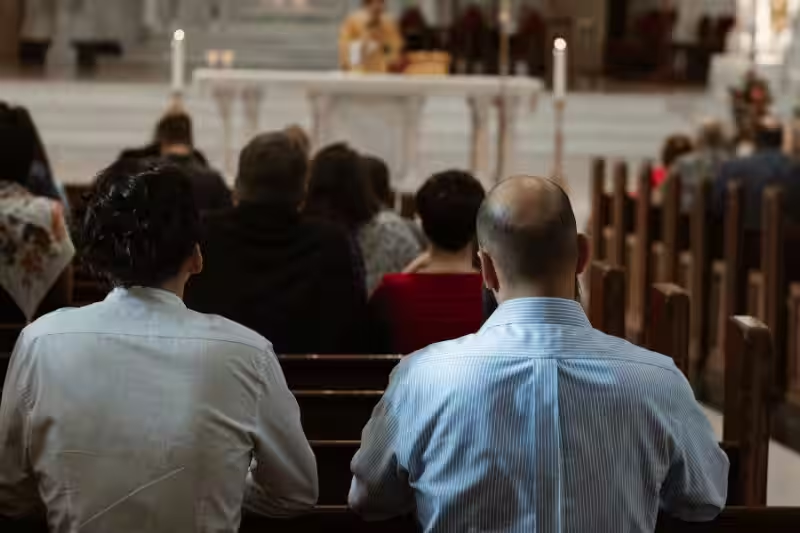
In the tapestry of human experience, moments of solemn silence often serve as anchors, grounding us in a profound sense of connection. Within the realm of religion, this quietude is not merely an absence of noise, but a deliberate and often sacred space. It’s a gateway to introspection, a conduit for divine communication, and a testament to the awe-inspiring nature of the spiritual. This article will explore the multifaceted role of solemn silence across various religious traditions, illuminating its power to transform, to heal, and to deepen our understanding of the sacred.
Imagine standing on the precipice of a vast canyon, the wind whispering secrets through ancient rock formations. The sheer scale and stillness evoke a sense of humility and wonder, a feeling akin to what many experience in moments of religious solemn silence. This deliberate quietude allows us to shed the cacophony of everyday life and tune into a subtler, more profound frequency. It’s in these hushed intervals that the echoes of our faith become clearest, and the whispers of the divine, most audible.
The Sacred Stillness: A Universal Religious Practice
Across the globe and throughout history, religious traditions have consistently recognized the value of solemn silence. It’s a practice woven into the very fabric of worship, meditation, and contemplation. This stillness is not empty; it is pregnant with meaning. It provides a fertile ground for the seeds of faith to germinate and grow, allowing for a more intimate and personal encounter with the divine. Many find that in the absence of external distractions, their internal dialogues with God, the universe, or their inner selves become significantly more potent and revealing.
Consider the early Christian monks who sought refuge in desert solitude, dedicating their lives to prayer and contemplation within the solemn silence of their hermitages. Their pursuit was not about escaping the world, but about finding a deeper connection to the divine within it. Similarly, Buddhist monks engage in extended periods of silent meditation, aiming to quiet the restless mind and achieve a state of mindful awareness. This deliberate cultivation of silence is a universal language of devotion, a testament to its enduring power in the spiritual journey.
Within organized religious services, moments of solemn silence are strategically placed, serving crucial functions. These pauses are not accidental; they are carefully orchestrated to facilitate reflection, absorption of sacred texts, and communal prayer. Whether it’s the hushed reverence before a sermon, the quiet introspection after a communal prayer, or the profound stillness during a sacrament, these silences amplify the impact of the spoken word and ritual actions. They create a shared experience of solemn silence that binds a community together in a common purpose.
For instance, in a Christian church, the solemn silence following a reading from the Gospels invites congregants to contemplate the teachings and their personal application. In a Jewish synagogue, the quiet before the Torah reading can be filled with a palpable sense of anticipation and respect. Even in the vibrant energy of a Pentecostal service, there are often moments of solemn silence that allow individuals to connect with the Holy Spirit on a personal level. These interludes are vital, offering a space for the sacred to truly penetrate the hearts and minds of the faithful.
The Personal Encounter: Meditation and Contemplation
Beyond communal worship, solemn silence is the bedrock of personal spiritual practice for countless individuals. Meditation, in its many forms, is fundamentally an exercise in cultivating inner quietude. By quieting the mental chatter, we create the space to observe our thoughts, emotions, and the underlying currents of our being. This is where profound self-discovery and spiritual insight often emerge from the solemn silence.
A simple practice of sitting quietly for ten minutes each day, focusing on your breath, can be a powerful gateway to solemn silence. Initially, your mind might race with a thousand thoughts. But with persistence, you’ll find those thoughts settling, much like dust settling in a still room. In this growing solemn silence, you might notice a sense of peace you haven’t felt before, or gain clarity on a persistent problem. This personal encounter with silence is not about achieving a blank mind, but about cultivating a mindful presence, a conscious awareness that can profoundly influence our daily lives.
The power of solemn silence lies not in what is absent, but in what is revealed when the external noise subsides. It allows for a deeper engagement with core religious tenets, a more authentic expression of faith, and a stronger connection to the transcendent. This stillness is an invitation, a gentle beckoning to step away from the frantic pace of the world and into a space of profound spiritual resonance.
When we embrace solemn silence, we are not just observing a religious custom; we are actively participating in a practice that has nurtured souls for millennia. It is a personal pilgrimage into the quiet chambers of our own hearts, where the most profound truths often reside. The ability to find solace and profound meaning within this sacred stillness is a gift that religion offers, a timeless treasure for all who seek it.
Frequently Asked Questions about Solemn Silence and Religion
What is solemn silence in a religious context?
Solemn silence in a religious context refers to a deliberate and intentional period of quietude observed during worship, prayer, meditation, or reflection. It is a practice aimed at fostering a deeper spiritual connection, allowing for introspection, and creating a sacred atmosphere.
Why is solemn silence important in some religions?
Solemn silence is important in many religions as it provides a space to:
* Focus on the divine: It helps to quiet external distractions and internal thoughts, allowing individuals to better hear or feel the presence of God, the divine, or their inner conscience.
* Promote contemplation and prayer: It offers an opportunity for unhurried, personal prayer and deep contemplation of religious teachings or personal spiritual journeys.
* Express reverence and awe: Silence can be a powerful expression of awe, reverence, and humility before the sacred.
* Facilitate communal spiritual experience: In group settings, shared silence can create a profound sense of unity and collective spiritual engagement.
In which religions is solemn silence commonly practiced?
Solemn silence is a significant practice in various religious traditions, including:
* Christianity: Particularly in contemplative orders, monastic traditions, and certain liturgical services (e.g., moments of silence after scripture readings or during communion).
* Judaism: Used in prayer services (amidah), meditation, and during periods of mourning.
* Buddhism: A cornerstone of meditation practices, where silence is essential for cultivating mindfulness and insight.
* Islam: While not formally designated as “solemn silence,” moments of quiet reflection and contemplation are integral to prayer (salat) and supplication (dua).
* Hinduism: Practiced in various forms of meditation (dhyana), yoga, and during devotional rituals.
* Sikhism: Used in meditation and prayer, especially in the practice of silent recitation of scripture (paath).
The observation of solemn silence typically involves:
* Ceasing vocalization: Refraining from speaking, singing, or making unnecessary noise.
* Stillness: Minimizing physical movement to enhance inner focus.
* Mindfulness: Directing one’s attention inwards, towards prayer, meditation, or spiritual awareness.
* Respect: Maintaining a respectful and reverent attitude towards the sacred space and the practice itself.
Can solemn silence be uncomfortable?
For individuals unaccustomed to prolonged periods of silence, it can sometimes feel uncomfortable. This discomfort may stem from a fear of being alone with one’s thoughts, external distractions that are hard to ignore, or a lack of familiarity with contemplative practices. However, with practice and patience, many find that the discomfort lessens and is replaced by a sense of peace and clarity.
What are the benefits of practicing solemn silence?
The benefits of practicing solemn silence can include:
* Reduced stress and anxiety: The quiet allows the mind to calm down.
* Improved focus and concentration: Training the mind to be present.
* Enhanced self-awareness: Gaining deeper insight into one’s thoughts, feelings, and spiritual state.
* Increased emotional regulation: Developing a greater capacity to manage emotions.
* Spiritual growth: Fostering a closer relationship with the divine or one’s inner self.
* Greater appreciation for stillness: Learning to find peace in quiet moments.