The Catholic Church, and indeed many other Christian denominations, hold a special place in their hearts and liturgical calendars for the Blessed Virgin Mary. This profound reverence is not a mere historical footnote; it is a living, breathing aspect of faith, expressed most vibrantly through the observance of various Marian feast days. These are not just days off from work or school; they are sacred occasions dedicated to celebrating Mary’s unique role in salvation history and her enduring intercessory power. For many believers, these feast days offer a tangible connection to the divine, providing opportunities for deep reflection, prayer, and renewed commitment to their spiritual journey.
The significance of these Marian feast days extends far beyond simple commemoration. They serve as powerful reminders of Mary’s virtues, such as her humility, obedience, and unwavering faith. Each feast day focuses on a particular aspect of her life or her relationship with Christ and humanity, allowing the faithful to meditate on specific theological truths and draw inspiration for their own lives. Whether it’s the solemnity of the Assumption, highlighting her bodily ascension into heaven, or the joy of the Nativity of Mary, celebrating her immaculate conception and birth, each occasion offers a distinct lens through which to view her importance. The collective weight of these observances weaves a rich tapestry of Marian devotion that has shaped Christian culture and spirituality for centuries.
Key Marian Feast Days and Their Meaning
Across the year, the Church designates numerous feast days in honor of Mary, each with its own historical roots and theological depth. These celebrations are not arbitrary; they are carefully chosen moments to reflect on Mary’s pivotal role as the Mother of God and her ongoing maternal care for all Christians. Understanding the meaning behind these significant dates can profoundly enrich one’s faith life and offer a deeper appreciation for the Church’s tradition.
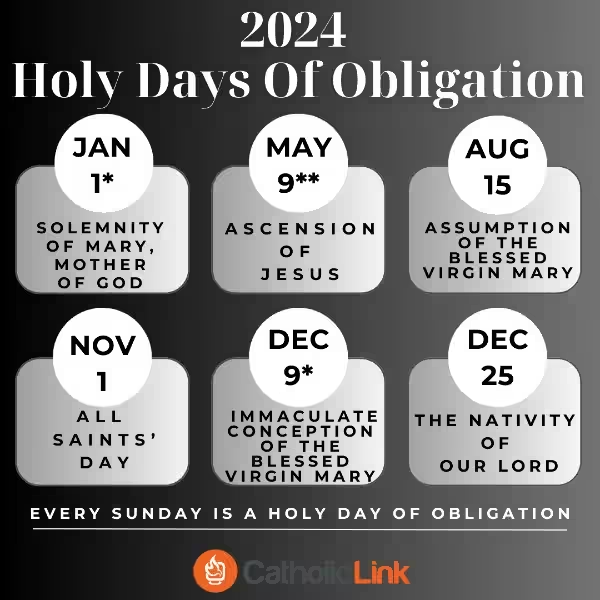
Among the most prominent Marian feast days is the Solemnity of Mary, Mother of God, celebrated on January 1st. This feast underscores Mary’s title as Theotokos, a Greek term meaning “God-bearer,” emphasizing that she is the mother of Jesus Christ, who is God. It’s a powerful affirmation of Christ’s divinity and Mary’s crucial role in bringing Him into the world. Another profoundly important Marian feast day is the Solemnity of the Assumption of the Blessed Virgin Mary, observed on August 15th. This dogma states that Mary, at the end of her earthly life, was assumed body and soul into heavenly glory. It speaks to the ultimate triumph of grace and foreshadows the resurrection of all believers.
Other significant Marian feast days include:
The Solemnity of the Immaculate Conception (December 8th): This feast celebrates the belief that Mary was conceived without the stain of original sin, a special privilege granted to her in preparation for her role as the mother of Jesus. This doctrine emphasizes God’s proactive grace in Mary’s life from the very beginning.
The Feast of the Nativity of the Blessed Virgin Mary (September 8th): This day rejoices in the birth of Mary, marking the beginning of the lineage that would bring forth the Savior. It highlights the human aspect of Mary’s journey and God’s plan unfolding through ordinary lives.
The Feast of Our Lady of Sorrows (September 15th): This solemn observance commemorates the seven dolors or sorrows that Mary experienced throughout her life, particularly her suffering at the foot of the cross. It invites believers to meditate on Mary’s profound empathy and her strength in times of great pain.
The Feast of Our Lady of Mount Carmel (July 16th): This feast, associated with the Carmelite Order, honors Mary under the title of Our Lady of Carmel and is often linked to the scapular, a sacramental worn by many devout Catholics.
Each of these Marian feast days offers a unique opportunity to connect with Mary and, through her, with Christ. They are not just historical markers but living expressions of faith that inspire, comfort, and guide believers.
More Than Just Dates on a Calendar: The Personal Impact of Marian Feast Days
The observance of Marian feast days is not confined to grand liturgical celebrations; it resonates deeply within the personal lives of individuals and families. These occasions provide structured moments to pause from the everyday hustle and engage in intentional spiritual practices. For many, it’s a time to seek Mary’s intercession for their personal struggles, their families, and the wider world. The gentle, maternal presence of Mary, as depicted in countless works of art and experienced in prayer, offers a profound sense of comfort and hope.
Consider the practical ways families might incorporate these feasts into their lives. A Marian feast day could be a reason for a special family meal, perhaps incorporating a traditional dish associated with a particular feast or region. It could be an opportunity to read scripture passages that highlight Mary’s role, or to pray the Rosary together, meditating on the mysteries of Christ’s life through Mary’s eyes. Many families also find joy in creating small home altars adorned with images of Mary, perhaps lighting a candle on these special days. The personal connection fostered through these simple acts reinforces the belief that Mary is not a distant, ethereal figure, but a loving mother accessible to all who seek her out. The consistent pattern of these observances throughout the year helps to build a strong foundation of faith and devotion within the home.
Integrating Marian Feast Days into Daily Life
While public celebrations in churches are central to Marian feast days, their true power lies in their ability to permeate the daily lives of the faithful. This integration can transform ordinary moments into opportunities for grace and spiritual growth. It’s about weaving the spirit of these Marian celebrations into the fabric of one’s existence, making them relevant and impactful beyond the confines of a single day.
One effective way to integrate Marian feast days is through personal prayer and reflection. Dedicating a few minutes each day, or specifically on these feast days, to pray a Hail Mary, a Magnificat, or simply to speak to Mary from the heart can foster a profound connection. Many find solace and guidance by reflecting on the specific virtues highlighted by each feast. For example, on the Feast of the Assumption, one might meditate on the hope of eternal life. On the Feast of Our Lady of Sorrows, one might reflect on Mary’s strength in suffering and offer prayers for those experiencing hardship. This personal engagement with the themes of the feast makes the commemoration more meaningful.
Furthermore, engaging with Marian art, music, and literature can also deepen one’s appreciation for these feast days. Many churches and homes feature statues or icons of Mary; taking a moment to pause before them on a feast day, offering a silent prayer or a brief reflection, can be a powerful act of devotion. Listening to sacred music dedicated to Mary or reading devotional texts can also enrich the experience. For families, teaching children about the various Marian feast days and their significance helps to pass down this rich tradition, instilling in them a love and reverence for the Blessed Mother from a young age. This could involve simple stories, coloring pages, or even learning a Marian hymn together.
The Enduring Relevance of Marian Devotion in the Modern World
In a world often characterized by rapid change, uncertainty, and a perceived disconnect from the spiritual, the enduring observance of Marian feast days offers a grounding presence and a beacon of hope. Mary represents a constant, unwavering love and a powerful intercessor who understands the complexities of human life. Her example of faith, obedience, and selfless love continues to inspire millions to seek a deeper relationship with God. The timeless message of hope and redemption embodied in her life and role continues to resonate, providing solace and strength in challenging times.
The universality of Mary’s appeal transcends cultural and geographical boundaries. From the humble shrines in rural villages to the grand basilicas in major cities, people from all walks of life turn to Mary with their prayers and petitions. This widespread devotion, expressed through the recurring cycle of Marian feast days, speaks to a fundamental human need for maternal guidance and spiritual connection. In an era where so many feel alone, the assurance of Mary’s motherly care, a cornerstone of these celebrations, offers a profound sense of belonging and divine embrace. The continued prominence of Marian feast days is a testament to the enduring power of faith and the multifaceted significance of Mary in the spiritual landscape.
Mary as a Model for Contemporary Faith
In our fast-paced, often individualistic world, the virtues exemplified by Mary on her various feast days offer a powerful counter-narrative and a compelling model for contemporary faith. Her profound humility, her unquestioning obedience to God’s will, and her unwavering trust in divine providence are qualities that remain remarkably relevant and aspirational today. These are not abstract theological concepts but practical virtues that can shape our actions and attitudes in our daily lives.
Consider the example of Mary’s “fiat” – her “yes” to the angel Gabriel’s announcement. This radical act of surrender, celebrated implicitly on many Marian feast days, calls us to examine our own willingness to embrace God’s plan, even when it is challenging or unexpected. Her dedication to her son, Jesus, from His birth through His suffering and death, highlights the profound depth of sacrificial love and maternal devotion. This is a powerful reminder for parents, caregivers, and indeed for all who are called to love and serve others. The consistent presence of Mary’s example across all the Marian feast days provides a rich source of inspiration for living a life of deeper faith and purpose.
The Catholic Church, through its rich tradition of Marian feast days, offers a consistent and profound invitation to engage with the Blessed Virgin Mary. These sacred observances are far more than mere historical commemorations; they are vibrant expressions of faith that offer guidance, comfort, and inspiration. By understanding and participating in these feast days, believers can deepen their relationship with Mary, draw closer to her Son, and find renewed strength for their own spiritual journeys. The timeless virtues she embodies, and the profound love she offers, ensure that Marian feast days will continue to hold a central and cherished place in the hearts of the faithful for generations to come.
Frequently Asked Questions about Marian Feast Days
What is a Marian feast day?
A Marian feast day is a specific day in the liturgical calendar of the Catholic Church (and some other Christian denominations) that is dedicated to celebrating and honoring the Virgin Mary, the mother of Jesus. These feast days commemorate significant events in her life, her titles, or her role in salvation history.
How many Marian feast days are there?
There are numerous Marian feast days throughout the year. While the most prominent ones are universally observed, many local churches or religious orders also have their own specific feasts dedicated to Mary. The exact number can vary depending on the specific liturgical calendar being followed.
What are some of the most important Marian feast days?
Some of the most significant and universally observed Marian feast days include:
January 1st: Feast of Mary, Mother of God (Solemnity) – Celebrates Mary’s divine motherhood.
February 2nd: Presentation of the Lord (Feast, formerly Purification of Mary) – Commemorates Mary presenting Jesus at the Temple.
March 25th: Annunciation of the Lord (Solemnity) – Celebrates the angel Gabriel’s announcement to Mary that she would conceive Jesus.
May 13th: Our Lady of Fatima (Memorial) – Commemorates the apparitions of Mary in Fatima, Portugal.
May 31st: Visitation of the Blessed Virgin Mary (Feast) – Celebrates Mary’s visit to her cousin Elizabeth.
August 5th: Dedication of the Basilica of Saint Mary Major (Memorial) – Commemorates a famous church in Rome dedicated to Mary.
August 15th: Assumption of the Blessed Virgin Mary (Solemnity) – Celebrates Mary being taken body and soul into heaven.
August 22nd: Queenship of the Blessed Virgin Mary (Memorial) – Celebrates Mary’s coronation as Queen of Heaven.
September 8th: Nativity of the Blessed Virgin Mary (Feast) – Celebrates Mary’s birth.
September 15th: Our Lady of Sorrows (Memorial) – Commemorates Mary’s sorrows throughout her life, especially at the foot of the cross.
October 7th: Our Lady of the Rosary (Memorial) – Celebrates the grace of the Rosary.
November 21st: Presentation of the Blessed Virgin Mary (Memorial) – Commemorates Mary’s presentation in the Temple as a child.
December 8th: Immaculate Conception of the Blessed Virgin Mary (Solemnity) – Celebrates Mary being conceived without original sin.
December 12th: Our Lady of Guadalupe (Feast) – Commemorates the apparitions of Mary in Guadalupe, Mexico.
Why are Marian feast days important in the Catholic religion?
Marian feast days are important because they highlight Mary’s central role in the Christian faith as the Mother of God and the first disciple. They provide opportunities for Catholics to:
Reflect on her virtues and example of faith.
Deepen their devotion to her.
Understand her significance in the plan of salvation.
Pray for her intercession.
These feasts are integral parts of Catholic worship and spiritual life.
How are Marian feast days celebrated?
Marian feast days are typically celebrated with special liturgies, including Masses with readings and prayers specifically chosen for the occasion. Many churches may also have processions, novenas (nine days of prayer), rosaries, and other devotional services. Some feast days are Solemnities, which are the highest rank of liturgical celebration, while others are Feasts or Memorials, which are of lesser rank but still important.