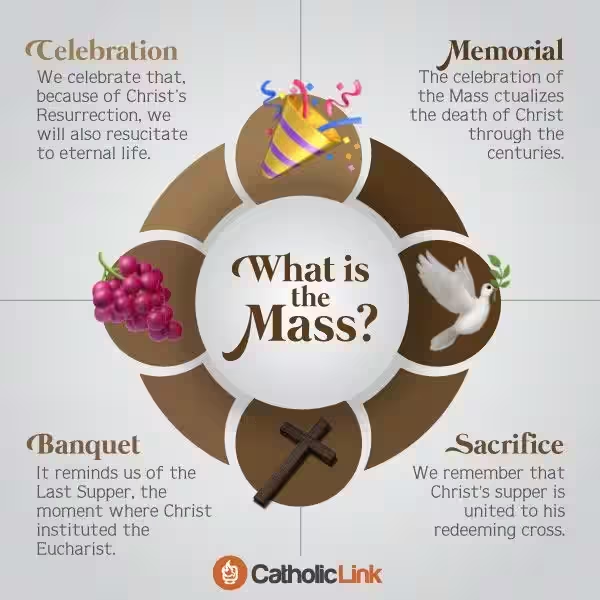
The Catholic Mass is far more than just a weekly religious obligation; it is the heartbeat of Catholic life, a sacred and deeply meaningful experience that connects believers to God and to each other. For those unfamiliar, or even for seasoned Catholics seeking a deeper understanding, exploring the Catholic Mass meaning reveals a rich tapestry of symbolism, action, and profound spiritual encounter. It’s a ritual that has been practiced for centuries, evolving yet retaining its core essence as a celebration of faith.
At its most fundamental level, the Mass is understood as a sacrificial meal, a commemoration of Jesus Christ’s Last Supper with his disciples. This act of remembrance is not merely a historical reenactment; it is a living memorial, where Christ’s sacrifice on the cross is made present. This central tenet imbues the entire celebration with immense significance, offering believers an opportunity to participate in the ultimate act of love and redemption. The Catholic Mass meaning therefore lies in its capacity to unite us with Christ’s Paschal Mystery – his suffering, death, and resurrection – offering spiritual nourishment and the promise of eternal life.
Unpacking the Liturgical Journey: From Word to Sacrament
The structure of the Mass is not arbitrary; each part is carefully designed to guide the faithful through a progression of spiritual encounter. It can be broadly divided into two main parts: the Liturgy of the Word and the Liturgy of the Eucharist. This division highlights the dual focus of the Mass: encountering God through His spoken word and through His sacramental presence.
The Liturgy of the Word begins with introductory rites, setting a prayerful and communal tone. This includes the Invocation, the Sign of the Cross, and the Penitential Act, a moment of honest self-reflection and seeking forgiveness. Following this, we hear readings from Sacred Scripture, typically from the Old Testament, the Psalms, and the New Testament, culminating in the Gospel. These readings are not random selections; they are chosen to illuminate a particular theme or message for that specific day, offering divine instruction and inspiration. The homily, or sermon, then bridges the ancient words of Scripture to our modern lives, making the Catholic Mass meaning tangible and relevant.
The Power of the Spoken Word: Scripture as Divine Dialogue
The readings during Mass are a cornerstone of the Catholic Mass meaning. They are seen as God speaking directly to His people, offering wisdom, comfort, and guidance. Think of it like receiving a personal letter from a beloved friend – the words carry weight, intention, and a desire for connection. Each week, the Church presents a carefully curated selection of biblical passages, designed to build upon one another throughout the liturgical year. This ensures a comprehensive engagement with the entirety of God’s revelation.
For example, during the season of Lent, the readings might focus on themes of repentance, sacrifice, and spiritual renewal, preparing us for the joy of Easter. In contrast, during the Easter season, the readings will undoubtedly emphasize the resurrection, hope, and the new life found in Christ. This cyclical approach to Scripture reading ensures that the Catholic Mass meaning is constantly renewed and deepened, allowing us to encounter God’s message in fresh ways each time we gather. It’s an invitation to listen with an open heart and discerning mind.
The Climax of Encounter: The Liturgy of the Eucharist
The second major part of the Mass, the Liturgy of the Eucharist, is where the Catholic Mass meaning reaches its most profound and transformative peak. This is the celebration of the Holy Sacrifice of the Mass, where bread and wine are consecrated and become the Body and Blood of Jesus Christ through the power of the Holy Spirit. This belief, known as transubstantiation, is central to Catholic faith and practice.
The preparation of the gifts, the offertory, involves presenting the bread and wine, symbols of our lives and work, to God. These humble elements are then brought to the altar, awaiting their miraculous transformation. The Eucharistic Prayer, the heart of the Mass, is a prayer of thanksgiving and consecration. It is here that the priest, acting in the person of Christ, invokes the Holy Spirit and pronounces the words of Jesus from the Last Supper: “This is my body… This is the cup of my blood.” This is the moment when the Catholic Mass meaning becomes most tangibly present, offering believers the opportunity to receive Christ Himself.
Receiving Christ: A Sacred Communion for the Faithful
Receiving Holy Communion is the ultimate expression of unity within the Church and with Christ. It is a spiritual banquet, a foretaste of the heavenly banquet, where we are nourished by the very life of God. When Catholics receive the consecrated host, they believe they are receiving the real presence of Jesus Christ – body, blood, soul, and divinity. This is not a symbolic act alone; it is a sacramental union.
The act of approaching the altar, receiving the host, and returning to one’s pew is a deeply personal and communal moment. It signifies a surrender to God’s love and a renewed commitment to live out the Gospel message. The Catholic Mass meaning is therefore deeply personal, yet profoundly communal, as we share this sacred meal together, united in faith and love. It is a moment for personal prayer, thanksgiving, and petition, a chance to commune directly with the divine.
The Enduring Significance: Living the Mass Beyond Sunday
The Catholic Mass meaning does not end when the final blessing is given and the congregation disperses. The grace and spiritual nourishment received at Mass are intended to empower believers to live out their faith in the world. We are called to be Christ’s hands and feet, to bring His love, compassion, and justice to our families, communities, and workplaces.
The Mass serves as a constant wellspring of strength and inspiration, equipping us to face life’s challenges with faith and courage. The teachings received, the prayers offered, and the presence of Christ in the Eucharist all contribute to a transformed life. Understanding the Catholic Mass meaning is an ongoing journey, a lifelong process of deepening our relationship with God and with His Church. It is an invitation to participate fully, to listen attentively, and to allow the transformative power of the Mass to shape our lives.
Frequently Asked Questions about Catholic Mass Meaning and Religion
What is the Catholic Mass?
The Catholic Mass is the central act of worship in the Catholic Church. It is a sacred liturgical celebration that commemorates the Last Supper, where Jesus Christ instituted the Eucharist. It is understood as a sacrifice that re-presents Christ’s sacrifice on the cross and a meal shared by the community.
What is the meaning of the Eucharist in the Mass?
The Eucharist is the most important part of the Mass. Catholics believe that during the consecration, the bread and wine become the actual Body and Blood of Jesus Christ (transubstantiation). Receiving Communion is seen as a way to unite oneself with Christ, receive spiritual nourishment, and be part of the Church community.
What are the main parts of the Mass?
The Mass is typically divided into two main parts: the Liturgy of the Word and the Liturgy of the Eucharist. The Liturgy of the Word includes readings from Scripture, a homily (sermon), and prayers. The Liturgy of the Eucharist begins with the presentation of the gifts (bread and wine) and culminates in the consecration and reception of Holy Communion.
No, for Catholics, the Mass is not merely a symbolic reenactment. It is believed to be a sacramental participation in the one sacrifice of Jesus Christ, made present on the altar. The Mass makes the saving power of Christ’s death and resurrection available to believers in the present moment.
What is the role of Jesus Christ in the Mass?
Jesus Christ is the central figure of the Mass. He is present in the Scriptures proclaimed, in the priest who presides, in the gathered community, and most especially, in the consecrated bread and wine. The Mass is offered to God the Father through Jesus, in the unity of the Holy Spirit.
What is Catholicism?
Catholicism is a major branch of Christianity. The Catholic Church, headed by the Pope in Rome, traces its origins back to Jesus Christ and the Apostles. It emphasizes the authority of the Pope and bishops, the seven sacraments, and a rich tradition of theology and practice.
What are the core beliefs of Catholicism?
Key Catholic beliefs include the Holy Trinity (God as Father, Son, and Holy Spirit), the divinity of Jesus Christ, his crucifixion and resurrection, the importance of the Church as founded by Christ, the role of the sacraments as channels of God’s grace, and the veneration of Mary, the mother of Jesus, and the saints.
What is the relationship between Catholicism and other religions?
Catholicism recognizes that elements of truth and sanctification can be found in other religions. While it holds that the fullness of truth and the means of salvation are found within the Catholic Church, it also respects other faiths and encourages dialogue and understanding.
How does one become Catholic?
People can become Catholic through baptism, usually as infants, or through a process called the Rite of Christian Initiation of Adults (RCIA) for those who come to the faith later in life. This process involves instruction, prayer, and participation in parish life before receiving the sacraments of Baptism, Confirmation, and Eucharist.
What is the role of the Bible in Catholicism?
The Bible is considered the inspired Word of God and is a foundational text for Catholic belief and practice. It is read and proclaimed at every Mass, and its teachings are central to Catholic theology and formation. The Church also provides an authoritative interpretation of Scripture through its Magisterium (teaching authority).