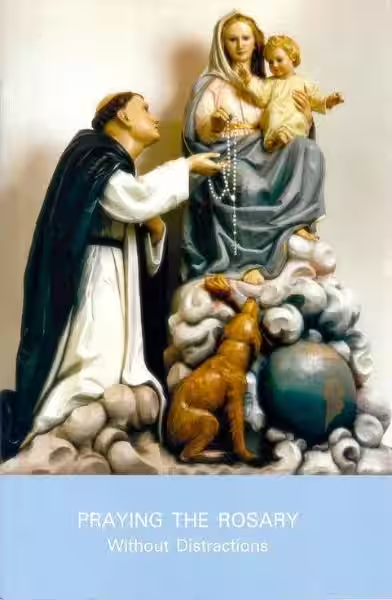
In a world often characterized by incessant noise and relentless demands, the practice of contemplative prayer offers a sanctuary for the soul. Among the most cherished and accessible forms of this spiritual discipline is the Holy Rosary. Far more than just a string of beads, the Rosary is a meditative journey, a sacred dialogue with the divine, and a powerful tool for cultivating inner peace and deepening one’s relationship with God. This ancient devotional practice invites us to step away from the distractions of everyday life and enter into a space of profound reflection and spiritual encounter.
The beauty of the Rosary lies in its simplicity and its profound depth. It is a prayer that can be prayed by anyone, anywhere, at any time. Whether you are seeking solace in times of trouble, strength for difficult decisions, or simply a moment of quiet communion, the Rosary provides a structured yet flexible path to spiritual nourishment. Its repetitive nature, far from being tedious, aids in quieting the mind, allowing the heart to open to divine grace. This article will explore the essence of the Rosary, its components, its benefits, and how to engage with this timeless practice to foster genuine spiritual growth.
Understanding the Heart of the Rosary: More Than Just Beads
At its core, the Rosary is a prayer that centers on the life and teachings of Jesus Christ, as revealed through the mysteries of his life, death, and resurrection. It is a Christocentric devotion, meaning Christ is at the very center of the prayer. The beads serve as tactile aids, helping us to keep track of the prayers and to focus our minds. Each bead represents a Hail Mary, a prayer invoking the Blessed Virgin Mary, who, as the Mother of Jesus, is a perfect intercessor and guide on our spiritual journey. Praying the Rosary is akin to walking through the Gospel story, meditating on key moments and their significance.
The structure of the Rosary involves reciting specific prayers in a particular order while contemplating a series of “mysteries.” These mysteries are divided into four sets: the Joyful, the Luminous, the Sorrowful, and the Glorious. Each set offers a unique lens through which to view Christ’s life and our own spiritual journey. For instance, contemplating the Joyful Mysteries might involve meditating on the Annunciation, imagining Mary’s humble acceptance of God’s plan. This contemplative aspect is what elevates the Rosary beyond mere recitation; it is an invitation to encounter Jesus through the eyes of his mother. The beads are merely the scaffolding that supports this profound meditative experience.
The Structure and Prayers of the Rosary
The Rosary is typically prayed in cycles, with each cycle dedicated to a specific set of mysteries. Before beginning, one usually makes the Sign of the Cross and recites the Apostles’ Creed. This is followed by the Our Father prayer, which Jesus himself taught us. Then, three Hail Marys are prayed, focusing on the virtues of faith, hope, and charity. The Rosary continues with the Glory Be and the Fatima Prayer (a short prayer for peace and mercy), before moving into the main body of the prayer, which consists of meditating on the mysteries.
For each mystery, one Our Father, ten Hail Marys, and one Glory Be are recited. The mysteries are announced before each decade. For example, within the Joyful Mysteries, the first decade might be the Annunciation, the second the Visitation, and so on. The consistent rhythm of the prayers helps to create a state of prayerful repose, allowing for deeper reflection on the specific mystery being contemplated. This structured approach provides a clear framework, ensuring that the prayer is both accessible and spiritually enriching, guiding the mind and heart through sacred events.
The Mysteries: Windows into Christ’s Life
The Joyful Mysteries (recited on Mondays and Saturdays) focus on the early life of Jesus and Mary: the Annunciation, the Visitation, the Nativity, the Presentation in the Temple, and the Finding of Jesus in the Temple. These mysteries evoke themes of humility, obedience, joy, and divine providence. Meditating on the Annunciation, for instance, invites us to consider Mary’s courageous “yes” to God’s will and to reflect on our own willingness to embrace God’s plans, even when they are unexpected.
The Luminous Mysteries (recited on Thursdays) were introduced by Pope John Paul II and illuminate key moments of Jesus’ public ministry: the Baptism of Jesus, the Wedding at Cana, the Proclamation of the Kingdom of God, the Transfiguration, and the Institution of the Eucharist. These mysteries highlight Jesus’ divine nature and his mission of salvation. The Wedding at Cana, where Jesus performs his first public miracle, calls us to trust in his power to transform our ordinary lives into something extraordinary.
The Sorrowful Mysteries (recited on Tuesdays and Fridays) delve into the passion and death of Jesus: the Agony in the Garden, the Scourging at the Pillar, the Crowning with Thorns, the Carrying of the Cross, and the Crucifixion. These meditations focus on themes of sacrifice, suffering, and redemption. In the Carrying of the Cross, we are invited to reflect on the burdens we carry and to find strength in Christ’s own suffering, remembering that he walked this path before us. The Rosary, in this context, becomes a powerful act of solidarity with Christ’s passion.
Finally, the Glorious Mysteries (recited on Wednesdays and Sundays) celebrate the triumph of Christ and the hope of eternal life: the Resurrection, the Ascension, the Descent of the Holy Spirit, the Assumption of Mary, and the Coronation of Mary. These mysteries offer profound hope and a glimpse of heavenly glory. The Resurrection, the cornerstone of Christian faith, reminds us of God’s ultimate victory over sin and death, a victory we share in through Christ. The Rosary, through these mysteries, paints a comprehensive portrait of salvation history.
The Transformative Power of Praying the Rosary
The benefits of incorporating the Rosary into one’s spiritual life are manifold and deeply transformative. Beyond the immediate sense of calm and peace it can bring, consistent prayer of the Rosary fosters a profound increase in faith, hope, and love. It is a spiritual discipline that nurtures a deeper intimacy with Jesus and Mary, drawing the devotee closer to the heart of God. Many have testified to the Rosary’s power to intercede in difficult situations, offering guidance and strength when it is most needed.
One of the most significant aspects of the Rosary is its ability to cultivate virtue. As we meditate on the lives of Jesus and Mary, we are inspired to emulate their qualities. For example, dwelling on the Visitation, where Mary visits Elizabeth, can inspire us to be more attentive to the needs of others and to practice charity and service. The Rosary is not merely a prayer of petition, but also a prayer of transformation, shaping our character to reflect the likeness of Christ. The repetitive nature of the Hail Marys, when prayed with intention, can become a mantra of love and devotion, quieting the soul and opening it to divine inspiration.
Cultivating Inner Peace and Stillness
In our fast-paced world, finding moments of genuine stillness can feel like an impossible feat. The Rosary offers a tangible pathway to this inner peace. The rhythmic repetition of the prayers acts as a gentle anchor for the mind, gradually quieting anxious thoughts and distracting worries. As the external world fades, the internal landscape becomes more serene. This is not about forcing the mind to be blank, but rather about gently redirecting our focus from the temporal to the eternal, from the superficial to the profound.
By dedicating time to pray the Rosary, we are actively choosing to step away from the clamor and embrace a sacred silence. This deliberate act of pausing and reflecting creates a sanctuary within ourselves. The mysteries provide fertile ground for contemplation, allowing us to ponder God’s love and presence in our lives. This consistent practice can lead to a more settled disposition, a greater ability to face challenges with equanimity, and a profound sense of inner quietude that permeates all aspects of our lives. It is a spiritual exercise that nurtures the soul and strengthens our resilience.
The Rosary is an invitation to a more intimate relationship with both Jesus and his Mother. Through meditating on the events of their lives, we come to know them more deeply. Mary, as the Mother of God, has a unique role in guiding us to her Son. She understands Jesus’ heart perfectly and can lead us to him with unparalleled grace. Praying the Hail Mary, a prayer of greeting and petition, becomes an act of trust and filial devotion to Mary, acknowledging her powerful intercession.
As we journey through the mysteries, we are not just observing them; we are invited to participate in them through our prayer. This personal engagement fosters a sense of connection and intimacy. Imagine yourself present at the Wedding at Cana, witnessing Jesus’ first miracle. This imaginative prayer draws you closer to the divine events, making them real and personal. The Rosary, therefore, becomes a living encounter, a continuous dialogue that strengthens the bonds of love and spiritual companionship with Jesus and Mary. It is a path toward experiencing God’s love more profoundly.
Making the Rosary a Regular Part of Your Life
Integrating the Rosary into your daily or weekly routine doesn’t have to be an overwhelming task. The beauty of this devotion is its flexibility. Even a shortened version of the Rosary can be incredibly beneficial. Perhaps you can commit to praying one decade (ten Hail Marys and the accompanying prayers) each day, focusing on a specific mystery. This small, consistent effort can yield significant spiritual fruit over time. The key is regularity and intention.
Finding a time that works for you is crucial. It might be first thing in the morning before the day’s demands begin, during a lunch break, or in the quiet of the evening. Consider praying the Rosary with a loved one or a group; this can provide mutual encouragement and support. There are also numerous online resources, apps, and guided Rosary meditations available that can assist you in your prayer life. The most important element is the desire of your heart to connect with God through this sacred prayer. The Rosary is a gift, readily available to all who seek its blessings.
Practical Tips for Prayer
To enhance your Rosary experience, consider a few practical tips. Find a quiet space where you can minimize external distractions. If your mind wanders, gently bring it back to the mystery you are contemplating. Don’t be discouraged by imperfect prayer; God sees the sincerity of your heart. You might find it helpful to visualize the scene of the mystery you are meditating on, allowing yourself to be immersed in the Gospel narrative. For instance, when praying the Nativity, picture the humble stable, the shepherds, and the newborn Jesus.
Experiment with different ways of praying. Some people prefer to pray the Rosary aloud, while others find a silent recitation more conducive to meditation. You can also vary the mysteries you pray based on your spiritual needs or the liturgical season. If you are struggling with doubt, perhaps focus on the Glorious Mysteries and the power of the Resurrection. If you are facing suffering, the Sorrowful Mysteries can offer profound solidarity and hope. The Rosary is a dynamic prayer, and its effectiveness lies in approaching it with an open heart and a receptive spirit. The beads are a guide, but the true power resides in the contemplation and the connection it fosters.
Finding a Community of Prayer
While the Rosary can be a deeply personal devotion, sharing this practice with others can amplify its impact and provide a supportive spiritual community. Many parishes offer group Rosary gatherings, either in person or virtually. Participating in these communal prayers can offer a sense of unity and shared purpose. Hearing others pray can also inspire and deepen your own prayer life, reminding you that you are not alone on your spiritual journey.
Connecting with fellow Rosary enthusiasts can provide encouragement, share insights, and foster a deeper understanding of the devotion. Whether through a parish group, an online forum, or simply a friend with whom you pray, shared prayer can be a powerful catalyst for spiritual growth. The collective intention and devotion of a group praying the Rosary can create a powerful spiritual atmosphere, drawing down abundant graces. This sense of community reinforces the personal benefits of the Rosary, making it a richer and more fulfilling practice.
In conclusion, the Rosary is a timeless and accessible prayer that offers a profound pathway to spiritual connection, inner peace, and a deeper love for Jesus and Mary. By understanding its structure, meditating on its mysteries, and integrating it into our lives with intention, we can unlock its transformative power. The Rosary is not just a series of prayers; it is a journey, a meditation, and a powerful encounter with the divine, waiting to be embraced by all who seek its solace and grace.
Frequently Asked Questions: Rosary Without Distractions
What is the Rosary?
The Rosary is a traditional Catholic devotion that involves meditating on the life of Jesus and Mary through a series of prayers, primarily the Hail Mary, Our Father, and Glory Be. It is structured around “mysteries” which are specific events or themes from salvation history.
Why is it difficult to pray the Rosary without distractions?
Distractions are a common challenge in prayer for many reasons. These can include external noises, internal thoughts (worries, to-do lists, unrelated ideas), physical discomfort, or a wandering mind. Our modern world, with its constant flow of information and stimuli, can exacerbate these tendencies.
What are some practical tips for minimizing distractions during the Rosary?
Preparation: Before starting, try to set aside dedicated time and find a quiet, comfortable location where you are less likely to be interrupted. Briefly calm your mind by taking a few deep breaths.
Focus on the Mysteries: Actively engage with the specific mystery you are meditating on. Visualize the scene, consider its meaning, and connect it to your own life. This can anchor your thoughts.
Use a Rosary Guide: Following a written or audio guide can help keep you on track with the prayers and the sequence of mysteries.
Acknowledge and Release: When a distraction arises, gently acknowledge it without judgment and then try to let it go, returning your focus to the prayers and mysteries. Don’t get discouraged if it happens repeatedly.
Posture and Environment: Praying in a consistent, prayerful posture can help signal to your mind that it’s time for prayer. Minimizing visual and auditory distractions in your immediate environment can also be beneficial.
How does religion view distractions during prayer?
Most religions, including Catholicism, acknowledge that distractions are a natural part of the human experience. The emphasis is not on achieving perfect, uninterrupted prayer, but on the sincere effort and intention to connect with the divine. The struggle against distractions is often seen as part of the spiritual discipline and a testament to one’s commitment.
Is there a specific prayer or technique to overcome distractions?
While there isn’t a magic bullet, several spiritual traditions offer guidance. In Catholicism, practices like the “Anima Christi” prayer, or simply offering your distractions to God, can be helpful. The act of persevering in prayer despite distractions is itself a form of spiritual offering.
What if I feel like I’m not praying “correctly” because of distractions?
It’s important to remember that God’s love and mercy are not conditional on our prayer performance. The sincerity of your heart and your desire to pray are what matter most. God sees your effort and your intention. Don’t let the struggle with distractions prevent you from praying altogether.
Can I pray the Rosary aloud to help focus?
Yes, praying the Rosary aloud can be very effective for some people. The physical act of speaking and the sound of your own voice can help to anchor your attention and reduce mental wandering.
How long should I pray the Rosary?
A full Rosary typically takes about 20-30 minutes to pray. However, it’s perfectly acceptable to pray a portion of the Rosary (e.g., one decade) if that’s what you can manage with your current circumstances. Consistency and intention are more important than length.