The Apostle Paul’s letter to the Romans is a cornerstone of Christian theology, a meticulously crafted exposition of the gospel that continues to resonate with believers across generations. Within its pages lie profound insights into God’s plan for humanity, the nature of sin, and the transformative power of faith in Jesus Christ. These Romans gospel verses offer not just theological explanations, but a guiding light for living a life that honors God. They speak to our deepest needs, offering hope, redemption, and a clear path to reconciliation with our Creator. Understanding these verses is not merely an academic exercise; it’s an invitation to a deeper, more vibrant relationship with God.
This article aims to unpack the richness of these foundational truths, making them accessible and personally relevant to your spiritual journey. We’ll delve into the core messages, explore their implications for daily life, and discover how the gospel presented in Romans can empower and reorient your perspective. Prepare to engage with timeless wisdom that has shaped countless lives and discover its power to do the same for you.
The Unveiling of God’s Righteousness: Romans 1:16-17
Paul begins his momentous letter with a declaration that sets the tone for everything that follows: “For I am not ashamed of the gospel, because it is the power of God that brings salvation to everyone who believes: first to the Jew, then to the Gentile. For in the gospel the righteousness of God is revealed—a righteousness that is by faith from start to finish, just as it is written: ‘The righteous will live by faith.'” (Romans 1:16-17). This opening statement is bold and unapologetic. It declares that the gospel is not a religion of shame or weakness, but a radical display of God’s unfailing power to save and transform. The “righteousness of God” isn’t about our ability to be good enough; it’s about God’s own perfect standard, which He makes available to us through faith.
Imagine you’ve been trying to build a magnificent castle out of sand, but the tide keeps washing it away. You’re exhausted and discouraged. Then, someone offers you a blueprint and the strongest bricks imaginable, along with the promise that they will build it for you. The gospel is like that blueprint and those bricks. It reveals God’s perfect righteousness, not as a standard we must achieve on our own, but as a gift He bestows through faith in Jesus. This righteousness awakens us to a new way of living, where our standing with God is secure, not based on our fluctuating efforts, but on Christ’s finished work. This profound truth liberates us from the burden of self-justification and empowers us to live by faith, trusting in God’s promises.
The Universality of Sin and the Need for Grace
Before revealing God’s solution, Paul meticulously lays out the problem. In Romans 3:23, he states, “for all have sinned and fall short of the glory of God.” This is a stark, yet universally applicable truth. It acknowledges a fundamental flaw in humanity, a pervasive tendency to miss the mark of God’s perfect standard. This isn’t about being inherently evil, but about a universal human condition where our actions, thoughts, and motivations often fall short of God’s glorious design for us. It’s like a group of people all trying to hit a bullseye on a dartboard, but none of them are quite close enough, regardless of their effort. We all miss the mark.
The consequence of this universal sinfulness is separation from God. However, Paul quickly pivots to the magnificent antidote: “and are justified freely by his grace through the redemption that came by Christ Jesus.” (Romans 3:24). This is where the gospel truly shines. We are not left to despair in our sin. Instead, God, in His immeasurable love, offers a free gift. This justification, or being declared righteous, isn’t earned; it’s a divine declaration made possible by the redemptive work of Jesus Christ. It’s as if the dartboard player who missed the bullseye is given a new dart, thrown by an expert archer who hits the bullseye perfectly, and the credit for that perfect throw is given to the original player. This grace is the cornerstone of our salvation, dismantling any notion that we can earn our way into God’s favor. It’s a radical, unmerited favor that redefines our relationship with the Divine.
Justification by Faith: The Heart of the Romans Gospel
Perhaps the most central and transformative theme in Romans is justification by faith. Paul powerfully articulates this in Romans 5:1: “Therefore, since we have been justified through faith, we have peace with God through our Lord Jesus Christ.” This verse is a beacon of hope for anyone burdened by guilt or striving for religious perfection. It declares that our right standing before God is not a result of our deeds or our adherence to a set of rules, but a direct consequence of our trusting belief in Jesus Christ. This foundational truth offers immediate relief and a secure foundation for our spiritual lives.
The concept of justification by faith is like winning the lottery without buying a ticket. You didn’t earn it, you didn’t work for it, but its benefits are now yours. Through faith, we receive Christ’s perfect righteousness, and God declares us righteous, not because we are perfect, but because Christ is perfect. This peace with God isn’t a fleeting emotion; it’s a profound, settled reality that allows us to approach the throne of grace with confidence, knowing that our sins are forgiven and we are accepted by our Heavenly Father. This liberating truth allows us to live free from the constant anxiety of trying to appease a God we can never fully satisfy through our own efforts.
The New Life in the Spirit: Romans 8:1-4
The implications of justification by faith extend far beyond a mere change in our standing with God; they usher in a radical transformation of our lives. Romans 8:1-4 powerfully describes this new reality: “Therefore, there is now no condemnation for those who are in Christ Jesus, because through Christ Jesus the law of the Spirit who gives life has set you free from the law of sin and death. For what the law was powerless to do in that it was weakened by the flesh, God did by sending his own Son in the likeness of sinful flesh to be a sin offering. And so he condemned sin in the flesh, in order that the righteous requirements of the law might be fully met in us, who do not live by the flesh but by the Spirit.” This passage is a declaration of freedom and a promise of empowered living.
Freedom from condemnation means that the guilt and shame of our past are washed away by Christ’s sacrifice. We are no longer under the penalty of sin. Furthermore, the “law of the Spirit” empowers us to live a life that aligns with God’s will. This isn’t about struggling to keep a long list of rules in our own strength, which the “law” (referring to the Mosaic Law in this context) was unable to achieve. Instead, it’s about the indwelling Holy Spirit actively working within us, enabling us to live righteously. Think of it like being given a powerful internal GPS system that not only tells you where to go but also provides the energy and guidance to navigate the journey successfully. This life in the Spirit is characterized by obedience, love, and a growing resemblance to Christ, transforming us from the inside out.
The Romans gospel verses are not meant to be confined to dusty theological tomes; they are intended to be lived out in the messy, beautiful reality of everyday life. The truths we’ve explored—God’s righteousness revealed, the universality of sin, justification by faith, and the new life in the Spirit—have profound practical implications for how we think, act, and relate to others. Understanding that we are “justified freely by his grace” (Romans 3:24) should cultivate a deep sense of gratitude and humility, freeing us from arrogance and fostering a spirit of service. We are called to present ourselves “as living sacrifices, holy and pleasing to God” (Romans 12:1), demonstrating this transformed life through our actions.
This transformation manifests in various ways. For instance, the assurance of our salvation allows us to face challenges with courage and resilience, knowing that our ultimate security is in Christ, not in our circumstances. In our relationships, the gospel calls us to love one another as Christ loved us, extending forgiveness and grace to those who have wronged us, just as God has forgiven us. It compels us to live lives of integrity and purpose, reflecting God’s goodness to a world desperately in need of His light. The Romans gospel verses are a roadmap for a life of authentic faith, marked by joy, peace, and unwavering hope.
The Power of Transformation: A Lifelong Journey
The journey of living out the gospel is not a one-time event; it is a lifelong process of transformation. As Paul writes in Romans 12:2, “Do not conform to the pattern of this world, but be transformed by the renewing of your mind. Then you will be able to test and approve what God’s will is—his good, pleasing and perfect will.” This renewing of our minds is crucial. It means actively choosing to let God’s truth, as revealed in Scripture and embodied in Christ, shape our thinking, challenging our ingrained worldly perspectives and replacing them with God’s eternal values. It’s a conscious decision to let the gospel recalibrate our worldview.
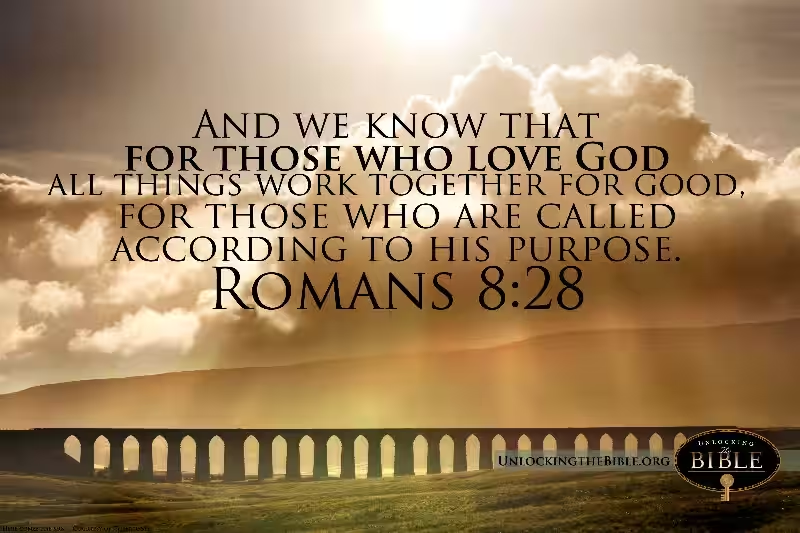
This ongoing transformation is often facilitated through community, prayer, and consistent engagement with God’s Word. It involves embracing the challenges and trials of life as opportunities for growth, knowing that God is working all things for our good (Romans 8:28). The Romans gospel verses provide the foundational principles, but it is through daily surrender and obedience that we experience the fullness of God’s power to transform us into the image of Christ. This is a dynamic and exciting journey, one where we continually discover more of God’s abundant grace and His perfect plan for our lives.
The Gospel of Romans refers to the core message of the Apostle Paul’s letter to the Romans in the New Testament of the Bible. It primarily focuses on God’s plan of salvation through faith in Jesus Christ, emphasizing that righteousness comes not from following the Law, but by grace through faith. Key themes include justification by faith, the universality of sin, the work of the Holy Spirit, and the believer’s transformation and new life in Christ.
Some of the most significant verses in Romans include:
* Romans 1:16-17: “For I am not ashamed of the gospel, for it is the power of God for salvation to everyone who believes, to the Jew first and also to the Greek. For in it the righteousness of God is revealed from faith for faith, as it is written, ‘The righteous shall live by faith.'”
* Romans 3:23-24: “for all have sinned and fall short of the glory of God, and are justified by his grace as a gift, through the redemption that is in Christ Jesus.”
* Romans 5:8: “but God shows his love for us in that while we were still sinners, Christ died for us.”
* Romans 6:23: “For the wages of sin is death, but the free gift of God is eternal life in Christ Jesus our Lord.”
* Romans 8:1: “There is therefore now no condemnation for those who are in Christ Jesus.”
* Romans 10:9-10: “because, if you confess with your mouth that Jesus is Lord and believe in your heart that God raised him from the dead, you will be saved. For with the heart one believes and is justified, and with the mouth one confesses and is saved.”
How does the Gospel of Romans relate to the concept of religion?
The Gospel of Romans presents a theological understanding of salvation that is distinct from many traditional religious systems. While other religions might emphasize human effort, adherence to rules, or the performance of rituals to achieve favor with the divine, Romans proclaims salvation as a free gift from God received through faith in Jesus Christ. It shifts the focus from human striving to God’s accomplished work on the cross. It argues that true righteousness is imputed by God, not earned by human merit or religious observance.
Does the Gospel of Romans suggest that religious practices are unnecessary?
The Gospel of Romans doesn’t necessarily negate the importance of religious practices, but it reorients their purpose. Practices like prayer, communal worship, and acts of love and service are understood not as means to earn salvation, but as natural outgrowths of a transformed life in Christ, empowered by the Holy Spirit. These actions become expressions of gratitude and obedience to God, stemming from a relationship of faith rather than a system of obligation. The emphasis is on the internal transformation of the heart through faith, which then naturally leads to outward expressions of devotion and good works.
What is the significance of “justification by faith” in Romans?
“Justification by faith” is a central tenet of the Gospel of Romans. It means that believers are declared righteous in God’s sight not because of their own good deeds or adherence to religious laws, but solely because of their faith in Jesus Christ. God credits Christ’s righteousness to those who believe. This is a radical departure from a merit-based religious system, offering assurance of salvation and a restored relationship with God through God’s grace.