The Catholic Mass, a central act of worship for millions worldwide, can sometimes feel like a rich tapestry woven with ancient traditions and profound symbolism, leaving newcomers or even long-time attendees pondering its deeper meaning. This article aims to demystify this sacred liturgy, breaking down the Catholic Mass explained step by step in a way that is both informative and relatable. Far from being a rigid, unfeeling ritual, the Mass is a dynamic encounter with the divine, a gathering of believers united in faith, and a powerful re-enactment of Christ’s sacrifice. Understanding each element, from the initial greeting to the final blessing, unlocks a deeper appreciation for its significance in the life of a Catholic and its enduring relevance in today’s world.
For many, the word “Mass” conjures images of stained-glass windows and hushed reverence. While these elements are present, the Mass is fundamentally about connection: connection to God, connection to the early Church, and connection to fellow parishioners. It’s a communal act of worship that nourishes the soul and strengthens the bonds of faith. This journey through the Catholic Mass explained step by step will illuminate the purpose behind each prayer, gesture, and reading, making this cornerstone of religious practice accessible and meaningful for everyone.
The Mass begins with the Liturgy of the Word, a segment dedicated to listening to God’s message through scripture. This is not simply a reading of old texts; it’s an active proclamation of God’s living word intended to speak directly to our hearts and minds in the present moment. The readings are carefully chosen to form a cohesive narrative throughout the liturgical year, offering guidance, inspiration, and a deeper understanding of our faith.
The first part of the Liturgy of the Word typically involves three scripture readings:
The First Reading, usually from the Old Testament, sets the historical and covenantal context for our faith.
The Responsorial Psalm, a song of praise or lament, allows us to respond prayerfully to God’s word.
The Second Reading, typically from the New Testament letters, offers practical guidance for Christian living.
The Gospel Reading, the climax of this section, recounts the life and teachings of Jesus Christ, offering the most direct revelation of God’s love and plan for salvation.
Consider the readings as a divine conversation. The first reading lays the groundwork, the Psalm is our heartfelt reply, the letters offer wisdom for our journey, and the Gospel reveals the ultimate truth. This segment is crucial in the Catholic Mass explained step by step because it equips us with the spiritual understanding and moral compass needed for the rest of the celebration. The homily, or sermon, that follows the Gospel is the priest’s opportunity to unpack these scriptures, making them relevant to our daily lives and challenging us to live out Christ’s teachings.
The Liturgy of the Eucharist: The Heart of the Mass
The Liturgy of the Eucharist is the absolute centerpiece of the Catholic Mass, where the bread and wine are transformed into the Body and Blood of Jesus Christ. This profound event, known as transubstantiation, is the central mystery of our faith and the ultimate act of love and sacrifice. It’s here that we participate directly in Christ’s Paschal Mystery, His suffering, death, and resurrection, which is made present for us anew.
This sacred transformation doesn’t happen in isolation; it’s preceded by the Offertory, where the gifts of bread and wine, along with our own contributions, are brought forward. These are more than just food and drink; they represent our lives, our work, and our willingness to offer ourselves to God. The prayers recited during the Offertory express this offering, asking that these gifts, and indeed we ourselves, may be acceptable to God.
The most sacred part of the Catholic Mass explained step by step is the Eucharistic Prayer. Here, the priest, acting in the person of Christ, invokes the Holy Spirit to bless and consecrate the bread and wine. The words spoken are echoes of Jesus’ own words at the Last Supper: “This is my Body… This is my Blood…” Through these words, a miraculous change occurs, and the bread and wine truly become the consecrated Body and Blood of Christ, while retaining their outward appearance. This is a moment of supreme reverence and awe, a tangible encounter with the Risen Lord.
Receiving Holy Communion: A Sacred Union
Following the consecration, believers are invited to receive Holy Communion. This is the culmination of the Liturgy of the Eucharist, a moment of profound spiritual intimacy. When Catholics receive the consecrated host, they are receiving the actual presence of Jesus Christ into their very being. This act of sacred union strengthens our faith, forgives our venial sins, and unites us more deeply with Christ and with one another.
To receive Holy Communion worthily, Catholics are instructed to be in a state of grace, meaning they have confessed any mortal sins and are not consciously living in a state of serious sin. This preparation ensures that we approach this extraordinary gift with the respect and reverence it deserves. The act of approaching the altar, receiving the host, and consuming it is a physical manifestation of our spiritual hunger for God.
After receiving Communion, a period of silent prayer and thanksgiving often follows. This is a personal and intimate time to converse with Jesus, to express gratitude for His presence, and to allow His grace to work within us. It’s a vital part of the Catholic Mass explained step by step because it emphasizes that the Mass doesn’t end with receiving Communion; it continues in our hearts as we carry Christ’s presence back into the world.
The Concluding Rites: Sending Forth the Faithful
The Concluding Rites of the Mass serve as a bridge between the sacred celebration and our everyday lives. This section is designed to send us forth with renewed purpose and a mission to live out our faith. It’s not an abrupt ending, but a deliberate commissioning, equipping us to be Christ’s hands and feet in the world. The prayers and blessings here are a reminder that the Mass extends beyond the church walls.
The Mass concludes with a final blessing, a solemn invocation for God’s grace and protection upon the congregation. This is not just a polite farewell; it’s a divine impartation of strength and peace, empowering us for the challenges and opportunities ahead. The priest often encourages the faithful to “Go in peace, to love and serve the Lord,” a powerful reminder of our Christian vocation.
The “Go forth” dismissal is the official end of the public celebration, but it marks the beginning of our active apostolate. This is the final step in the Catholic Mass explained step by step that underscores the active nature of our faith. We are not meant to be passive observers; we are called to be disciples who share the Good News through our actions, our words, and our very lives. The Mass, therefore, is not just an hour of worship; it’s a transformative experience that shapes our identity and guides our engagement with the world.
Catholic Mass Explained Step-by-Step
What is the Catholic Mass?
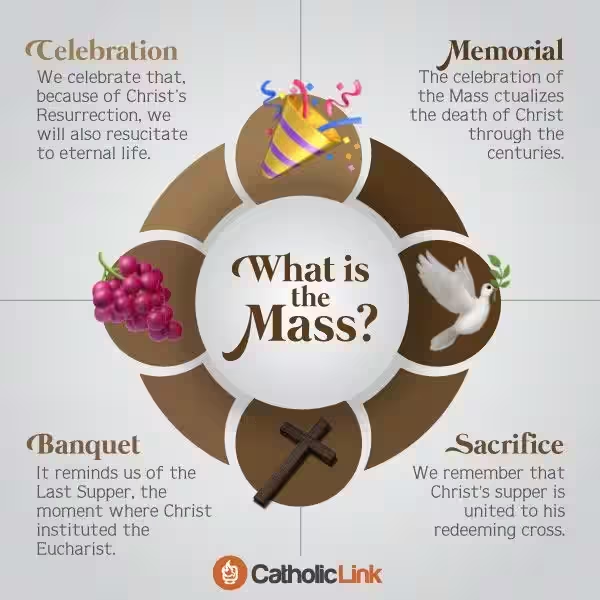
The Catholic Mass is the central and most important act of worship in the Catholic Church. It is a liturgical celebration where Catholics commemorate the Last Supper and the sacrifice of Jesus Christ on the cross through a ritual that includes readings from scripture, prayers, the consecration of bread and wine into the Body and Blood of Christ, and Holy Communion.
What are the main parts of the Mass?
The Mass is generally divided into two main parts: the Liturgy of the Word and the Liturgy of the Eucharist.
What happens during the Liturgy of the Word?
The Liturgy of the Word involves scripture readings from the Old Testament, the New Testament (usually a letter and the Gospels), and a homily (a sermon delivered by the priest or deacon). It also includes prayers like the Profession of Faith (the Nicene Creed) and the Universal Prayer (also known as the Prayer of the Faithful).
This is the core of the Mass. It begins with the Offertory, where gifts of bread and wine are brought to the altar. Then comes the Eucharistic Prayer, the most sacred part, where the priest, in the person of Christ, consecrates the bread and wine, transforming them into the Body and Blood of Jesus. This is followed by the Sign of Peace and then Holy Communion, where the faithful receive the consecrated bread and wine.
What is the significance of the homily?
The homily is a vital part of the Liturgy of the Word. It is an explanation and application of the scripture readings to the lives of the faithful, helping them to understand God’s word and how to live it out.
What is the consecration?
Consecration is the moment during the Eucharistic Prayer when the priest, using the words of Jesus from the Last Supper, transforms the bread and wine into the actual Body and Blood of Christ through the power of the Holy Spirit. This is known as transubstantiation.
What is Holy Communion?
Holy Communion is the reception of the consecrated bread and wine, which are believed to be the Body and Blood of Jesus Christ. It is a spiritual nourishment and a sign of unity with Christ and with each other.
What is the role of the priest?
The priest acts as a mediator between God and the people. During the Mass, he presides over the liturgy, offers prayers, preaches, and, most importantly, consecrates the bread and wine, making Christ present. He acts in persona Christi Capitis (in the person of Christ the Head).
What are the responses expected from the congregation?
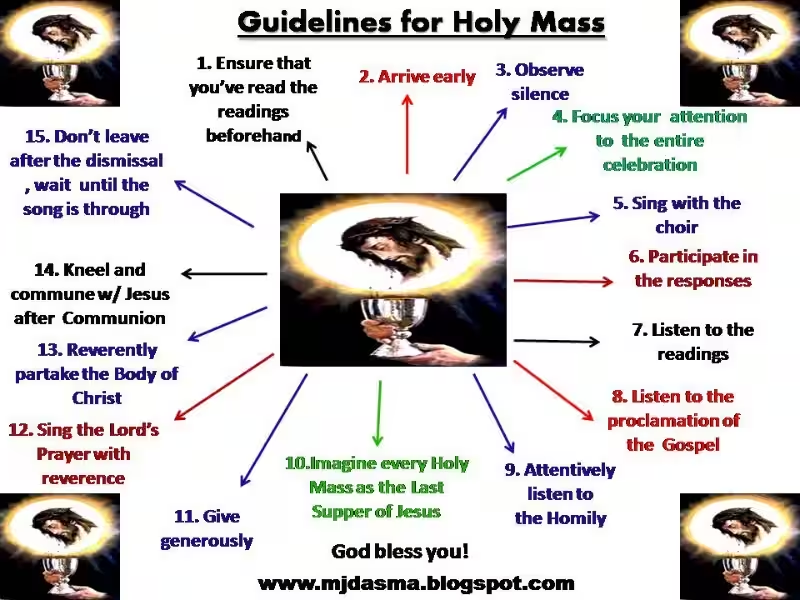
During the Mass, the congregation participates through prayers, responses to the priest’s words (e.g., “Amen,” “And with your spirit”), singing hymns, and kneeling at appropriate times. These responses show active participation and unity in worship.
Why do Catholics believe the Mass is important?
Catholics believe that attending Mass is a commandment and a way to encounter Jesus Christ in a profound way. It is seen as a participation in the sacrifice of Christ, a spiritual meal, and a source of grace and strength for their daily lives.