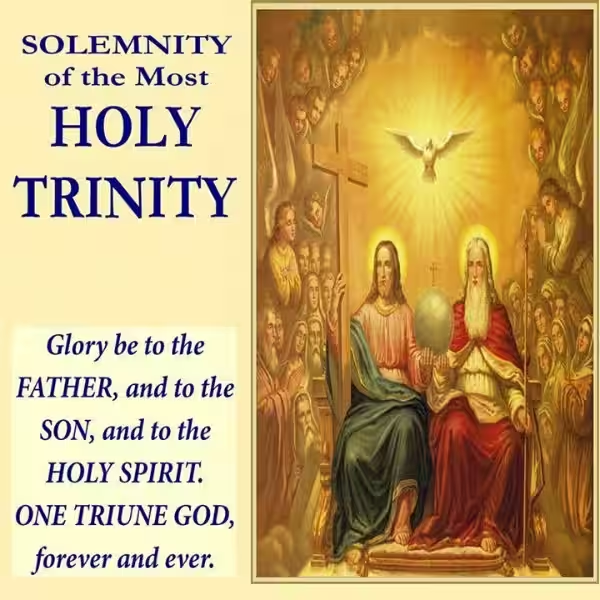
Religion often speaks of a divine presence, a guiding force that transcends the ordinary. For many, this is the Holy Spirit, the third person of the Trinity in Christianity, but also a concept resonating with a sense of the sacred and immanent across various spiritual traditions. This article delves into the profound and often subtle ways the Holy Spirit manifests in our lives, weaving together relatable experiences with the rich tapestry of religious understanding. We’ll explore how this divine breath can inspire, comfort, convict, and transform us, turning the mundane into moments of revelation and the ordinary into the extraordinary.
The Holy Spirit is often described as a gentle whisper, a still, small voice that nudges us in the right direction. It’s not a booming command, but a quiet intuition, a feeling of certainty that arises from within. These moments of guidance can be as simple as a sudden urge to call a friend you haven’t spoken to in years, only to discover they were going through a difficult time. Or it might be a profound sense of knowing to take a different route home, thus avoiding an accident. These aren’t random coincidences; for believers, they are divine interventions, the Holy Spirit actively shaping our journey.
Consider the story of Sarah, a young professional wrestling with a difficult ethical decision at work. She felt torn between what was expected of her and what she knew was right. One evening, while praying, a sense of profound peace washed over her, accompanied by a clear, internal conviction about the path she should take. It wasn’t a logical deduction; it was a spiritual assurance. This inner knowing, this clarity that cuts through confusion, is a hallmark of the Holy Spirit’s work. It’s about discernment, helping us distinguish truth from falsehood and aligning our will with a higher purpose.
The Spark of Inspiration: Creativity and Revelation Fueled by the Divine
Beyond guidance, the Holy Spirit is also the source of inspiration, igniting creativity and leading to moments of profound revelation. Think of the artist who experiences a sudden surge of ideas, the writer who finds words flowing effortlessly, or the musician who composes a melody that seems to come from out of nowhere. These bursts of creativity are often attributed to the Holy Spirit’s influence, breathing life into our imaginations and allowing us to express something new and beautiful. This isn’t just about artistic endeavors; it extends to problem-solving, innovation, and breakthroughs in all areas of life.
Many ancient religious texts are viewed as products of this divine inspiration. The prophets of old, the mystics, and the sages throughout history often spoke of receiving messages or insights directly from the divine. This wasn’t a passive reception; it was an active impartation of wisdom and understanding. For instance, the apostle Paul, in his letters, often speaks of receiving revelations about God’s plan. These weren’t mere intellectual exercises; they were transformative truths that reshaped his understanding and that of countless others. The Holy Spirit, in this context, acts as a divine muse, unlocking our potential and revealing deeper truths about ourselves and the universe.
Comfort in the Crucible: The Holy Spirit as a Source of Strength and Solace
Life’s journey is rarely smooth. We face trials, losses, and periods of intense suffering. In these darkest hours, the Holy Spirit is often experienced as a source of deep comfort and unwavering strength. It’s the presence that calms our fears, soothes our anxieties, and gives us the resilience to persevere. This is the divine comforter, the one who walks with us through the valley of the shadow of death, never leaving us alone. This presence is felt not as an absence of pain, but as a strength within the pain, enabling us to endure and even find meaning in our struggles.
Consider the story of Maria, who lost her husband unexpectedly. The grief was overwhelming, a crushing weight that threatened to consume her. Yet, in the midst of her despair, she described feeling a gentle, persistent presence that held her. It was like an invisible hand wiping away her tears, a quiet assurance that she was not alone. This was the Holy Spirit, providing unconditional love and support when human comfort felt insufficient. This ability to find peace amidst turmoil, to feel hope when all seems lost, is a powerful testament to the Holy Spirit’s consoling power. It’s about divine empathy, God understanding and sharing in our suffering.
Transformation from Within: The Holy Spirit as the Agent of Change
Perhaps the most profound work of the Holy Spirit is its role in personal transformation. It’s the divine power that molds us into better versions of ourselves, cultivating virtues like love, joy, peace, patience, kindness, goodness, faithfulness, gentleness, and self-control – often referred to as the “fruit of the Spirit.” This process isn’t instantaneous; it’s a gradual unfolding, a spiritual maturation that occurs as we yield to the Spirit’s influence. It’s about the Holy Spirit actively re-shaping our character, aligning our desires with God’s will.
Think of someone who has overcome addiction or a deeply ingrained negative habit. While personal effort plays a crucial role, many attribute their lasting change to a divine encounter or the persistent work of the Holy Spirit in their lives. This is the transformative power of grace, a supernatural force that empowers us to break free from the chains of our past and embrace a new way of living. It’s about the Holy Spirit acting as a divine sculptor, patiently chiseling away at our imperfections and revealing the noble image intended for us. This internal metamorphosis is a testimony to the Holy Spirit’s active presence and its power to bring about genuine, lasting change.
In conclusion, the stories of the Holy Spirit are not confined to ancient scriptures or distant lands. They are woven into the fabric of our everyday lives, in the quiet nudges of intuition, the sparks of creativity, the comfort in times of sorrow, and the slow, steady transformation of our character. By recognizing these whispers of the divine, we open ourselves to a deeper, more meaningful connection with the sacred, realizing that we are never truly alone on our journey. The Holy Spirit is a constant companion, a divine enabler, and a transforming presence, inviting us to experience the fullness of life in all its rich, spiritual dimensions.
Frequently Asked Questions About the Holy Spirit
What are some common stories or accounts of the Holy Spirit in religious texts?
Many religious traditions feature narratives about the Holy Spirit’s presence and actions. In Christianity, the New Testament is rich with such stories, including the descent of the Holy Spirit upon Jesus at his baptism, the Pentecost event where the disciples were filled with the Spirit and began speaking in other tongues, and numerous instances of the Spirit empowering individuals for ministry, prophecy, and healing. The Old Testament also contains references to the Spirit of God (Ruach Elohim) as a creative force and a source of inspiration for prophets and leaders.
How is the Holy Spirit understood in different religions?
While the concept of a Holy Spirit is most prominent in Christianity, similar ideas of divine presence, inspiration, or animating force exist in other religions. In Judaism, the “Spirit of God” is a significant concept, often associated with creation, prophecy, and God’s immanent presence. In Islam, the Holy Spirit (Ruh al-Qudus) is primarily identified with the Angel Gabriel, who brought revelations to the prophets. Some traditions within Hinduism and Buddhism speak of universal consciousness, divine energy, or animating principles that share some functional similarities with the concept of a Holy Spirit, though their theological frameworks are distinct.
What are the perceived benefits or effects of experiencing the Holy Spirit?
Experiences attributed to the Holy Spirit are often described as bringing spiritual empowerment, comfort, guidance, and a deeper connection to the divine. Believers often report feeling a sense of peace, conviction, or transformation. In a Christian context, the Holy Spirit is seen as guiding believers into truth, enabling them to live a righteous life, gifting them with abilities for service, and sealing them for salvation. Many also speak of the Spirit fostering love, joy, and unity among people.
Are there specific rituals or practices associated with the Holy Spirit?
In Christianity, practices like baptism and confirmation are often seen as sacraments or ordinances where the Holy Spirit is invoked or imparted. Prayer, worship services, and personal meditation are also considered ways to connect with and be guided by the Holy Spirit. Some denominations emphasize specific practices like speaking in tongues or laying on of hands as ways to experience the Spirit’s presence and power.
How does one discern if an experience is genuinely from the Holy Spirit?
Discernment practices vary, but common principles include aligning the experience with scripture, observing whether it produces positive character traits like love and humility, and seeking counsel from trusted spiritual leaders. In Christianity, it’s often taught that the Holy Spirit bears witness to Christ and leads believers into truth, rather than promoting division or falsehood. The fruit of the Spirit, as described in Galatians 5:22-23 (love, joy, peace, patience, kindness, goodness, faithfulness, gentleness, self-control), is often considered a key indicator of genuine spiritual influence.