Marriage Catholic Church: A Divine Covenant of Love and Lifelong Commitment
For millions worldwide, the concept of marriage Catholic church signifies more than just a legal or social union; it represents a profound and sacred covenant blessed by God himself. Within the Catholic tradition, marriage is not merely a contract between two individuals but a sacrament, a visible sign of God’s invisible grace. This understanding imbues the marital bond with a unique depth, emphasizing its divine origin and its enduring purpose.
The Catholic Church views marriage as a lifelong, indissoluble union between one man and one woman, called to a mutual love and service. This commitment is rooted in the belief that God, the creator of all life, instituted marriage from the very beginning, intending it for the procreation and education of children as well as for the mutual sanctification of the spouses. This perspective shapes every aspect of Catholic marriage preparation and celebration, highlighting its significance as a cornerstone of the family and society.
Foundational Principles: The Sacramental Nature of Catholic Marriage
At the heart of the marriage Catholic church doctrine lies its sacramental nature. Unlike other sacraments that are administered by clergy, marriage is considered a sacrament administered by the couple themselves, with the Church providing the sacred space and ritual for its solemnization. The exchange of vows, spoken freely and with full knowledge, becomes the tangible expression of their commitment to God and to each other. This mutual consent, when entered into validly, creates an unbreakable bond.
The sacramental grace inherent in this union is believed to strengthen and sanctify the spouses throughout their married life. It provides them with the divine assistance needed to navigate the challenges and joys of married life, to love each other with a Christ-like love, and to raise their children in the Catholic faith. This grace is not a one-time gift but a continuous source of strength, empowering them to live out their vows even in difficult times. Think of it like receiving a special tool from God to help build and maintain their family home, a tool that gets stronger the more it’s used.
Essential Elements for a Valid Catholic Marriage
For a marriage to be considered valid within the Catholic Church, certain essential elements must be present. These include: free consent from both parties, meaning they are entering into the union without coercion or undue pressure; the intention to marry for life, excluding any notion of divorce or remarriage; the openness to procreation (though infertility does not invalidate a marriage); and the adherence to the Church’s canonical form, which typically involves a ceremony before a priest or deacon and two witnesses.
These requirements are not meant to be obstacles but rather safeguards to protect the sanctity and integrity of the marital bond. The Church emphasizes thorough marriage preparation for engaged couples to ensure they understand the gravity of their commitment and are equipped with the spiritual and practical tools needed for a successful marriage. This preparation often includes engaging in open discussions about finances, communication, family planning, and the spiritual dimensions of married life. A common analogy is preparing for a long journey; you wouldn’t embark without a map, supplies, and a clear understanding of the destination.
The Purpose of Marriage Catholic Church: Love, Life, and Partnership
The marriage Catholic church doctrine outlines two inseparable primary purposes for this sacred union: the good of the spouses and the procreation and education of children. These purposes are intrinsically linked and cannot be separated without diminishing the holistic understanding of marriage. The mutual love and support between husband and wife are vital for their personal growth and spiritual development, fostering a deeper relationship with God and each other.
Simultaneously, the Church recognizes marriage as the natural and ideal setting for raising children. The unique bond between parents, united in love and commitment, provides a stable and nurturing environment for children to flourish, both physically and spiritually. This understanding underscores the profound responsibility that comes with marriage, encompassing not only the couple’s happiness but also the well-being and faith formation of their future family. This is why the Church strongly advocates for responsible parenthood, encouraging couples to prayerfully discern the number and spacing of their children.
Navigating Challenges: Faith, Forgiveness, and the Grace of Perseverance
Married life, with all its blessings, is not without its challenges. The marriage Catholic church understands that couples will face difficulties, disagreements, and even periods of profound struggle. However, the Church’s teaching emphasizes that the sacramental grace of marriage is always available to help them overcome these hurdles. Faith plays a crucial role, encouraging reliance on God’s providence and guidance.
The virtues of forgiveness, patience, and open communication are paramount in weathering these storms. The Church encourages couples to continually recommit to their vows, seeking reconciliation and understanding when conflicts arise. Forgiveness, in particular, is a powerful tool for healing and strengthening the bond. When couples truly embrace the spirit of Christ’s love within their marriage, they discover a wellspring of resilience and the ability to persevere through adversity, emerging stronger and more deeply united.
The Role of the Church: Support, Guidance, and Ongoing Formation
The Catholic Church does not simply officiate at weddings; it actively seeks to support and guide couples throughout their married lives. This support extends beyond the wedding ceremony through various pastoral ministries and resources. These can include: marriage counseling, annulment processes (which investigate if a valid marriage ever truly existed), marriage enrichment programs, and spiritual direction.
The Church also provides ongoing formation opportunities for married couples, helping them to deepen their understanding of Catholic teaching on marriage and family life. These initiatives aim to equip couples with the tools and knowledge to live out their vocation more fully, to be witnesses of God’s love in the world, and to build strong, faith-filled families. The Church acts as a spiritual home, offering a community of support and encouragement for those living out their vocation to marriage.
Marriage as a Witness: Living the Faith in the World
Ultimately, the marriage Catholic church is seen as a powerful witness to the world of God’s enduring love and the beauty of a committed, Christ-centered union. The way a couple loves and supports each other, forgives and perseveres, and raises their children in the faith serves as a living testament to the transformative power of God’s grace.
In a world that often views marriage as temporary or disposable, the Catholic understanding of marriage offers a compelling alternative – a vision of a sacred, lifelong commitment that is both deeply personal and profoundly spiritual. It is a journey of shared growth, mutual sanctification, and unwavering love, a testament to the enduring power of faith and the divine blueprint for human flourishing.
Frequently Asked Questions about Catholic Marriage
What is the Catholic Church’s definition of marriage?
The Catholic Church teaches that marriage is a lifelong union between one man and one woman, instituted by God, which is both sacred and indissoluble. It is a covenant entered into freely by a baptized man and a baptized woman, signifying the union between Christ and His Church.
What are the requirements for a Catholic marriage?
Both the bride and groom must be baptized Catholics and be free to marry (i.e., not already married to someone else, not too closely related). They must also have the intention of entering into a lifelong, exclusive, and procreative union. Pre-Cana preparation (marriage preparation) is mandatory.
Yes, a Catholic can marry a non-Catholic Christian (with a dispensation from the bishop) or a non-baptized person (with a dispensation). However, specific conditions and preparations are required to ensure the Catholic faith is respected within the marriage.
What does “indissoluble” mean in the context of Catholic marriage?
“Indissoluble” means that a valid, sacramental marriage between two baptized persons cannot be dissolved by any human power. It is considered a permanent bond until the death of one of the spouses.
What is the purpose of marriage in the Catholic Church?
The purposes of marriage are twofold: the good of the spouses themselves (mutual love, support, and sanctification) and the procreation and education of children.
What is a dispensation in Catholic marriage?
A dispensation is an exemption from an ecclesiastical law. For example, a dispensation from the requirement of both parties being Catholic is needed for a Catholic to marry a non-Catholic.
What is “Pre-Cana” or marriage preparation?
Pre-Cana is a mandatory period of preparation for engaged couples in the Catholic Church. It aims to help them understand the sacrament of marriage, discuss important aspects of married life, and prepare them for the responsibilities and blessings of this commitment.
Can a divorced Catholic remarry in the Church?
A divorced Catholic cannot remarry in the Church unless their previous marriage has been declared null by an annulment process. An annulment is a declaration by the Church that a marriage was never valid from its inception due to a defect at the time of the wedding.
What is an annulment?
An annulment, or declaration of nullity, is a formal Church process that determines whether a sacramental marriage was ever valid. It does not “dissolve” a marriage but rather states that a valid marriage never existed.
What is the role of the Church in a Catholic wedding ceremony?
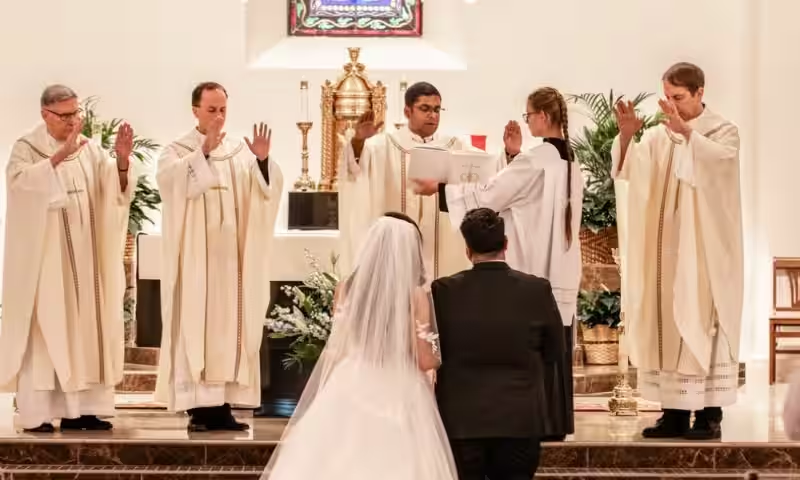
The Catholic Church presides over the wedding ceremony, which is a sacrament. The priest or deacon witnesses the vows exchanged between the couple, acting on behalf of the Church and God. The ceremony includes scripture readings, prayers, and the exchange of vows.