Step into any Catholic church, and you are immediately enveloped in a world that transcends the ordinary. This is the realm of sacred art Catholic, a vibrant tapestry woven from centuries of devotion, theological reflection, and artistic genius. It’s more than just decoration; it’s a visual language that speaks to the heart, guides the mind, and elevates the spirit. For the devout, it’s a constant reminder of God’s presence and the profound truths of their faith. For those curious, it offers an accessible entry point into understanding the richness of Catholic tradition, revealing stories, emotions, and doctrines through compelling imagery.
The purpose of sacred art Catholic is multifaceted. It serves as a pedagogical tool, teaching the illiterate and reminding the faithful of key biblical events, lives of saints, and the core tenets of their religion. It also acts as a conduit for worship, creating an atmosphere conducive to prayer and contemplation. The beauty found within these works is intended to reflect the divine beauty of God, inspiring awe and drawing worshippers closer to the sacred. In essence, it transforms a physical space into a sanctuary, a place where the earthly and the divine meet.
The Rich History and Evolution of Catholic Sacred Art
The history of sacred art Catholic is as old as Christianity itself. From the humble beginnings of catacomb paintings, depicting Christ as the Good Shepherd and early Christian symbols, to the monumental cathedrals of the Middle Ages and the Renaissance masterpieces, this art form has constantly evolved, adapting to new artistic styles and theological interpretations while remaining steadfast in its core purpose. Each era has left its indelible mark, offering a unique perspective on the enduring stories of faith.
Early Christian art, often created in secret, focused on conveying hope and salvation through symbols like the fish (ichthys) and the anchor. As Christianity became the official religion of the Roman Empire, art flourished. The Byzantine era brought forth luminous mosaics and iconic imagery, emphasizing the divine majesty of Christ and the Theotokos (Mother of God). The Romanesque period saw the rise of robust sculptures and illuminated manuscripts, while the Gothic era introduced soaring architecture filled with stained glass windows that painted biblical narratives with light. This progression wasn’t merely stylistic; it often reflected shifts in theological understanding and popular devotion, making the evolution of sacred art Catholic a fascinating study in cultural and spiritual history.
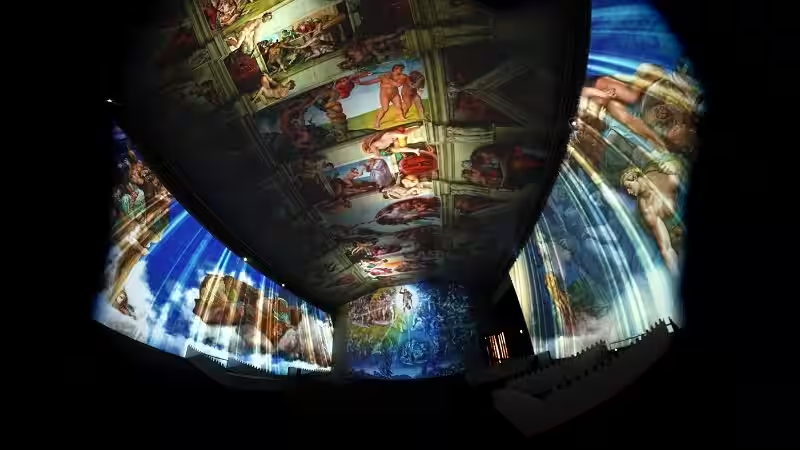
The transition from early symbolic representations to the more narrative and naturalistic styles of later periods is striking. Think of the difference between a simple fresco of Jonah and the whale in a Roman catacomb and Michelangelo’s breathtaking Sistine Chapel ceiling. The former communicates a core message of deliverance; the latter, a complex theological drama of creation, fall, and redemption. This evolution reflects a growing confidence and a desire to engage viewers on a deeper emotional and intellectual level.
The Renaissance, in particular, witnessed an explosion of genius in sacred art Catholic. Artists like Leonardo da Vinci, Raphael, and Michelangelo brought unparalleled skill and humanistic perspective to religious subjects. Their depictions of Christ, Mary, and the saints were imbued with a profound sense of humanity, emotion, and divine grace. For instance, Raphael’s “Sistine Madonna,” with its serene yet powerful depiction of the Virgin Mary holding the Christ Child, captures a tender maternal love while simultaneously hinting at the divine destiny of her son. These works weren’t just beautiful; they were intended to inspire profound piety and a personal connection to the divine narrative.
Key Themes and Iconography in Sacred Art Catholic
At the heart of sacred art Catholic lies a rich and consistent set of themes and iconography that have been developed and refined over centuries. These visual symbols and recurring motifs are not arbitrary; they are deeply rooted in Scripture, tradition, and the lived experience of the Church. Understanding this visual vocabulary unlocks a deeper appreciation for the art and its spiritual message.
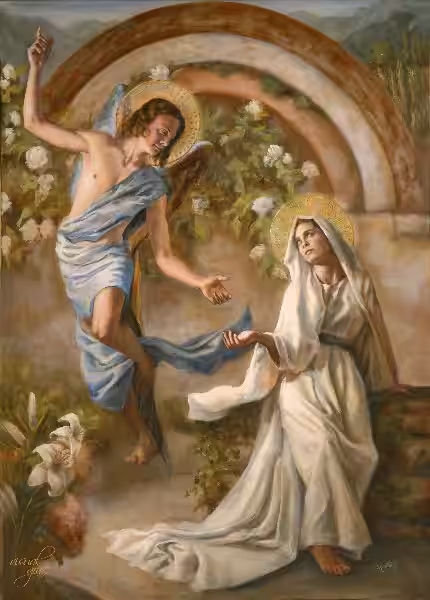
The life of Jesus Christ is, of course, the central theme. From the Annunciation and Nativity to the Crucifixion and Resurrection, every significant event is depicted countless times, each artist bringing their unique interpretation while adhering to established iconographic traditions. The Virgin Mary, revered as the Mother of God, also features prominently, often depicted in various roles: the Immaculate Conception, the compassionate intercessor, or the sorrowful mother at the foot of the cross. The lives of the saints, too, are a fertile ground for sacred art Catholic, with each saint often portrayed with specific attributes or symbols that identify them and recall their martyrdoms or virtues. For example, St. Peter is often shown with keys, symbolizing his role as the “rock” of the Church, while St. Sebastian is frequently depicted pierced with arrows, referencing his martyrdom.
Beyond specific figures, the subtle use of color, gesture, and embedded objects plays a crucial role in conveying meaning within sacred art Catholic. Colors often carry symbolic weight: white signifies purity and divinity, red represents martyrdom or the Holy Spirit, and blue is traditionally associated with Mary, symbolizing her heavenly grace. Gestures, too, are highly significant. A raised hand might indicate blessing or authority, while a hand placed over the heart often signifies love and devotion.
Furthermore, specific objects are laden with theological meaning. The lily, for instance, is a common symbol of Mary’s purity. A lamb often represents Christ as the sacrificial Lamb of God. A chalice and host point directly to the Eucharist, the central sacrament of Catholic worship. Even the arrangement of figures in a composition can carry profound theological implications, such as the triangular composition often used to represent the Trinity. By paying attention to these details, viewers can move beyond a superficial appreciation of beauty and engage with the deeper spiritual narratives that sacred art Catholic seeks to communicate.
The Enduring Relevance of Sacred Art Catholic Today
In our fast-paced, digitally saturated world, the enduring relevance of sacred art Catholic may seem counterintuitive to some. Yet, its power to inspire contemplation, foster a sense of community, and offer a tangible connection to something transcendent remains remarkably potent. The quiet grandeur of a stained-glass window or the serene gaze of a painted Madonna can offer a welcome respite from the noise of modern life, inviting us to pause and reflect.
For contemporary Catholics, sacred art Catholic continues to serve as a vital element of religious experience. It adorns churches, chapels, and homes, providing visual anchors for prayer and devotion. Moreover, it plays a crucial role in catechesis, helping to transmit the faith to new generations. The stories depicted in art are often more accessible and emotionally resonant than abstract theological explanations, fostering a deeper, more personal understanding of faith. Whether it’s a contemporary mosaic in a new parish church or a centuries-old icon in a monastic setting, this art form continues to nourish souls and proclaim timeless truths.
Frequently Asked Questions: Sacred Art in the Catholic Religion
What is sacred art in the Catholic tradition?
Sacred art in the Catholic tradition refers to artistic works created with the intention of expressing, celebrating, or teaching the Catholic faith. It encompasses a wide range of mediums, including painting, sculpture, architecture, music, and literature, all designed to inspire devotion and reflect divine truths.
What are the purposes of sacred art in Catholicism?
Sacred art serves multiple purposes in Catholicism. It is used for glorifying God, aiding in prayer and meditation, educating the faithful about biblical stories and the lives of saints, beautifying places of worship, and fostering a sense of awe and reverence for the divine.
What are some common themes found in Catholic sacred art?
Common themes include the life of Jesus Christ (Nativity, Passion, Resurrection), the Blessed Virgin Mary (Annunciation, Assumption, Immaculate Conception), the saints and martyrs, biblical narratives, the sacraments, and theological concepts like the Trinity and redemption.
How has Catholic sacred art evolved over time?
Catholic sacred art has evolved significantly throughout history, reflecting changes in artistic styles, theological understanding, and cultural contexts. From the early Christian catacombs and Romanesque basilicas to the Renaissance masterpieces and Baroque grandeur, each era has contributed its unique artistic expressions to the faith.
Are there specific guidelines or rules for creating Catholic sacred art?
While there are no rigid, universal “rules,” the Church has historically provided guidance and principles for sacred art through various councils and official documents. These often emphasize clarity in conveying theological meaning, suitability for a sacred context, and avoidance of anything that might be distracting, irreverent, or doctrinally unsound.
What is the significance of images and statues in Catholic worship?
Images and statues in Catholic worship are seen as aids to devotion, not objects of worship themselves. They serve as visual reminders of Christ, Mary, and the saints, helping believers to focus their prayers and contemplate the mysteries of faith. The veneration of images is distinct from the worship due to God alone.
Can non-Catholics appreciate or understand Catholic sacred art?
Absolutely. While rooted in Catholic theology, the beauty, skill, and emotional depth of Catholic sacred art can be appreciated by people of all backgrounds. Often, these artworks offer universal themes of love, sacrifice, and hope that resonate with a broad audience.
What are some famous examples of Catholic sacred art?
Famous examples include Michelangelo’s Sistine Chapel ceiling and Pietà, Leonardo da Vinci’s Last Supper, Raphael’s The School of Athens, Bernini’s Ecstasy of Saint Teresa, the mosaics of Ravenna, and the architecture of cathedrals like Notre Dame de Paris and St. Peter’s Basilica in Rome.